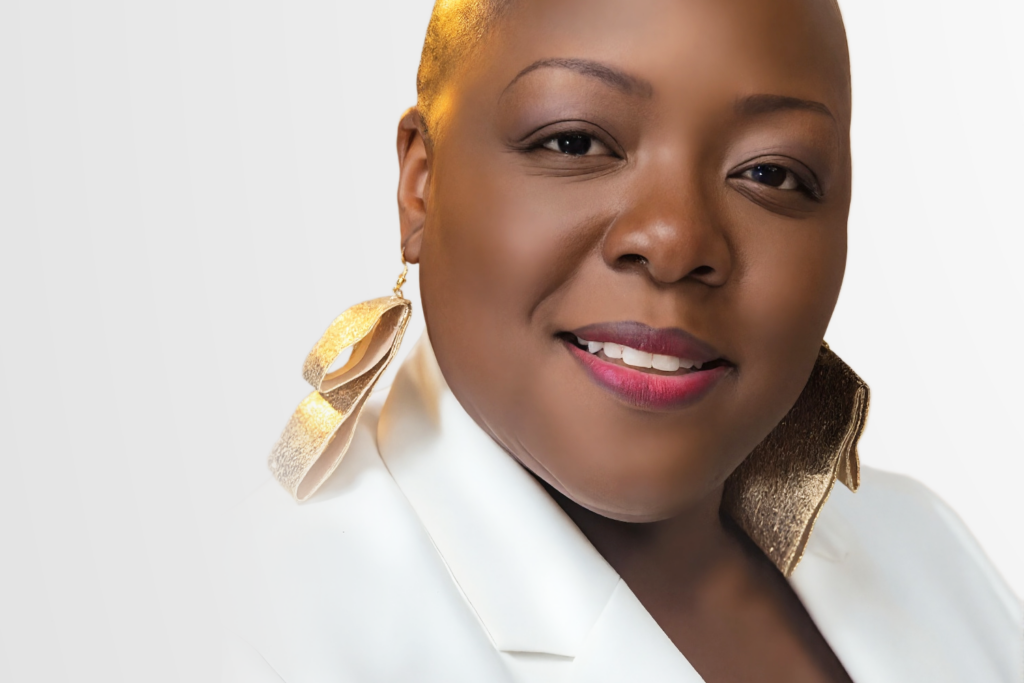
Some women survive loss quietly. Others choose to heal out loud, even when the healing is messy, uncomfortable, and deeply misunderstood. Angela Harris is one of those women. As a writer, speaker, advocate, and the voice behind the growing “Bald. Bold. Becoming.” movement, Angela is creating powerful conversations around grief, vulnerability, visibility, and what it truly means to rebuild yourself after life-altering change. After losing her husband, she found herself facing the painful question so many women silently carry: Who am I now? Rather than performing strength for the comfort of others, Angela chose honesty. She began speaking openly about the realities of grief, identity loss, confidence, beauty, and the emotional weight women are often expected to carry in silence.
“Healing is ugly,” she says candidly. “People are sometimes over your loss long before you are even able to accept it yourself.” Through that honesty, Angela discovered something powerful: women everywhere were searching for permission to stop hiding their pain too. From relocating to Tulsa, Oklahoma, to representing the city in the 2026 Ms. Bald & Beautiful Pageant and earning the title of 1st Runner Up during her very first pageant appearance, Angela continues turning personal heartbreak into purpose and empowerment. In this moving interview, she opens up about grief, reinvention, bald beauty, authenticity, and why becoming is often born from the hardest seasons of our lives. Let’s meet her…
Your message, “Bald. Bold. Becoming.,” has become deeply resonant for many women navigating grief and reinvention. What inspired those three words, and how do they reflect the different chapters of your personal healing journey?
“Bald. Bold. Becoming.” came from realizing that every part of my journey changed me. “Bald” represents visibility and vulnerability for me. Being bald is not for the weak — you have to truly own it. “Bold” represents surviving life-changing loss and still choosing to show up anyway. And “Becoming” is the reminder that healing is ongoing.
After losing my husband, I realized I was not becoming who I used to be again — I was becoming someone entirely new. That was painful, confusing, beautiful, and powerful all at once.
What surprised me most was how many women connected to those words. So many women are quietly trying to rediscover themselves after grief, heartbreak, illness, divorce, or major life transitions. “Bald. Bold. Becoming.” became bigger than me — it became language for women learning how to meet themselves again.
After the loss of your husband, you were faced with the question, “Who am I now?” — a question many women quietly struggle with after life-altering change. What did rediscovering yourself look like in the earliest stages of grief, and how has that answer evolved over time?
Listen… it was messy. I looked like survival. Getting out of bed was hard. Breathing felt hard. While I did not want to end my life, there were days I woke up disappointed that I woke up at all. That is a part of grief people do not talk about enough.
In the beginning, rediscovering myself was not about confidence or purpose — it was about making it through the day. I did not recognize myself because grief had changed everything about my life and the woman I thought I was.
Over time, I stopped asking, “How do I get back to who I used to be?” and started asking, “Who am I becoming now?” That shift changed my healing journey completely. Today, that question no longer feels heartbreaking to me. It feels freeing.
Grief often changes not only our emotional world, but also our sense of identity, beauty, confidence, and purpose. How did your relationship with yourself shift after loss, and what were some of the hardest parts of learning to see yourself again?
After loss, my relationship with myself changed completely. The hardest part was not necessarily seeing myself again, but accepting who I was becoming. Honestly, that is still a question I am answering.
My life and identity went from “we” to “I” in one phone call. I think I was so busy trying to survive and make sense of what had happened that I avoided fully exploring who I was without the life I once knew. In many ways, it hurt to even ask myself those questions because doing so made the loss feel real.
Over time, I began realizing that healing was not about returning to the woman I used to be. It was about giving myself permission to meet the woman I was becoming with compassion instead of resistance.
Your decision to heal out loud has created powerful conversations around vulnerability and visibility. Why do you believe so many women feel pressured to hide their pain, and what has it meant for you to choose openness instead?
I think many women hide their pain because the most traumatic thing that has happened to them often makes other people uncomfortable. People are sometimes over your loss long before you are even able to accept it yourself.
Healing is ugly. Let’s be honest — who really wants to hear about the messy parts? To protect yourself from the cliché statements like “you’re so strong” or “they wouldn’t want you unhappy,” sometimes it feels easier to suffer in silence.
Choosing openness allowed me to stop performing strength and start being honest about what grief and rebuilding really look like. What surprised me most was how many women connected to the honesty of it all because so many of us are quietly carrying pain we were never given space to say out loud.
Many women experience a season where they no longer recognize the version of themselves staring back in the mirror after heartbreak, trauma, illness, divorce, widowhood, or transition. What would you say to women who are struggling to embrace the woman they are becoming?
I would tell women to stop measuring their healing and identity against society’s expectations. We are given this cookie-cutter idea of what strength, healing, beauty, and moving forward are supposed to look like, but real life rarely happens that way.
I think if more women understood that it is okay not to recognize yourself after life-changing experiences, they would stop being so hard on themselves. Sometimes grief, heartbreak, trauma, illness, or transition changes you completely, and acknowledging that is not weakness — it is honesty.
Becoming can feel uncomfortable because it requires you to release who you were while learning who you are now. But there is power in giving yourself permission to evolve without guilt or apology.
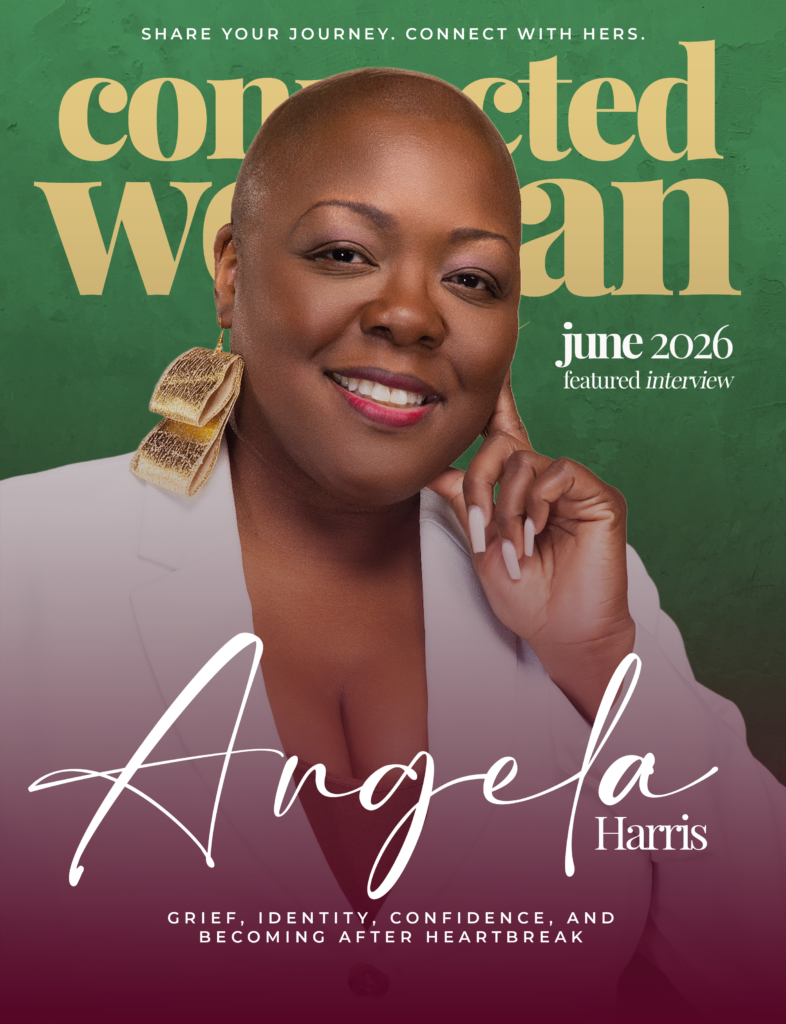
Your journey also challenges traditional ideas surrounding beauty, femininity, and confidence. How has embracing your baldness become connected to reclaiming your voice, visibility, and personal power?
Society has capitalized more on tradition than truth, especially when it comes to beauty and femininity. I think India Arie said it best: “I am not my hair, I am not my skin.” Those things can fade, but who I am at my core will always remain.
Being bald has elevated everything for me. It is not just a hairstyle or a trend — it became a symbol of my life. Transparent. Visible. Free.
Embracing my baldness forced me to stop hiding behind society’s expectations and fully own who I am. In doing that, I reclaimed my voice, my confidence, and my power in a much deeper way than appearance alone could ever give me.
In a world that often tells women to “bounce back” quickly after devastating life changes, how important has it been for you to redefine healing on your own terms rather than perform strength for others?
It was very important because while women are often told to “bounce back,” we are rarely given the grace or the blueprint to actually do so. People tell you that you are young, you will find love again, or life will move on, but not enough people talk about the emotional work required for you to become whole again.
I know people usually mean well, but those conversations were not always helpful for me. I did not want to spend my life pretending I was healed while silently struggling underneath it all.
I knew I could not have been the only woman feeling this way, so I decided to make my journey visible. That decision changed not only my healing, but also the conversations I began having with other women navigating grief, identity shifts, and rebuilding after loss.
Relocating to Tulsa, Oklahoma marked another major life transition for you. How did starting over in a new environment contribute to your personal growth, and what did that season teach you about rebuilding community and connection?
My relocation gave me a blank canvas. After moving to Tulsa, I decided to shave my head. It was the perfect opportunity because I knew no one here — I just… moved.
I am reminded often that faith without works is dead, so if that is true, I knew I had to do the work to rebuild my life. What I did not expect was how much relocating and being truly alone would force me to really face my grief. There were no distractions, no familiar routines, and no version of my old life to hide inside of anymore.
In many ways, relocating completely transformed my personal growth journey. I had to rely on myself completely and learn that healing, confidence, and rebuilding all require intention. Tulsa became more than a new city for me — it became the place where I truly began becoming.
You recently represented Tulsa in the Ms. Bald & Beautiful Pageant and earned the title of 1st Runner Up during your very first pageant appearance. What emotions did that moment bring up for you personally, especially considering everything you had survived to stand on that stage?
Honestly, it felt surreal. Standing on that stage was bigger than pageantry for me because I knew everything it had taken for me to get there emotionally, mentally, and personally. There was a time in my life when simply getting out of bed felt impossible, so to stand confidently and fully visible in that moment was emotional for me.
What impacted me most was the sisterhood and connection with the other contestants. They validated that I was not alone on this journey. In many ways, it reminded me of my grief journey and how publicly sharing my story also showed me that I was never as alone as I thought I was.
Being named 1st Runner Up was an honor, but the biggest victory for me was realizing how much healing had taken place in my life. That moment reminded me that even after grief and life-altering loss, confidence, joy, visibility, and connection are still possible.
Pageantry is often associated with narrow beauty standards, yet your presence brought a different kind of representation and visibility. What did participating in that space symbolize for you beyond competition?
One of the things that prompted me to enter the pageant was that it was not a traditional pageant. Katina Prescott and The S.H.E. Is Movement did a phenomenal job creating a space for women like me — women who are often overlooked by traditional beauty standards.
The pageant was about the woman, not just the appearance. It created space for confidence, vulnerability, resilience, and real stories to exist together. That meant a lot to me because I was not walking into that experience pretending to be perfect or untouched by life.
Participating symbolized freedom, representation, and visibility for me. It reminded me that beauty is not limited to one look, one journey, or one definition, and that women deserve to feel seen and celebrated exactly as they are.
Through your advocacy and storytelling, you’ve helped normalize conversations surrounding grief, identity shifts, confidence, and reinvention. What kinds of responses or stories from other women have impacted you the most since sharing your journey publicly?
Being part of a grief group has definitely impacted me. I was both saddened and relieved hearing other people’s journeys — saddened for the obvious reasons, but relieved to realize I was not alone in my feelings. Grief can make you feel isolated in ways that are hard to explain, so hearing other women speak openly helped me more than I can put into words.
I have also been deeply impacted by random women messaging me privately to share their own struggles, identity shifts, and healing journeys. There is something powerful about people feeling safe enough to be honest and vulnerable with you.
The women I met while participating in the pageant also reminded me how important visibility and connection truly are. Every conversation reminded me how many women are quietly carrying battles while trying to navigate becoming someone new after life-changing experiences.
There is often an invisible loneliness that accompanies major life transitions, especially for women who feel disconnected from who they used to be. How do you personally navigate moments when grief resurfaces, even while walking boldly in purpose?
Thank you for asking this because it almost never gets asked. I am still learning how to acknowledge when grief resurfaces. In the beginning, I would not allow myself to fully sit in it or let it touch me, and honestly, that still challenges me sometimes.
So many wonderful things are happening in my life, but when I get home, that is often when it hits me the hardest. The one person I want to tell about it is not here and is never coming back. People may say, “He is still with you,” and I understand the sentiment, but it does not replace physically having that person here.
I think navigating grief while still walking in purpose means learning how to hold joy and heartbreak in the same space. I am learning that even on the hard days, healing is still happening.
Your movement reminds women that becoming is an ongoing process rather than a final destination. How do you continue giving yourself permission to evolve while still honoring the versions of yourself that existed before loss?
I give myself permission to evolve by not succumbing to what happened to me. Yes, it was devastating. Yes, it still hurts, and honestly, it probably always will in some way. But I also believe my assignment here is not done.
Although we walked into that hospital together, I was left here for a reason, and that belief continues to keep me going. I do not think honoring the woman I was before loss means staying stuck in that moment forever. I think it means carrying her with me while still allowing myself permission to grow, evolve, and continue living.
Becoming is ongoing for me. I am still healing, still learning, and still discovering who I am beyond what happened to me.
For women who may feel unseen, undesirable, disconnected, or emotionally exhausted after losing relationships, identities, careers, or dreams, what practical steps helped you begin rebuilding confidence and reconnecting with joy again?
You have to become your own cheerleader first. Advocate for yourself. That may sound big, but honestly, it starts with small things — not comparing yourself to the next woman, not living to keep everyone else comfortable, and not feeling guilty for making decisions that are best for your healing.
I had to learn that constantly abandoning myself to please other people was not helping me rebuild confidence or reconnect with joy. In many ways, this has been my season of selfishness — not in a harmful way, but in a way that finally prioritizes my peace, healing, growth, and happiness too. I often think about the airplane instruction to put your oxygen mask on first. You cannot properly pour into others when you are emotionally depleted yourself.
Rebuilding confidence after loss is not always about huge transformations. Sometimes it begins with simply choosing yourself again, little by little, day by day.
As the “Bald. Bold. Becoming.” movement continues to grow, what legacy do you hope your voice, advocacy, and story leave for women who are learning that life after heartbreak can still hold beauty, purpose, connection, and new beginnings?
Those three words hold so much weight for me. “Bald. Bold. Becoming.” represents the reality that something happened in my life that caused a major shift, but I am still here to tell the story.
My journey is not a fairytale. It is real, painful, evolving, and still unfolding. I think that is why so many women connect to it — because it is honest and relatable.
More than anything, I hope women walk away from my story understanding that life after heartbreak, grief, loss, or transition can still hold purpose, visibility, healing, joy, and new beginnings. Becoming does not mean your story ended. It means you are still becoming despite what happened to you.
How can our readers connect with you?
IG: bougiemagazine
Web: https://linktr.ee/TheAngelaHarris7
Discover more from Connected Woman Magazine
Subscribe to get the latest posts sent to your email.