
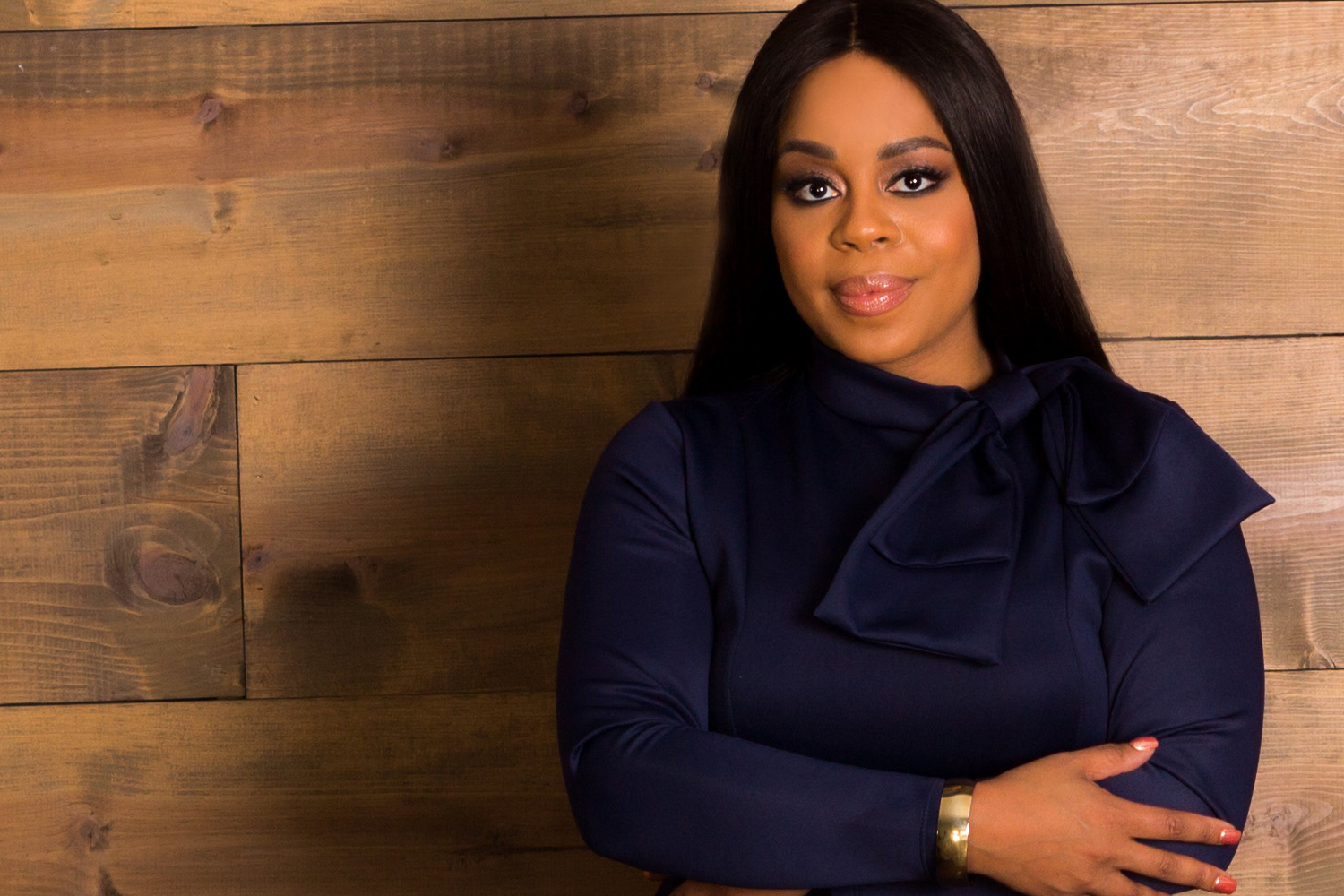
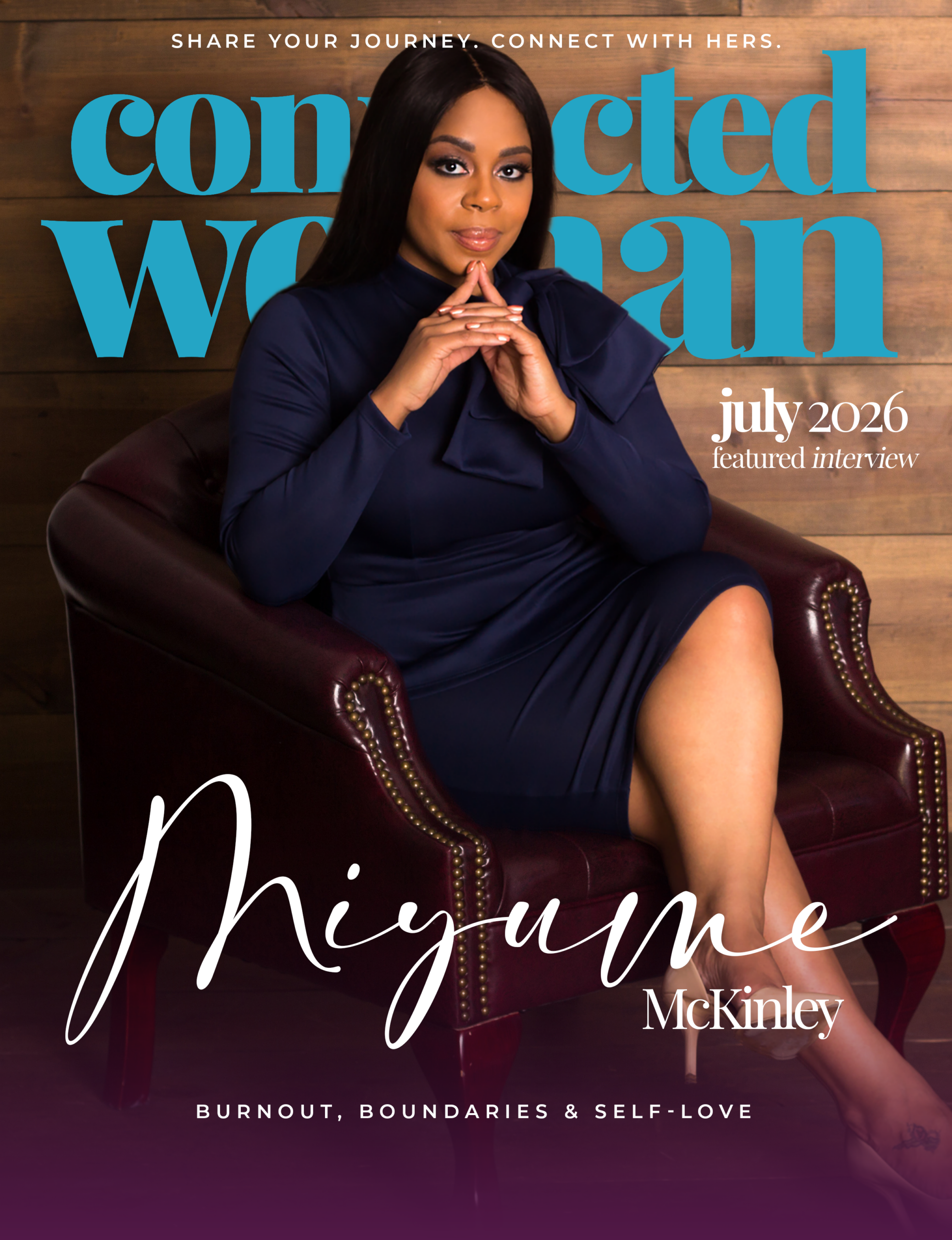
Strength has long been celebrated as one of a woman’s greatest qualities, but what happens when being “the one who handles everything” becomes emotionally exhausting instead of empowering? In this insightful conversation, licensed mental health therapist Miyume McKinley explores the hidden connection between anxiety, burnout, people-pleasing, and the pressure many women place on themselves to always be available, capable, and in control. She shares practical strategies for releasing guilt, embracing healthy boundaries, and making the structural shifts necessary to move from survival mode to a life rooted in genuine peace, healing, and self-love. Let’s meet her…
Many women pride themselves on being the person who can “handle everything.” In your work as a therapist, what have you discovered about the connection between hyper-independence, over-functioning, and anxiety?
Many women view hyper-independence as a strength, but clinically, I often see it as an adaptation or survival strategy that developed long before it became a personality trait. Hyper-independence can be a trauma response. Many women grew up in environments where they had very little control, were parentified at a young age, or learned they couldn’t consistently depend on others for emotional, physical, or environmental safety. As a result, they developed the belief that, “If I don’t do it, it won’t get done,” or “If I don’t take care of myself, no one else will.”
Over-functioning then becomes a way of managing anxiety because staying busy, planning ahead, fixing problems, and carrying everyone else’s responsibilities creates the illusion of control. While these women are often praised for being capable and dependable, beneath that competence is frequently a nervous system that has learned to stay on high alert. What looks like strength from the outside may actually be chronic hypervigilance on the inside.
The goal in therapy isn’t to take away a woman’s strength, it’s to help her discover that she can be both capable and supported. True resilience isn’t believing you have to carry everything alone; it’s knowing you don’t have to.
You often speak about capable women who appear successful on the outside but feel overwhelmed internally. What are some of the hidden emotional costs of constantly being the one everyone relies on?
One of the greatest hidden costs is loneliness. When everyone sees you as the strong one, few people stop to ask how you’re doing. Many women become so accustomed to being the helper, provider, problem-solver, or caretaker that they lose touch with their own needs.
Another hidden cost is that their self-esteem often becomes tied to productivity rather than their inherent worth. When your value is measured by how much you accomplish, fix, or carry for others, there is always another task to complete. This can perpetuate the belief that you’re never quite “good enough,” because your sense of worth is constantly dependent on what you do instead of who you are.
Hyper-independence can also create barriers to emotional intimacy. If you’ve learned that depending on others isn’t safe, you never fully experience the security, trust, and emotional connection that come from allowing yourself to be supported. Ironically, many women long for deeper relationships while simultaneously protecting themselves from the very vulnerability those relationships require.
Finally, living in a constant state of hypervigilance comes at a cost to both the mind and body. When the nervous system remains activated for prolonged periods, it can contribute to chronic stress, fatigue, sleep disturbances, elevated blood pressure, digestive issues, headaches, muscle tension, and other stress-related health concerns. Those physical symptoms, in turn, can significantly affect mood, emotional regulation, and overall mental well-being.
True strength isn’t measured by how much you can carry alone. It’s measured by your ability to recognize when you need support and having the courage to receive it.
At what point does being responsible and dependable cross the line into becoming an unhealthy coping mechanism rooted in survival rather than choice?
The shift occurs when your worth becomes attached to being needed or when productivity becomes a way to avoid what feels emotionally unsafe. Healthy responsibility comes from choice. Survival-based responsibility comes from fear.
One pattern I frequently see is what I call “avoidance disguised as responsibility.” Staying busy can feel productive, but sometimes constant productivity is protecting us from something much deeper. It may be avoiding difficult conversations in a marriage, unresolved family conflict, grief, disappointment, or the emotional pain of past trauma. If every moment is filled with taking care of someone else or accomplishing the next task, there is very little space left to sit with your own emotions.
For many women, busyness becomes socially rewarded, so the coping strategy often goes unnoticed. People compliment them for “having it all together,” when in reality they may be using productivity to outrun pain. If saying no creates panic, if resting feels unsafe, or if slowing down causes uncomfortable emotions to surface, those are signs that responsibility may no longer be a value, it has become a survival strategy.
One of the most profound moments in therapy is when a woman realizes that what she believed was discipline or strength was actually a nervous system trying to keep her emotionally protected. Healing begins when she no longer has to earn her safety through constant doing.
Many women feel guilty when they aren’t being productive. Why do you think so many of us have tied our worth to what we do rather than who we are?
There are many reasons this develops, and one that often goes overlooked is the influence of family culture. Many women grew up in households where rest was unintentionally viewed as laziness or wasted time. Comments like, “Why are you sitting down? We have things to do,” or “You can rest when everything is finished,” send subtle but powerful messages to children about what gives them value. Over time, they begin to associate productivity with worth and rest with inadequacy.
For others, productivity became a way to earn love, praise, attention, or a sense of safety. If achievement was consistently recognized while emotional needs were minimized, it’s easy to internalize the belief that “I am valuable because of what I accomplish.”
The challenge is that there is always another task, another goal, another responsibility. When your identity is rooted in what you do rather than who you are, you can spend a lifetime chasing a sense of “enough” that never fully arrives.
One of the most important mindset shifts I help women make is redefining rest. Rest is not the opposite of productivity; it is what makes sustainable productivity possible. It is an investment in the health of your mind, body, and nervous system. Without restoration, we don’t become stronger, we become depleted. Learning to rest without guilt is one of the healthiest ways we communicate to ourselves that our worth is inherent, not earned.
For women who recognize themselves as the person who is always fixing problems, managing crises, and carrying the emotional load for everyone else, what are some signs that their “strength” may actually be masking chronic anxiety?
One of the biggest distinctions I encourage women to make is this: strength is accompanied by healthy boundaries, whereas anxiety often lacks boundaries and is fueled by fear.
When we’re operating from strength, we understand that boundaries protect our well-being, our relationships, and our peace. When we’re operating from anxiety, fear often takes the driver’s seat. Fear of disappointing others. Fear of failure. Fear of conflict. Fear of being perceived as selfish or not enough.
If you find yourself consistently overlooking your own needs, saying “yes” when you want to say “no,” or realizing that you have few or no boundaries at all, it’s worth asking yourself whether anxiety has taken the driver’s seat. Our boundaries often serve as a window into our emotional well-being. When they begin to disappear, it’s important to become curious about what fear may be driving your decisions rather than your values.
Strength allows you to show up fully while also recognizing your limits. Anxiety, on the other hand, often convinces you that you have to do more, fix more, anticipate more, or carry more because something bad will happen if you don’t. It is frequently driven by fears such as the fear of failure, the fear of disappointing others, the fear of losing control, or the fear of being perceived as incapable, selfish, or inadequate.
A woman operating from strength knows that saying “no,” asking for help, delegating, or resting does not diminish her value. In fact, she understands that healthy boundaries protect both her well-being and her relationships.
A woman operating from chronic anxiety often struggles to recognize where she ends and everyone else begins. She may feel responsible for other people’s emotions, believe it’s her job to solve everyone’s problems, or experience guilt the moment she prioritizes herself. From the outside, this can look like incredible strength. Clinically, it often reflects a nervous system that has learned to equate constant responsibility with safety.
One of the most transformative moments in therapy is when women realize they don’t have to choose between being strong and taking care of themselves. The healthiest form of strength isn’t measured by how much you can carry, it’s measured by your ability to know what is yours to carry and what isn’t.
Saying “no” sounds simple in theory, yet many women experience intense guilt, fear, or even panic when they try to establish boundaries. What psychological factors make boundary-setting so emotionally difficult?
Boundaries are rarely about the word “no.” More often, they’re about what our nervous system has learned to associate with saying it.
For many women who experienced trauma, neglect, or chronic invalidation during childhood, trauma can cause them to lose their voice long before they become adults. If there was a time in your life when saying “no,” expressing your needs, or attempting to set a boundary either wasn’t respected, didn’t matter, or resulted in emotional, physical, or psychological harm, your brain and body learned an important survival lesson: staying quiet felt safer than speaking up.
As adults, even when those traumatic circumstances no longer exist, the nervous system often responds as though they do. Setting a healthy boundary may trigger feelings of guilt, fear, panic, or shame, not because the boundary is wrong, but because your body remembers a time when having a voice didn’t feel safe. For some women, it doesn’t even occur to them that saying “no” is an option because they learned so early in life that their needs came after everyone else’s.
One of the most beautiful parts of the healing journey is helping women rediscover their voice. Healing isn’t simply learning to say “no.” It’s learning to trust that your thoughts, feelings, needs, and boundaries deserve to exist. Every healthy boundary becomes an opportunity to rewrite the message that your voice doesn’t matter.
I often tell women that boundaries are more than limits, they are the language of self-respect. Every time you use your voice to honor your needs, you’re reminding your nervous system that you are no longer living in the environment that taught you to silence it. That is where healing begins.
 What advice would you give to women who worry that saying “no” will disappoint others, damage relationships, or make them appear selfish?
One of the biggest misconceptions I help women challenge is the belief that boundaries are selfish. In reality, healthy boundaries are one of the most caring things you can do—for yourself and for the people you love.
Without boundaries, we often find ourselves saying “yes” while internally feeling exhausted, overwhelmed, or resentful. Over time, continually neglecting our own needs can contribute to chronic stress, anxiety, depression, burnout, and even physical health concerns because we stop caring for ourselves emotionally, mentally, and physically. When our own well-being is consistently sacrificed, we eventually have less of ourselves to genuinely offer others.
I also encourage women to remember that every time we say “yes” to someone else, we are inherently saying “no” to something else. The question becomes, What am I saying no to? Am I saying no to rest? To spending time with my family? To my physical health? To my peace? To my own healing? Looking at boundaries through that lens often helps women recognize the true cost of constantly putting themselves last.
I also remind women that we teach people how to treat us by how we consistently treat ourselves. If I repeatedly ignore my own boundaries, dismiss my own needs, or fail to respect my own limits, I’m unintentionally communicating that my needs are optional. On a subconscious level, that becomes the standard other people often follow. Healthy relationships are built on mutual respect, and that begins with respecting yourself first.
Many women fear that saying “no” will damage a relationship. I encourage them to consider a different question: What is the cost of never saying “no”? If the only way a relationship continues to function is through your self-sacrifice, then the relationship isn’t being sustained by love, it’s being sustained by the absence of boundaries.
Another perspective I often share is this: people rarely ask us to explain why we said “yes,” yet we often feel obligated to justify our “no.” Healthy boundaries don’t require lengthy explanations or permission from others. “No” is a complete sentence. While there are certainly times when offering context is appropriate, we should not feel that our boundaries are only valid if someone else agrees with or understands them.
The healthiest relationships don’t require you to disappear in order to belong. They create space for honesty, mutual respect, and the understanding that your needs matter just as much as everyone else’s. A boundary isn’t a rejection of another person; it’s an expression of self-respect. And when we respect ourselves, we give others the opportunity to build healthier, more authentic relationships with us.
How can women distinguish between healthy compassion and people-pleasing behaviors that ultimately leave them depleted and resentful?
One of the biggest differences is that healthy compassion includes yourself, while people-pleasing often excludes you.
Self-compassion recognizes that there are many ways to support, love, or care for another person without completely neglecting your own needs. It understands that you can offer encouragement, resources, your time, your presence, or your expertise while still honoring your emotional, physical, and mental limits. Healthy compassion asks, “How can I support this person in a way that is both caring and sustainable?”
People-pleasing, on the other hand, often operates from the belief that support can only be given in the exact way the other person is requesting. It equates love with compliance and assumes that saying “yes” is the only acceptable response, even when doing so comes at the expense of your own well-being.
One question I encourage women to ask themselves is: “Am I helping because I genuinely want to, or because I’m afraid of what will happen if I don’t?” If the motivation is fear of rejection, conflict, disappointing someone, or feeling guilty, anxiety, not compassion, may be driving the decision.
Healthy compassion leaves both people feeling respected. People-pleasing often leaves one person feeling relieved and the other feeling depleted.
Ultimately, compassion and boundaries are not opposites, they work together. Some of the most loving things we can say are, “I can’t do that, but here’s what I can do,” or “I may not be able to help in the way you’re asking, but I’d still like to support you.” That shift allows us to care for others without abandoning ourselves.
When someone has spent years prioritizing everyone else’s needs, what practical steps can they take to begin setting boundaries without being consumed by guilt?
Start small. Boundaries are a skill, not a personality trait. One of the healthiest habits you can develop is giving yourself permission not to answer immediately.
Many people say “yes” before they’ve even had a chance to consider whether they truly have the emotional, physical, or mental capacity to follow through. I often encourage clients to make “Let me get back to you,” or “Let me check my schedule and I’ll let you know,” part of their regular vocabulary. Giving yourself time creates space to ask an important question: “Can I do this without neglecting myself or sacrificing something I genuinely need?”
Sometimes the answer is no. Other times the answer is yes—but with a boundary.
For example, instead of saying, “Sure, I’ll help you move tomorrow” you might say, “I’d love to help, but I’m only available between 10:00 a.m. and 12:00 p.m.” Healthy boundaries aren’t always about declining; they’re often about defining what is realistic and sustainable.
It’s also important to recognize that anxiety often pushes us to answer immediately because saying “yes” provides temporary relief from the fear of disappointing someone. But that immediate relief can come at the expense of our own well-being. Pausing before responding allows us to make decisions based on our values instead of our fears.
Finally, remember that guilt is not always a sign you’re doing something wrong. Sometimes guilt simply means you’re doing something differently than you have in the past. As you begin honoring your own needs, the guilt often decreases while your self-respect and confidence grow.
You discuss moving from chaotic survival mode into true self-love. How do you define self-love from a mental health perspective, and how does it differ from the self-care messages we often see on social media?
I think one of the biggest misconceptions is that we use self-love and self-care as though they’re the same thing. I don’t believe they are.
One of the easiest ways to understand the difference is to think about a healthy relationship. Most of us don’t simply want someone to tell us they love us—we want them to consistently show us through their actions. The same is true in our relationship with ourselves.
Self-love is what you believe about yourself. It is the belief that you have value, purpose, dignity, and are deserving of respect, healthy relationships, rest, and care. When you genuinely love yourself, there are certain people, situations, and relationships you simply will not allow yourself to remain in because they no longer align with how you believe you deserve to be treated. At the same time, there are also environments, relationships, and opportunities you intentionally choose because they reinforce, nurture, and magnify the love you have for yourself. Self-love isn’t just about protecting your peace, it’s also about intentionally placing yourself where you can grow, flourish, and be valued.
Self-care is how you demonstrate that love through your actions. Sometimes self-care looks like taking a vacation or enjoying a bubble bath. Other times, it looks much less glamorous. It may mean saying “no” to protect your peace, scheduling your annual physical, going to therapy, taking your medication consistently, ending an unhealthy relationship, getting enough sleep, or keeping the promises you make to yourself.
In other words, self-care is the evidence that self-love exists. It’s the action that proves love is at the core.
From a mental health perspective, self-love isn’t measured by how often you practice self-care rituals. It’s measured by how consistently your daily decisions reflect the belief that you matter. Every boundary you set, every doctor’s appointment you keep, every moment you choose rest over exhaustion, every healthy opportunity you embrace, and every unhealthy relationship you walk away from is another way of saying to yourself, “I believe I’m worthy of care, respect, and environments that help me thrive.”
That’s why healing isn’t simply about feeling better. It’s about developing a relationship with yourself where your actions consistently reflect the love and respect you believe you deserve.
What are some of the structural shifts women need to make in their daily lives, relationships and thought patterns if they want to move beyond burnout and create sustainable emotional well-being?
One of the biggest structural shifts women can make is creating space for self-discovery. Many women have spent so much of their lives caring for everyone else that they’ve lost touch with who they are outside of the roles they fulfill. Sustainable emotional well-being begins by giving yourself permission to reconnect with yourself and discover who you are today, not simply who you’ve always had to be.
One of the first questions I encourage women to ask isn’t, “What do I need to get done?” It’s, “What do I need?” Sometimes we have to go back to the basics:
- What do I enjoy?
- What brings me peace?
- What energizes me?
- What do I value?
- What are my current needs and wants?
- Who are you when you’re not “doing” anything for others?
- If you took away your job, titles, or responsibilities who would still be left?
- How would you describe yourself without mentioning what you do?
- What do you need to feel safe being your full self?
- When do you feel most at home within yourself?
- How do you nurture yourself (not escape) when life feels overwhelming?
When we’ve spent years focusing on everyone else’s needs, it’s easy to lose sight of the simple things that bring us joy when they have nothing to do with helping someone else. Before we can create a life that supports our well-being, we first have to rediscover what well-being actually looks like for us.
For women who grew up in environments where their needs were minimized or ignored, how does that history often show up in adulthood through overachievement, perfectionism, or chronic caretaking?
The short answer is yes, all of the above are possible. However, there isn’t a one-size-fits-all response because there are many factors that influence how childhood experiences shape us. What is common is that when a child’s emotional, physical, or relational needs are consistently unmet, those unmet needs don’t simply disappear. Instead, they often reappear later in life through different coping strategies.
For some women, those unmet needs show up as overachievement or perfectionism. They may spend years striving for success, recognition, or external validation because, consciously or unconsciously, they’re still searching for the approval, affirmation, or sense of worth they didn’t consistently receive growing up. Their accomplishments become more than achievements, they become evidence that they are enough. The challenge is that external validation is temporary, so they often continue chasing the next accomplishment in hopes that it will finally provide the security they’ve been longing for.
For others, those unmet needs manifest through people-pleasing and chronic caretaking. When you’ve experienced what it feels like to have your own needs overlooked, it’s not uncommon to become highly attuned to everyone else’s. Many women become exceptional at anticipating, meeting, and prioritizing the needs of others because they know what it feels like to go without. Unfortunately, over time this can create one-sided, unbalanced relationships where everyone else’s needs become the priority because there was never a strong foundation for identifying, expressing, or honoring their own.
Another common adaptation is hyper-independence. As we discussed earlier, hyper-independence can be a trauma response. When you grow up believing you can’t consistently depend on others to meet your emotional, physical, or environmental needs, you learn to depend almost exclusively on yourself. You may begin believing that the world isn’t trustworthy, people aren’t reliable, and the safest way to avoid disappointment is to ensure you don’t need anyone. If you do everything yourself, you reduce the possibility of your needs going unmet. Even if a need isn’t fulfilled, at least it was your choice, not someone else’s. In many ways, hyper-independence becomes an attempt to maintain control over the possibility of being let down again.
Although these patterns may look very different on the surface, they often share the same underlying question: “How do I make sure my needs are finally met?” One woman may answer that question by achieving. Another by pleasing. Another by controlling. Another by refusing to depend on anyone at all.
The encouraging news is that our past may explain many of our patterns, but it doesn’t have to define our future. Once we become aware of why we developed these coping strategies, we have the opportunity to make choices that are no longer driven solely by survival, but by self-awareness, self-respect, and the understanding that our needs matter just as much as anyone else’s.
What role does rest play in emotional healing, and why do so many ambitious women struggle to embrace rest without feeling guilty or unproductive?
Rest is not a luxury—it is one of the most essential components of our emotional, mental, and physical well-being. Our brains and bodies were never designed to operate at full capacity indefinitely. When we are consistently sleep-deprived or emotionally exhausted, it affects nearly every aspect of our functioning. Our mood becomes more reactive, our patience decreases, decision-making becomes more difficult, concentration suffers, brain fog increases, and our ability to regulate emotions declines. Chronic stress and inadequate rest can also contribute to physical health challenges, which in turn affect how we feel emotionally.
For many hyper-independent and high-achieving women, rest has become psychologically associated with being unproductive. Somewhere along the way, productivity became evidence of worth, while rest became associated with laziness, falling behind, or not doing enough. As a result, many women don’t give themselves permission to rest until their body forces them to.
One pattern I’ve observed is that illness often becomes the only “acceptable” reason to slow down. It’s almost as though there is an unspoken rule that says, “If I’m sick, then I have permission to rest because I don’t have a choice.” Yet choosing to rest before reaching that point can feel uncomfortable or even guilt-provoking. Ironically, even when sick, many women continue thinking about everything they “should” be doing instead of allowing themselves to recover.
I often encourage women to shift the way they think about rest. Rather than viewing it as something you earn after you’ve exhausted yourself, begin viewing it as something that protects your ability to continue showing up in the areas of life that matter most. Rest is not the reward for productivity; it is one of the reasons sustainable productivity is possible.
Ultimately, choosing to rest isn’t a sign that you’re giving up, it’s a sign that you’re listening. It’s one of the most powerful ways we communicate to ourselves that our well-being matters just as much as everything else we’ve been trying to accomplish.
Throughout your career as a licensed mental health therapist, what are some of the most powerful breakthroughs you’ve witnessed when women finally stop operating from survival mode and start choosing themselves?
One of the most powerful transformations I’ve witnessed is an overwhelming sense of relief. It’s as though women finally exhale after spending years carrying responsibilities, expectations, and emotional burdens they were never meant to carry alone.
As their nervous system becomes less activated, they begin to experience life differently. They’re no longer constantly anticipating the next problem or mentally rehearsing everything that could go wrong. Instead, they become more emotionally present. They laugh more. They experience greater peace. They begin noticing moments of joy that anxiety once overshadowed.
One of the most beautiful changes is in their relationships. They become more emotionally connected with the people they love because they’re no longer living primarily in their heads. They become mentally and emotionally present—not just physically present. Instead of constantly thinking about the next task or responsibility, they’re able to fully experience the conversation, the laughter, the quiet moments, and the memories they’re creating with the people who matter most.
Their values often begin to shift as well. They start placing greater importance on the things that cannot be replaced—quality time with loved ones, meaningful relationships, peace of mind, emotional presence, and experiences that bring genuine fulfillment. Success is no longer measured only by what they’ve accomplished, but also by how fully they’ve lived.
Perhaps the greatest transformation is discovering what life feels like when your nervous system is no longer operating in a constant state of survival. Living from a place of calm rather than chronic activation creates space for joy, creativity, connection, gratitude, and a deeper sense of internal satisfaction. It also strengthens something many women have spent years searching for—self-trust.
I often remind women that while we cannot always control what happens around us, we do have influence over how we experience the world around us. As they begin making choices rooted in self-awareness instead of survival, they discover that true control isn’t about controlling every circumstance—it’s about trusting themselves to navigate whatever life brings. And in my experience, that is one of the greatest gifts a woman can give herself.
If a woman reading this interview realizes she is exhausted from carrying everyone else’s burdens while neglecting her own needs, what is the first conversation you would encourage her to have with herself today?
I would encourage her to close her eyes and imagine placing everyone else’s burdens into a large bag. Every expectation. Every responsibility that isn’t truly hers. Every fear of disappointing someone. Every problem she’s been trying to solve for everyone else.
Now imagine placing that bag in a closet, closing the door, and walking away from it.
Then I’d ask her to sit with one simple question:
“What would my life feel like if I stopped carrying what was never mine to carry?”
How would your mornings begin?
How would your daily routine change?
How would you experience the people around you—your children, your partner, your friends, your coworkers?
Would you be more emotionally present?
Would you laugh more?
Would you feel more peaceful?
Would you finally have enough mental space to enjoy the life you’ve worked so hard to build?
If your answer is yes, then ask yourself another question:
“Who would I become if I wasn’t constantly surviving?”
Would you be more playful?
Would you rediscover hobbies you’ve forgotten?
Would you travel more?
Create more?
Rest more?
Laugh more?
Dream bigger?
Sometimes we’ve carried survival for so long that we confuse it with our identity. We begin believing the heavy bag is part of who we are.
But it isn’t.
You are not the burdens you’ve been carrying.
One of the greatest gifts you can give yourself is the courage to put the bag down, not because the people you love aren’t important, but because you matter too.
When you stop carrying what doesn’t belong to you, you create room for something far more meaningful: peace, joy, connection, and the opportunity to finally discover who you are when you’re no longer living for everyone else or seeking external validation for something you can create within you.
How can readers connect?
To keep in contact with me, please connect via Instagram at @epiphany_miyume or visit www.eccts.com.
Discover more from Connected Woman Magazine
Subscribe to get the latest posts sent to your email.

Amazing healing therapist. A healing voice for her generation and mine. I love this woman’s heart.
Thank you Miyume.
I will share with others.