 Book Synopsis
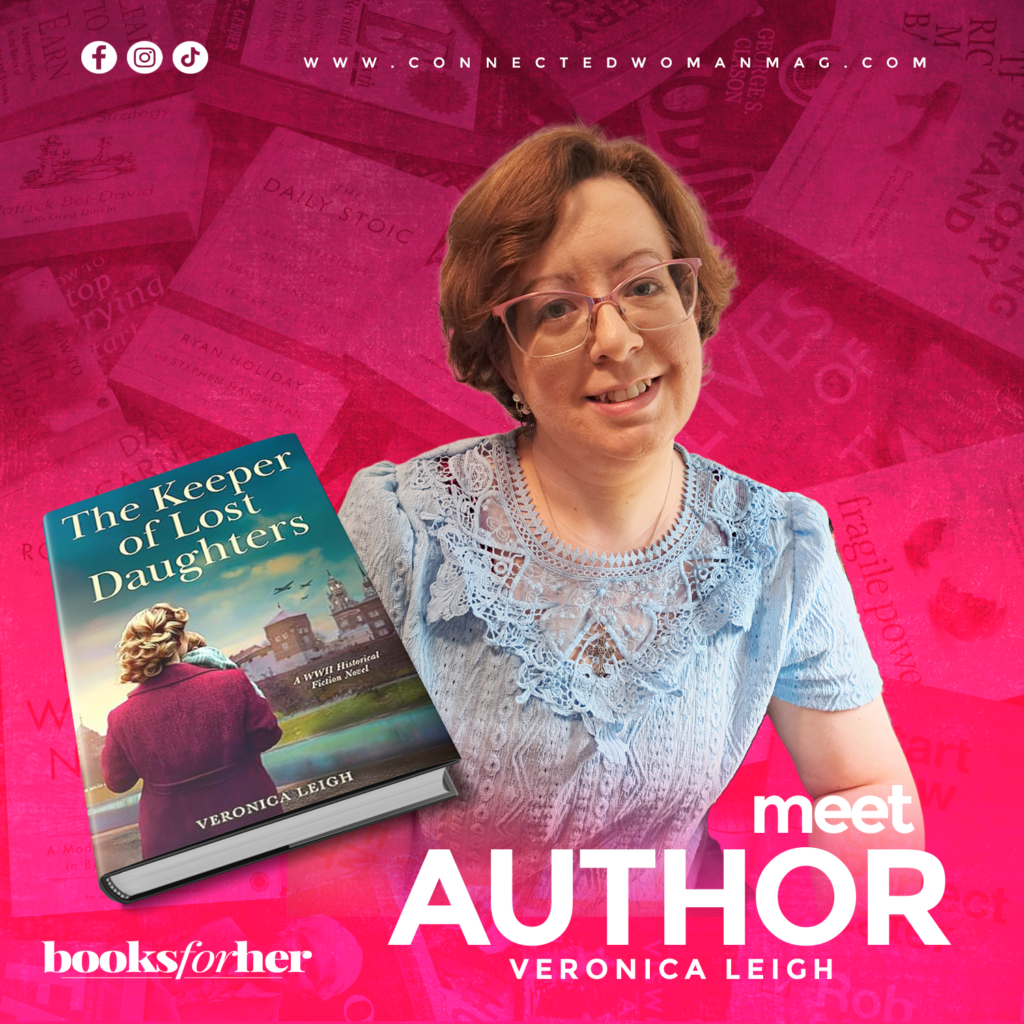
The moment Lidia laid eyes on the abandoned baby on her doorstep, she knew she would risk everything to protect her forever. 1941, Krakow. Lidia Sobieska hears a knock on the door and is shocked to find a baby in a basket on her doorstep. Attached to the basket is a letter from the baby’s mother, begging to save her daughter Suzanne from the Nazis. Always wanting children of her own but unable to conceive, Lidia knows there is only one right thing to do. She names the baby Sophie and vows to do everything she can to love and protect her. As living conditions in Krakow worsen and food rations dwindle, Sophie becomes Lidia’s light. Witnessing the inhumane conditions of the nearby ghetto, Lidia is determined to do what she can to save more lives. With help from the local priest, she adopts Eva Diamant, a thirteen-year-old Jewish girl in need of a safe home. As the girls form a new family, Lidia will go to extreme lengths to conceal her daughters’ real identities and get them through the war. 1946. It’s been years since Lidia had to fear for her girls, until a sudden knock on the door threatens to change their lives forever. On her doorstep stands a man who calls himself Adam Altman, claiming to be Sophie’s biological father. His story is full of horror and bravery, and he has gone through hell to retrieve his daughter. But Lidia did not risk everything for a stranger to tear apart her family. She will not give up her daughter without a fight.
Book Synopsis
The moment Lidia laid eyes on the abandoned baby on her doorstep, she knew she would risk everything to protect her forever. 1941, Krakow. Lidia Sobieska hears a knock on the door and is shocked to find a baby in a basket on her doorstep. Attached to the basket is a letter from the baby’s mother, begging to save her daughter Suzanne from the Nazis. Always wanting children of her own but unable to conceive, Lidia knows there is only one right thing to do. She names the baby Sophie and vows to do everything she can to love and protect her. As living conditions in Krakow worsen and food rations dwindle, Sophie becomes Lidia’s light. Witnessing the inhumane conditions of the nearby ghetto, Lidia is determined to do what she can to save more lives. With help from the local priest, she adopts Eva Diamant, a thirteen-year-old Jewish girl in need of a safe home. As the girls form a new family, Lidia will go to extreme lengths to conceal her daughters’ real identities and get them through the war. 1946. It’s been years since Lidia had to fear for her girls, until a sudden knock on the door threatens to change their lives forever. On her doorstep stands a man who calls himself Adam Altman, claiming to be Sophie’s biological father. His story is full of horror and bravery, and he has gone through hell to retrieve his daughter. But Lidia did not risk everything for a stranger to tear apart her family. She will not give up her daughter without a fight.
Why will readers like this book? I think the characters strike a chord with readers. They’re ordinary people forced into difficult situations. Their ultimate goal is to save the life of a child. That is something every parent or even random caring person understands.
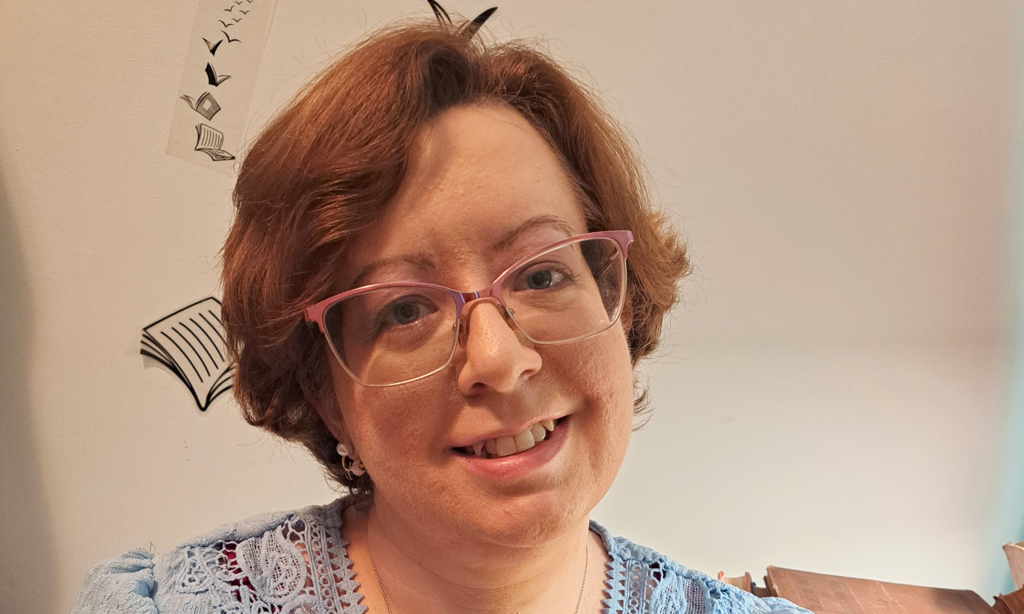 World War II stories often remind us of the resilience of the human spirit, but the most unforgettable ones are those rooted in love, sacrifice, and impossible choices. In The Keeper of Lost Daughters, author Veronica Leigh transports readers to wartime Krakow, where one woman’s decision to protect two vulnerable girls becomes an extraordinary act of courage in the face of unimaginable danger. Through richly layered characters and emotional storytelling, Leigh explores what it truly means to be a mother, a protector, and a survivor.
In this interview, Veronica shares the inspiration behind her powerful historical novel, the research that brought the story to life, and her passion for creating characters whose journeys linger with readers long after the final page.
The Keeper of Lost Daughters explores motherhood, sacrifice, and survival during one of history’s darkest periods. What first inspired the story of Lidia, Sophie, and Eva, and what emotional themes were most important for you to explore through their journey?
I was actually doing research about the Holocaust, WWII, and post-WWII for a different writing project that didn’t pan out. After doing all of that research for that failed project, I realized that this new idea I had – which eventually became “The Keeper of Lost Daughters” – would work. The story took root in me and wouldn’t let go. One theme of this story that is near to my heart, and even appears in other stories that I’ve written, is that of a found family. And found families can be found anywhere and under any circumstance.
Lidia’s decision to take in an abandoned baby and later shelter a Jewish teenager places her in extraordinary danger. What drew you to writing a heroine whose courage is rooted in compassion, and how did you balance portraying both her strength and her vulnerability throughout the novel?
I was inspired by many of the women who lived in that period, who risked their lives to save children and others. Women like Miep Gies, Irena Sendler, Stefania Podgorska, and Antonina Zabinski. They knew what they had to do and despite the dire consequences, they did what was right. They’re some of my personal heroes. If I was able to capture both strength and vulnerability in Lidia, it is only because I had the example of those extraordinary ladies.
Historical fiction requires a careful blend of factual research and imaginative storytelling. Can you share some of the research that helped shape the world of wartime Krakow, and were there any real-life stories or historical accounts that influenced the characters or plot?
The most unique research I did was traveling to Poland, specifically Krakow and Auschwitz-Birkenau, and walking in the steps of those who walked before me. Being able to see Krakow, to see its streets, its architecture, even the Polish countryside, put me right in the middle of what I was writing about. It wasn’t just a fictional world that I was creating; it was a real place rich with culture, beauty, and a great deal of pain.
Irena Sendler and Stefania Podgorska were both inspirations for Lidia. Their courage, their hope, and their sense of right and wrong contributed to her character. Ewa Diamant was more than a little inspired by Holocaust and Mengele survivor, Eva Mozes Kor. It was her CANDLES Museum tour that I was on when I traveled to Poland. I read her book, “Echoes of Auschwitz,” and heard her story many times. I even used her name for Ewa. As for Sophie – when I wrote the first draft of my book, I was doing some babysitting for an energetic five-year-old girl named Summer and many of her mannerisms and antics were used for Sophie.
One of the most compelling aspects of the novel is the question of what truly makes a family. Through Lidia’s relationship with Sophie and Eva, readers are invited to consider the difference between biological ties and chosen bonds. What conversations or reflections do you hope readers have after finishing the book?
I hope that readers might think of their own mothers, grandmothers, aunts, and even mother-like figures in their lives. The difficult decisions they had to make in the past, the struggles they faced, how maybe they didn’t always make the best choices or even do the right thing, but they did the best they could in the situations they were in. No one is perfect. Lidia isn’t perfect, but she loves Sophie and Ewa enough to continually sacrifice for them. And Mina loves her daughter enough to give her up, that way her daughter can have a better life.
With that being said, if someone is in a toxic situation with their parent – like Lidia is with her mother and step-father – it is absolutely okay to remove yourself from that situation. Sometimes you have to save yourself. Lidia doesn’t bring that toxicity to her relationship with her adoptive daughters. She breaks the pattern, becoming a better mother and person. That is why “The Keeper of Lost Daughters” is so focused on chosen bonds/found families. Because sometimes in life it isn’t your biological relatives who make up your family, but those you surround yourself with.
The arrival of Adam Altman after the war introduces a powerful moral and emotional dilemma. Without giving away spoilers, what interested you most about exploring the competing claims of love, loss, and parenthood in the aftermath of war?
I wanted to tell a tale of two people – Lidia and Adam – who both had legitimate claims to one child. “The Keeper of Lost Daughter” was partly inspired by the Biblical tale of The Judgment of Solomon. That was even my original title to the book. While Lidia is considered the MC of this book, and the audience has generally sympathized with her, I tend to side with Adam. After the war, Jewish parents who survived the camps came back and tried to reclaim their children – as it was understood that they only meant to hide their children with Christians temporarily – and their children were kept from them. So, my book does have a historical basis. It must have been terrible that these Jewish parents, who went through absolute hell, couldn’t get their children back. Many Christians had religious reasons for wanting to keep the children and ensure they remained Christians. I’d like to think there were some scenarios where the Christians genuinely became attached to the children and thought of them as their own. Above all, I hope I was able to look at both sides of the situation in a balanced and respectful way.
You have shared that you aspire to be the Jane Austen of your generation, yet your work also ventures into the emotionally charged world of historical fiction. How has Austen influenced your writing style, character development, or storytelling approach, and where do you see your own voice distinguishing
itself?
You’re right, I guess have ventured into territory that Austen didn’t. But she lived in a different era. Maybe if she lived longer, she would have tackled different subjects. She is best known for her books being comedy of manners and social satires, and including romantic subplots. She did tackle the issues of the day, which included the rights of women and their place in the world, economics, moving through society, and rising up into a higher sphere. Marrying for one’s best interest versus marrying for love. She wrote terrible villains in Willoughby and Wickham – villains who more or less got away with their villainy. She also wrote imperfect heroes and heroines, who throughout each of her novels tried to become the best versions of themselves. Whenever I reread her books or watch an adaptation, I try to pay close attention to her characterizations and their personal motives, to better understand my own characters. Aside from Austen, or aspiring to be like her, I hope my books are remembered for being heartfelt, for being about ordinary people in extraordinary situations, and for capturing maybe a part of history that has long since been forgotten.
Looking at your writing career as a whole, what have you learned about yourself as a storyteller through writing The Keeper of Lost Daughters, and what can readers expect from you next as you continue creating unforgettable stories that blend history, emotion, and human resilience?
I’ve learned through writing “The Keeper of Lost Daughters” that I’m not done learning. Not personally or in regards to writing. Publishing a novel was always a dream of mine, and though I achieved that, I realize I still have far to go. I worked on “The Keeper of Lost Daughters” off and on for seven years. It didn’t come all at once, the story itself evolved as I evolved as a person. I hope to continue writing meaningful stand-alone novels, I imagine the process of writing them will be a slow endeavor on my part.
My next book, “Eye For An Eye,” is due out this August. Though it came easier, and I found a publisher for it, I’m absolutely terrified of what everyone will think of it. It’s the first in a historical crime trilogy…and though I have written short historical crime stories before, this will be my first novel in the genre. In many ways, it’s the polar opposite of “The Keeper of Lost Daughters.” It does have a few similar themes – faith, found family, and good triumphing over evil. I hope it’ll find its audience the way my first book did.
How can our readers connect with you:
https://www.amazon.com/Keeper-Lost-Daughters-Historical-Unforgettable-ebook/dp/B0FBJPQWY3
World War II stories often remind us of the resilience of the human spirit, but the most unforgettable ones are those rooted in love, sacrifice, and impossible choices. In The Keeper of Lost Daughters, author Veronica Leigh transports readers to wartime Krakow, where one woman’s decision to protect two vulnerable girls becomes an extraordinary act of courage in the face of unimaginable danger. Through richly layered characters and emotional storytelling, Leigh explores what it truly means to be a mother, a protector, and a survivor.
In this interview, Veronica shares the inspiration behind her powerful historical novel, the research that brought the story to life, and her passion for creating characters whose journeys linger with readers long after the final page.
The Keeper of Lost Daughters explores motherhood, sacrifice, and survival during one of history’s darkest periods. What first inspired the story of Lidia, Sophie, and Eva, and what emotional themes were most important for you to explore through their journey?
I was actually doing research about the Holocaust, WWII, and post-WWII for a different writing project that didn’t pan out. After doing all of that research for that failed project, I realized that this new idea I had – which eventually became “The Keeper of Lost Daughters” – would work. The story took root in me and wouldn’t let go. One theme of this story that is near to my heart, and even appears in other stories that I’ve written, is that of a found family. And found families can be found anywhere and under any circumstance.
Lidia’s decision to take in an abandoned baby and later shelter a Jewish teenager places her in extraordinary danger. What drew you to writing a heroine whose courage is rooted in compassion, and how did you balance portraying both her strength and her vulnerability throughout the novel?
I was inspired by many of the women who lived in that period, who risked their lives to save children and others. Women like Miep Gies, Irena Sendler, Stefania Podgorska, and Antonina Zabinski. They knew what they had to do and despite the dire consequences, they did what was right. They’re some of my personal heroes. If I was able to capture both strength and vulnerability in Lidia, it is only because I had the example of those extraordinary ladies.
Historical fiction requires a careful blend of factual research and imaginative storytelling. Can you share some of the research that helped shape the world of wartime Krakow, and were there any real-life stories or historical accounts that influenced the characters or plot?
The most unique research I did was traveling to Poland, specifically Krakow and Auschwitz-Birkenau, and walking in the steps of those who walked before me. Being able to see Krakow, to see its streets, its architecture, even the Polish countryside, put me right in the middle of what I was writing about. It wasn’t just a fictional world that I was creating; it was a real place rich with culture, beauty, and a great deal of pain.
Irena Sendler and Stefania Podgorska were both inspirations for Lidia. Their courage, their hope, and their sense of right and wrong contributed to her character. Ewa Diamant was more than a little inspired by Holocaust and Mengele survivor, Eva Mozes Kor. It was her CANDLES Museum tour that I was on when I traveled to Poland. I read her book, “Echoes of Auschwitz,” and heard her story many times. I even used her name for Ewa. As for Sophie – when I wrote the first draft of my book, I was doing some babysitting for an energetic five-year-old girl named Summer and many of her mannerisms and antics were used for Sophie.
One of the most compelling aspects of the novel is the question of what truly makes a family. Through Lidia’s relationship with Sophie and Eva, readers are invited to consider the difference between biological ties and chosen bonds. What conversations or reflections do you hope readers have after finishing the book?
I hope that readers might think of their own mothers, grandmothers, aunts, and even mother-like figures in their lives. The difficult decisions they had to make in the past, the struggles they faced, how maybe they didn’t always make the best choices or even do the right thing, but they did the best they could in the situations they were in. No one is perfect. Lidia isn’t perfect, but she loves Sophie and Ewa enough to continually sacrifice for them. And Mina loves her daughter enough to give her up, that way her daughter can have a better life.
With that being said, if someone is in a toxic situation with their parent – like Lidia is with her mother and step-father – it is absolutely okay to remove yourself from that situation. Sometimes you have to save yourself. Lidia doesn’t bring that toxicity to her relationship with her adoptive daughters. She breaks the pattern, becoming a better mother and person. That is why “The Keeper of Lost Daughters” is so focused on chosen bonds/found families. Because sometimes in life it isn’t your biological relatives who make up your family, but those you surround yourself with.
The arrival of Adam Altman after the war introduces a powerful moral and emotional dilemma. Without giving away spoilers, what interested you most about exploring the competing claims of love, loss, and parenthood in the aftermath of war?
I wanted to tell a tale of two people – Lidia and Adam – who both had legitimate claims to one child. “The Keeper of Lost Daughter” was partly inspired by the Biblical tale of The Judgment of Solomon. That was even my original title to the book. While Lidia is considered the MC of this book, and the audience has generally sympathized with her, I tend to side with Adam. After the war, Jewish parents who survived the camps came back and tried to reclaim their children – as it was understood that they only meant to hide their children with Christians temporarily – and their children were kept from them. So, my book does have a historical basis. It must have been terrible that these Jewish parents, who went through absolute hell, couldn’t get their children back. Many Christians had religious reasons for wanting to keep the children and ensure they remained Christians. I’d like to think there were some scenarios where the Christians genuinely became attached to the children and thought of them as their own. Above all, I hope I was able to look at both sides of the situation in a balanced and respectful way.
You have shared that you aspire to be the Jane Austen of your generation, yet your work also ventures into the emotionally charged world of historical fiction. How has Austen influenced your writing style, character development, or storytelling approach, and where do you see your own voice distinguishing
itself?
You’re right, I guess have ventured into territory that Austen didn’t. But she lived in a different era. Maybe if she lived longer, she would have tackled different subjects. She is best known for her books being comedy of manners and social satires, and including romantic subplots. She did tackle the issues of the day, which included the rights of women and their place in the world, economics, moving through society, and rising up into a higher sphere. Marrying for one’s best interest versus marrying for love. She wrote terrible villains in Willoughby and Wickham – villains who more or less got away with their villainy. She also wrote imperfect heroes and heroines, who throughout each of her novels tried to become the best versions of themselves. Whenever I reread her books or watch an adaptation, I try to pay close attention to her characterizations and their personal motives, to better understand my own characters. Aside from Austen, or aspiring to be like her, I hope my books are remembered for being heartfelt, for being about ordinary people in extraordinary situations, and for capturing maybe a part of history that has long since been forgotten.
Looking at your writing career as a whole, what have you learned about yourself as a storyteller through writing The Keeper of Lost Daughters, and what can readers expect from you next as you continue creating unforgettable stories that blend history, emotion, and human resilience?
I’ve learned through writing “The Keeper of Lost Daughters” that I’m not done learning. Not personally or in regards to writing. Publishing a novel was always a dream of mine, and though I achieved that, I realize I still have far to go. I worked on “The Keeper of Lost Daughters” off and on for seven years. It didn’t come all at once, the story itself evolved as I evolved as a person. I hope to continue writing meaningful stand-alone novels, I imagine the process of writing them will be a slow endeavor on my part.
My next book, “Eye For An Eye,” is due out this August. Though it came easier, and I found a publisher for it, I’m absolutely terrified of what everyone will think of it. It’s the first in a historical crime trilogy…and though I have written short historical crime stories before, this will be my first novel in the genre. In many ways, it’s the polar opposite of “The Keeper of Lost Daughters.” It does have a few similar themes – faith, found family, and good triumphing over evil. I hope it’ll find its audience the way my first book did.
How can our readers connect with you:
https://www.amazon.com/Keeper-Lost-Daughters-Historical-Unforgettable-ebook/dp/B0FBJPQWY3
Discover more from Connected Woman Magazine
Subscribe to get the latest posts sent to your email.