
 What happens when accountability becomes entertainment and public humiliation becomes profitable? A conversation every woman should be having.
 Before We Judge Another Woman, We Should Meet Ourselves First
Few things spread faster than judgment, especially when it comes from one woman toward another. Social media has made it easier than ever to form opinions from a single post, a thirty-second video, or a headline. Yet before we decide another woman is “too much,” “too loud,” “too confident,” or “making the wrong choices,” it may be worth asking ourselves a more uncomfortable question: Why does her behavior affect me so deeply?
Sometimes our judgments have less to do with the other woman and more to do with ourselves. Perhaps she possesses a confidence we have never allowed ourselves to embrace. Maybe she sets boundaries we have always been afraid to establish. Maybe she speaks up in rooms where we have remained silent. While not every decision another person makes is wise or admirable, our emotional reaction can reveal just as much about us as it does about her.
There is another perspective worth considering. Many women can honestly say, “I used to do that,” or “I used to accept that.” Growth is something to celebrate. But personal growth should not erase compassion. Sometimes the woman you are judging today is standing exactly where you once stood. The difference is that you have had more time, more experience, and perhaps more support to reach a healthier place. Remembering your own journey can make room for grace instead of superiority.
Then there is the tendency to deflect. When a topic touches a nerve, it is often easier to criticize someone else’s behavior than to examine why it feels so personal. Occasionally, the loudest criticism is not about the other person at all—it is an attempt to redirect attention away from our own unresolved struggles. Honest self-reflection can be uncomfortable, but it is often more productive than tearing someone else down. If recurring emotional reactions are causing distress or interfering with relationships, talking with a trusted friend, mentor, or mental health professional can be a meaningful step toward understanding those patterns.
None of this means women should never hold one another accountable. Accountability has an important place in healthy communities. Harmful behavior should not be excused in the name of sisterhood. But accountability and condemnation are not the same thing. One seeks growth; the other often seeks humiliation.
The next time you feel compelled to judge another woman, pause for a moment before joining the commentary. Ask yourself whether your response is rooted in wisdom, compassion, and truth—or in comparison, insecurity, old wounds, or unresolved emotions. The answer may tell you more about your own journey than hers.
After all, the strongest women are not those who never notice another woman’s flaws. They are the ones who have learned to examine their own hearts with the same honesty they expect from everyone else.
Before We Judge Another Woman, We Should Meet Ourselves First
Few things spread faster than judgment, especially when it comes from one woman toward another. Social media has made it easier than ever to form opinions from a single post, a thirty-second video, or a headline. Yet before we decide another woman is “too much,” “too loud,” “too confident,” or “making the wrong choices,” it may be worth asking ourselves a more uncomfortable question: Why does her behavior affect me so deeply?
Sometimes our judgments have less to do with the other woman and more to do with ourselves. Perhaps she possesses a confidence we have never allowed ourselves to embrace. Maybe she sets boundaries we have always been afraid to establish. Maybe she speaks up in rooms where we have remained silent. While not every decision another person makes is wise or admirable, our emotional reaction can reveal just as much about us as it does about her.
There is another perspective worth considering. Many women can honestly say, “I used to do that,” or “I used to accept that.” Growth is something to celebrate. But personal growth should not erase compassion. Sometimes the woman you are judging today is standing exactly where you once stood. The difference is that you have had more time, more experience, and perhaps more support to reach a healthier place. Remembering your own journey can make room for grace instead of superiority.
Then there is the tendency to deflect. When a topic touches a nerve, it is often easier to criticize someone else’s behavior than to examine why it feels so personal. Occasionally, the loudest criticism is not about the other person at all—it is an attempt to redirect attention away from our own unresolved struggles. Honest self-reflection can be uncomfortable, but it is often more productive than tearing someone else down. If recurring emotional reactions are causing distress or interfering with relationships, talking with a trusted friend, mentor, or mental health professional can be a meaningful step toward understanding those patterns.
None of this means women should never hold one another accountable. Accountability has an important place in healthy communities. Harmful behavior should not be excused in the name of sisterhood. But accountability and condemnation are not the same thing. One seeks growth; the other often seeks humiliation.
The next time you feel compelled to judge another woman, pause for a moment before joining the commentary. Ask yourself whether your response is rooted in wisdom, compassion, and truth—or in comparison, insecurity, old wounds, or unresolved emotions. The answer may tell you more about your own journey than hers.
After all, the strongest women are not those who never notice another woman’s flaws. They are the ones who have learned to examine their own hearts with the same honesty they expect from everyone else.
 The Career You Dream About May Not Be the Life You Need
The recent passing of a major record label executive has prompted many conversations throughout the music industry about legacy, power, and the business behind the songs we love. It also serves as a reminder that behind every chart-topping artist is an industry that can be both incredibly rewarding and incredibly demanding. For women pursuing careers in music, that reality deserves honest discussion.
Many aspiring artists grow up dreaming of signing a major record deal. For decades, that contract represented the ultimate stamp of success—a gateway to global tours, platinum albums, award shows, magazine covers, and household-name recognition. While a supportive record label can still provide resources, marketing, industry relationships, and financial backing that are difficult to replicate independently, today’s landscape is very different than it was in 1980. The internet has given artists unprecedented opportunities to release music, build loyal communities, connect directly with fans, and generate income without waiting for someone else’s approval.
Yet independent success comes with its own challenges. The promotional power, distribution, and investment that an established label can provide still have the potential to elevate an artist to a level of worldwide visibility that few independent careers achieve. That is why so many talented women continue to pursue record deals. The question is no longer simply, “How do I become famous?” but rather, “What am I willing to sacrifice to get there?”
For women especially, protecting mental health should never become secondary to building a career. Fame cannot replace peace. A successful contract is not automatically a healthy contract. Creative opportunities lose their shine if they require compromising your values, surrendering your voice, or living in a constant state of emotional exhaustion. No amount of streams, sold-out arenas, or social media followers can fully compensate for a life where anxiety, burnout, or the loss of personal identity become the cost of admission.
It is easy to look at global superstars such as Britney Spears, Rihanna, Taylor Swift, or Beyoncé and assume that extraordinary success automatically brings extraordinary happiness. The truth is that none of us can know the full reality of another person’s private life. Public success and personal fulfillment are not always the same thing. Money can provide comfort, opportunity, and access to excellent mental health care, but it cannot erase the emotional pressures that often accompany intense public scrutiny, demanding schedules, or years spent navigating an industry with enormous expectations.
Every woman entering the music business should ask herself difficult questions before signing any contract. Does this partnership respect my humanity as much as my talent? Will I still recognize myself after chasing this dream for five or ten years? Does this opportunity allow me to create from a place of joy instead of fear? The answers may matter more than the size of the advance or the promise of fame.
The greatest career is not always the one that makes you the most recognizable. Sometimes it is the one that allows you to remain healthy, inspired, financially secure, creatively fulfilled, and surrounded by people who genuinely value your well-being. Success should never require sacrificing your peace to prove your worth.
Your talent deserves an audience. Your voice deserves to be heard. But your mental health deserves to be protected just as fiercely as your music. In the end, the most meaningful legacy may not be how famous you became, but whether you were able to build a career that honored both your gifts and the woman behind them.
Mean Girls Don’t Build Lasting Legacies
In today’s social media landscape, it can sometimes seem as though negativity is rewarded. Outrage spreads quickly, clapbacks go viral, and tearing someone else down can generate more clicks than offering encouragement. While controversy may temporarily increase followers and engagement, women should pause and consider what they are truly building. A platform built on cruelty, humiliation, or constant criticism may attract attention, but it rarely creates lasting respect.
Being known as the “mean girl” online comes with hidden costs. Brands, employers, collaborators, and even potential friendships often look beyond follower counts to character. A digital footprint filled with unnecessary conflict can close doors that talent alone might have opened. More importantly, constantly operating from a place of judgment or hostility can take an emotional toll on the creator herself, making negativity feel like a permanent part of her personal brand.
There is also the impact on the audience. Women and girls are watching. When influential creators normalize bullying, public shaming, or celebrating another woman’s failures, they contribute to an online culture where empathy becomes secondary to entertainment. The internet does not have to become another high school cafeteria where popularity depends on making someone else feel small.
This doesn’t mean women should avoid difficult conversations or honest opinions. Healthy disagreement has a place. Accountability matters. Constructive criticism has value. The difference lies in intention. Is the goal to inform, encourage, and challenge people to grow—or simply to embarrass, insult, and gain views at someone else’s expense?
The most enduring platforms are often built on authenticity, wisdom, creativity, and consistency. Women who uplift others while remaining true to themselves create communities instead of fan bases. They inspire trust instead of fear and respect instead of temporary fascination. Trends change, algorithms shift, and viral moments fade, but a reputation for integrity continues to open doors long after the latest controversy has been forgotten.
At the end of the day, every post becomes part of your legacy. Before pressing “publish,” ask yourself one simple question: Will this content build the kind of platform I hope to be remembered for? Followers may come and go, but your character is the one thing your audience should never have to question.
The Career You Dream About May Not Be the Life You Need
The recent passing of a major record label executive has prompted many conversations throughout the music industry about legacy, power, and the business behind the songs we love. It also serves as a reminder that behind every chart-topping artist is an industry that can be both incredibly rewarding and incredibly demanding. For women pursuing careers in music, that reality deserves honest discussion.
Many aspiring artists grow up dreaming of signing a major record deal. For decades, that contract represented the ultimate stamp of success—a gateway to global tours, platinum albums, award shows, magazine covers, and household-name recognition. While a supportive record label can still provide resources, marketing, industry relationships, and financial backing that are difficult to replicate independently, today’s landscape is very different than it was in 1980. The internet has given artists unprecedented opportunities to release music, build loyal communities, connect directly with fans, and generate income without waiting for someone else’s approval.
Yet independent success comes with its own challenges. The promotional power, distribution, and investment that an established label can provide still have the potential to elevate an artist to a level of worldwide visibility that few independent careers achieve. That is why so many talented women continue to pursue record deals. The question is no longer simply, “How do I become famous?” but rather, “What am I willing to sacrifice to get there?”
For women especially, protecting mental health should never become secondary to building a career. Fame cannot replace peace. A successful contract is not automatically a healthy contract. Creative opportunities lose their shine if they require compromising your values, surrendering your voice, or living in a constant state of emotional exhaustion. No amount of streams, sold-out arenas, or social media followers can fully compensate for a life where anxiety, burnout, or the loss of personal identity become the cost of admission.
It is easy to look at global superstars such as Britney Spears, Rihanna, Taylor Swift, or Beyoncé and assume that extraordinary success automatically brings extraordinary happiness. The truth is that none of us can know the full reality of another person’s private life. Public success and personal fulfillment are not always the same thing. Money can provide comfort, opportunity, and access to excellent mental health care, but it cannot erase the emotional pressures that often accompany intense public scrutiny, demanding schedules, or years spent navigating an industry with enormous expectations.
Every woman entering the music business should ask herself difficult questions before signing any contract. Does this partnership respect my humanity as much as my talent? Will I still recognize myself after chasing this dream for five or ten years? Does this opportunity allow me to create from a place of joy instead of fear? The answers may matter more than the size of the advance or the promise of fame.
The greatest career is not always the one that makes you the most recognizable. Sometimes it is the one that allows you to remain healthy, inspired, financially secure, creatively fulfilled, and surrounded by people who genuinely value your well-being. Success should never require sacrificing your peace to prove your worth.
Your talent deserves an audience. Your voice deserves to be heard. But your mental health deserves to be protected just as fiercely as your music. In the end, the most meaningful legacy may not be how famous you became, but whether you were able to build a career that honored both your gifts and the woman behind them.
Mean Girls Don’t Build Lasting Legacies
In today’s social media landscape, it can sometimes seem as though negativity is rewarded. Outrage spreads quickly, clapbacks go viral, and tearing someone else down can generate more clicks than offering encouragement. While controversy may temporarily increase followers and engagement, women should pause and consider what they are truly building. A platform built on cruelty, humiliation, or constant criticism may attract attention, but it rarely creates lasting respect.
Being known as the “mean girl” online comes with hidden costs. Brands, employers, collaborators, and even potential friendships often look beyond follower counts to character. A digital footprint filled with unnecessary conflict can close doors that talent alone might have opened. More importantly, constantly operating from a place of judgment or hostility can take an emotional toll on the creator herself, making negativity feel like a permanent part of her personal brand.
There is also the impact on the audience. Women and girls are watching. When influential creators normalize bullying, public shaming, or celebrating another woman’s failures, they contribute to an online culture where empathy becomes secondary to entertainment. The internet does not have to become another high school cafeteria where popularity depends on making someone else feel small.
This doesn’t mean women should avoid difficult conversations or honest opinions. Healthy disagreement has a place. Accountability matters. Constructive criticism has value. The difference lies in intention. Is the goal to inform, encourage, and challenge people to grow—or simply to embarrass, insult, and gain views at someone else’s expense?
The most enduring platforms are often built on authenticity, wisdom, creativity, and consistency. Women who uplift others while remaining true to themselves create communities instead of fan bases. They inspire trust instead of fear and respect instead of temporary fascination. Trends change, algorithms shift, and viral moments fade, but a reputation for integrity continues to open doors long after the latest controversy has been forgotten.
At the end of the day, every post becomes part of your legacy. Before pressing “publish,” ask yourself one simple question: Will this content build the kind of platform I hope to be remembered for? Followers may come and go, but your character is the one thing your audience should never have to question.
 When the Mean Girl Brand Comes Full Circle
If you’ve spent any time on social media lately, you’ve probably noticed a growing trend. Entire platforms are being built around exposing people, calling them out, humiliating them, dissecting their lives, and monetizing every ounce of controversy. The louder the insult, the greater the engagement. The harsher the criticism, the more views. It seems that outrage has become one of the internet’s most profitable business models.
But an interesting pattern often emerges.
Some creators who have built audiences by “airing people out” suddenly become deeply uncomfortable when that same energy is directed back toward them. The criticism they once encouraged becomes “harassment.” The public commentary they once celebrated becomes “bullying.” The invasions of privacy they once justified suddenly become unfair when they are the subject instead of the narrator.
It raises an important question: Is it only acceptable to embarrass, insult, or publicly shame someone as long as you’re the one controlling the microphone?
There is a significant difference between accountability and entertainment. Accountability seeks truth, growth, or justice. Entertainment built on humiliation often seeks clicks, comments, and revenue. The internet has blurred those lines so effectively that many people no longer recognize the difference. Publicly dismantling another person’s dignity has become content, while empathy has somehow become less marketable.
Women should especially be mindful of this shift. We have spent generations advocating for women to support one another, create healthier spaces, and reject unnecessary cruelty. Yet some of the most successful online brands today thrive by encouraging audiences to laugh at another woman’s mistake, speculate about her personal life, or wait for her next public failure. It becomes less about informing an audience and more about creating a cycle where someone else’s worst day becomes someone else’s payday.
There is also the issue of selective caring. Compassion can lose its meaning when it is reserved only for ourselves. If we expect grace when we make mistakes, should we not also extend some measure of grace to others? If we condemn online pile-ons when we become the target but encourage them when someone else is involved, we are not opposing toxic behavior—we are simply objecting to our position within it.
This is not to suggest that public figures should never be criticized. They should. Harmful actions deserve scrutiny. Dishonesty should be challenged. Abuse of power should be exposed. But there is a difference between discussing behavior and building an identity around destroying people. When the person becomes the product, everyone eventually becomes potential inventory.
Perhaps the greater question isn’t whether monetizing misery has become the new norm. In many corners of social media, it clearly has. The more important question is whether we, as women, will continue rewarding it with our attention, our engagement, and ultimately our dollars.
Every click is a vote for the kind of internet we want to create. Every follow says, “Give me more of this.” Every share helps determine what the algorithm values next.
Maybe the strongest platform isn’t the one that humiliates people the fastest. Maybe it’s the one that can speak truth without abandoning compassion, hold people accountable without dehumanizing them, and prove that influence does not require cruelty.
Because eventually, every creator learns the same lesson: the audience you build by enjoying someone else’s downfall may one day enjoy yours just as much.
When the Mean Girl Brand Comes Full Circle
If you’ve spent any time on social media lately, you’ve probably noticed a growing trend. Entire platforms are being built around exposing people, calling them out, humiliating them, dissecting their lives, and monetizing every ounce of controversy. The louder the insult, the greater the engagement. The harsher the criticism, the more views. It seems that outrage has become one of the internet’s most profitable business models.
But an interesting pattern often emerges.
Some creators who have built audiences by “airing people out” suddenly become deeply uncomfortable when that same energy is directed back toward them. The criticism they once encouraged becomes “harassment.” The public commentary they once celebrated becomes “bullying.” The invasions of privacy they once justified suddenly become unfair when they are the subject instead of the narrator.
It raises an important question: Is it only acceptable to embarrass, insult, or publicly shame someone as long as you’re the one controlling the microphone?
There is a significant difference between accountability and entertainment. Accountability seeks truth, growth, or justice. Entertainment built on humiliation often seeks clicks, comments, and revenue. The internet has blurred those lines so effectively that many people no longer recognize the difference. Publicly dismantling another person’s dignity has become content, while empathy has somehow become less marketable.
Women should especially be mindful of this shift. We have spent generations advocating for women to support one another, create healthier spaces, and reject unnecessary cruelty. Yet some of the most successful online brands today thrive by encouraging audiences to laugh at another woman’s mistake, speculate about her personal life, or wait for her next public failure. It becomes less about informing an audience and more about creating a cycle where someone else’s worst day becomes someone else’s payday.
There is also the issue of selective caring. Compassion can lose its meaning when it is reserved only for ourselves. If we expect grace when we make mistakes, should we not also extend some measure of grace to others? If we condemn online pile-ons when we become the target but encourage them when someone else is involved, we are not opposing toxic behavior—we are simply objecting to our position within it.
This is not to suggest that public figures should never be criticized. They should. Harmful actions deserve scrutiny. Dishonesty should be challenged. Abuse of power should be exposed. But there is a difference between discussing behavior and building an identity around destroying people. When the person becomes the product, everyone eventually becomes potential inventory.
Perhaps the greater question isn’t whether monetizing misery has become the new norm. In many corners of social media, it clearly has. The more important question is whether we, as women, will continue rewarding it with our attention, our engagement, and ultimately our dollars.
Every click is a vote for the kind of internet we want to create. Every follow says, “Give me more of this.” Every share helps determine what the algorithm values next.
Maybe the strongest platform isn’t the one that humiliates people the fastest. Maybe it’s the one that can speak truth without abandoning compassion, hold people accountable without dehumanizing them, and prove that influence does not require cruelty.
Because eventually, every creator learns the same lesson: the audience you build by enjoying someone else’s downfall may one day enjoy yours just as much.
 Her Story Doesn’t Have to Match Yours to Matter
One of the greatest gifts we can offer another woman is the simple acknowledgment that her experience is real—even if it looks nothing like our own.
In a world where everyone has an opinion and every story seems open for public debate, it has become increasingly common to measure another woman’s experiences against our own. We hear someone share their pain, their triumph, or their struggle, and instead of listening, we begin comparing. That didn’t happen to me. I handled it differently. I would never have made that choice. Somewhere along the way, empathy gets replaced by evaluation.
But another woman’s story does not need your personal approval to be valid.
Every woman arrives where she is through a unique combination of family, upbringing, education, opportunities, disappointments, relationships, health, finances, faith, personality, and countless experiences that no one else can fully understand. Two women can walk through what appears to be the exact same circumstance and leave with completely different perspectives. Neither response is automatically right or wrong. They are simply different because the women living them are different.
Perhaps you grew up in a home filled with encouragement, while another woman spent her childhood trying to earn love that was rarely given. Maybe leaving an unhealthy relationship seemed straightforward to you because you had financial independence and a strong support system. Another woman may have stayed longer because she feared homelessness, worried about her children, or had nowhere else to turn. The circumstances may look similar from the outside, but the emotional landscape can be worlds apart.
The same is true for success. Some women build thriving businesses in their twenties, while others discover their purpose after fifty. Some become mothers, while others never do. Some find healing through faith, others through counseling, trusted friendships, or quiet personal reflection. There is no universal timeline for becoming whole.
Empathy asks us to pause before assuming we know the entire story. It invites us to replace quick conclusions with thoughtful curiosity. Instead of asking, “Why would she do that?” perhaps we should ask, “What might she have experienced that I don’t know?” That simple shift creates space for understanding rather than judgment.
Respecting another woman’s journey does not mean agreeing with every decision she has ever made. It does not require abandoning your values or pretending harmful choices are acceptable. Respect simply means recognizing her humanity. It means acknowledging that people are often carrying burdens invisible to everyone around them. We can disagree with someone’s choices while still extending compassion to the person making them.
Ironically, many of us long for this same grace ourselves. We hope people will understand that we are more than our worst mistake, our hardest season, or our most difficult chapter. We want others to see our intentions, our growth, and our efforts—not just the snapshot they happened to witness. If we desire that kind of understanding, we should be willing to offer it as well.
Women have enough challenges without competing over whose pain is more legitimate or whose success was harder earned. Trauma is not a competition. Healing is not a race. Joy is not a limited resource. One woman’s victory does not diminish another’s, and one woman’s hardship does not invalidate someone else’s struggle.
Imagine how different our communities would feel if we listened first and judged less. If we celebrated without comparison. If we comforted without minimizing. If we recognized that someone else’s experience could teach us something instead of threatening our own perspective.
The beauty of womanhood is not found in living identical lives. It is found in our ability to learn from one another’s stories, to honor experiences we may never personally understand, and to offer kindness even when we cannot fully relate.
Because at the end of the day, every woman is carrying a story that shaped who she is today. You may never walk her exact path, but you can still walk beside her with compassion.
And sometimes, that kind of empathy becomes the very thing that helps another woman believe her story matters.
Her Story Doesn’t Have to Match Yours to Matter
One of the greatest gifts we can offer another woman is the simple acknowledgment that her experience is real—even if it looks nothing like our own.
In a world where everyone has an opinion and every story seems open for public debate, it has become increasingly common to measure another woman’s experiences against our own. We hear someone share their pain, their triumph, or their struggle, and instead of listening, we begin comparing. That didn’t happen to me. I handled it differently. I would never have made that choice. Somewhere along the way, empathy gets replaced by evaluation.
But another woman’s story does not need your personal approval to be valid.
Every woman arrives where she is through a unique combination of family, upbringing, education, opportunities, disappointments, relationships, health, finances, faith, personality, and countless experiences that no one else can fully understand. Two women can walk through what appears to be the exact same circumstance and leave with completely different perspectives. Neither response is automatically right or wrong. They are simply different because the women living them are different.
Perhaps you grew up in a home filled with encouragement, while another woman spent her childhood trying to earn love that was rarely given. Maybe leaving an unhealthy relationship seemed straightforward to you because you had financial independence and a strong support system. Another woman may have stayed longer because she feared homelessness, worried about her children, or had nowhere else to turn. The circumstances may look similar from the outside, but the emotional landscape can be worlds apart.
The same is true for success. Some women build thriving businesses in their twenties, while others discover their purpose after fifty. Some become mothers, while others never do. Some find healing through faith, others through counseling, trusted friendships, or quiet personal reflection. There is no universal timeline for becoming whole.
Empathy asks us to pause before assuming we know the entire story. It invites us to replace quick conclusions with thoughtful curiosity. Instead of asking, “Why would she do that?” perhaps we should ask, “What might she have experienced that I don’t know?” That simple shift creates space for understanding rather than judgment.
Respecting another woman’s journey does not mean agreeing with every decision she has ever made. It does not require abandoning your values or pretending harmful choices are acceptable. Respect simply means recognizing her humanity. It means acknowledging that people are often carrying burdens invisible to everyone around them. We can disagree with someone’s choices while still extending compassion to the person making them.
Ironically, many of us long for this same grace ourselves. We hope people will understand that we are more than our worst mistake, our hardest season, or our most difficult chapter. We want others to see our intentions, our growth, and our efforts—not just the snapshot they happened to witness. If we desire that kind of understanding, we should be willing to offer it as well.
Women have enough challenges without competing over whose pain is more legitimate or whose success was harder earned. Trauma is not a competition. Healing is not a race. Joy is not a limited resource. One woman’s victory does not diminish another’s, and one woman’s hardship does not invalidate someone else’s struggle.
Imagine how different our communities would feel if we listened first and judged less. If we celebrated without comparison. If we comforted without minimizing. If we recognized that someone else’s experience could teach us something instead of threatening our own perspective.
The beauty of womanhood is not found in living identical lives. It is found in our ability to learn from one another’s stories, to honor experiences we may never personally understand, and to offer kindness even when we cannot fully relate.
Because at the end of the day, every woman is carrying a story that shaped who she is today. You may never walk her exact path, but you can still walk beside her with compassion.
And sometimes, that kind of empathy becomes the very thing that helps another woman believe her story matters.
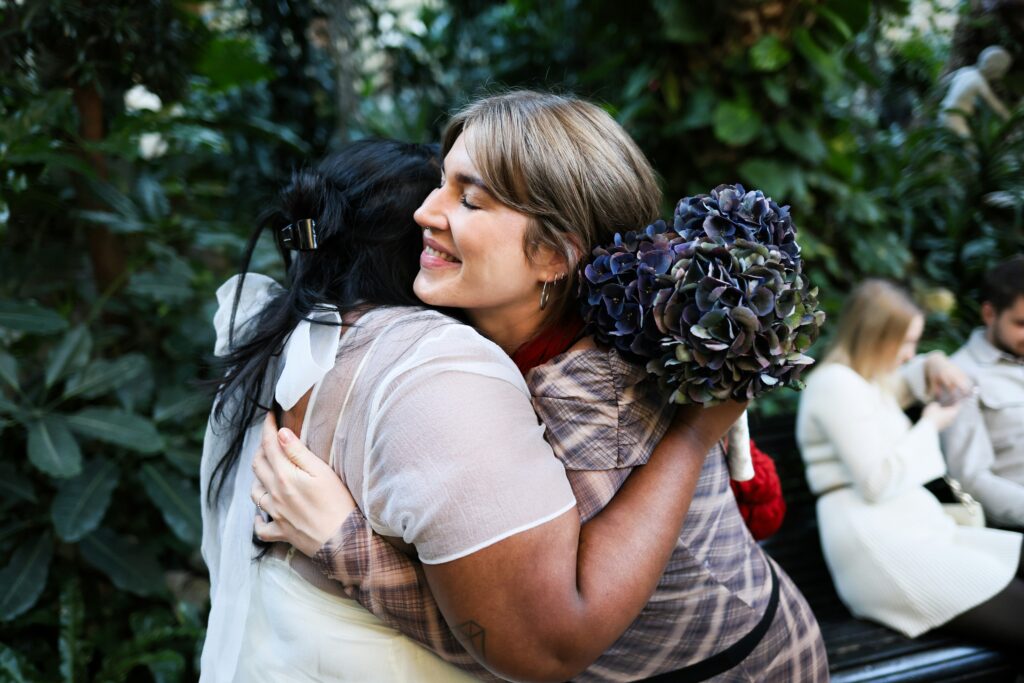 Let’s Love on Each Other: Every Woman’s Story Deserves a Place at the Table
There is something incredibly powerful that happens when a woman tells the truth about her life.
Not the polished version. Not the version edited to make everyone else comfortable. The real story. The chapters filled with uncertainty, disappointment, resilience, healing, joy, and lessons learned. Those stories have the power to encourage another woman who may believe she is walking through life alone.
Unfortunately, not every woman’s story begins from the same place.
Some women were raised by parents who poured confidence into them from the very beginning. They were protected, encouraged, celebrated, and reminded every day that they mattered. They entered adulthood believing they belonged in every room they walked into because someone taught them they did.
Others never experienced that.
Some women grew up longing for a mother’s affection. Others never knew the protection of an involved father. Some were raised by grandparents, foster parents, siblings, or relatives doing the best they could with limited resources. Some experienced homes where criticism was louder than encouragement. Others spent years trying to earn love that should have been given freely. There are women whose childhoods prepared them to flourish, while others have spent adulthood trying to heal from what childhood failed to provide.
Neither woman should be shamed for where she started.
This is why comparison is such a dangerous habit. We often compare outcomes without considering origins. We compare confidence without knowing the encouragement someone received. We compare emotional maturity without understanding the trauma another woman survived. We compare financial success without acknowledging access, opportunity, education, or mentorship. We compare relationships without realizing one woman witnessed healthy love growing up while another had to teach herself what respect even looked like.
How can we expect every woman to arrive at the same destination when we didn’t all begin the journey from the same place?
Empowerment should never become another form of exclusion. It should never sound like, “I figured it out, so why haven’t you?” Instead, it should sound more like, “I’ve learned some things along the way. Let me share what helped me.”
There is room for every woman’s voice.
The woman who built a thriving business after years of setbacks has wisdom worth sharing. So does the woman who quietly survived abuse and found the courage to begin again. The mother raising children with intention after experiencing a difficult childhood has something valuable to teach. The woman rebuilding after divorce. The woman navigating grief. The woman returning to school at fifty. The woman choosing peace over people-pleasing. The woman finally learning to love herself after decades of self-doubt.
None of their voices diminish the others.
In fact, they strengthen one another.
Sometimes we unintentionally dismiss another woman’s story because it doesn’t sound like ours. We assume our path is the blueprint everyone else should follow. But life simply doesn’t work that way. Different experiences create different perspectives, and that diversity is not a weakness—it is one of our greatest strengths.
Imagine if, before responding to another woman’s story, we paused and asked ourselves one question:
“Do I want to help her continue growing, or do I want to make her feel like her journey has less value because it doesn’t resemble mine?”
That single question has the power to change conversations.
It shifts us away from competition and toward compassion.
It reminds us that empowerment is not about deciding whose testimony is the most impressive or whose struggle was the hardest. It is about creating space where women can speak honestly without fearing ridicule, dismissal, or comparison.
Every woman’s testimony has the potential to become someone else’s survival guide.
The lesson you learned through heartbreak may become the encouragement another woman needs to leave an unhealthy relationship. Your story of rebuilding your finances may inspire someone who feels trapped by debt. Your experience with forgiveness may help another woman release years of bitterness. Even your mistakes have value because they can become someone else’s warning, wisdom, or hope.
None of us knows who is listening.
None of us knows whose life might change because we decided to tell the truth.
The world does not need every woman to sound the same. It needs women who are willing to speak from where they have been and who they have become. Authenticity is far more powerful than uniformity.
As women, we have an opportunity to create something different from what we often see online. We can build communities where stories are welcomed instead of ranked. Where vulnerability is honored instead of mocked. Where healing is celebrated instead of questioned. Where women are not required to prove that their pain was painful enough or that their success was earned enough.
Let’s become women who leave room at the table.
Let’s become women who listen before we lecture.
Let’s become women who encourage before we criticize.
Let’s become women who understand that healing is not a straight line and that growth rarely looks identical from one life to the next.
Most of all, let’s become women who genuinely love on each other.
Because every woman deserves the opportunity to walk in her power. Every woman deserves to share the lessons life has taught her. Every woman deserves to believe that her voice matters.
And perhaps the most empowering thing we can ever say to another woman is this:
“Your story may not be my story, but it still has value. Keep telling it. Someone needs to hear it.”
Let’s Love on Each Other: Every Woman’s Story Deserves a Place at the Table
There is something incredibly powerful that happens when a woman tells the truth about her life.
Not the polished version. Not the version edited to make everyone else comfortable. The real story. The chapters filled with uncertainty, disappointment, resilience, healing, joy, and lessons learned. Those stories have the power to encourage another woman who may believe she is walking through life alone.
Unfortunately, not every woman’s story begins from the same place.
Some women were raised by parents who poured confidence into them from the very beginning. They were protected, encouraged, celebrated, and reminded every day that they mattered. They entered adulthood believing they belonged in every room they walked into because someone taught them they did.
Others never experienced that.
Some women grew up longing for a mother’s affection. Others never knew the protection of an involved father. Some were raised by grandparents, foster parents, siblings, or relatives doing the best they could with limited resources. Some experienced homes where criticism was louder than encouragement. Others spent years trying to earn love that should have been given freely. There are women whose childhoods prepared them to flourish, while others have spent adulthood trying to heal from what childhood failed to provide.
Neither woman should be shamed for where she started.
This is why comparison is such a dangerous habit. We often compare outcomes without considering origins. We compare confidence without knowing the encouragement someone received. We compare emotional maturity without understanding the trauma another woman survived. We compare financial success without acknowledging access, opportunity, education, or mentorship. We compare relationships without realizing one woman witnessed healthy love growing up while another had to teach herself what respect even looked like.
How can we expect every woman to arrive at the same destination when we didn’t all begin the journey from the same place?
Empowerment should never become another form of exclusion. It should never sound like, “I figured it out, so why haven’t you?” Instead, it should sound more like, “I’ve learned some things along the way. Let me share what helped me.”
There is room for every woman’s voice.
The woman who built a thriving business after years of setbacks has wisdom worth sharing. So does the woman who quietly survived abuse and found the courage to begin again. The mother raising children with intention after experiencing a difficult childhood has something valuable to teach. The woman rebuilding after divorce. The woman navigating grief. The woman returning to school at fifty. The woman choosing peace over people-pleasing. The woman finally learning to love herself after decades of self-doubt.
None of their voices diminish the others.
In fact, they strengthen one another.
Sometimes we unintentionally dismiss another woman’s story because it doesn’t sound like ours. We assume our path is the blueprint everyone else should follow. But life simply doesn’t work that way. Different experiences create different perspectives, and that diversity is not a weakness—it is one of our greatest strengths.
Imagine if, before responding to another woman’s story, we paused and asked ourselves one question:
“Do I want to help her continue growing, or do I want to make her feel like her journey has less value because it doesn’t resemble mine?”
That single question has the power to change conversations.
It shifts us away from competition and toward compassion.
It reminds us that empowerment is not about deciding whose testimony is the most impressive or whose struggle was the hardest. It is about creating space where women can speak honestly without fearing ridicule, dismissal, or comparison.
Every woman’s testimony has the potential to become someone else’s survival guide.
The lesson you learned through heartbreak may become the encouragement another woman needs to leave an unhealthy relationship. Your story of rebuilding your finances may inspire someone who feels trapped by debt. Your experience with forgiveness may help another woman release years of bitterness. Even your mistakes have value because they can become someone else’s warning, wisdom, or hope.
None of us knows who is listening.
None of us knows whose life might change because we decided to tell the truth.
The world does not need every woman to sound the same. It needs women who are willing to speak from where they have been and who they have become. Authenticity is far more powerful than uniformity.
As women, we have an opportunity to create something different from what we often see online. We can build communities where stories are welcomed instead of ranked. Where vulnerability is honored instead of mocked. Where healing is celebrated instead of questioned. Where women are not required to prove that their pain was painful enough or that their success was earned enough.
Let’s become women who leave room at the table.
Let’s become women who listen before we lecture.
Let’s become women who encourage before we criticize.
Let’s become women who understand that healing is not a straight line and that growth rarely looks identical from one life to the next.
Most of all, let’s become women who genuinely love on each other.
Because every woman deserves the opportunity to walk in her power. Every woman deserves to share the lessons life has taught her. Every woman deserves to believe that her voice matters.
And perhaps the most empowering thing we can ever say to another woman is this:
“Your story may not be my story, but it still has value. Keep telling it. Someone needs to hear it.”
Discover more from Connected Woman Magazine
Subscribe to get the latest posts sent to your email.