 When many people hear the word “technology,” they picture computers, coding, robots, or video games.
What they don’t always picture is girls.
For a long time, many people believed that careers in science, technology, engineering, and mathematics—also known as STEM—were mainly for boys. Thankfully, that idea is changing.
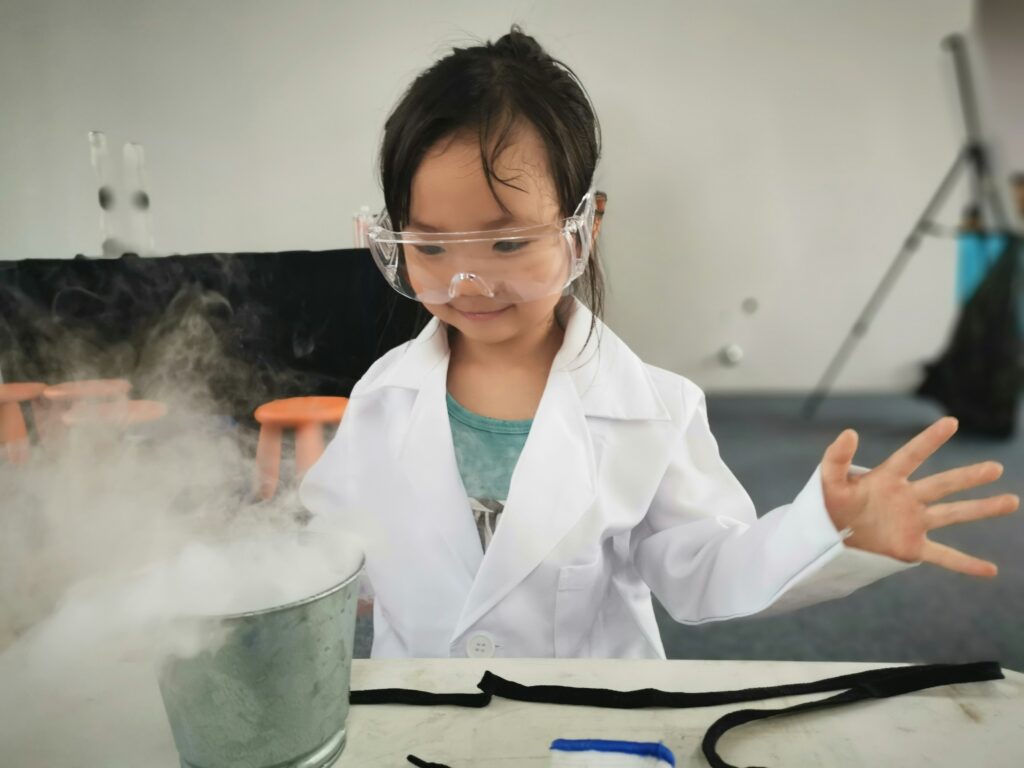
Today, more girls are discovering that they belong in STEM too.
Whether you dream of building apps, designing robots, creating video games, exploring space, curing diseases, or inventing something the world has never seen before, STEM can open incredible doors.
What Is STEM?
STEM stands for:
Science Learning how the world works through observation and discovery.
Technology Using tools and innovation to solve problems.
Engineering Designing and building solutions.
Mathematics Using numbers and logic to understand patterns and make decisions.
STEM is everywhere.
When you use your smartphone, STEM is involved.
When you watch a weather forecast, STEM is involved.
When doctors use medical equipment, STEM is involved.
When engineers design safer buildings, STEM is involved.
These fields shape the future.
Girls Belong Here
Unfortunately, many girls receive messages—sometimes without anyone realizing it—that STEM isn’t for them.
Maybe someone says:
“Girls aren’t usually interested in coding.”
“Math is harder for girls.”
“Boys are better with technology.”
None of those statements are true.
Girls are just as capable of succeeding in STEM as boys.
The challenge is often exposure and encouragement.
Research consistently shows that when girls are encouraged to explore science and technology, they perform just as well as their male peers.
Talent doesn’t belong to one gender.
Curiosity doesn’t belong to one gender.
Innovation doesn’t belong to one gender.
Why Representation Matters
Have you ever noticed how inspiring it can be to see someone who looks like you doing something amazing?
Representation matters because it helps people imagine what’s possible.
When girls see female engineers, scientists, astronauts, programmers, and inventors, they begin to think:
“Maybe I can do that too.”
Throughout history, women have made important contributions to STEM.
For example, Katherine Johnson used her extraordinary mathematical skills to help calculate flight paths for early space missions.
Mae Jemison became the first Black woman to travel into space.
Ada Lovelace is often recognized as one of the world’s first computer programmers.
These women helped change history.
Future innovators could be sitting in today’s classrooms.
STEM Is About Solving Problems
One misconception is that STEM careers are only about sitting behind computers all day.
In reality, STEM is about solving problems.
People in STEM work on challenges like:
- Developing cleaner energy
- Creating safer transportation
- Designing medical breakthroughs
- Protecting the environment
- Improving communication technology
- Exploring space
If you enjoy asking questions and finding solutions, STEM may be a great fit for you.
Building Confidence in STEM
Many girls avoid STEM because they’re afraid of making mistakes.
Here’s a secret:
Every scientist, engineer, and inventor makes mistakes.
Failure is often part of learning.
The first version of an invention rarely works perfectly.
The first coding project often has bugs.
The first experiment may not go as planned.
Success usually comes from persistence, not perfection.
Ways to Explore STEM Right Now
You don’t have to wait until college to start.
You can:
- Join a robotics club
- Learn basic coding online
- Participate in science fairs
- Build simple engineering projects
- Watch STEM videos
- Read books about inventors
- Ask teachers about STEM opportunities
Every small step builds skills and confidence.
The Future Needs Your Ideas
Technology affects everyone.
That’s why it’s important for different voices and experiences to be represented.
Girls bring valuable perspectives, creativity, and innovation.
The future shouldn’t be designed by only one type of person.
It should be shaped by people from all backgrounds.
Your ideas could become the next app, invention, discovery, or breakthrough that changes lives.
Don’t let stereotypes decide what you’re capable of.
The world needs your curiosity.
The world needs your creativity.
And the world may need the solution that only you can imagine.
Discover more from Connected Woman Magazine
Subscribe to get the latest posts sent to your email.