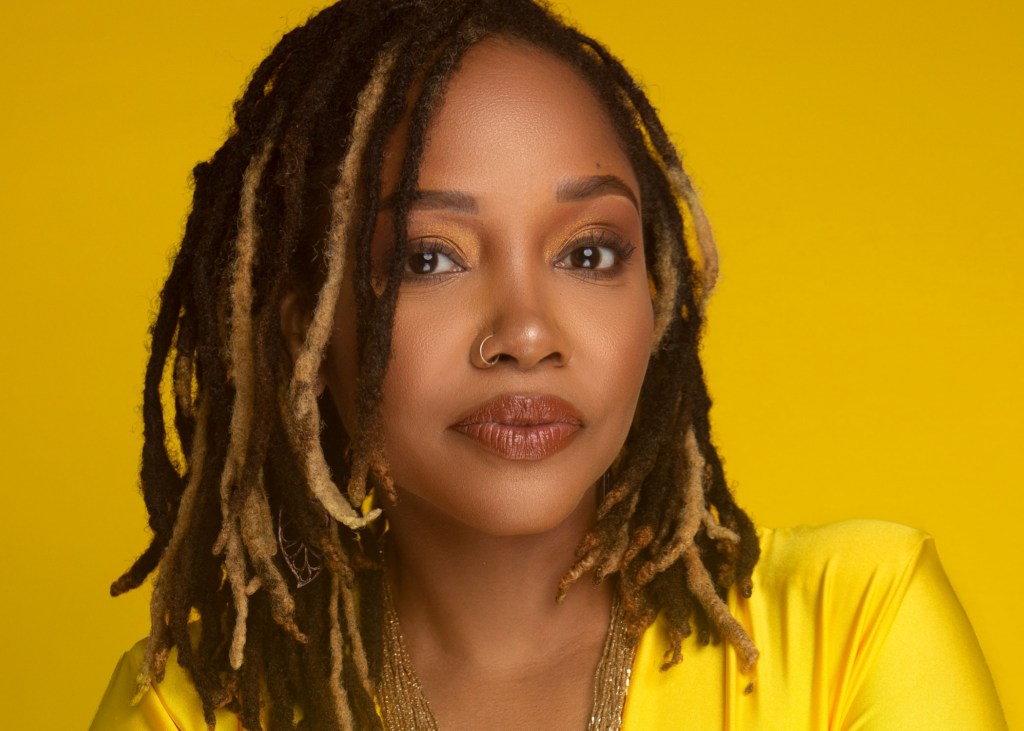
 In a media landscape where visibility can often feel curated rather than authentic, Francheska “Fancy” Felder has built something intentional, powerful, and deeply necessary. As the Founder and Publisher of SwagHer Magazine, she has created more than a platform—she has cultivated a trusted space where Black women are not only seen, but heard, valued, and amplified with purpose. What began as a print publication has evolved into a multi-platform media brand reaching hundreds of thousands, rooted in storytelling, connection, and legacy-building.
But behind the brand is a woman committed not only to elevating others, but to doing the inner work required to remain aligned with her own purpose. A self-proclaimed “self-improvement junkie,” Fancy embraces self-awareness, growth, and the pursuit of harmony over perfection. Her recent decision to step away from the education field reflects a deeper commitment to living a life that prioritizes joy, fulfillment, and sustainability. Grounded in authenticity and unafraid to go against the grain, she continues to lead with intention—proving that true influence begins with staying connected to your own voice. Let’s meet her…
SwagHer Magazine began as a print publication and has grown into a powerful multi-platform media brand reaching nearly 300,000 Black women. What was the original vision when you launched SwagHer, and at what moment did you realize it had the potential to become something much larger than a magazine?
The original vision was far from what we’ve built today. I’d recently moved to Baton Rouge, which was the city for a country girl like me, and I wanted to be a celebrity publicist. However, instead of connecting me with people in need of PR services, they connected me with people who wanted to share their stories, and I was so inspired by them that I thought other Black women needed to know these things, too, so that they could step into their power and live their best lives.
There wasn’t a moment of realization. I just allowed my ideas to lead me. I knew I still wanted to practice public relations because I noticed how we featured women, and often their story stopped there. I knew public relations could assist them with the visibility they deserved. Yet many small businesses cannot afford the luxury of public relations, so I had to find a way to make it more affordable while staying within my bandwidth.
As a publisher and cultural curator, you have intentionally built a platform centered on narrative ownership. Why is it so important that Black women have control over how their stories are told, and how has SwagHer helped shift that narrative landscape?
I think it was the lack of representation that I had as a Black girl growing up in a small town. I simply didn’t know Black women could have happy, successful lives. That’s why I initially thought it was so important to share these stories, but then I learned how the media had historically cast Black women as stereotypes, and I wanted to dispel those beliefs. Black women are doing amazing things, overcoming, and thriving. Who better to share our stories and understand our complexities than us? But there was also this sense of letting other women know they were not alone in what they were going through. That was important to me because that was often how I felt.
Many women consume media every day without realizing the power structures behind what gets published and promoted. What inspired you to step into the role of media owner rather than simply contributor, and what did that transition require of you personally and professionally?
Again, it wasn’t a decision; it was more like a desire to start a business, and I only had what I had: my writing skills, creativity, and self-efficacy. I never dreamed SwagHer would be as big as it is now, because I didn’t think my ideas and I were that big.
The transition was challenging. I started the mag as a single mother of three with an associate degree, enrolling in Southern University, serving by day, and stripping and selling adult toys by night. All I knew was that no one was coming to save me, and I had to make a way for my kids and me, but I thought there was something wrong with me. So, I began my self-love journey, and that kind of spilled into my work. I interviewed successful women who appeared to love themselves, and I learned. I hadn’t had a mentor or any guidance, but on-the-job learning helped fill the gap, and I shared everything I was learning.
So, I had to learn to love myself and my Blackness and change my mindset. From there, I had to grow my faith and actively pursue my dreams. Then I had to work on my leadership, confidence, and visibility. In the midst of all of that, I was lonely, but my work schedule and finances did not allow me to build real relationships with people. I prayed for many years to find the circle of friends that I now have, and I had to work on myself again to successfully flourish those relationships, but they are a big part of who I am today. In order to run a successful women’s brand, you need all types of women in your life.
Visibility is a recurring theme in your work. In your experience, how does visibility translate into tangible opportunities for Black women in business, leadership, and creative industries?
One must be visible in order for people to know they exist. Visibility is what turns great ideas, talent, and leadership into real opportunities. When people can see your work, hear your voice, and understand the value you bring, doors begin to open—whether that’s partnerships, media features, speaking opportunities, or clients who align with what you do.
For Black women in particular, visibility is powerful because historically our contributions have often been overlooked or underrepresented. When we intentionally show up and share our expertise, we help shift that narrative. We’re not just building our own platforms; we’re also expanding the space for other Black women to be recognized for the brilliance already present in our communities.
Visibility also builds credibility. The more consistently people see you operating in your purpose, the more they begin to trust your authority in that space. Over time, that trust becomes influence, and influence becomes opportunity.
Building a trusted media brand requires credibility, consistency, and intention. What were some of the most pivotal decisions you made early on that helped establish SwagHer as a respected and influential platform?
I made the decision not to stop and continue going. We’ve experienced loss and setbacks for sure, but something in me believes that we need to see this through to see what can be built. That decision combined with the fact that our messaging has always been to “uplift Black women” causes us to show up consistently, and that is what people respect about us, and it makes us credible and influential.
Media entrepreneurship often requires balancing creative vision with business sustainability. How have you navigated monetization, partnerships, and growth while still protecting the authenticity and mission of SwagHer?
I’m a writer and creative at heart, but I had to learn how to package that. It was imperative to look over what we had and see what we could monetize. Partnerships are essential for us because we have a team of about 30 in all, but I ensure that those partnerships align with our mission and beliefs. We get requests that are totally out of alignment with our brand often, but I always ask myself, “What would our community think of this collaboration?” If they wouldn’t approve, neither will I.
You have interviewed and featured countless founders, executives, creatives, and change makers. What common threads or defining qualities have you observed among women who successfully create lasting impact?
The women that I’ve interviewed and found to create lasting impact are the ones who ensure they are walking the walk and not just talking the talk. They are women of action, organization, planning, and collaboration. They take initiative and are strategic and deliver on their word. Most of them are natural problem solvers or they built something out of necessity. All of them have experienced some type of loss or trauma, and they are usually transparent about that which helps their audience further relate to them. They also understand the power of visibility, which is usually why they agree to the interview.
Women’s History Month invites reflection on legacy and progress. How do you see your work contributing to the broader historical record of Black women’s leadership and cultural influence?
SwagHer and I are documenting history and the culture in real time. We are sharing the stories of Black women who are moving and shaking, stories of issues that are impacting them right now, stories to help them solve those problems and grow whether that be in business or life, and stories of events they are supporting.
My hope is that one day, other Black women will find our archive and see how Black millennial women lived in the 21st century and be inspired.
Many women hesitate to share their stories because they feel they are not “important enough” or “ready.” What would you say to women who underestimate the power of their lived experiences?
Sharing your story is one of the most powerful moves one can make. It allows them to write their own narrative. It places them in history. It shows they existed, but even more importantly, your story is your testimony, and someone out there needs to hear it and know they can overcome the same thing or at least that they are not alone. Your lived experiences are your wisdom, and this is a season of awakening, so that’s in demand now. But don’t just share your problems, share your strategy for overcoming them, share the mindset you used to push through.
As someone who has built a platform rooted in amplifying others, how do you personally stay grounded, inspired, and connected to your own voice and purpose?
I’m a self-improvement junkie, that’s my thing. So, the fact that I’m always working to improve myself, makes me very self-aware. For the past three years, I’ve worked as an educator, and recently, I realized that I wasn’t grounded at all. I don’t subscribe to balance, but I do strive for harmony in my life, and I’m forever in the pursuit of happiness. For this reason, I recently decided that I am retiring from the education field because I can no longer subject myself to that type of unhappiness.
I believe educating others is part of my purpose but it’s important that I do it in a way that aligns with the life I desire to lead. I can’t pour from an empty cup, that means I need to be able to replenish myself by having time for myself and doing things that bring me joy. I discovered I hadn’t really been doing that.
Staying connected to my voice is easy, because I’m a stronger believer in being myself, and I will go against the grain if I don’t agree.
The media landscape has shifted dramatically in the digital age. What challenges and opportunities have emerged from transitioning SwagHer into a primarily digital and social ecosystem?
While people don’t support magazines the way they used, people still enjoy being in printed magazines and having something physical. However, both the cost of printing and living in general is so expensive now, it’s difficult to balance the two, at least for us anyway. We’re not sponsored by corporations, but rather small businesses. So digital makes sense for us, but in order to be attractive to partners, we must have the right numbers. SwagHer doesn’t do clickbait, and we don’t promote gossip or things that tear down the Black community, so getting views isn’t the easiest. Thankfully, there is a community of intentional Black women and Black businesswomen who keep it real that rock with us. We also barter, and I’ve learned the more people you involve, the more people you get.
Representation in media is not only about presence but about accuracy and depth. How do you ensure that the stories featured in SwagHer reflect the full humanity, complexity, and leadership of Black women?
Representation, to me, means going beyond surface-level storytelling. At SwagHer Magazine, we are very intentional about making sure Black women are not portrayed as one-dimensional or reduced to a single narrative. Our stories highlight women as leaders, innovators, creatives, mothers, healers, and visionaries—often all at once—because that reflects the real complexity of our lives.
One way we do this is by allowing women to speak for themselves. Many of our features are interview-driven so readers hear directly from the woman behind the work—her motivations, challenges, and evolution. We also prioritize stories that show both the wins and the journey, because leadership is rarely a straight line. Sharing those layers helps our audience see themselves reflected honestly.
We also make a conscious effort to feature women from different industries, backgrounds, and stages of life—from emerging entrepreneurs to established leaders—so that the magazine reflects the breadth of Black women’s experiences. At the end of the day, my goal with SwagHer is to create a platform where Black women are not just visible, but seen in their fullness, their brilliance, and their humanity.
As a visionary founder, what were some of the internal obstacles you had to overcome—whether self-doubt, fear, or external barriers—to fully step into your role as a publisher and media entrepreneur?
I learned to love myself and then I had to come from behind the scenes and use my voice. Occasionally, I even have to go as far as flex my power, but I’m more of a laid back, “if that makes sense to you” type of person. Reading, journaling, and reflecting helped me accomplish these things.
For women who feel called to create platforms, publications, or media brands of their own, what foundational advice would you offer about building something meaningful and sustainable?
I believe that what we build is often a direct reflection of who we are, so the foundation has to start with integrity. At the same time, it can’t be driven solely by self-interest. When you’re creating a platform meant to serve others, your reputation matters just as much as your content.
People will remember whether you were professional, collaborative, and reliable—or difficult and inconsistent. Sustainable platforms are built not only on great ideas, but on trust, consistency, and the way you treat the people who support your vision.
When future generations of women look back at your work and the legacy of SwagHer Magazine, what do you hope they will understand about the importance of storytelling, visibility, and creating space for others?
Being a Black woman is dope. We have shaped the culture of the 21st century, and in many ways we liberated ourselves by refusing to stay small or silent. Even when people try to overlook us or act as if our contributions don’t exist, our impact continues to show up everywhere.
I hope future generations understand that storytelling and visibility are powerful acts of ownership. When one Black woman tells her story, it gives another woman permission to tell hers. And through independent, Black-owned media outlets like SwagHer Magazine, FEMI Magazine, Pretty Women Hustle, and countless others, those stories are documented, celebrated, and preserved so that our voices continue to shape culture, leadership, and possibility for the women coming after us.
In a media landscape where visibility can often feel curated rather than authentic, Francheska “Fancy” Felder has built something intentional, powerful, and deeply necessary. As the Founder and Publisher of SwagHer Magazine, she has created more than a platform—she has cultivated a trusted space where Black women are not only seen, but heard, valued, and amplified with purpose. What began as a print publication has evolved into a multi-platform media brand reaching hundreds of thousands, rooted in storytelling, connection, and legacy-building.
But behind the brand is a woman committed not only to elevating others, but to doing the inner work required to remain aligned with her own purpose. A self-proclaimed “self-improvement junkie,” Fancy embraces self-awareness, growth, and the pursuit of harmony over perfection. Her recent decision to step away from the education field reflects a deeper commitment to living a life that prioritizes joy, fulfillment, and sustainability. Grounded in authenticity and unafraid to go against the grain, she continues to lead with intention—proving that true influence begins with staying connected to your own voice. Let’s meet her…
SwagHer Magazine began as a print publication and has grown into a powerful multi-platform media brand reaching nearly 300,000 Black women. What was the original vision when you launched SwagHer, and at what moment did you realize it had the potential to become something much larger than a magazine?
The original vision was far from what we’ve built today. I’d recently moved to Baton Rouge, which was the city for a country girl like me, and I wanted to be a celebrity publicist. However, instead of connecting me with people in need of PR services, they connected me with people who wanted to share their stories, and I was so inspired by them that I thought other Black women needed to know these things, too, so that they could step into their power and live their best lives.
There wasn’t a moment of realization. I just allowed my ideas to lead me. I knew I still wanted to practice public relations because I noticed how we featured women, and often their story stopped there. I knew public relations could assist them with the visibility they deserved. Yet many small businesses cannot afford the luxury of public relations, so I had to find a way to make it more affordable while staying within my bandwidth.
As a publisher and cultural curator, you have intentionally built a platform centered on narrative ownership. Why is it so important that Black women have control over how their stories are told, and how has SwagHer helped shift that narrative landscape?
I think it was the lack of representation that I had as a Black girl growing up in a small town. I simply didn’t know Black women could have happy, successful lives. That’s why I initially thought it was so important to share these stories, but then I learned how the media had historically cast Black women as stereotypes, and I wanted to dispel those beliefs. Black women are doing amazing things, overcoming, and thriving. Who better to share our stories and understand our complexities than us? But there was also this sense of letting other women know they were not alone in what they were going through. That was important to me because that was often how I felt.
Many women consume media every day without realizing the power structures behind what gets published and promoted. What inspired you to step into the role of media owner rather than simply contributor, and what did that transition require of you personally and professionally?
Again, it wasn’t a decision; it was more like a desire to start a business, and I only had what I had: my writing skills, creativity, and self-efficacy. I never dreamed SwagHer would be as big as it is now, because I didn’t think my ideas and I were that big.
The transition was challenging. I started the mag as a single mother of three with an associate degree, enrolling in Southern University, serving by day, and stripping and selling adult toys by night. All I knew was that no one was coming to save me, and I had to make a way for my kids and me, but I thought there was something wrong with me. So, I began my self-love journey, and that kind of spilled into my work. I interviewed successful women who appeared to love themselves, and I learned. I hadn’t had a mentor or any guidance, but on-the-job learning helped fill the gap, and I shared everything I was learning.
So, I had to learn to love myself and my Blackness and change my mindset. From there, I had to grow my faith and actively pursue my dreams. Then I had to work on my leadership, confidence, and visibility. In the midst of all of that, I was lonely, but my work schedule and finances did not allow me to build real relationships with people. I prayed for many years to find the circle of friends that I now have, and I had to work on myself again to successfully flourish those relationships, but they are a big part of who I am today. In order to run a successful women’s brand, you need all types of women in your life.
Visibility is a recurring theme in your work. In your experience, how does visibility translate into tangible opportunities for Black women in business, leadership, and creative industries?
One must be visible in order for people to know they exist. Visibility is what turns great ideas, talent, and leadership into real opportunities. When people can see your work, hear your voice, and understand the value you bring, doors begin to open—whether that’s partnerships, media features, speaking opportunities, or clients who align with what you do.
For Black women in particular, visibility is powerful because historically our contributions have often been overlooked or underrepresented. When we intentionally show up and share our expertise, we help shift that narrative. We’re not just building our own platforms; we’re also expanding the space for other Black women to be recognized for the brilliance already present in our communities.
Visibility also builds credibility. The more consistently people see you operating in your purpose, the more they begin to trust your authority in that space. Over time, that trust becomes influence, and influence becomes opportunity.
Building a trusted media brand requires credibility, consistency, and intention. What were some of the most pivotal decisions you made early on that helped establish SwagHer as a respected and influential platform?
I made the decision not to stop and continue going. We’ve experienced loss and setbacks for sure, but something in me believes that we need to see this through to see what can be built. That decision combined with the fact that our messaging has always been to “uplift Black women” causes us to show up consistently, and that is what people respect about us, and it makes us credible and influential.
Media entrepreneurship often requires balancing creative vision with business sustainability. How have you navigated monetization, partnerships, and growth while still protecting the authenticity and mission of SwagHer?
I’m a writer and creative at heart, but I had to learn how to package that. It was imperative to look over what we had and see what we could monetize. Partnerships are essential for us because we have a team of about 30 in all, but I ensure that those partnerships align with our mission and beliefs. We get requests that are totally out of alignment with our brand often, but I always ask myself, “What would our community think of this collaboration?” If they wouldn’t approve, neither will I.
You have interviewed and featured countless founders, executives, creatives, and change makers. What common threads or defining qualities have you observed among women who successfully create lasting impact?
The women that I’ve interviewed and found to create lasting impact are the ones who ensure they are walking the walk and not just talking the talk. They are women of action, organization, planning, and collaboration. They take initiative and are strategic and deliver on their word. Most of them are natural problem solvers or they built something out of necessity. All of them have experienced some type of loss or trauma, and they are usually transparent about that which helps their audience further relate to them. They also understand the power of visibility, which is usually why they agree to the interview.
Women’s History Month invites reflection on legacy and progress. How do you see your work contributing to the broader historical record of Black women’s leadership and cultural influence?
SwagHer and I are documenting history and the culture in real time. We are sharing the stories of Black women who are moving and shaking, stories of issues that are impacting them right now, stories to help them solve those problems and grow whether that be in business or life, and stories of events they are supporting.
My hope is that one day, other Black women will find our archive and see how Black millennial women lived in the 21st century and be inspired.
Many women hesitate to share their stories because they feel they are not “important enough” or “ready.” What would you say to women who underestimate the power of their lived experiences?
Sharing your story is one of the most powerful moves one can make. It allows them to write their own narrative. It places them in history. It shows they existed, but even more importantly, your story is your testimony, and someone out there needs to hear it and know they can overcome the same thing or at least that they are not alone. Your lived experiences are your wisdom, and this is a season of awakening, so that’s in demand now. But don’t just share your problems, share your strategy for overcoming them, share the mindset you used to push through.
As someone who has built a platform rooted in amplifying others, how do you personally stay grounded, inspired, and connected to your own voice and purpose?
I’m a self-improvement junkie, that’s my thing. So, the fact that I’m always working to improve myself, makes me very self-aware. For the past three years, I’ve worked as an educator, and recently, I realized that I wasn’t grounded at all. I don’t subscribe to balance, but I do strive for harmony in my life, and I’m forever in the pursuit of happiness. For this reason, I recently decided that I am retiring from the education field because I can no longer subject myself to that type of unhappiness.
I believe educating others is part of my purpose but it’s important that I do it in a way that aligns with the life I desire to lead. I can’t pour from an empty cup, that means I need to be able to replenish myself by having time for myself and doing things that bring me joy. I discovered I hadn’t really been doing that.
Staying connected to my voice is easy, because I’m a stronger believer in being myself, and I will go against the grain if I don’t agree.
The media landscape has shifted dramatically in the digital age. What challenges and opportunities have emerged from transitioning SwagHer into a primarily digital and social ecosystem?
While people don’t support magazines the way they used, people still enjoy being in printed magazines and having something physical. However, both the cost of printing and living in general is so expensive now, it’s difficult to balance the two, at least for us anyway. We’re not sponsored by corporations, but rather small businesses. So digital makes sense for us, but in order to be attractive to partners, we must have the right numbers. SwagHer doesn’t do clickbait, and we don’t promote gossip or things that tear down the Black community, so getting views isn’t the easiest. Thankfully, there is a community of intentional Black women and Black businesswomen who keep it real that rock with us. We also barter, and I’ve learned the more people you involve, the more people you get.
Representation in media is not only about presence but about accuracy and depth. How do you ensure that the stories featured in SwagHer reflect the full humanity, complexity, and leadership of Black women?
Representation, to me, means going beyond surface-level storytelling. At SwagHer Magazine, we are very intentional about making sure Black women are not portrayed as one-dimensional or reduced to a single narrative. Our stories highlight women as leaders, innovators, creatives, mothers, healers, and visionaries—often all at once—because that reflects the real complexity of our lives.
One way we do this is by allowing women to speak for themselves. Many of our features are interview-driven so readers hear directly from the woman behind the work—her motivations, challenges, and evolution. We also prioritize stories that show both the wins and the journey, because leadership is rarely a straight line. Sharing those layers helps our audience see themselves reflected honestly.
We also make a conscious effort to feature women from different industries, backgrounds, and stages of life—from emerging entrepreneurs to established leaders—so that the magazine reflects the breadth of Black women’s experiences. At the end of the day, my goal with SwagHer is to create a platform where Black women are not just visible, but seen in their fullness, their brilliance, and their humanity.
As a visionary founder, what were some of the internal obstacles you had to overcome—whether self-doubt, fear, or external barriers—to fully step into your role as a publisher and media entrepreneur?
I learned to love myself and then I had to come from behind the scenes and use my voice. Occasionally, I even have to go as far as flex my power, but I’m more of a laid back, “if that makes sense to you” type of person. Reading, journaling, and reflecting helped me accomplish these things.
For women who feel called to create platforms, publications, or media brands of their own, what foundational advice would you offer about building something meaningful and sustainable?
I believe that what we build is often a direct reflection of who we are, so the foundation has to start with integrity. At the same time, it can’t be driven solely by self-interest. When you’re creating a platform meant to serve others, your reputation matters just as much as your content.
People will remember whether you were professional, collaborative, and reliable—or difficult and inconsistent. Sustainable platforms are built not only on great ideas, but on trust, consistency, and the way you treat the people who support your vision.
When future generations of women look back at your work and the legacy of SwagHer Magazine, what do you hope they will understand about the importance of storytelling, visibility, and creating space for others?
Being a Black woman is dope. We have shaped the culture of the 21st century, and in many ways we liberated ourselves by refusing to stay small or silent. Even when people try to overlook us or act as if our contributions don’t exist, our impact continues to show up everywhere.
I hope future generations understand that storytelling and visibility are powerful acts of ownership. When one Black woman tells her story, it gives another woman permission to tell hers. And through independent, Black-owned media outlets like SwagHer Magazine, FEMI Magazine, Pretty Women Hustle, and countless others, those stories are documented, celebrated, and preserved so that our voices continue to shape culture, leadership, and possibility for the women coming after us.
Discover more from Connected Woman Magazine
Subscribe to get the latest posts sent to your email.