
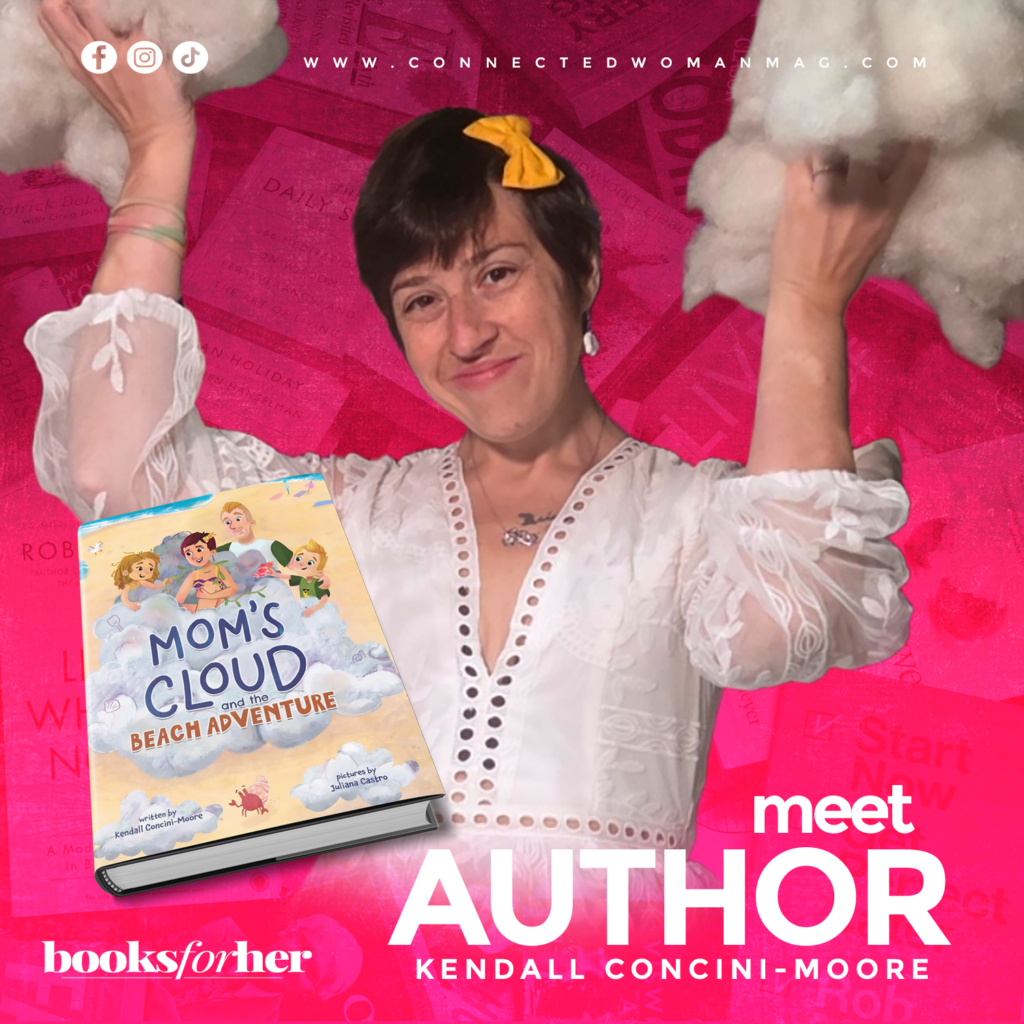
 Book Synopsis:
A beach day. A stubborn cloud. A family’s love and understanding.Alma and Max are eager for a day of sunshine and adventure. But a cloud begins to follow Mom, dimming her day. With empathy and playful hearts, the family reminds her that it’s okay to not be okay, because clouds don’t last forever.This whimsical picture book, for ages 4-8, validates the reality of hard days while celebrating the healing power of family presence. With its gentle approach to emotional wellness, it gives children the language to understand when someone they love is struggling, and shows them that sometimes, the best thing we can offer is simply being there.Includes discussion questions and caregiver resources for exploring big feelings together
Book Synopsis:
A beach day. A stubborn cloud. A family’s love and understanding.Alma and Max are eager for a day of sunshine and adventure. But a cloud begins to follow Mom, dimming her day. With empathy and playful hearts, the family reminds her that it’s okay to not be okay, because clouds don’t last forever.This whimsical picture book, for ages 4-8, validates the reality of hard days while celebrating the healing power of family presence. With its gentle approach to emotional wellness, it gives children the language to understand when someone they love is struggling, and shows them that sometimes, the best thing we can offer is simply being there.Includes discussion questions and caregiver resources for exploring big feelings together
Why Will Readers Like This Book: Anyone who has big feelings & doesnt know how to ask for help can share their cloudy day, resonate, & know they are not alone. This book sparks conversations many dont say outloud, but can immediately resonate with.
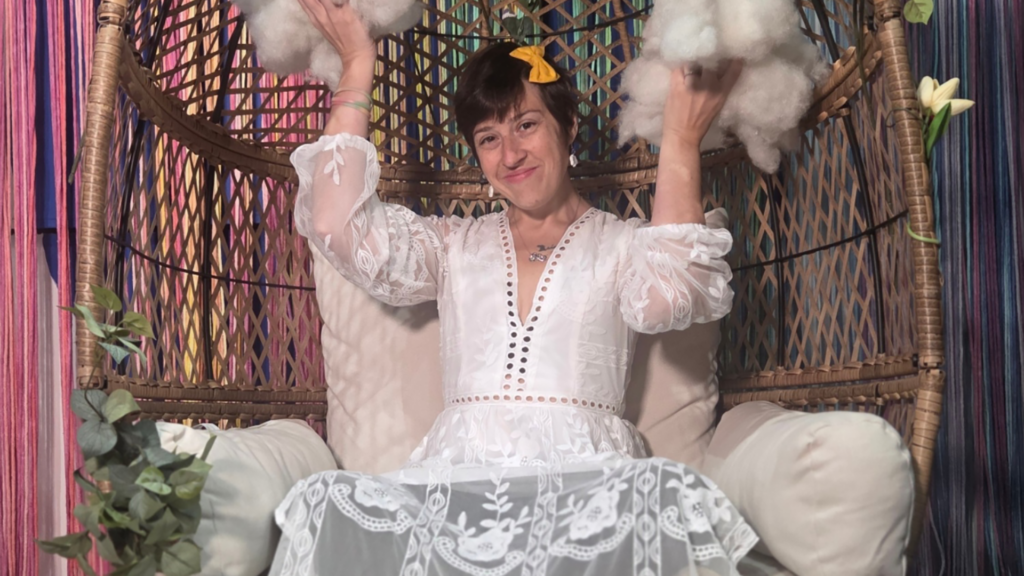 In her heartfelt children’s book Mom’s Cloud and the Beach Adventure, Kendall Concini-Moore gently opens the door for families to have honest conversations about emotions, mental wellness, and the reality of hard days. Through the loving bond between a mother and her children, Alma and Max, she reminds readers that it’s okay to not be okay—and that presence, patience, and understanding can be powerful forms of support. In this interview, Kendall shares the inspiration behind her story, the importance of emotional literacy for young children, and how families can use this book as a tool for connection, healing, and meaningful dialogue. Let’s meet her…
Your book uses the metaphor of a “cloud” to represent emotional heaviness. What inspired you to frame mental health in such a visual and accessible way for young children, and how do you hope families interpret that symbolism?
When I was in therapy, long before I ever considered having kids, my therapist told me I was “in the waves.” On the surface, I was above water: smiling, showing up, enjoying the day, but underneath, I was feeling the undertow, constantly pulling at me.
At the time, that language worked. When I was struggling, I could tell my loved ones, “I feel a wave coming.” But over time, that metaphor wasn’t as easy. The response often became, “Then don’t go in the water”, as if the solution was to avoid the things making me unhappy. But it was never that simple. So, the wave became a cloud. Something that could move with me. Something that could exist even on a sunny day, casting shade without warning. A cloud could shift, build into a storm, or pass just as quietly. It made space for the unpredictability, for the reality that these feelings aren’t always tied to a clear cause.
As a cloud, relaying it to my children was easy, because we loved cloud watching and always saw different things. Which is also my hope for families; that they can interpret their own way to talk with their loved ones as well. That emotional heaviness can become lighter and they can create their story.
My daughter understands my clouds, and herself identified her weather as her tornado. She talked through her feelings and responses in her own framework- and for me that was success in her interpretation.
Alma and Max respond to their mother’s “cloud” with empathy and presence rather than trying to fix her. Why was it important for you to model this kind of response for children, especially in a world that often encourages quick solutions?
In her heartfelt children’s book Mom’s Cloud and the Beach Adventure, Kendall Concini-Moore gently opens the door for families to have honest conversations about emotions, mental wellness, and the reality of hard days. Through the loving bond between a mother and her children, Alma and Max, she reminds readers that it’s okay to not be okay—and that presence, patience, and understanding can be powerful forms of support. In this interview, Kendall shares the inspiration behind her story, the importance of emotional literacy for young children, and how families can use this book as a tool for connection, healing, and meaningful dialogue. Let’s meet her…
Your book uses the metaphor of a “cloud” to represent emotional heaviness. What inspired you to frame mental health in such a visual and accessible way for young children, and how do you hope families interpret that symbolism?
When I was in therapy, long before I ever considered having kids, my therapist told me I was “in the waves.” On the surface, I was above water: smiling, showing up, enjoying the day, but underneath, I was feeling the undertow, constantly pulling at me.
At the time, that language worked. When I was struggling, I could tell my loved ones, “I feel a wave coming.” But over time, that metaphor wasn’t as easy. The response often became, “Then don’t go in the water”, as if the solution was to avoid the things making me unhappy. But it was never that simple. So, the wave became a cloud. Something that could move with me. Something that could exist even on a sunny day, casting shade without warning. A cloud could shift, build into a storm, or pass just as quietly. It made space for the unpredictability, for the reality that these feelings aren’t always tied to a clear cause.
As a cloud, relaying it to my children was easy, because we loved cloud watching and always saw different things. Which is also my hope for families; that they can interpret their own way to talk with their loved ones as well. That emotional heaviness can become lighter and they can create their story.
My daughter understands my clouds, and herself identified her weather as her tornado. She talked through her feelings and responses in her own framework- and for me that was success in her interpretation.
Alma and Max respond to their mother’s “cloud” with empathy and presence rather than trying to fix her. Why was it important for you to model this kind of response for children, especially in a world that often encourages quick solutions?
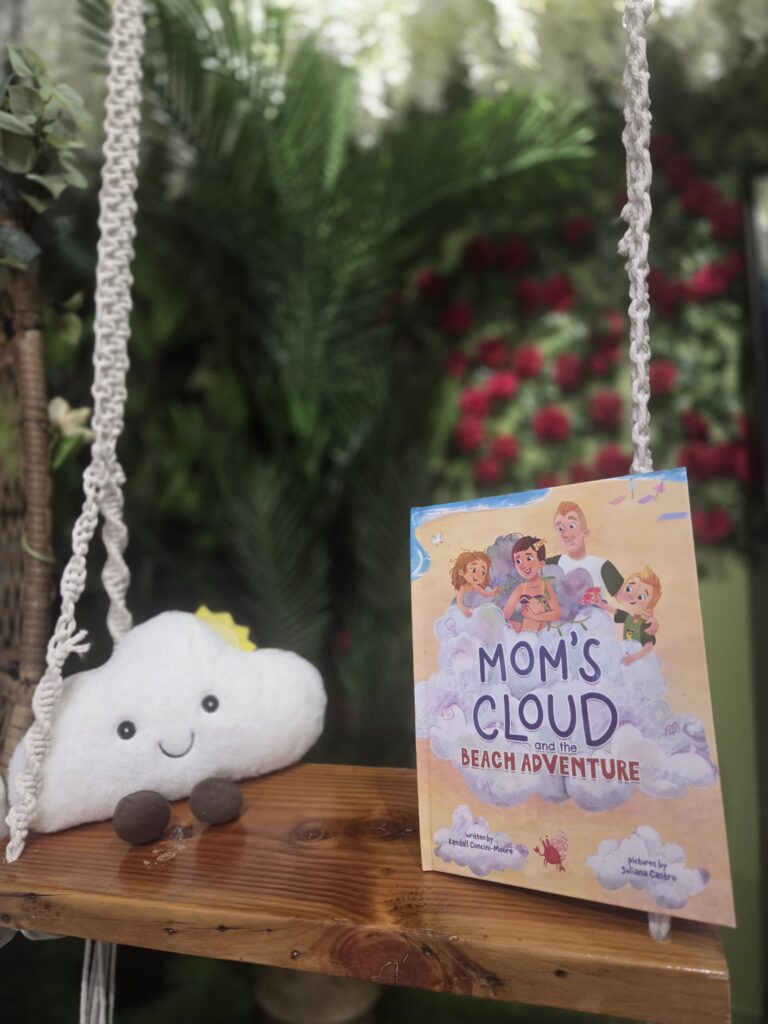 Honestly, a big part of how I approached this came from my own childhood. I was a parentified child. I remember moments where my parents would fight, or go through their own struggles, and be told, “go cheer up your mom,” or “go sit with her”. I loved our time together, but I knew those moments felt different. I felt the weight of being needed, and remember wishing my Dad would be the more responsible person.
I knew I didn’t want that for my children. I wanted to raise them to be empathetic, but not responsible for our emotions. To understand that yes, they are a huge source of happiness in my life, but they are not in charge of creating it or fixing cloudy days.
So in the story, I was very intentional about showing that balance. The family holds space for Mom, but they don’t try to fix her. They don’t beg her to do things, and Dad doesn’t require them to change their day to include Mom. Instead, they give her space, and they have their fun, and from that there are moments where they are able to enjoy the beach in ways that feel good to them, and are okay with the way Mom wants to play- or rest. They stay connected, but they’re not carrying her cloud.
The reality I hope children grow up with is this: it’s okay if someone isn’t “on” all the time. We all have feelings, and we don’t need to fix or take responsibility for them, we can love, understand, and still enjoy sunshine.
Many children struggle to understand when a parent is having a difficult emotional day. How did you approach writing this story in a way that validates children’s feelings while also reassuring them that they are not responsible for a parent’s struggles?
I wrote this book with my family.
During the process, I would draft a scene while offering two or three different lines for everyone to choose from. When I felt stuck, I’d ask my daughter, “If we were at the beach and Mom didn’t want to go in the water, what would you say?”
I would take the heart of her response and weave it into the story.
Some of the most meaningful lines came from her, which is why you’ll see her name signed on the front page: “the power of caring,” “your best is enough,” and “it’s not forever.”
It was meaningful to me, because when I hear, “we can’t talk to kids about mental health’ or ‘this is a hard concept for this age” I can reflect on how my daughter helped write this at two years old, because I gave the space and confidence to do so.
The dad’s lines, while a little more punny than usual, are very much inspired by my husband. They reflect the kind of grounding, steady reminders he gives me in real life, and helped show me could become a parent. .
It was also a very messy process. I was constantly editing, even during production. In fact, the first printed version is slightly different because I was podcasting and talking through the story while the sample was being created, and I realized I wanted to soften a few moments. So the book really evolved alongside our conversations. But that’s also the beauty of reading it outloud, I often add in some one-liners and extra insights as I go.
As a mother yourself, how did your personal experiences influence the storytelling in this book, particularly the dynamic between Mom, Alma, and Max?
I touched on this a bit earlier, but my personal experience is really the core of the story. The beach was a natural setting because it reflects our real life. When we go, I don’t always participate in the same way. I’m not someone who loves lotion, sandcastles, or being in the water, so I often ask for space and understanding in those moments.
What’s meaningful is how my kids respond. They’ll come show me their treasures, wave to me from the water, including me in their way, but they don’t pressure me to do the things I don’t enjoy. They’re okay with that being ‘Dad time’, and our dynamic focuses on support without pressure. That was exactly what I wanted to capture when talking about mental health. The setting was authentic and familiar.
The book emphasizes that “it’s okay to not be okay.” Why do you feel this message is especially important for children ages 4–8, and how can caregivers continue this conversation beyond the pages of the book?
I’m drawn to the Montessori education approach, which encourages children’s self-motivation, curiosity, and confidence, while validating their natural capacity for self-discovery and learning. Within this framework, all feelings are natural. It moves away from phrases like “stop crying,” “you’re fine,” or “you’re okay,” which often overlook whether a child truly understands or is ready to express what they feel. It encourages conversations, explanations, and understanding.
The idea that “it’s okay to not be okay” captures this completely, acknowledging that all emotions are valid, curiosity is welcome, and grounding is acceptable. It encourages, questions, and creates conversation.
You included discussion questions and caregiver resources to help families navigate big emotions together. What kinds of conversations do you hope this book sparks between parents and children after reading it?
Throughout the book, we use bold and creatively drawn words to emphasize moments for engagement, highlight significance, and inspire curiosity. In the back, we include discussion questions to guide caregivers and children, helping spark meaningful conversation and togetherness.
Caregivers can continue this beyond the book by being open to readiness. When tantrums or big feelings arise, try asking, “Is this a cloud moment?” Other ways to extend the discussion include: repeating back what the child shares in your own words to show understanding, sharing your own “clouds” in age-appropriate ways to model that everyone experiences big emotions, instead of immediately trying to fix a situation, ask questions: “What made you feel this way?” or “How could we make this better together?”
By embedding these approaches in daily interactions, caregivers reinforce the lessons from the book, validate emotions, and help children develop self-awareness, resilience, and empathy, turning “cloudy” moments into opportunities for growth and connection.
Mental health is still a sensitive topic in many households. What impact do you hope Mom’s Cloud and the Beach Adventure will have in normalizing these conversations and strengthening emotional connection within families?
What I hope to normalize is connection and openness around emotional struggles. I once attended an event with my husband, where we had fliers with resources stating, “1 in 5 women experience PPD struggles.” My husband looked around the room and said, “There are six women here- you are the one.” He then took a walk to the next room, came back and said, “There are seven women in that room, I wonder who needs you to connect with them and remind them they are not alone?”
The impact I hope to make is exactly that: fostering connections, showing that we are not alone, validating feelings, and reminding everyone that clouds don’t last forever, and it’s okay to not be okay.
Connect with this Author:
Instagram
Author’s Website/Buy The Book
Substack
Honestly, a big part of how I approached this came from my own childhood. I was a parentified child. I remember moments where my parents would fight, or go through their own struggles, and be told, “go cheer up your mom,” or “go sit with her”. I loved our time together, but I knew those moments felt different. I felt the weight of being needed, and remember wishing my Dad would be the more responsible person.
I knew I didn’t want that for my children. I wanted to raise them to be empathetic, but not responsible for our emotions. To understand that yes, they are a huge source of happiness in my life, but they are not in charge of creating it or fixing cloudy days.
So in the story, I was very intentional about showing that balance. The family holds space for Mom, but they don’t try to fix her. They don’t beg her to do things, and Dad doesn’t require them to change their day to include Mom. Instead, they give her space, and they have their fun, and from that there are moments where they are able to enjoy the beach in ways that feel good to them, and are okay with the way Mom wants to play- or rest. They stay connected, but they’re not carrying her cloud.
The reality I hope children grow up with is this: it’s okay if someone isn’t “on” all the time. We all have feelings, and we don’t need to fix or take responsibility for them, we can love, understand, and still enjoy sunshine.
Many children struggle to understand when a parent is having a difficult emotional day. How did you approach writing this story in a way that validates children’s feelings while also reassuring them that they are not responsible for a parent’s struggles?
I wrote this book with my family.
During the process, I would draft a scene while offering two or three different lines for everyone to choose from. When I felt stuck, I’d ask my daughter, “If we were at the beach and Mom didn’t want to go in the water, what would you say?”
I would take the heart of her response and weave it into the story.
Some of the most meaningful lines came from her, which is why you’ll see her name signed on the front page: “the power of caring,” “your best is enough,” and “it’s not forever.”
It was meaningful to me, because when I hear, “we can’t talk to kids about mental health’ or ‘this is a hard concept for this age” I can reflect on how my daughter helped write this at two years old, because I gave the space and confidence to do so.
The dad’s lines, while a little more punny than usual, are very much inspired by my husband. They reflect the kind of grounding, steady reminders he gives me in real life, and helped show me could become a parent. .
It was also a very messy process. I was constantly editing, even during production. In fact, the first printed version is slightly different because I was podcasting and talking through the story while the sample was being created, and I realized I wanted to soften a few moments. So the book really evolved alongside our conversations. But that’s also the beauty of reading it outloud, I often add in some one-liners and extra insights as I go.
As a mother yourself, how did your personal experiences influence the storytelling in this book, particularly the dynamic between Mom, Alma, and Max?
I touched on this a bit earlier, but my personal experience is really the core of the story. The beach was a natural setting because it reflects our real life. When we go, I don’t always participate in the same way. I’m not someone who loves lotion, sandcastles, or being in the water, so I often ask for space and understanding in those moments.
What’s meaningful is how my kids respond. They’ll come show me their treasures, wave to me from the water, including me in their way, but they don’t pressure me to do the things I don’t enjoy. They’re okay with that being ‘Dad time’, and our dynamic focuses on support without pressure. That was exactly what I wanted to capture when talking about mental health. The setting was authentic and familiar.
The book emphasizes that “it’s okay to not be okay.” Why do you feel this message is especially important for children ages 4–8, and how can caregivers continue this conversation beyond the pages of the book?
I’m drawn to the Montessori education approach, which encourages children’s self-motivation, curiosity, and confidence, while validating their natural capacity for self-discovery and learning. Within this framework, all feelings are natural. It moves away from phrases like “stop crying,” “you’re fine,” or “you’re okay,” which often overlook whether a child truly understands or is ready to express what they feel. It encourages conversations, explanations, and understanding.
The idea that “it’s okay to not be okay” captures this completely, acknowledging that all emotions are valid, curiosity is welcome, and grounding is acceptable. It encourages, questions, and creates conversation.
You included discussion questions and caregiver resources to help families navigate big emotions together. What kinds of conversations do you hope this book sparks between parents and children after reading it?
Throughout the book, we use bold and creatively drawn words to emphasize moments for engagement, highlight significance, and inspire curiosity. In the back, we include discussion questions to guide caregivers and children, helping spark meaningful conversation and togetherness.
Caregivers can continue this beyond the book by being open to readiness. When tantrums or big feelings arise, try asking, “Is this a cloud moment?” Other ways to extend the discussion include: repeating back what the child shares in your own words to show understanding, sharing your own “clouds” in age-appropriate ways to model that everyone experiences big emotions, instead of immediately trying to fix a situation, ask questions: “What made you feel this way?” or “How could we make this better together?”
By embedding these approaches in daily interactions, caregivers reinforce the lessons from the book, validate emotions, and help children develop self-awareness, resilience, and empathy, turning “cloudy” moments into opportunities for growth and connection.
Mental health is still a sensitive topic in many households. What impact do you hope Mom’s Cloud and the Beach Adventure will have in normalizing these conversations and strengthening emotional connection within families?
What I hope to normalize is connection and openness around emotional struggles. I once attended an event with my husband, where we had fliers with resources stating, “1 in 5 women experience PPD struggles.” My husband looked around the room and said, “There are six women here- you are the one.” He then took a walk to the next room, came back and said, “There are seven women in that room, I wonder who needs you to connect with them and remind them they are not alone?”
The impact I hope to make is exactly that: fostering connections, showing that we are not alone, validating feelings, and reminding everyone that clouds don’t last forever, and it’s okay to not be okay.
Connect with this Author:
Instagram
Author’s Website/Buy The Book
Substack
Discover more from Connected Woman Magazine
Subscribe to get the latest posts sent to your email.