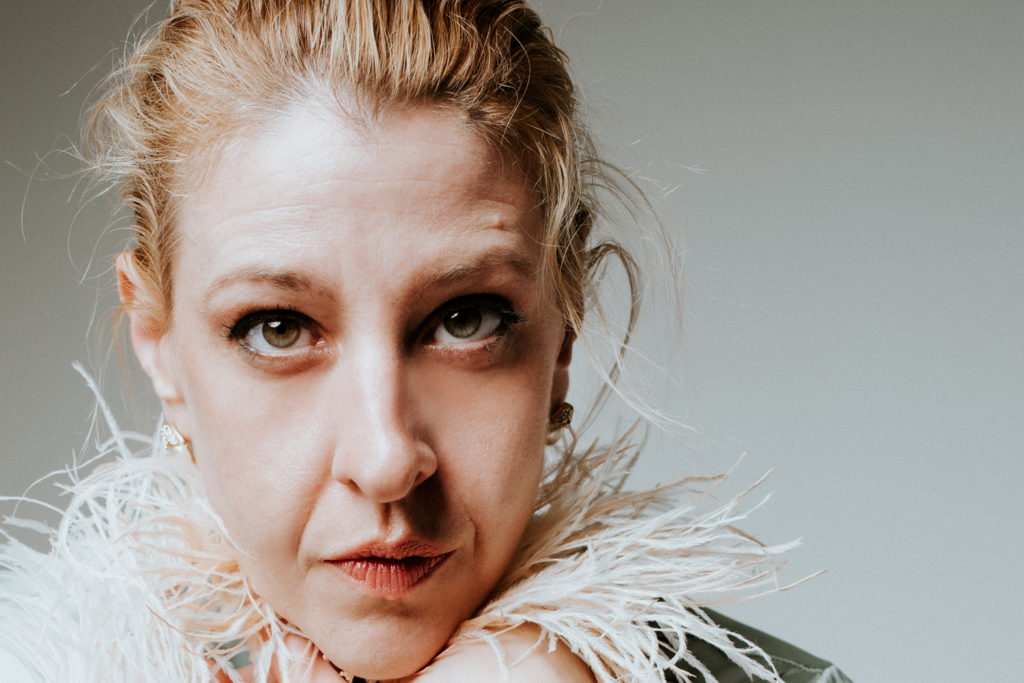
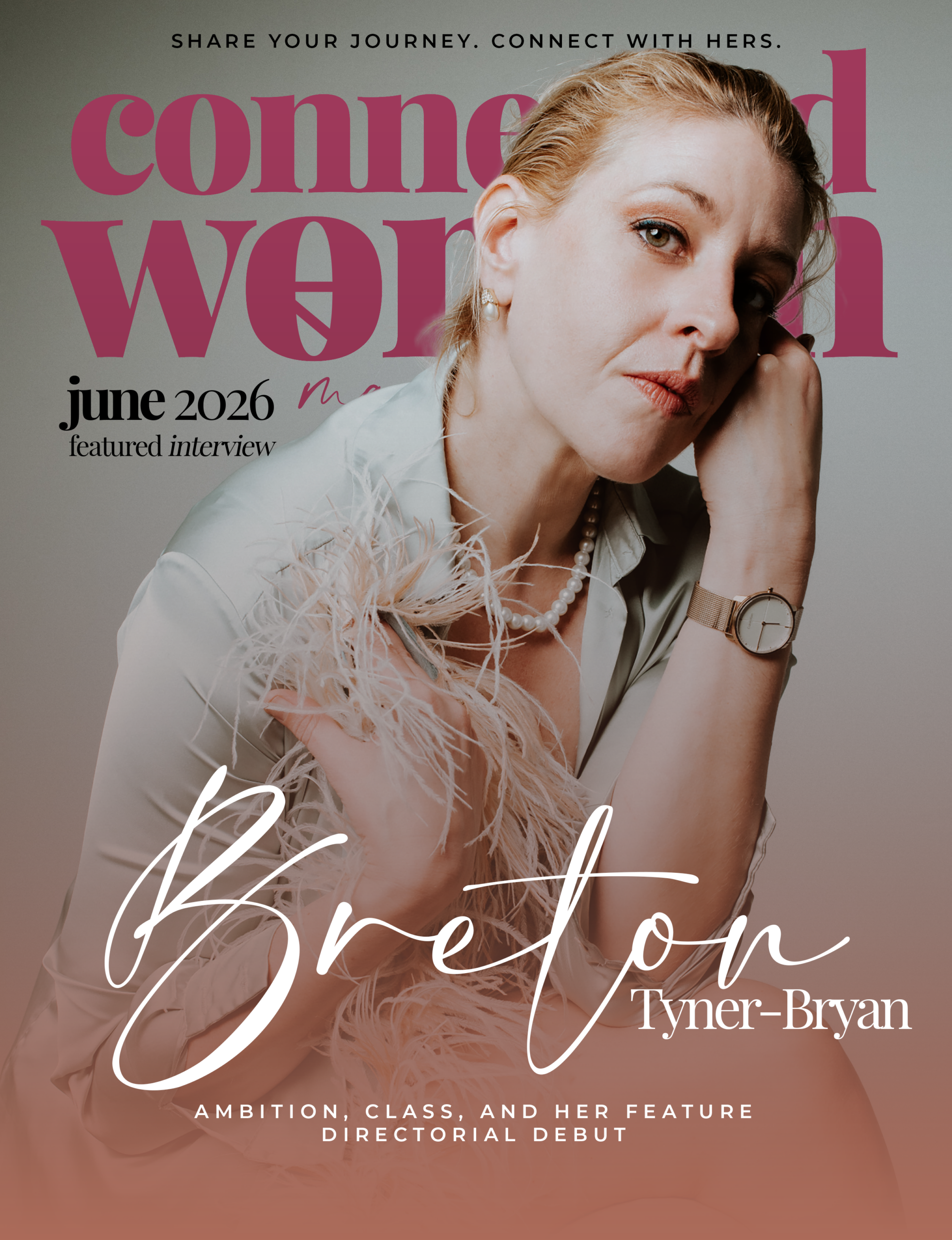
 From award-winning short films to acclaimed performances on screen, Breton Tyner-Bryan has built a career defined by artistic versatility, emotional depth, and visually captivating storytelling. Now, she takes a major leap forward with Rhythm or Smooth, her feature directorial debut that recently wrapped production in New York. The independent film dives into the fiercely competitive world of ballroom dance, exploring ambition, class, identity, and the personal sacrifices often hidden behind the pursuit of excellence. In this exclusive interview, Breton shares insights into her creative journey as a director, writer, actor, and choreographer, the inspiration behind Rhythm or Smooth, the challenges of leading a feature film while appearing in it, and what she hopes audiences will discover when they step onto the dance floor with her unforgettable characters. Let’s meet her…
You’ve built a career as a director, writer, actor, choreographer, and editor. How have these different disciplines shaped your storytelling voice, and how do they show up in Rhythm or Smooth?
I do not really experience those disciplines as separate practices. They are all different ways of investigating human behavior. Dance taught me that the body often tells the truth before language does. Acting taught me empathy. Editing taught me that meaning is created through rhythm, perspective, and juxtaposition. Writing taught me to interrogate character. Directing became the place where all of those disciplines converge. It is where movement, image, performance, rhythm, and character meet.
I’m deeply interested in the tension between performance and authenticity, and I love when the two collide to reveal a deeper truth, often a comedic one. We are all performing versions of ourselves, consciously or unconsciously, depending on the environment we occupy. Rhythm or Smooth explores that idea through ballroom culture, where identity, desire, status, survival, and aspiration are constantly being negotiated through movement, alliances, and proximity to power. For me, movement is the cinematic mechanism for storytelling, the human experience made visible.
Your previous films like West of Frank, Bloom, and Delusione have earned over 150 international awards. What lessons from those projects did you carry into your feature directorial debut?
Those projects taught me to trust specificity. The more personal, peculiar, and truthful the work became, the more universal the response seemed to be. Whether I was exploring grief, identity, obsession, fantasy, or human connection, audiences consistently responded to emotional honesty rather than perfection.
They also taught me how to pivot. In independent filmmaking, you are constantly problem solving. Early on, that might mean adjusting a production or post production plan over the course of forty eight or twenty four hours. Eventually that becomes twenty minutes on set, and then sometimes five. You learn to solve problems in real time without losing sight of the larger vision.
I think that mentality comes from my background in dance and theater. Our lives as performers are built around seconds. Everything is scheduled with precision. You learn very quickly how much can be accomplished with the time you have, and how momentum itself becomes a creative tool. That understanding has served me tremendously as a filmmaker because filmmaking is ultimately the art of balancing preparation, instinct, collaboration, and time.
Going into Rhythm or Smooth, I was interested in embracing contradiction. The film is glamorous and gritty, funny and heartbreaking, heightened and deeply human. Like the ballroom world itself, it exists in multiple realities at once. My previous work taught me not to resolve those contradictions, but to lean into them.
From award-winning short films to acclaimed performances on screen, Breton Tyner-Bryan has built a career defined by artistic versatility, emotional depth, and visually captivating storytelling. Now, she takes a major leap forward with Rhythm or Smooth, her feature directorial debut that recently wrapped production in New York. The independent film dives into the fiercely competitive world of ballroom dance, exploring ambition, class, identity, and the personal sacrifices often hidden behind the pursuit of excellence. In this exclusive interview, Breton shares insights into her creative journey as a director, writer, actor, and choreographer, the inspiration behind Rhythm or Smooth, the challenges of leading a feature film while appearing in it, and what she hopes audiences will discover when they step onto the dance floor with her unforgettable characters. Let’s meet her…
You’ve built a career as a director, writer, actor, choreographer, and editor. How have these different disciplines shaped your storytelling voice, and how do they show up in Rhythm or Smooth?
I do not really experience those disciplines as separate practices. They are all different ways of investigating human behavior. Dance taught me that the body often tells the truth before language does. Acting taught me empathy. Editing taught me that meaning is created through rhythm, perspective, and juxtaposition. Writing taught me to interrogate character. Directing became the place where all of those disciplines converge. It is where movement, image, performance, rhythm, and character meet.
I’m deeply interested in the tension between performance and authenticity, and I love when the two collide to reveal a deeper truth, often a comedic one. We are all performing versions of ourselves, consciously or unconsciously, depending on the environment we occupy. Rhythm or Smooth explores that idea through ballroom culture, where identity, desire, status, survival, and aspiration are constantly being negotiated through movement, alliances, and proximity to power. For me, movement is the cinematic mechanism for storytelling, the human experience made visible.
Your previous films like West of Frank, Bloom, and Delusione have earned over 150 international awards. What lessons from those projects did you carry into your feature directorial debut?
Those projects taught me to trust specificity. The more personal, peculiar, and truthful the work became, the more universal the response seemed to be. Whether I was exploring grief, identity, obsession, fantasy, or human connection, audiences consistently responded to emotional honesty rather than perfection.
They also taught me how to pivot. In independent filmmaking, you are constantly problem solving. Early on, that might mean adjusting a production or post production plan over the course of forty eight or twenty four hours. Eventually that becomes twenty minutes on set, and then sometimes five. You learn to solve problems in real time without losing sight of the larger vision.
I think that mentality comes from my background in dance and theater. Our lives as performers are built around seconds. Everything is scheduled with precision. You learn very quickly how much can be accomplished with the time you have, and how momentum itself becomes a creative tool. That understanding has served me tremendously as a filmmaker because filmmaking is ultimately the art of balancing preparation, instinct, collaboration, and time.
Going into Rhythm or Smooth, I was interested in embracing contradiction. The film is glamorous and gritty, funny and heartbreaking, heightened and deeply human. Like the ballroom world itself, it exists in multiple realities at once. My previous work taught me not to resolve those contradictions, but to lean into them.
 Rhythm or Smooth is described as a love letter to ballroom dance, but also a story about ego, class, and ambition. What drew you to explore these deeper themes through the lens of dance?
I love when appetite is on display, with a ferocity that reaches beyond perceived notions of class. I find it utterly authentic, hilarious at times, and deeply human. Everyone is dressing themselves, consciously or unconsciously, in a play of their own invention.
I love ballroom dance because it encompasses such ferocity, passion, spirit, and presentation. Underneath that veneer lies celebration, heartbreak, discipline, joy, partnership, and the perception of control. I find those contradictions sitting side by side to be much closer to the truth of the human experience. Longing, ambition, competition, insecurity, and desire live within so many private experiences, and ballroom places them center stage.
I have always been drawn to environments where people are striving for transformation. Whether through success, love, status, spirituality, loss, or performance, human beings are constantly attempting to become something beyond themselves. I find it fascinating that the gift of performance often brings us closer to our own personal truths. We get all dressed up only to reveal ourselves eventually. Some people do it willingly, some never do. That tension fascinates me.
Ballroom became a powerful metaphor for that pursuit. The dance floor is not simply a place where people compete. It is a place where they construct identity, seek validation, and reveal aspects of themselves they may not be able to express anywhere else. As a lifelong performer, I know the power and freedom of truly being oneself in motion, suspended for a moment from the expectations, attitudes, and demands of everyday life.
This marks your first time directing a feature film while also appearing on screen. What were the biggest challenges and advantages of balancing both roles?
I’ve actually been acting in my own work for the better part of a decade. Many of those projects were never originally intended for me to perform in, but circumstances changed and I stepped in at the last minute. Over time, I’ve discovered that projects I create often become projects I act in as well.
What’s interesting is that I also act in projects where I’m hired as a director but not the writer. In those situations, acting becomes a bit of an emotional vacation for me. I know that sounds simplistic, but as a lifelong performer, being in front of the camera is the most natural place for me to be. It is where I feel the least burdened by responsibility. I simply have to show up, listen, respond, and be present. There is something incredibly freeing about that.
Directing is different. You’re responsible for the entire ecosystem of the film. You’re thinking about performance, camera, production design, schedule, story, tone, and a hundred other moving parts simultaneously. It requires you to see the room in 360 degrees.
Oddly, I enjoy that level of intensity. Multitasking sharpens my focus rather than dividing it. I find that switching between the two perspectives often makes me better at both. As an actor, I understand vulnerability. As a director, I understand structure. When those things are working together, it creates an environment where people feel safe enough to take risks and discover something truthful.
Ballroom dance is both visually stunning and emotionally intense. How did your background in choreography influence how you captured movement and storytelling on screen?
A lifelong dancer, emotion has always been the driving force behind why I move, dance, act, and create. Everything is movement. Editing, costume design, set design, architecture, nature. Design itself is life in motion.
I feel and see everything through an exaggerated lens of time enhanced by movement. I have experienced the world through that lens for as long as I can remember. That instinct has been sharpened through years of working across multiple disciplines and artistic forms. At the end of the day, I’m looking for the lie. I’m looking for the moment authenticity appears and drops into place.
It is an energetic feeling expressed through aesthetics. The lie occurs when people disconnect, when the thread breaks, or when they were never connected in the first place. Great art connects people instantly. It rarely requires explanation. It is felt.
My choreography background influences everything I do because I do not separate movement from storytelling. The camera dances with the performers. Framing, pacing, choreography, performance, and editing are all part of the same conversation.
Ballroom demands extraordinary precision, but I was equally interested in the moments where control begins to fracture and the beautiful humanity of perceived mistakes seeps through. The moments where emotion interrupts technique and movement becomes a revelation for both the viewer and the performer. Those are often the moments that tell us who a character truly is.
Rhythm or Smooth is described as a love letter to ballroom dance, but also a story about ego, class, and ambition. What drew you to explore these deeper themes through the lens of dance?
I love when appetite is on display, with a ferocity that reaches beyond perceived notions of class. I find it utterly authentic, hilarious at times, and deeply human. Everyone is dressing themselves, consciously or unconsciously, in a play of their own invention.
I love ballroom dance because it encompasses such ferocity, passion, spirit, and presentation. Underneath that veneer lies celebration, heartbreak, discipline, joy, partnership, and the perception of control. I find those contradictions sitting side by side to be much closer to the truth of the human experience. Longing, ambition, competition, insecurity, and desire live within so many private experiences, and ballroom places them center stage.
I have always been drawn to environments where people are striving for transformation. Whether through success, love, status, spirituality, loss, or performance, human beings are constantly attempting to become something beyond themselves. I find it fascinating that the gift of performance often brings us closer to our own personal truths. We get all dressed up only to reveal ourselves eventually. Some people do it willingly, some never do. That tension fascinates me.
Ballroom became a powerful metaphor for that pursuit. The dance floor is not simply a place where people compete. It is a place where they construct identity, seek validation, and reveal aspects of themselves they may not be able to express anywhere else. As a lifelong performer, I know the power and freedom of truly being oneself in motion, suspended for a moment from the expectations, attitudes, and demands of everyday life.
This marks your first time directing a feature film while also appearing on screen. What were the biggest challenges and advantages of balancing both roles?
I’ve actually been acting in my own work for the better part of a decade. Many of those projects were never originally intended for me to perform in, but circumstances changed and I stepped in at the last minute. Over time, I’ve discovered that projects I create often become projects I act in as well.
What’s interesting is that I also act in projects where I’m hired as a director but not the writer. In those situations, acting becomes a bit of an emotional vacation for me. I know that sounds simplistic, but as a lifelong performer, being in front of the camera is the most natural place for me to be. It is where I feel the least burdened by responsibility. I simply have to show up, listen, respond, and be present. There is something incredibly freeing about that.
Directing is different. You’re responsible for the entire ecosystem of the film. You’re thinking about performance, camera, production design, schedule, story, tone, and a hundred other moving parts simultaneously. It requires you to see the room in 360 degrees.
Oddly, I enjoy that level of intensity. Multitasking sharpens my focus rather than dividing it. I find that switching between the two perspectives often makes me better at both. As an actor, I understand vulnerability. As a director, I understand structure. When those things are working together, it creates an environment where people feel safe enough to take risks and discover something truthful.
Ballroom dance is both visually stunning and emotionally intense. How did your background in choreography influence how you captured movement and storytelling on screen?
A lifelong dancer, emotion has always been the driving force behind why I move, dance, act, and create. Everything is movement. Editing, costume design, set design, architecture, nature. Design itself is life in motion.
I feel and see everything through an exaggerated lens of time enhanced by movement. I have experienced the world through that lens for as long as I can remember. That instinct has been sharpened through years of working across multiple disciplines and artistic forms. At the end of the day, I’m looking for the lie. I’m looking for the moment authenticity appears and drops into place.
It is an energetic feeling expressed through aesthetics. The lie occurs when people disconnect, when the thread breaks, or when they were never connected in the first place. Great art connects people instantly. It rarely requires explanation. It is felt.
My choreography background influences everything I do because I do not separate movement from storytelling. The camera dances with the performers. Framing, pacing, choreography, performance, and editing are all part of the same conversation.
Ballroom demands extraordinary precision, but I was equally interested in the moments where control begins to fracture and the beautiful humanity of perceived mistakes seeps through. The moments where emotion interrupts technique and movement becomes a revelation for both the viewer and the performer. Those are often the moments that tell us who a character truly is.
 The film centers on Ava, played by newcomer Kiree Brooks, navigating a high stakes dance world. What made Kiree the right choice for this role, and how did you guide her performance?
Kiree and I actually go back quite a few years. She was one of my students in the Alvin Ailey and Fordham BFA program, long before either of us imagined we would be making a feature film together. What is funny is that she originally came to an open call that was not for the lead role. I did not recognize her at first. It had been years, and she walked into the room as a completely different artist than the student I remembered. I simply said, “Let her audition.”
At the time, we had seen a number of wonderful actors. Many were incredibly talented, but there was often a practical conversation attached to the work. Scheduling requests, availability, competing priorities. It felt like a job. This role needed to be about the journey we were going to take together. Kiree came into the audition nervous, but the moment the pressure was on, she went for it. She committed fully. She took risks. She was vulnerable. She trusted her instincts and nailed the audition right there in the room. To me, that is the character. It is also the heart of New York City.
You go for it even when you’re tired, scared, hungry, uncertain, and running on very little sleep because the dream is bigger than your past. The possibility of what could happen is greater than the comfort of staying where you are.
Kiree is an exceptional dancer who came up through New York City. You cannot replicate that kind of hustle, sacrifice, perseverance, and heartbreak unless you have lived some version of it yourself. There is a resilience that comes from pursuing something difficult in this city, and she carried that into every aspect of the role. As the auditions continued, it became increasingly clear that she was Ava. Not because she fit some predetermined idea of the character, but because she continually revealed dimensions of the role that I had not anticipated. The character became richer through her, and that’s what I’d been looking for. My job was never to manufacture a performance. It was to create an environment where she could trust her instincts, remain present, and bring her full self to the work.
One of the greatest joys of the experience was watching someone I had once taught step fully into her own artistry. She earned that role completely on her own merits, and I could not be more proud of the work she did in the film.
The partnership between Ava and her dance partner introduces themes of secrecy, survival, and societal expectations. What conversations or real world observations inspired this dynamic?
I’ve always been interested in the roles society asks us to perform. The relationship at the center of the film grew from conversations about identity, survival, economic realities, and the compromises people make in order to belong. Ballroom dance became the perfect backdrop because it is literally a world built on partnership, presentation, aspiration, and perception.
New York City plays a significant role in the film’s atmosphere. How did shooting in New York shape the tone, energy, and authenticity of Rhythm or Smooth?
New York is a signature, unavoidable, loud, and generous character in the film. The city has a relentless energy that mirrors the ambition of the people who come here chasing something. There is elegance and grit existing side by side. Beauty and struggle occupy every inch of this city. New York will polish you into the best version of yourself and then throw you to the pavement and ask if you’re ready for more. It pushes you like no other place on earth.
We have a predominantly New York cast, many of whom have spent significant time in the theater and dance worlds. That takes muscle and hustle. It takes commitment, perseverance, and a relentless hunger to pursue excellence day after day.
The locations are also characters in the film. They are uniquely New York spaces that cannot easily be replicated anywhere else in the world. Shooting in New York gave us an authenticity that cannot be manufactured. You feel the urgency, density, possibility, and contradiction of the city in every frame. It became an extension of the characters themselves.
You’ve worked across major television productions like The Penguin, Manifest, and Billions. How does working on large scale productions compare to the creative control and intimacy of independent filmmaking?
Large scale productions are incredible opportunities to observe masters at work. You learn discipline, collaboration, and the mechanics of storytelling at an exceptionally high level. Independent filmmaking is different because every decision carries greater personal responsibility. There are fewer safety nets, but there is also tremendous freedom. I love both because they exercise different creative muscles and constantly remind me that storytelling exists at every scale.
With such a talented ensemble cast, including Catherine Curtin and Ivory Aquino, how did you approach directing actors from such diverse backgrounds and experiences?
My approach is always rooted in trust and collaboration. Every actor arrives with a unique process, and my responsibility is to understand what helps them do their best work.
Catherine Curtin and Ivory Aquino are longtime collaborators whose work I have admired for years across multiple mediums. More importantly, they are extraordinary human beings. They are magnanimous, whip smart, deeply generous artists who consistently give you something greater than you imagined when you wrote the scene.
What continues to amaze me is the range they possess individually. The level of talent is extraordinary, but what makes them exceptional is their awareness. They understand the larger architecture of a story while simultaneously calibrating the smallest details of a performance. Their micro movements, nuances, rhythms, and choices are incredibly precise, yet they never feel calculated.
When Catherine or Ivory walk onto a set, everything suddenly makes sense. They bring a vitality, intelligence, and vivaciousness for life that cannot be manufactured and is increasingly rare to find. They elevate not only the scene they are in, but everyone around them.
They are equally captivating on screen and on stage, which is a remarkably rare combination. There is a technical mastery to what they do, but there is also tremendous humanity. They understand people. They understand behavior. They understand the story.
The truth is, I wrote both of these roles specifically for Catherine and Ivory, hoping they would say yes. Their voices, instincts, and humanity were already living inside the characters as I was writing them. When they agreed to join the film, it felt less like casting and more like a creative homecoming. Working with them is always an adventure. They surprise me every time, and I feel incredibly fortunate to have taken that journey with them.
Movement informed storytelling is a signature of your work. How do you ensure that physicality and emotion remain equally impactful in your films?
I do not know how I would exist without movement. Movement is the currency of living. Nature is movement. Wind, water, the moon, the sun. These elements are constantly in conversation with one another. I believe movement is part of the fundamental design of existence. The perception of stillness is just as important as physical motion. Timing is everything, and to me that is the quintessential definition of movement. As a choreographer and director, I am aggressively expansive in creation and then ruthlessly selective in editing. I like to expand possibilities, discover the strongest choices, and refine until every moment serves its purpose.
Emotion lives in the body. Long before a character speaks, we understand them through posture, breath, rhythm, behavior, and presence. Because of my dance background, I pay close attention to physical storytelling, but movement should never become decorative. Every gesture, every moment of stillness, every shift in rhythm should reveal something essential about a character’s emotional state. When movement and emotion become inseparable, the audience stops watching a performance and begins experiencing a life.
The ballroom world is known for its discipline and precision. What did you discover about that community that surprised or challenged your initial perspective?
What surprised me most was the level of trust required. From the outside, people see glamour, competition, and technical mastery. What I discovered was a community built on partnership, discipline, vulnerability, and mutual dependence. To dance with someone at that level requires extraordinary trust. That emotional honesty became one of the most compelling aspects of the world for me.
You’re also developing a television series, I Dream of Hazel, and are attached to multiple upcoming projects. How do you creatively shift between film, television, and stage work without losing momentum or clarity?
For me, the medium changes, but the mission does not. Whether I am directing a feature, developing a television series like I Dream of Hazel, or working in theater, I am always searching for emotionally complex characters, navigating extraordinary circumstances and dialing into what each medium uniquely demands.
Each project ultimately tells you what medium it wants to live in, and sometimes it wants to exist across several. Moving between mediums keeps me energized because each form reveals different possibilities for storytelling. They challenge different instincts while serving the same artistic curiosity.
I have spent significant time working in all of them, and I genuinely love each for its strengths. More and more, I am being asked to think about intellectual property across multiple mediums, and that is exciting. You are not only helping creators realize a larger vision, you are also creating multiple points of entry for audiences to engage with a world they love.
At the end of the day, whether it is theater, film, or television, I am still chasing the same thing: emotional truth, compelling characters, and the movement of an audience.
Independent filmmaking often comes with limitations. How did you navigate constraints, whether financial, logistical, or time related, while still maintaining your artistic vision for this project?
Independent filmmaking demands creativity in every sense of the word. Limitations force you to identify what is truly essential. Whenever challenges arose, the question became: what is the emotional truth of the scene, and how do we protect it? If you remain committed to that truth, constraints stop feeling like obstacles and start becoming opportunities to sharpen the work.
As a filmmaker whose work centers on character and emotional clarity, what do you ultimately hope audiences take away from Rhythm or Smooth, both about the world of dance and about themselves?
I hope audiences see themselves somewhere in the film. Not necessarily as they are today, but perhaps as someone they once were, someone they may become, or someone they recognize in their own lives. While Rhythm or Smooth is set within the world of ballroom dance, the emotions driving the characters are universal. The desire to belong, to be loved, to be chosen, to reinvent ourselves, to matter.
As a filmmaker, character is central to my work, but so is visual storytelling. Before I ever made films, I was a photographer. I have always been fascinated by the moving image as a way of expressing time, place, memory, and emotion. Color, texture, composition, light, and movement are not decorative elements to me. They are the emotional architecture of the film. They shape how an audience experiences a character’s inner world and how they perceive the world around them.
Cinema allows us to recognize ourselves through the lives of others. I hope audiences see a part of themselves reflected in these characters, whether it is who they are, who they were, who they may become, or someone they deeply know and love. If the film creates empathy, reflection, or a deeper understanding of ourselves and each other, then it has succeeded. For me, that is the power of storytelling.
The film centers on Ava, played by newcomer Kiree Brooks, navigating a high stakes dance world. What made Kiree the right choice for this role, and how did you guide her performance?
Kiree and I actually go back quite a few years. She was one of my students in the Alvin Ailey and Fordham BFA program, long before either of us imagined we would be making a feature film together. What is funny is that she originally came to an open call that was not for the lead role. I did not recognize her at first. It had been years, and she walked into the room as a completely different artist than the student I remembered. I simply said, “Let her audition.”
At the time, we had seen a number of wonderful actors. Many were incredibly talented, but there was often a practical conversation attached to the work. Scheduling requests, availability, competing priorities. It felt like a job. This role needed to be about the journey we were going to take together. Kiree came into the audition nervous, but the moment the pressure was on, she went for it. She committed fully. She took risks. She was vulnerable. She trusted her instincts and nailed the audition right there in the room. To me, that is the character. It is also the heart of New York City.
You go for it even when you’re tired, scared, hungry, uncertain, and running on very little sleep because the dream is bigger than your past. The possibility of what could happen is greater than the comfort of staying where you are.
Kiree is an exceptional dancer who came up through New York City. You cannot replicate that kind of hustle, sacrifice, perseverance, and heartbreak unless you have lived some version of it yourself. There is a resilience that comes from pursuing something difficult in this city, and she carried that into every aspect of the role. As the auditions continued, it became increasingly clear that she was Ava. Not because she fit some predetermined idea of the character, but because she continually revealed dimensions of the role that I had not anticipated. The character became richer through her, and that’s what I’d been looking for. My job was never to manufacture a performance. It was to create an environment where she could trust her instincts, remain present, and bring her full self to the work.
One of the greatest joys of the experience was watching someone I had once taught step fully into her own artistry. She earned that role completely on her own merits, and I could not be more proud of the work she did in the film.
The partnership between Ava and her dance partner introduces themes of secrecy, survival, and societal expectations. What conversations or real world observations inspired this dynamic?
I’ve always been interested in the roles society asks us to perform. The relationship at the center of the film grew from conversations about identity, survival, economic realities, and the compromises people make in order to belong. Ballroom dance became the perfect backdrop because it is literally a world built on partnership, presentation, aspiration, and perception.
New York City plays a significant role in the film’s atmosphere. How did shooting in New York shape the tone, energy, and authenticity of Rhythm or Smooth?
New York is a signature, unavoidable, loud, and generous character in the film. The city has a relentless energy that mirrors the ambition of the people who come here chasing something. There is elegance and grit existing side by side. Beauty and struggle occupy every inch of this city. New York will polish you into the best version of yourself and then throw you to the pavement and ask if you’re ready for more. It pushes you like no other place on earth.
We have a predominantly New York cast, many of whom have spent significant time in the theater and dance worlds. That takes muscle and hustle. It takes commitment, perseverance, and a relentless hunger to pursue excellence day after day.
The locations are also characters in the film. They are uniquely New York spaces that cannot easily be replicated anywhere else in the world. Shooting in New York gave us an authenticity that cannot be manufactured. You feel the urgency, density, possibility, and contradiction of the city in every frame. It became an extension of the characters themselves.
You’ve worked across major television productions like The Penguin, Manifest, and Billions. How does working on large scale productions compare to the creative control and intimacy of independent filmmaking?
Large scale productions are incredible opportunities to observe masters at work. You learn discipline, collaboration, and the mechanics of storytelling at an exceptionally high level. Independent filmmaking is different because every decision carries greater personal responsibility. There are fewer safety nets, but there is also tremendous freedom. I love both because they exercise different creative muscles and constantly remind me that storytelling exists at every scale.
With such a talented ensemble cast, including Catherine Curtin and Ivory Aquino, how did you approach directing actors from such diverse backgrounds and experiences?
My approach is always rooted in trust and collaboration. Every actor arrives with a unique process, and my responsibility is to understand what helps them do their best work.
Catherine Curtin and Ivory Aquino are longtime collaborators whose work I have admired for years across multiple mediums. More importantly, they are extraordinary human beings. They are magnanimous, whip smart, deeply generous artists who consistently give you something greater than you imagined when you wrote the scene.
What continues to amaze me is the range they possess individually. The level of talent is extraordinary, but what makes them exceptional is their awareness. They understand the larger architecture of a story while simultaneously calibrating the smallest details of a performance. Their micro movements, nuances, rhythms, and choices are incredibly precise, yet they never feel calculated.
When Catherine or Ivory walk onto a set, everything suddenly makes sense. They bring a vitality, intelligence, and vivaciousness for life that cannot be manufactured and is increasingly rare to find. They elevate not only the scene they are in, but everyone around them.
They are equally captivating on screen and on stage, which is a remarkably rare combination. There is a technical mastery to what they do, but there is also tremendous humanity. They understand people. They understand behavior. They understand the story.
The truth is, I wrote both of these roles specifically for Catherine and Ivory, hoping they would say yes. Their voices, instincts, and humanity were already living inside the characters as I was writing them. When they agreed to join the film, it felt less like casting and more like a creative homecoming. Working with them is always an adventure. They surprise me every time, and I feel incredibly fortunate to have taken that journey with them.
Movement informed storytelling is a signature of your work. How do you ensure that physicality and emotion remain equally impactful in your films?
I do not know how I would exist without movement. Movement is the currency of living. Nature is movement. Wind, water, the moon, the sun. These elements are constantly in conversation with one another. I believe movement is part of the fundamental design of existence. The perception of stillness is just as important as physical motion. Timing is everything, and to me that is the quintessential definition of movement. As a choreographer and director, I am aggressively expansive in creation and then ruthlessly selective in editing. I like to expand possibilities, discover the strongest choices, and refine until every moment serves its purpose.
Emotion lives in the body. Long before a character speaks, we understand them through posture, breath, rhythm, behavior, and presence. Because of my dance background, I pay close attention to physical storytelling, but movement should never become decorative. Every gesture, every moment of stillness, every shift in rhythm should reveal something essential about a character’s emotional state. When movement and emotion become inseparable, the audience stops watching a performance and begins experiencing a life.
The ballroom world is known for its discipline and precision. What did you discover about that community that surprised or challenged your initial perspective?
What surprised me most was the level of trust required. From the outside, people see glamour, competition, and technical mastery. What I discovered was a community built on partnership, discipline, vulnerability, and mutual dependence. To dance with someone at that level requires extraordinary trust. That emotional honesty became one of the most compelling aspects of the world for me.
You’re also developing a television series, I Dream of Hazel, and are attached to multiple upcoming projects. How do you creatively shift between film, television, and stage work without losing momentum or clarity?
For me, the medium changes, but the mission does not. Whether I am directing a feature, developing a television series like I Dream of Hazel, or working in theater, I am always searching for emotionally complex characters, navigating extraordinary circumstances and dialing into what each medium uniquely demands.
Each project ultimately tells you what medium it wants to live in, and sometimes it wants to exist across several. Moving between mediums keeps me energized because each form reveals different possibilities for storytelling. They challenge different instincts while serving the same artistic curiosity.
I have spent significant time working in all of them, and I genuinely love each for its strengths. More and more, I am being asked to think about intellectual property across multiple mediums, and that is exciting. You are not only helping creators realize a larger vision, you are also creating multiple points of entry for audiences to engage with a world they love.
At the end of the day, whether it is theater, film, or television, I am still chasing the same thing: emotional truth, compelling characters, and the movement of an audience.
Independent filmmaking often comes with limitations. How did you navigate constraints, whether financial, logistical, or time related, while still maintaining your artistic vision for this project?
Independent filmmaking demands creativity in every sense of the word. Limitations force you to identify what is truly essential. Whenever challenges arose, the question became: what is the emotional truth of the scene, and how do we protect it? If you remain committed to that truth, constraints stop feeling like obstacles and start becoming opportunities to sharpen the work.
As a filmmaker whose work centers on character and emotional clarity, what do you ultimately hope audiences take away from Rhythm or Smooth, both about the world of dance and about themselves?
I hope audiences see themselves somewhere in the film. Not necessarily as they are today, but perhaps as someone they once were, someone they may become, or someone they recognize in their own lives. While Rhythm or Smooth is set within the world of ballroom dance, the emotions driving the characters are universal. The desire to belong, to be loved, to be chosen, to reinvent ourselves, to matter.
As a filmmaker, character is central to my work, but so is visual storytelling. Before I ever made films, I was a photographer. I have always been fascinated by the moving image as a way of expressing time, place, memory, and emotion. Color, texture, composition, light, and movement are not decorative elements to me. They are the emotional architecture of the film. They shape how an audience experiences a character’s inner world and how they perceive the world around them.
Cinema allows us to recognize ourselves through the lives of others. I hope audiences see a part of themselves reflected in these characters, whether it is who they are, who they were, who they may become, or someone they deeply know and love. If the film creates empathy, reflection, or a deeper understanding of ourselves and each other, then it has succeeded. For me, that is the power of storytelling.
Discover more from Connected Woman Magazine
Subscribe to get the latest posts sent to your email.