
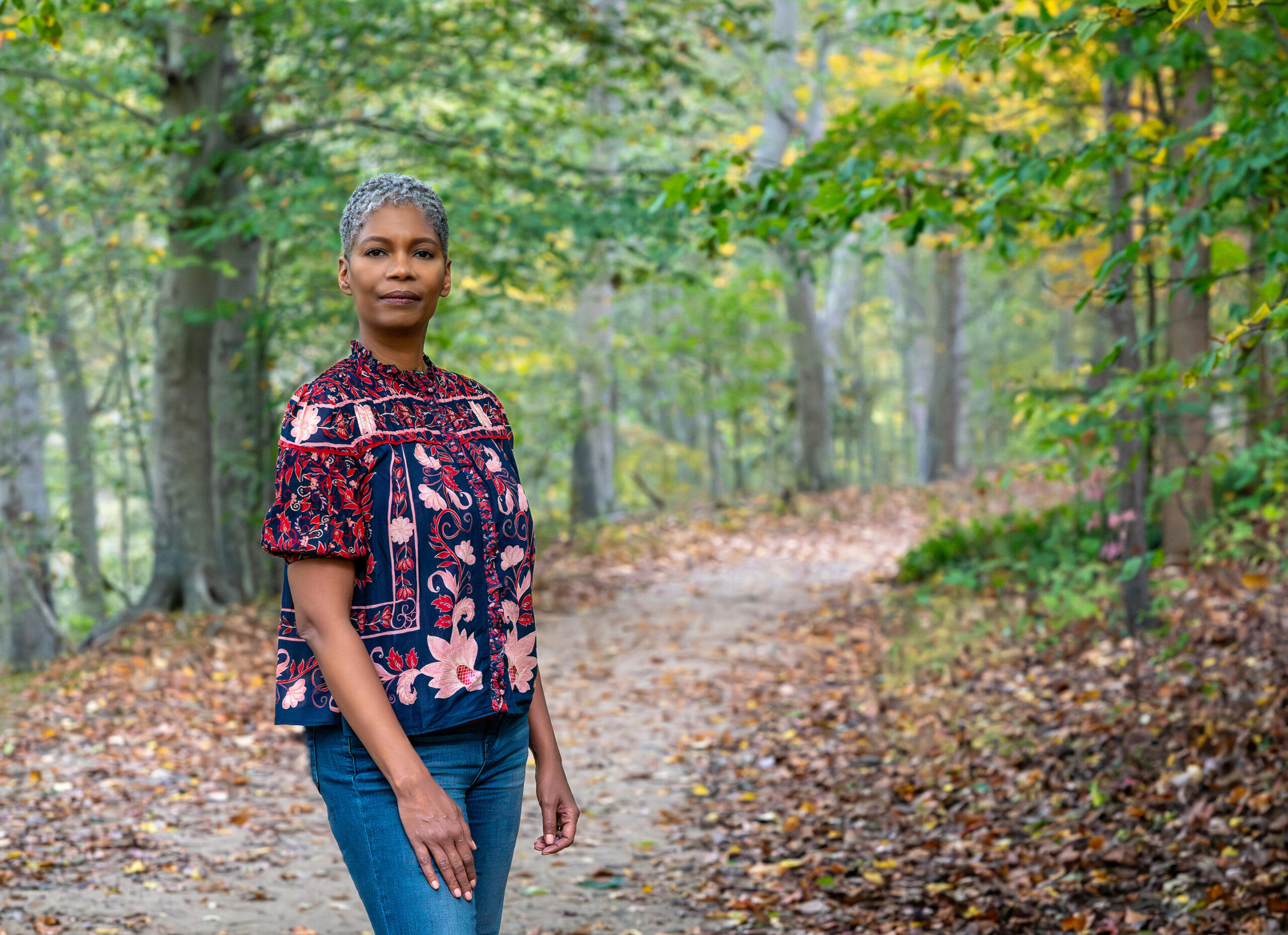
Through honesty, resilience, and courage, Maya L. Johnson challenges beauty standards and reminds Black women that their worth has never been defined by their hair.
For many Black women, hair is far more than style—it is history, identity, culture, and community. In Head on Fire: A Black Hair Memoir on Loss and Healing, Baltimore author and advocate Maya L. Johnson courageously shares her deeply personal journey with central centrifugal cicatricial alopecia (CCCA), illuminating the emotional, physical, and cultural realities of a condition that disproportionately affects Black women but is too often overlooked. Through honest storytelling, Johnson challenges beauty standards, confronts medical bias, and redefines what healing and self-acceptance truly look like. In this conversation with Connected Woman Magazine, she opens up about loss, resilience, advocacy, and why every Black woman’s story deserves to be seen, heard, and believed. Let’s meet her…
Your memoir, Head on Fire, explores Black hair loss through deeply personal and cultural lenses. What inspired you to tell this story publicly, and what did you hope Black women would feel or recognize within its pages?
I was diagnosed with central centrifugal cicatricial alopecia (CCCA) – a form of hair loss that almost exclusively affects Black women – four years ago. The first two years were the worst years of my life, because hair loss is not just emotionally painful, but CCCA is also physically painful, to a debilitating degree.
I had family and dear friends to support me, along with medical professionals, but I still felt lost because I didn’t know anyone else with CCCA who could help me make sense of what was happening from a lived experience. I had to figure that out on my own.
My way of doing that was journaling. I wrote down words to describe what I was thinking and how I was feeling, then wrote paragraphs about each word over time. That approach helped me understand what I was living through, and it helped me make connections and recognize patterns that spanned my entire life.
By the time I finished that project, I could clearly articulate how the themes of racism, anti-Blackness, sexism, and misogyny were central to how I saw myself and expressed myself through my hair, and how the loss of my hair felt like losing a part of my identity.
But here’s the thing: I was never alone in this, even though it felt that way.
So, my first hope for Black women reading Head on Fire is that they feel seen and understood through my story. Secondly, I hope they can reflect on my journey to find their own path to healing from the underlying conditions that make hair loss emotionally traumatic.
Black hair often carries emotional, spiritual, and cultural significance far beyond aesthetics. How would you describe your relationship with your hair before your diagnosis with Central Centrifugal Cicatricial Alopecia, and how did that relationship evolve throughout your journey?
It went from pain, masking, and conditional acceptance, to total acceptance.
My hair is tightly coiled – some would describe it as 4C – and I grew up at a place and time when most Black women straightened their hair. When I think back to my childhood wash days, the first word that comes to mind is pain. Every stage of the process – washing, detangling, blowdrying, pressing, and styling – involved some degree of pain, even though my mom was careful. When I was old enough to get relaxers, including paying for them myself, pain continued to be a theme because lye that sits on the scalp too long – which happened on numerous occasions – resulted in scalp burns that took days to scab, and weeks to heal.
Masking is the next word that comes to mind. Pain was something the Black women around me and I endured because straight hair was essential to getting by in the world. It didn’t matter whether we were navigating white or all Black environments; straight hair was the standard and compliance expected. I saw that in the way children in my youth and people in adulthood would ridicule Black girls and women if our hair was untidy or nappy. That masking had consequences. I would avoid humidity, rain, and sweating out of fear that my roots would swell and prevent my hair from laying flat.
When I reached my 30s and started dancing salsa and flamenco regularly, all that got to be too much. I did a complete 180 and cut my hair into a short afro before having loc extensions installed. That was me saying “no” to pain and masking, and taking a stand against the anti-Blackness that had so infiltrated my thinking. But, what may initially be read as self acceptance was more like conditional acceptance, for I was obsessed with my roots being “snatched” for fear of being perceived as unkempt. Hence, the level of effort I put into retwisting my roots after dancing multiple days of the week was aberrant. My hair was natural and still I was masking.
It was losing my hair that got me to a place of total acceptance. I experience CCCA as painful, and it is no longer an option for me to loc or color my hair, nor to manipulate it with any regularity. Not every woman with CCCA experiences the condition the same way, but in my case, I no longer have the choice to do whatever I want with my hair. I have to do what it wants. Initially I saw that as a curse; now I see it as an extraordinary gift.
In the memoir, you discuss how hair loss affected not only your appearance but also your identity and emotional well-being. What do you think society often misunderstands about the grief associated with losing one’s hair?
As women – cis, trans, femmes, and non-binary folk who relate to the experiences of women included – our identity is often tied to our hair. I’ve witnessed many women speak of losing their femininity as they lose their hair. That belief lodges itself deep within the psyche and diffuses itself through every aspect of a woman’s life – especially job performance, friendships, and intimate relationships.
I’ve borne witness to women talk about closing themselves off from the world for fear of being seen or belittled. They stay at home. They stop engaging socially. They give up on love. Some give up on life – figuratively, if not contemplating it literally.
That is deep-seated grief. Grief you just don’t get over by simply wearing a wig, as many well-meaning people often suggest. It’s grief people need support to overcome – be that through therapy or beloved people in their life taking their grief seriously and standing steadfast by their side the whole way through it.
You write candidly about the physical pain of CCCA, something many people may not realize accompanies the condition. Why was it important for you to highlight both the physical and emotional realities of living with hair loss?
In my early days, the pain of CCCA was so extreme that it felt like being stuck in the head with dozens of hot sewing needs, all at once. My scalp felt like it was literally on fire, and the pain would last not just hours, but days at a time, sometimes weeks.
One reason it was important for me to be honest about this, is so other women would know that pain is a side effect of CCCA and it’s important to advocate for medication to address it. Why? Because some doctors and dermatologists will dismiss the pain as something else altogether, as was the case for me.
The second reason is to give women permission to show themselves compassion. I kept trying to work despite the pain, but there came a point where I couldn’t sustain it. I had to change jobs because I needed more control over and flexibility within my schedule. Once I did that, I had to learn to lean into the good days and permit myself to do nothing but rest on the bad days. That was easier said than done, but there comes a point when severe pain overrides will. After months of chronic pain, I didn’t have a choice.
Black women are often taught from an early age that our hair is tied to beauty, professionalism, femininity, and even worthiness. How did those societal expectations shape your experience navigating hair loss?
Early on, I was terrified. I was deeply afraid my husband would no longer find me attractive, that hair loss would impact my ability to secure consulting work, that I would be seen as less of a woman, and that I wouldn’t be worthy of love and respect, particularly from strangers. Honestly, I’m still terrified, but I still have enough hair to cover the bald spots throughout my crown that I can assuage those fears. Intellectually and intuitively, I know that none of my fears are remotely likely to come true, and if they did, the situation would say everything about the other person and nothing about me. But the ego is powerful. It is expert at shielding us from harm and fear is its #1 tool to accomplish that goal. Checking my ego and coaxing it off the ledge is a never-ending process that every woman experiencing hair loss must commit to.
Throughout Head on Fire, you touch on medical dismissal and the normalization of Black women’s pain. Can you share what it was like trying to seek answers and care within systems that often overlooked or minimized your symptoms?
The first dermatologist I saw refused to acknowledge the pain I was experiencing. I theorized it was because that symptom didn’t fit with his misdiagnosis of alopecia areata. When the pain and hair loss symptoms worsened, I emailed his office multiple times and those emails went unanswered.
In the meantime, I scheduled an appointment with another dermatologist. He was a breath of fresh air in that he took the time to truly listen to me. But, his experience was that pain as severe as mine isn’t typical of CCCA, therefore it must be neurological. Well, I took neurological meds and they didn’t work.
As a next step, I requested a referral to his allergist to see if I developed an allergy to products I was using since the pain was significantly worse on “wash days.” She gave me “the most comprehensive test” out there; however, it turned up no answers. That wasn’t that much of a surprise to me because it covered only 20 of the 200 ingredients that were in products I’d been using for a decade. Still, I was hopeful. When I asked the allergist what I should do next, her response was literally, “I don’t know.”
An entire year of dealing with severe pain had passed when I saw a third dermatologist – a Black woman. I appreciate that she took me seriously just like the second dermatologist did, but she told me something different. She said severe pain can absolutely be a symptom of CCCA, and many of her patients experience excruciating pain like me, or itching so extreme it leads them to scratch their scalps raw.
Finally, I had an answer. And it took a whole year to get it. But that didn’t result in a change to my medication right away. It was almost another year before another drug was added that tamped down the pain consistently enough to get me back to a relatively normal life.
Now I’m largely pain free, and looking back, this is very much a lesson in advocacy. I hope my story encourages other women to fiercely advocate for the treatment they need, so they don’t have to wrestle with pain for months or years like I did.
Your memoir centers Black women’s lived experiences in a way that feels both intimate and political. Why do you believe it is important for Black women to tell stories about our bodies, pain, and healing in our own words?
When I was first diagnosed, I had no one to talk to. I didn’t know of any support groups. None of the women in my life has ever opened up about experiencing hair loss. My dermatologists didn’t have patient groups I could join. The closest I got to learning about someone else’s experience was asking my stylist to connect me with one of her clients who has CCCA. Her client graciously agreed to speak with me, and through her I learned what worked for her and received a referral to my third dermatologist.
It turns out there are support groups available for women – on Facebook, through the Scarring Alopecia Foundation, and events hosted by dermatologists and trichologists all across the country. Those venues allow women to learn more about hair loss conditions, how other women experience them, and what medications, tips, and hair care products could be worth trying. They also allow women to make connections and form friendships with other women who are on the same journey.
Because not every hair-loss patient knows about these opportunities or can/will take advantage of them, it’s important that Black women share and publish our stories so others know they’re not alone in what they’re experiencing and how they’re feeling. I wish I had read other women’s stories to make sense of my own. In the end, I did what Toni Morrison told us to do: “If there’s a book that you want to read, but it hasn’t been written yet, then you must write it.”
What began as a journaling exercise for me to process my experience became a book that allowed me to share my story with the world. And the same goes for my blog, CCCA Chronicles, which I hope can eventually become a vehicle for other Black women to tell their stories too.
You use cotton as a recurring metaphor throughout the book, connecting Black hair to larger histories of labor, trauma, race, and survival. How did that symbolism emerge for you, and what conversations were you hoping it would spark?
It wasn’t until I finished my journaling exercise and realized that what I wrote could be a book that the idea of some unifying symbolism became important. I spent a lot of time thinking about what made sense, and I choose to believe the spirit of the cotton plant was nudging me.
When I’d wash and style my hair, I’d think about how it felt like cotton. When I walked into my living room, my eyes would be drawn to a vase of cotton. And when I’d go to work in my office, most days I’d take a moment to reshape the ends of a cotton macrame that hangs on the door.
Finally, the nudge registered, and cotton became the throughline for the book. It serves as a symbol of the racism and resistance that is endemic to the Black American experience. And it’s a representation of what it’s like to walk through the world with cotton-textured hair – the discrimination it brings on and the unique beauty that it is.
Salon culture plays such a major role in many Black women’s lives — from bonding and beauty rituals to moments of vulnerability and judgment. How did your experiences in salons shape your understanding of beauty, belonging, and self-image?
On one hand, salons are uplifting spaces where we gather in community with other Black women to experience joy, laughter, pampering, and self-care. We come out looking our best, and that feels good, empowering even. On the other hand, salons can be places filled with gossip about celebrities, church happenings, and people we may or may not know. They can also be places where one’s stylist may be judgmental about the state of one’s hair when you walk in. I recognize negativity isn’t a part of every salon experience, perhaps not even most salons, but this is my mixed experience.
Consequently, I sometimes felt ashamed in the salon. And I learned that to keep my hair in a state that wouldn’t invite scorn within and outside of those walls, I’d have to pay a high price in time and money for weekly visits during my relaxed years.
These are some of the dots I connected while writing Head on Fire, and this revelation means I now choose my salons and stylists wisely.
Hair loss can often trigger feelings of shame, isolation, or invisibility, especially for Black women navigating spaces where appearance is heavily scrutinized. What helped you begin the process of reclaiming yourself outside of those beauty standards?
I think hair loss makes women hyper-visible to the people we come into contact with, and potentially invisible to those we might desire as intimate partners.
What helped me reclaim my sense of beauty and worth – despite having lost 30% to 40% of the hair in my crown – is understanding how much I internalized white supremacist beauty standards and deciding I don’t have to comply. First, it’s an impossible standard for Black women to live up to. Second, white people are around 10% of the world’s population, so I’ll be damned if I’m going to let such a minority of people dictate how I show up.
That process wasn’t quick. And even now I wrestle with other aspects of white supremacist beauty standards like body shape, weight, and speech, but I’m a work in progress. And every time I start to feel shame, I ask myself where it’s coming from and can I let it go.
You describe Head on Fire as both a memoir and a broader cultural reflection. How important was it for you to move the conversation about hair loss beyond vanity and toward larger discussions about race, health, identity, and systemic inequities?
Since being diagnosed with CCCA, I’ve heard many people say, “You’ll be okay. Hair is an accessory. You don’t need it.” Aside from it being a source of warmth for the head, that’s true. Hair is not essential to our physical well-being, but hair is essential to many women’s emotional well-being. It’s tied to our sense of femininity, professionalism, and worth – because, well, patriarchy and white supremacy.
It was important for me to be real about that because naming it and understanding its impact allows me to reject it and challenge it. It’s my hope that every person who reads Head on Fire, be they Black or otherwise, will understand the impact white beauty standards have on Black women and feel encouraged and motivated to reject and challenge them too.
In many ways, your book questions the systems and standards that shape how Black women see themselves. What are some of the most harmful narratives surrounding Black beauty that you believe need to be dismantled?
That straight hair is good hair.
That anything other than daily washing makes our hair gross or dirty.
That pain is a necessary part of our hair care.
All these narratives are damaging to our bodies, minds, and spirits. And not one of them is true.
Black hair, including tightly coiled hair like mine, is extraordinary. Black women can do with our hair what no other race of people can do. We can create works of art atop our heads, and that is something to be celebrated, not vilified.
Every texture of hair needs a different wash frequency – daily, weekly, twice monthly, monthly – and that’s nothing to be embarrassed about. If I were to wash my hair daily, it would fast become dry and damaged. None of us need ever apologize for doing right by our hair texture.
Lastly, pain is a symptom, not a condition. It results from tugging and pulling that creates inflammation, hot blowdryers and irons that burn when placed too close to the scalp, and relaxers left to sit too long. Black women endure pain because we think we have to, but do we? What would it look like to reject it? How might we style our hair differently? What joy might we experience by honoring what our hair needs instead of forcing it to do the unnatural? These are questions worth asking of ourselves.
Through your platform, CCCA Chronicles, you’ve created space for community, visibility, and advocacy. What have you learned from other Black women sharing their own experiences with hair loss and healing?
At present, support groups are the primary way I learn what other Black women with CCCA are experiencing, and that’s been a gift. Now it’s part of my life’s work to share what I’ve learned with others. One of those vehicles is my blog, where I write posts that I think will be helpful. And soon I’ll be inviting other women to share their stories, because all of our stories are important. If you’d like to share yours, please get in touch.
Some of the most important things I’ve learned are:
- Hair loss is emotionally devastating. There’s not a single woman I’ve come across who isn’t feeling grief, anger, and guilt.
- Not all doctors and dermatologists take Black women’s concerns seriously, therefore it’s important we educate and advocate for a definitive diagnosis and efficacious treatment.
- Early treatment is key to preventing scarring and permanent hair loss. Don’t wait.
- There is no one-size-fits-all medical treatment or hair care regimen for CCCA – every person’s experience is different.
- Bald is beautiful…and liberating.
The title Head on Fire evokes pain, urgency, and transformation all at once. What does the phrase personally mean to you now after completing this memoir and reflecting on your journey?
I appreciate this question so much. Thank you. At this moment, Head on Fire is about me using my fiery nature to support and advocate for Black women experiencing hair loss. Besides giving talks on the book and writing more blogs, I have two other projects I’m actively working on – a deck of affirmation cards for Black women experiencing hair loss and a journal that women can use to document and process their own experience. Beyond that, I intend to advocate for the C.R.O.W.N. (“Create a Respectful and Open World for Natural Hair”) Act to become federal law through working with an organization that’s part of the C.R.O.W.N. Coalition. I trust that as I remain open, more opportunities will present themselves that allow me to put my strengths and skills to good use.
For Black women currently struggling with hair loss, self-esteem, medical frustration, or feeling disconnected from their identity, what do you hope your story ultimately teaches them about healing, beauty, and self-acceptance?
That healing is layered.
It involves treatment for the hair loss itself, which requires a degree of internally derived strength and courage you must summon to get what you need from a medical community that often dismisses and minimizes Black women’s symptoms.
It demands that you reckon with the parts of yourself that have been damaged by racism, anti-Blackness, sexism, and misogyny. This is hard work that requires radical honesty. And it’s worth it for the grace, liberation, and self-love that awaits you on the other side.
💛 💚 💜 🤎
Discover more from Connected Woman Magazine
Subscribe to get the latest posts sent to your email.