
 There is a particular kind of heartbreak that happens when life keeps moving after someone you love dies.
Not because you are “over it.”
Not because it did not matter.
But because the bills still have to be paid, the children still need to be fed, meetings still show up on your calendar, laundry still piles up, and people still expect you to function as if your entire world did not just shift underneath you.
For many women, grief does not arrive with the luxury of stopping everything. It arrives in the middle of school drop-offs, work deadlines, caregiving responsibilities, marriage struggles, parenting, and survival. You lose someone you deeply love, and somehow by Monday morning you are expected to answer emails professionally, smile politely on Zoom calls, help with homework, remember spirit week at school, and decide what everyone is eating for dinner.
Meanwhile, your heart is sitting somewhere else entirely.
Many women never truly get the opportunity to grieve because they immediately become responsible for managing everyone else’s emotions after a loss. If you are a mother, daughter, wife, sister, caretaker, or “the strong one” in the family, people often unconsciously expect you to continue performing strength while privately unraveling inside.
And that performance can become dangerous.
Not dangerous in the dramatic, movie-scene way.
Dangerous in the quiet way.
The way your body starts holding grief it never got permission to release.
The way exhaustion becomes your personality.
The way you stop feeling joy but continue functioning anyway.
The way you begin operating like a machine instead of a human being.
Many women become emotional robots after loss because they simply do not have the option to collapse. They push through funerals, paperwork, insurance calls, family drama, work obligations, and parenting schedules while ignoring the fact that they themselves are grieving not only who they lost, but also what they lost.
Because grief is rarely just about death.
Sometimes you are grieving:
- the future you thought you would have,
- the phone calls you can no longer make,
- the version of yourself that existed before the loss,
- the support system that disappeared,
- the innocence you had before tragedy arrived,
- the emotional safety that person gave you,
- or the reality that life will never feel the same again.
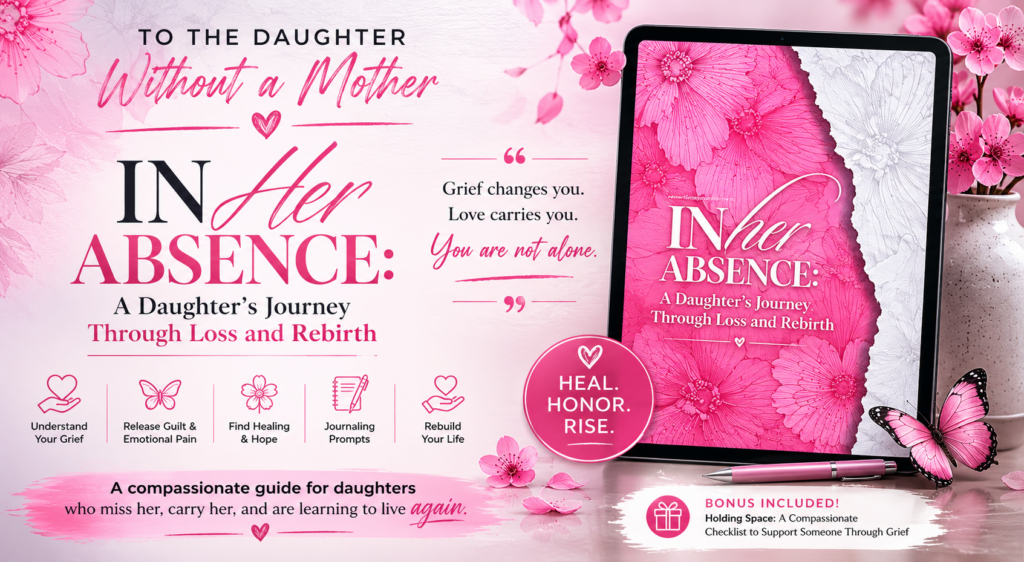 But instead of sitting with those emotions, many women bury them under productivity.
We answer emails.
We overwork.
We clean obsessively.
We pour into everybody else.
We become hyper-independent.
We keep showing up.
We stay “busy.”
And eventually the body keeps score.
That “crash out” people joke about online is often years of unresolved grief finally demanding attention.
It can show up as anxiety attacks, emotional numbness, rage, burnout, insomnia, depression, health issues, irritability, brain fog, or sudden emotional breakdowns over something seemingly small. Sometimes the crash comes after years of “holding it together.” One minor inconvenience suddenly opens the floodgates because your nervous system was never meant to carry that much unprocessed pain for that long.
The truth is, surviving loss and processing loss are two different things.
A lot of women survive.
Far fewer actually get to grieve.
Our society praises women who “stay strong” after tragedy, but rarely makes room for women to be undone by it. There is applause for resilience but discomfort around visible grief. People often check on you heavily during the first few weeks after a loss, then quietly expect you to return to normal shortly afterward.
But grief does not operate on a socially convenient timeline.
Some losses crack your life open permanently.
And healing does not mean pretending it never happened.
It means learning how to carry the loss without abandoning yourself in the process.
That may look like therapy.
It may look like finally taking a day off.
It may look like crying in the shower after months of holding it in.
It may look like admitting you are not okay instead of automatically saying “I’m fine.”
It may look like letting people help you instead of trying to carry everything alone.
It may look like giving yourself permission to rest without guilt.
Most importantly, it may look like understanding that your grief deserves attention even if your responsibilities never paused.
Women are often taught that being dependable matters more than being emotionally well. But there comes a point where constantly suppressing grief becomes its own form of self-destruction.
You cannot endlessly run on emotional fumes and expect your mind, body, and spirit not to eventually protest.
Grief ignored is not grief erased.
It simply waits.
And eventually, it asks to be felt.
So if you are someone who lost a loved one and immediately had to return to “business as usual,” give yourself grace. If you have been functioning for years while secretly carrying enormous pain, give yourself compassion. If you are exhausted from pretending to be okay because everyone depends on you, know that your humanity matters too.
You are not weak for needing time.
You are not failing because you are grieving differently.
And you are not selfish for realizing that survival mode was never meant to become your permanent lifestyle.
Even the strongest women still need space to mourn.

Connected Woman Magazine
Connected Woman Magazine is an online blog-style magazine created to inspire, empower, and connect women through authentic storytelling, meaningful conversations, and diverse perspectives. Covering topics ranging from entrepreneurship and career growth to wellness, relationships, lifestyle, and personal development, the platform highlights real women, real experiences, and the power of community while encouraging readers to share their journeys and connect with others.