
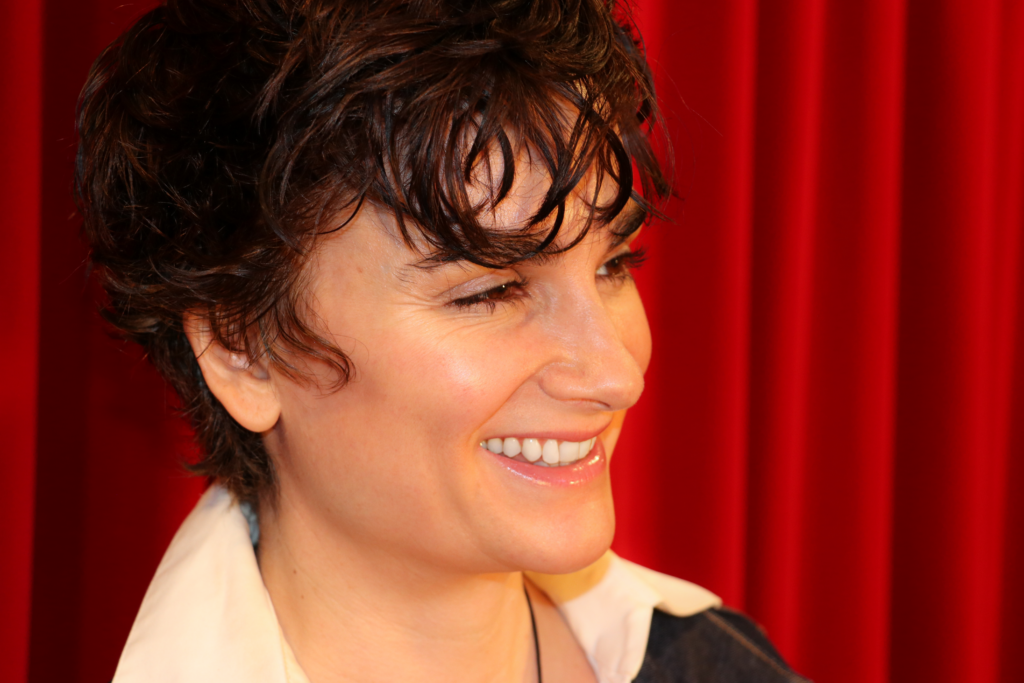
 For more than two decades, musician, songwriter, piano teacher, and multimedia artist Jessica Leia has been transforming the complexities of the human experience into music that is contemplative, deeply honest, humorous, and emotionally raw. Raised in Concord, California, Jessica’s creative journey began in childhood and evolved into a lifelong commitment to storytelling through song. Influenced by legendary songwriters like Carole King and Don Henley, as well as the philosophical teachings of Alan Watts, her work explores grief, joy, identity, consciousness, and the contradictions that make us human.
Now preparing for the June release of Season 4 of her long-form video and music project, Me and My Song, Jessica continues redefining what it means to share music authentically in a world driven by performance and perfection. Designed to give her songs a permanent home beyond the limitations of live shows, the multi-part series invites audiences into every stage of the creative process—from a song’s origin story to raw performances, behind-the-scenes recordings, and fully realized music videos. Grounded in self-honesty, introspection, and emotional truth, Jessica believes that authentic art naturally embraces complexity rather than avoiding it. Through her music and storytelling, she creates space for people to laugh, reflect, heal, and reconnect with themselves in deeply human ways. Let’s meet her..
Me and My Song has evolved into far more than a performance series. What
inspired you to create a format that documents the full emotional and creative
journey of a song instead of simply releasing finished music?
Briefly put, after many a year performing live for folks, I found that they always wanted to know what “songs were about”. Ironically, I’ve always hated that question and have often answered it with, “whatever you want it to be about”. I’ve never said this to be persnickety, you understand, but because I genuinely rather have folks hear a song and have it be their own, personal experience without me butting into it.
But hey, I know I’ve always enjoyed the little pop ups they played on VH1 where they tell the little factoids about circumstances surrounding songs. (Does that still exist?) So why not provide something fun like that for folks with each song they hear from me?
Ultimately, I figured instead of just throwing tunes out there into the great wide world of the web, that I would find a way to give a place for people to go if they felt they wanted to know more about a song that they hear. I can then only hope that after getting to know a little bit more about me and the circumstances surrounding the song that it doesn’t ruin the music for them completely! lol
Season 4 of Me and My Song arrives this June. What themes, emotional shifts, or
personal revelations can audiences expect to experience in this new season
compared to previous ones?
Yes, Season 4 is here! Holy Toledo, it’s been a long time coming. And in fact, it is the first season of my video series where I get to do something I had wanted to do with the albums I make from the very beginning: that is to make albums with themes. So, to answer your question, Season 4 of “Me and My Song” will walk the audience through the creation of and stories behind a collection of songs that are strcitly love songs. Ah, l’amour…
People might not bat an eye at the thought of a collection of love songs. After all, it seems that is what folks mostly write about. But if you look into some of the other albums I have recorded and released, you will find there aren’t many love songs there. In fact, when I first started writing lyrical songs, I swore I would never write a love song. After all, there were so many other interesting things to write about in life and it annoyed me that there was such an over emphasis on romantic love in the world of music.
Alas, romantic love managed to find its way into my personal musical themes as much as I tried to fight it lol …. And so, Season 4 of “Me and My Song” will be showcasing many of those songs. AND since it ends up that my love life has been decidedly stupid, I am certain the audience will thoroughly enjoy the dynamics of the entire experience showcasing said love songs and the stories behind them.
You’ve spoken openly about stepping away from traditional performance models
after years of navigating band changes and audience expectations. How did that
decision ultimately reconnect you with your authentic creative voice?
There is a bit of irony here because, to answer your question, not having to spend all of my time and calories on the endless tasks required to run a live performance machine, would, I had hoped, open up many more resources and time and calories that could then be made available for the craft and the art of music and music creation. Alas, because I do my video series “Me and My Song”, I fear I may have swapped out one resource consuming machine for another one… I have created a monster!! Lol
None the less, doing the video series is a much better way of staying in touch with my creative faculties and voice, not only because you darn well better be creative if you are going to navigate a project like “Me and My Song”, but also because, at the end of the day, it’s all about the music and through the video series, the music is “getting out there” … living in the world. This allows me, regardless of how much time and money it takes to do so, to ultimately continue presenting a variety of my music to whatever audiences want to join in on the fun and come listen and watch.
Performing live simply didn’t allow for the opportunity to present the full of spectrum of the music that I write. Songs about having fun on Saturday night are great at bars and festivals, but a somber song about demons laughing while tormenting you might not go over quite so well in those environments lol … Alas, I write somber tunes AND tunes about having fun, as well as tunes of many other styles and themes and persuasions. They all represent the experiences of life as a homo-sapien and I want to be able to share all of that.
Your songs are often described as contemplative, existential, humorous, and deeply
human. How do you balance heavier emotional truths with moments of wit and
lightness in your songwriting?
Frankly I just let the song be about the experience and figure that if there is any balance that develops, it will surface simply because there is a balance in The Force. And by the way, may The Force be with you. 😊 I suppose the balance then, really comes from the collection of works rather than residing specifically in each piece. That said, no matter how existential or contemplative a song is, humor often enough finds its way in there. Really, I can’t imagine being contemplative in any honest way and not inevitably laughing about something within that reflection.
So, sometimes it does end up being true that even though a particularly song is moody at its core, humor still works its way in there. A perfect example of this is a song I released in my last album on Season 3 of “Me and My Song” which is called, “Hating You”. Although the song itself, is all about, well, hating someone, if one reads between the lines, (and I speak on this in my PART 1 monologue about the song), one will find in the lyric that I am actually finding humor in my state of anger and in essence, making fun of myself for allowing myself to rile around so much in it.
One of the most compelling parts of Me and My Song is allowing audiences to
witness a song from conception to completion. Was it ever intimidating to expose
the unfinished or vulnerable stages of your creative process?
Although the audience DOES get to come along and see the music actually get recorded on the PART 3 segments of the show (which I like to call “Recording the Basic Tracks”), technically I am not actually exposing any work that is unfinished anywhere in the show. That is to say, the songs have already been written and the stories behind them already lived.
In fact, although yes, it is intimidating at times to be so raw and authentic about my own feelings and experiences in life, (including the stories behind the music and the sometimes awkward recording of it), by the time the music is presented to the audience, I have long since moved through the processing of the experience any song was inspired by. As one might imagine, creating the music, itself, is a big part of that processing. And I find that, that processing, that distance, is actually quite necessary such that I am able to present, perform, record and discuss said music without any emotional response that would otherwise hinder my ability to do so.
As for the exposing of not so flattering life stories and all the recording flubs and mishaps, well, I embrace my humanity and feel no shame in it. Quite so, more than myself feeling intimidated about exposing such things, I find that many others are intimidated by the fact that I DO expose them. I don’t feel vulnerable being authentic about my humanity, I feel empowered by it. This way, I am never bleeding resources into trying to be or feel or exemplify or maintain anything about myself which I am not. It really takes a load off just to keep it real lol…
You’ve spent over two decades teaching piano while continuing to write hundreds
of original songs. How has teaching shaped the way you understand emotion,
discipline, and storytelling within music?
It’s been a bit fun really. As a creator, I have always just created. It was, from the start, an intuitive thing. I started as a child compoising on piano. I didn’t know what a minor chord was, but it was still the type of chord I instinctively chose when I was expressing my sadness.
As a teacher, I have to explain this sort of intuitive thing in a logical way so that those students who don’t have a knack for intuitive expression can see it as it appears in the music and then hopefully, make use of it. So, when, for example I have a student that is learning a song called ‘The Detective’ and there are notes slurred together that end with a staccato, I can say “See how the slur connecting the first notes and the staccato at the end note makes a real sneaky, weaky sound? It’s because ‘The Detective’ is spying on people. Isn’t that cool?” Sometimes they just think I’m a nerd lol. But it’s so fun to see the light bulb go off above their heads when they make these connections between how they can use the tools that we’ve learned in our studies in such a way that allows them to express whatever feeling or idea they may have.
If I hadn’t taught for so long, such things would neve have become so clear in my own mind and would have stayed more on an intuitive level. That’s okay also, of course, but if you can combine an intuitive understanding of how to express the energies along with the logical skills you have learned in your particular modality of expression, it makes for a more complete experience – one that uses both sides of the brain.
Your work often feels rooted in emotional honesty rather than commercial
expectation. In an industry that can sometimes reward performance over
authenticity, how have you protected your creative integrity?
Well, I have at times, jumped through hoops that “experts” say you ought to jump through in order to have “success”. But never have I, nor will I ever, do anything that makes me feel yucky in any way, in order to make an industry happy. Yes, I would love to generate revenue for all the work that I do and to actually have that work reach people. But if that only happens because “the industry” is rewarding me, well I don’t know… that might not be a good sign lol … Maybe we outlanders are creating an industry of own where it’s all about keeping creative integrity. Maybe we already have!
As for me personally, simply put, you can’t teach an old dog new tricks. My creative process has, for so long, been about authentically looking at myself and others and life, in general, through the lens of honest reflection and a desire to truly understand and express that, that to create in any other way wouldn’t, in fact, be creation in my mind.
You cite legendary songwriters like Carole King and Don Henley as influences. What
lessons have you carried from their ability to seamlessly blend melody, rhythm, and
lyrical depth?
The number one thing I admire in creators is their ability to take you somewhere. Writers, such as the above mentioned, as well as many other greats, are exceptional at, in my opinion, creating work that moves you. You can smell a rose from the refrigerator in a grocery store and notice it smells mildly pleasant or you can smell one growing wild in someone’s garden that has a fragrance so rich it blasts you into some other dimension you don’t even understand but love to be experiencing.
When I have experienced music from others that is more like that wild rose instead of one from a grocery store, I can’t help but to love it and have naturally taken with me the desire to create similar experiences for others.
Beyond music, philosopher Alan Watts has influenced your understanding of
consciousness and reality. How have those teachings shaped both your songwriting
and your personal healing journey?
Actually, I don’t know that I have ever written anything which has been, (that I can recall), directly influenced by Mr. Alan Watts. I do deeply love the man, however, and am so grateful for the catalogue of work he has left behind for us here in the matrix. More than doing anything to shape a healing journey or some such thing, I have found, rather, that diving in to some of his brilliant talks have, more so, catapulted me right past any state that even requires healing. His work tends to, I would say, gently and humorously escort me into a place where I am reminded of how perfect Creation is, whether or not my puny self is quite seeing that from its pinprick of a temporary perspective. What a gift! So, if he has influenced anything for me in my work, I suppose it would be, again, leading me to hope that the gifts I offer might do something similar for others.
 Many artists create from pain, but your work also seems deeply invested in care,
self-love, and responsibility. How has your creative spirit helped you bring comfort,
laughter, or emotional release to others during difficult moments in their lives?
Yes, well, in my experience self-love and responsibility go hand in hand. To love the self is to take ultimate responsibility and it is then when we truly become adept at bringing comfort to others – if we wish to. If one focuses on cultivating THEMSELVES in life, rather than merely cultivating things and/or being some kind of martyr who has no time for themselves and/or wasting the self by trying to keep up with the Jones’ and fabricating a false version of the self to live by, then one knows better how to just BE – alone or whilst with others. In my experience, the deeper you go into understanding yourself, the more you realize that in your BE-ingness, you are the experiencer but also, the witness. In this state you can offer others the gift of being seen and people take a great comfort in being seen – especially when they haven’t cultivated their own inner witness.
I find this phenomenon is true in moments of joy and difficulty. Because in my experience, it is through the act of being that allows one to act as a portal, if you will, for whatever Creation deems to be the best sort of energy for any situation. Being willing to BE when you are with others, makes you an optimum possible resource for Creation to use you to infuse into any scenario whatever energy dynamic that scenario may benefit from. Intuition guides you and you find that the right words and actions come. That could be an intuitive nudge to go get a chocolate cake for everyone to gorge on as an external form of comfort or the instinct to tell a highly inappropriate joke that provides just the right energy to shake up the stranglehold which a darker energy may hold on someone during a difficult time.
The creative spirit and music, itself, have taught me much about being and how to be the witness. Essentially, if you know how to be present, you know how to be creative. If you know how to be creative, you can always change up the energies in any given situation for the better. Sometimes, simply by BE-ing there.
Growing up in Concord, California, in a working-class household, what early life
experiences still echo most strongly throughout your music today?
Well, there certainly are plenty of songs where I mention childhood etc… But it’s funny, really, because I think the thing that most shaped my music today is that as a child I hid away in small places and/or the tops of trees to go be by myself and to absorb and think about life. And as far back as I can remember, I made up songs while I did this. I am still doing this today. Although I don’t tend to climb quite as many trees, I do so enjoy hiking through them while I contemplate the meaning of it all lol…
After writing hundreds of songs inspired by both your own life and the lives of
others, what continues to surprise you about the emotional experiences people
connect to most deeply?
I’m not sure if this is quite the answer that you are looking for, but it is what surprises me. I find that people REALLY enjoy and connect with the realness of things. This isn’t surprising. The thing that surprises me is that, as much as people obviously always enjoy and connect with said realness, they don’t always quite seem to make an effort to reach for it and to make it their go-to in life. Seems they still end up spending more time rolling around in the weird fakery of it all. It’s so strange to me. I don’t know quite how to explain it. It’s as if people always love a good nutritious meal and feel great after eating it and know that is the best thing for them, and yet, they get hungry and end up reaching for the Doritos every damn time. Lol … I don’t know, maybe that shouldn’t be surprising.
Your project gives songs what you call a “permanent home” outside the fleeting
nature of live performance. What do you hope audiences remember or carry with
them long after watching an episode of Me and My Song?
Thanks for asking. I think it’s good to know the intentions behind what we do and to share that with others. For me, I interpret a lot of this experience of life as an underlying bunch of energies, more so than a physical outpouring of pictures and events. So, it is always my hope that wherever I go and whatever I do and whatever work of mine that folks are exposed to, that the underlying energy of that work, and of myself, will leave folks in a slightly better energetic space than they were in before.
Fortunately, my video series, “Me and My Song” allows a lot of opportunity for that. Whether one experiences catharsis through an intensely emotional song, or ends up in stitches over watching the guys pick on each other during a recording session, or perhaps, garners some insight into themselves when they recognize their own life in a story I tell about mine during a monologue. Whatever the case, audiences can walk away feeling a little lighter energetically, or at least like they had a good energetic workout! I like the thought of that. I think part of why I came here was to rattle the cage. Moving that underlying energy around rattles the cage and eventually makes the screws come loose and the walls come down. So, I guess I’m saying that hopefully I can leave everyone with a few screws loose lol
In a culture that often encourages people to constantly perform happiness or
certainty, how important is it for you to create art that embraces complexity,
introspection, and emotional contradiction?
I feel that self honesty naturally results in the embracing of complexity, introspection, and emotional contradiction. In that regard, I hold self honesty in the highest regard and see it as a means by which these other things will automatically appear in any art that is created. So, more than creating the art itself, it is most important for me to always be honest with myself. Then I never need worry about creating any art that won’t automatically embrace such things as you have mentioned.
Looking ahead, what legacy do you hope Me and My Song leaves not only for your
audience, but also for independent artists searching for new ways to share honest,
meaningful work on their own terms?
Well, you said it: I am sharing what I consider to be honest and meaningful work on my own terms. If any legacy remains, that would be quite enough I should think. And then, also, I hope that people will always remember that I have great hair. 😉
Where can our readers connect with you?
https://www.instagram.com/me_and_my_song
https://www.instagram.com/jessicaleiamusic/