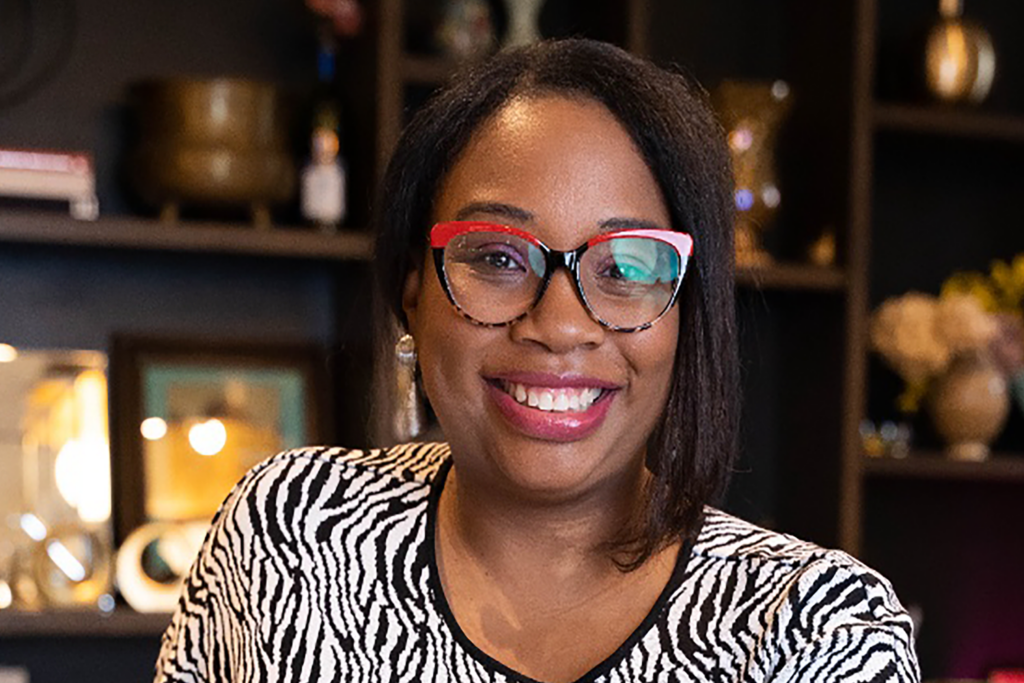
In a world where many women are building businesses but far fewer are being positioned as lasting forces of influence, Myown Holmes is redefining what it means to scale with purpose. As the visionary behind The Prism Effect, she has created a transformative ecosystem that merges strategic marketing, thought leadership, and holistic growth to elevate high-achieving women—particularly women of color—into undeniable industry leaders. With over 15 years of experience spanning corporate, government, and nonprofit sectors, Myown’s work goes beyond visibility, focusing on legacy, infrastructure, and long-term impact. In this interview, she shares her bold vision for building a definitive media and events platform for minority women entrepreneurs, one that not only opens doors but ensures they remain open for generations to come—creating a future where women no longer question their belonging, but lead unapologetically in rooms built with them in mind. Let’s meet her… The Prism Effect is such a powerful and intentional name. What inspired it, and how does it reflect the transformation you create for women entrepreneurs? When you refract light through a prism, you do not lose anything. You reveal everything that was already there. That image stayed with me because it captured exactly what I knew minority women entrepreneurs needed. Not a makeover. Not someone telling them who to become. They needed a space that could take the light they already carried and reveal it in full color. Most women come to me carrying everything. The corporate experience. The lived experience. The wisdom. The trauma. The vision. They have been told to compartmentalize, to leave parts of themselves at the door, to pick which version of themselves shows up at work. The Prism Effect says no. Bring all of it. Every facet matters. Every facet is part of how your brand shines. That is the transformation. Women walk in feeling fragmented and walk out integrated. They stop hiding parts of themselves and start using all of themselves to build. You focus on elevating high-achieving women into industry-leading powerhouses. What do you believe is the biggest mindset shift required to move from success to true influence and legacy? The shift from chasing the next win to building something that outlives the next win. High-achieving women know how to perform. We have been trained to. But performance has an end date. Influence and legacy require something different. They require you to stop measuring yourself by your last achievement and start measuring yourself by what you are building for the women coming behind you. The biggest internal shift is moving from proving to positioning. Proving is exhausting and never finished. Positioning is strategic. Positioning says, I have already done the work. Now my job is to make sure the right people see it, learn from it, and benefit from it. That shift changes everything. It changes how you show up online. How you charge. Who you collaborate with. What you say yes to and, more importantly, what you finally feel free to say no to. With over 15 years of experience across multiple sectors, how has your journey shaped the way you approach brand strategy and business growth today? My career has spanned healthcare, government, corporate, and nonprofit. I have built strategy for organizations with massive budgets and for entrepreneurs working out of their living rooms. That range taught me something most strategists never learn. The fundamentals are the same, but the access is not. A strong brand is a strong brand whether you are a federal agency or a solo founder. The difference is whether you have the resources, the network, and the room to be heard. So when I work with women now, I bring boardroom-level strategy to women who have historically been locked out of those rooms. I do not water it down. I do not assume they cannot handle complexity. I treat them like the executives they already are. That respect, paired with strategy that actually works, is what changes outcomes. Many women are building businesses, but not all are building legacies. What differentiates the two, and how do you guide your clients to think beyond immediate success? A business pays you. A legacy pays generations. A business solves a problem this quarter. A legacy reshapes how a problem is approached for decades. The difference is not the size of the company. It is the intention behind it. I guide my clients to ask better questions. Not just how do I make more money this year, but what am I building infrastructure for. Who benefits when I am no longer in the room. What knowledge, systems, and relationships am I creating that can keep working without me having to show up every day to keep them alive. When women start answering those questions, they make different decisions. They invest in documentation. They mentor differently. They build community instead of audience. They stop optimizing for visibility and start optimizing for impact. Legacy is not a someday conversation. It is a today decision. You integrate marketing, mindset, wellness, and operations into your ecosystem. Why is it critical for women to embrace this holistic approach rather than focusing on just one area? Because you cannot pour from an empty cup, and you cannot scale a business from a depleted body. I learned that the hard way watching women, including women in my own family, push through until there was nothing left. The business worked until they did not. That is not success. That is a delayed collapse. Marketing without mindset is performance. You can have the best strategy in the world, but if you do not believe you deserve the result, you will sabotage it before it lands. Wellness without operations is wishful thinking. You cannot rest your way into a sustainable business if your systems are broken. And operations without mindset and wellness creates burnout machines. The four have to work together. That is not a soft idea. It is the architecture of a sustainable business. When a woman is well, when her mindset is right, when her operations support her, when her marketing is strategic, the whole thing compounds. That is the Prism Effect. Every facet contributes to a single, brilliant result. In your experience, what are the most common visibility gaps that high-performing women entrepreneurs face, and how can they begin to close them? The biggest gap is the assumption that the work will speak for itself. It will not. Not because the work is not excellent, but because excellence without visibility stays a private accomplishment. High-performing women are often heads-down builders. They are so focused on delivering that they forget to document, position, and amplify what they are doing. The second gap is platform. Many women are visible to clients but invisible to the broader industry. They have a steady book of business, but no one outside that book knows their name. That limits what is possible. It caps your speaking opportunities, your media features, your ability to charge premium rates, and your access to bigger rooms. Closing the gap starts with deciding to be seen. That sounds simple, but for many women it is the hardest decision they will make. Then it is consistent. Show up on the platforms where your industry is paying attention. Publish. Speak. Be quoted. Build a body of public work that backs up excellence. Visibility is a discipline, not a personality trait. The Prism Effect includes luxury retreats and high-level masterminds. What kind of transformation happens in those spaces that cannot be replicated in traditional business settings? Something happens when you put a group of high-achieving women in a beautiful space, away from their inboxes and their families and their performance, and you give them permission to be honest. The masks come off. The strategies start flowing. The collaborations form. Women hear themselves think out loud for the first time in months. Traditional business settings reward the version of you that has it all figured out. Our retreats and masterminds reward the version of you that is willing to admit what is not working. That honesty is where breakthroughs live. A woman will share a problem she has been carrying for a year and three women in the room will have already solved it. That kind of exchange does not happen on a webinar. It happens in person, with intention, in spaces designed for it. Beauty matters too. We are women who pour into everyone else. When we are poured into, when we are cared for, when the environment itself says you are worthy of this, something heals. And healed women build different businesses. You have worked across healthcare, government, and nonprofit sectors. How do you tailor your strategies to resonate across such diverse industries while maintaining authenticity and impact? Every audience deserves a strategy built specifically for them. A healthcare client is not a government agency, and neither is a nonprofit. The cultures are different. The compliance environments are different. The decision-making timelines are different. The way trust gets built is different. What stays consistent is my respect for the audience and my commitment to the fundamentals. Good strategy is good strategy. Clear messaging, intentional positioning, consistent execution. Those translate across every sector. What changes is the language, the channels, the case studies, and the cultural context I bring into the room. Authenticity comes from doing the homework. I never walk into a sector assuming I already understand it. I listen first. I learn the inside language. I find out what the audience is tired of hearing. Then I build something that respects where they are and moves them toward where they need to go. As a nationally recognized speaker, what message do you feel women in leadership need to hear right now, especially in today’s evolving business landscape? Stop waiting for permission. The landscape is shifting too fast for permission-based leadership. The women who will define the next decade are the ones who are willing to build, publish, speak, and lead before anyone tells them they are ready. And while you are building, take care of yourself. The version of leadership that requires you to sacrifice your health, your relationships, and your peace is not leadership. It is martyrdom dressed up as ambition. We have romanticized exhaustion for too long. The new model has to include rest, healing, and joy as part of the strategy, not as a reward for surviving it. You are allowed to lead well, live well, and build something that does not break you in the process. That is the message.
Thought leadership is a major pillar of your work. What are the first steps a woman should take if she wants to position herself as a dominant voice in her industry? First, get clear on what you actually believe. Thought leadership is not content. It is conviction. You cannot lead a conversation if you do not know where you stand. Spend real time defining your point of view. What do you believe that other people in your industry are too cautious to say? What do you wish someone would name out loud? That is your starting line. Second, pick your platform and commit. You do not need to be everywhere. You need to be consistent somewhere. LinkedIn for most professionals. A podcast or newsletter if you have the bandwidth to go deeper. Pick the one your industry is actually using and show up like a publisher, not a poster. Third, get in rooms. Speak. Get quoted. Be on panels. Visibility compounds. Every stage leads to another stage. Every interview opens another door. But you have to start before you feel ready. The women who wait until they feel ready are still waiting. For women of color specifically, what unique challenges do you see in scaling businesses and building visibility, and how does your work intentionally address those barriers? The challenges are real and they are layered. Less access to capital. Smaller professional networks because we are often the first or only in our spaces. The constant tax of being hyper-visible and invisible at the same time. Being underestimated in some rooms and overestimated for the wrong reasons in others. The exhaustion of code-switching. The loneliness of building without a roadmap because the women who could have given you one were locked out before you were even born. My work addresses these barriers by refusing to pretend they do not exist. We name them. We build a strategy that accounts for them. We create rooms where Black and Brown women do not have to translate, soften, or explain themselves. They can walk in fully and get to work. That alone is rare. And rare changes outcomes. We also build infrastructure. Community, education, media, and events that center us. Not as an afterthought. As the point. Because when the table is built for you, the conversation finally moves forward. You have built a multi-dimensional brand ecosystem. What were some of the most pivotal decisions or risks you took that helped you scale The Prism Effect to what it is today? The biggest decision was choosing to build something instead of just running an agency. I had a successful done-for-you marketing business. It paid the bills. It had a track record. The safe move was to keep it growing. The risk was building The Prism Effect alongside it, knowing that meant splitting my focus and investing into something that would not pay off for years. Another pivotal decision was being public about the integration of mindset and wellness in my work. In an industry that rewards hustle culture, saying out loud that women cannot business well if they are not well first felt risky. Some people did not get it. The right people did, and they became my community. The third was investing in rooms before I could comfortably afford them. Conferences, masterminds, partnerships. Every time I stretched financially to be in a higher-level room, the return came. Not always immediately. Always eventually. In a world driven by digital noise, how can women entrepreneurs create brands that not only stand out but sustain relevance and authority over time? Stop trying to stand out. Start trying to stand for something. Standing out is a tactic. Standing for something is a brand. Tactics get drowned in noise. Brands built on conviction get louder over time. The women whose brands sustain over decades have one thing in common. They are clear. Clear about who they serve. Clear about what they believe. Clear about what they will not do for a check. That clarity is magnetic. It cuts through noise because it does not try to compete with the noise. It just tells the truth, consistently, until the right people find it. Sustainability also requires evolution. The brand has to grow with you. The version of your business that worked five years ago will not work five years from now. The women who stay relevant are willing to refract. They reveal new facets without losing the core. What role does personal healing and self-awareness play in business success, and how do you encourage women to do that inner work while building outward success? Healing is not separate from strategy. Healing is strategy. The unhealed parts of you will run your business if you let them. The parts of you that learned to overgive will overgive in your business. The parts of you that learned to undercharge for your worth will undercharge for your services. The parts of you that learned to perform will build a business based on performance instead of presence. I encourage women to stop treating inner work as a phase they will get to once the business is stable. The business will never be stable enough to give you that permission. The work has to happen alongside the building. Therapy. Coaching. Community. Honest reflection. Whatever your version of it is, do it now. Do it while you are growing, not after you collapse. The women in The Prism Effect are doing both at the same time. Healing in public when it serves them. Building businesses that reflect who they are becoming, not who they were when they started. That is the integration. That is the prism. Looking ahead, what is your long-term vision for The Prism Effect, and what kind of legacy do you hope it leaves for the next generation of women leaders and entrepreneurs? My long-term vision is for The Prism Effect to become the definitive media and events ecosystem for minority women entrepreneurs in this country. Flagship conferences. A thriving community. A library of education that women can access at every stage of their journey. Partnerships with the most respected institutions in the world that finally take our market seriously. Retreats and masterminds that become rite-of-passage experiences for the women who lead our industries. Beyond that, I want to leave infrastructure. The next generation of women should not have to build everything from scratch the way many of us did. They should walk into rooms that already exist. Use platforms that were built for them. Be mentored by women who were trained, in part, by what we created. Legacy is not a quote on a website. It is the doors that stay open after you walk through them. If a young woman ten years from now starts her business and never has to question whether she belongs, never has to translate her vision to make it palatable, never has to choose between her wellness and her ambition, then The Prism Effect did its job. That is the legacy I am building. How can our readers connect with you? IG: @imyownnow @theprismfx
Read her article Full Spectrum: Why the Most Powerful Version of You Is Also the Most Whole here
Discover more from Connected Woman Magazine
Subscribe to get the latest posts sent to your email.