Sometimes the most meaningful creative journeys begin without a business plan, an audience, or expectations—just a willingness to pick up a brush, trust the process, and see where inspiration leads.
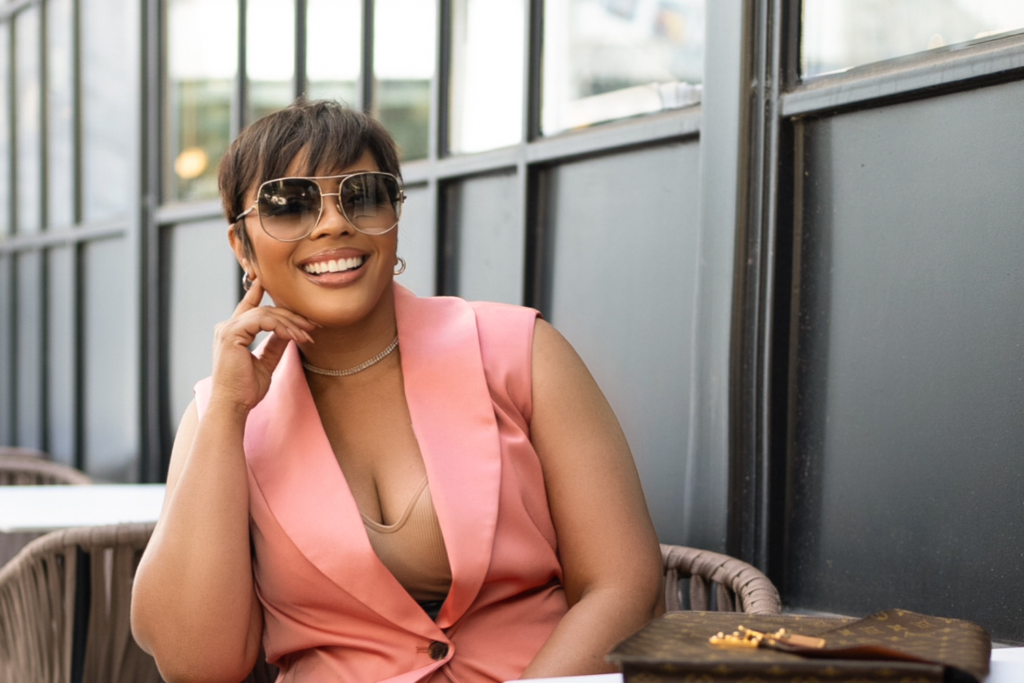
Not every creative journey begins with a business plan or the pursuit of recognition. Sometimes, it begins with a simple desire to explore, express, and discover something meaningful within ourselves. For artist Shekina Farr, painting started as a personal outlet for creativity, never with the expectation that her work would eventually resonate with others.
Through her artistry and S. Farr Studio, Shekina reminds us that passion doesn’t always need a predetermined destination. What begins as personal expression can unexpectedly become a source of connection, inspiration, and shared emotion.
In this Connected Woman Magazine feature, Shekina takes us behind the canvas to explore her artistic beginnings, creative process, personal growth, and the unexpected rewards of sharing her work with the world. Her journey celebrates the beauty of creating authentically, trusting your artistic instincts, and discovering that sometimes the most meaningful connections happen when we simply allow ourselves to create.
Every artist has a story behind the work they create. Take us back to the beginning of your creative journey.
I started making art as a hobby, just a way to express myself and explore without worrying about where it might lead. Around that time, I was also moving through a period when I felt I had lost touch with myself. Looking at my roots became part of finding my way back, and that search began to show up in the primitive portraits I was creating.
So, I wasn’t setting out to become an artist or build a business. Then people started asking to buy my work. Their interest surprised me and helped me see that something I had made for myself could connect with other people, too. That’s how S. FARR Studio began to take shape.
How would you describe your artistic style and the emotions, experiences, or perspectives that influence your work?
My style brings together primitive portraiture, graphic shapes, and bold color. I’m drawn to expressive faces, simplified forms, and elongated necks…details that give a figure presence without overexplaining it.
The work has grown from my own questions about identity and self-discovery, but I paint both men and women. I’m interested in what makes a person feel fully themselves, and how much can be communicated through a gaze, a posture, or a few deliberate shapes. My newer work is becoming more colorful and graphic, while still holding onto that sense of presence.
Walk us through your process, from the initial spark of inspiration to the moment you consider a piece complete.
A painting might begin with a face, a posture, a color combination, or simply an idea I want to explore. I often have a direction in mind, but I leave room for the piece to change as I work.
I build the figure with shapes and planes, then develop the face, clothing, and background. I’ll simplify or strengthen areas until the composition feels balanced and the figure has the presence I’m looking for. I call it finished when the choices feel resolved and when I can tell I’m refining the work, not just fussing because I’m reluctant to stop.
What stories or conversations do you hope your artwork inspires? Is there a particular piece that holds especially deep meaning for you?
I hope my paintings invite people to look closely and bring their own associations to what they see. The figures are stylized, but I want them to feel individual and self-possessed. Whether I’m painting a man or a woman, I’m interested in identity and the experience of being seen.
The primitive portraits hold particular meaning for me as a group because they grew from a personal period of self-exploration. Rather than attach one fixed story to a single painting, I see the series itself as a record of that process. My process continues to evolve.
 What have been some of the most challenging aspects of your journey as an artist?
The hardest part has been trusting my own instincts while the work is still taking shape. I began painting for myself, so when people started asking to buy pieces, I really had to get comfortable sharing something personal and recognizing its value.
Reactions to art are subjective, and not every response will match what I hoped for. I’ve learned to listen without letting outside opinions decide what I make or how I feel about it. That has made me more willing to keep experimenting and to stand behind my choices.
Through S. Farr Studio, how have you approached building a platform for your artistry while protecting your creative freedom?
- FARR Studio gives my work a place to live and makes it easier for people to discover and collect it. Because the interest came after I had already begun creating, I’m building the platform around the art rather than trying to make the art fit a formula.
I’m also learning how to present and price original work with care. A painting reflects time, skill, and a point of view, not just the cost of the materials. For women who are unsure whether their creative work is worth investing in, my advice is to take it seriously, even if it starts as something you do for yourself. You can grow into the business side as the work and its audience develop.
What growth are you most proud of, and what legacy do you hope to establish?
I’m proud that I gave myself permission to explore without needing a clear outcome. That openness helped me reconnect with myself, develop a visual language, and eventually share my work with an audience.
I hope people remember the figures’ presence and feel invited to consider their own relationship to identity and confidence. I’m now developing a bolder, more graphic collection that builds on my earlier portrait work while taking the color and backgrounds in new directions.
Anything to add?
I didn’t start painting with a plan to sell my work. I started because I wanted to explore and express something. The fact that other people connected with the paintings has been an unexpected and meaningful part of the journey.
How can readers connect?
Readers can follow S. FARR Studio @SFARRStudio and visit
https://sfarrstudio.com to see new work and available pieces.
Discover more from Connected Woman Magazine
Subscribe to get the latest posts sent to your email.