
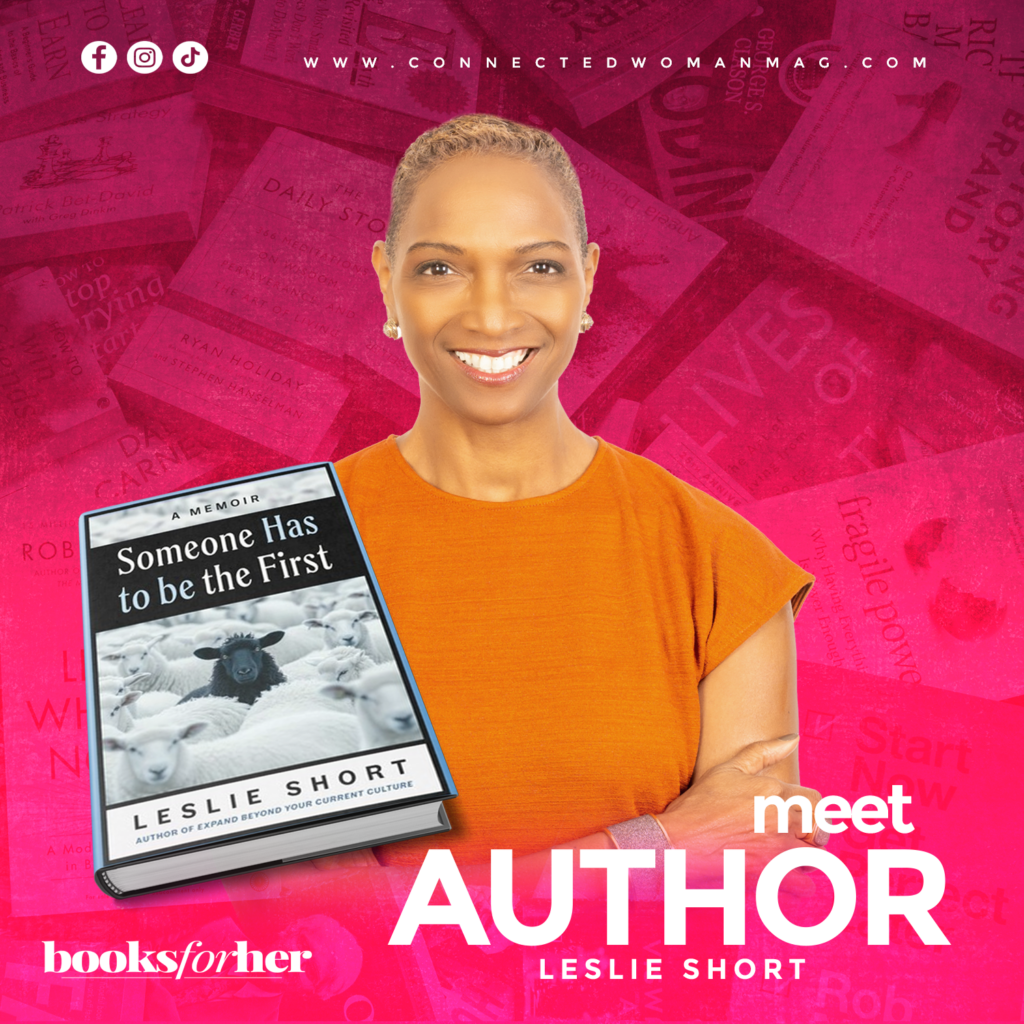
 Book Synopsis
When you’re fearless, determined, and focused, you don’t follow the path—you make it. Leslie Short did. Leslie Short has never played by the rules or stayed in the boxes others tried to put her in. At seven, she declared herself “too sophisticated for New Jersey.” Years later, she danced her way across Europe, built Japan’s first male revue show, helped transform FUBU into a global brand, and carved out a place as a chaplain, speaker, and culture strategist. From ballet studios to boardrooms, cruise ships to corporate America, Leslie’s journey is as unconventional as it is inspiring. With humor and fearless candor, she shares the realities of racism, sexism, and the courage it takes to step into spaces where no one expected her to be. More than a memoir of firsts, Someone Has to Be the First is a call to action—a reminder that success isn’t just about opening doors, but about keeping them open so others can follow.
Book Synopsis
When you’re fearless, determined, and focused, you don’t follow the path—you make it. Leslie Short did. Leslie Short has never played by the rules or stayed in the boxes others tried to put her in. At seven, she declared herself “too sophisticated for New Jersey.” Years later, she danced her way across Europe, built Japan’s first male revue show, helped transform FUBU into a global brand, and carved out a place as a chaplain, speaker, and culture strategist. From ballet studios to boardrooms, cruise ships to corporate America, Leslie’s journey is as unconventional as it is inspiring. With humor and fearless candor, she shares the realities of racism, sexism, and the courage it takes to step into spaces where no one expected her to be. More than a memoir of firsts, Someone Has to Be the First is a call to action—a reminder that success isn’t just about opening doors, but about keeping them open so others can follow.
Why will readers like this book? Someone Has to Be the First is a bold, unconventional memoir that follows Leslie Short’s journey of defying expectations and breaking barriers across industries and cultures, using fearless honesty and humor to call readers not just to be first, but to open doors for others. It’s not often you follow the journey of a Black ballet dancer using her transferable skills to create newness and freshness in each industry she touches
 In a world that often demands labels and limits, Leslie Short has built a life by refusing to be confined by either. In Someone Has to Be the First, she shares a journey that moves seamlessly from ballet to global entertainment, corporate branding, and chaplaincy—each step rooted in skills and vision she believes were always within her, waiting for the right moment to emerge. Her story challenges the boxes others tried to place her in, from being steered toward “expected” paths as a Black dancer to being told she didn’t belong in the world of hip-hop branding, and instead centers on self-awareness, intention, and doing the work required to achieve her goals. With honesty and clarity, Leslie also reflects on the reality of being “the first” in many spaces, emphasizing the importance of knowing you’ve earned your place, navigating systems not built with you in mind, and creating pathways so others can follow—making this memoir not just a reflection of her journey, but a call for others to step forward boldly in their own. Let’s meet her…
Your journey spans ballet, global entertainment, corporate branding, and chaplaincy—each space vastly different from the next. How did you learn to transfer your identity and skills across industries without losing your sense of self?
The reason I was able to expand my skills across industries is that each new skill I learned was already within me. They were ideas I had or new things I wanted to learn, but they may not have fit into my life at that time. When the time or opportunity was right, I was able to transfer them and use them to enhance what I was already doing.
You write about never fitting into the boxes others created for you. Can you share a moment when resisting those expectations came at a cost—and how that experience shaped your resilience?
I don’t feel that not fitting in a box costs me anything. When I was dancing ballet, people said I should go dance with Alvin Ailey or the Dance Theater of Harlem. Both amazing companies, but they said that because I was Black, and that was where they were comfortable seeing Black dancers. I wanted to dance classical ballet, and I did! Fast forward many years later, when I decided to accept FUBU’s offer to run their Marketing, Advertising, and PR department, I was told I was making the biggest mistake of my career because “that world” was not my world. They were right, the Hip-Hop lifestyle was not my life; building a business was.
It’s not only about building or shaping resilience, but also about understanding who you are and the goals you have for yourself, and being able to do the work to achieve them. People love to place people in boxes they are comfortable with. The question should always be, “Am I comfortable here, and if so, why?
To this very day, I ask myself what I want, how I will achieve it, and who may go along for the ride that sees my vision. I’m going to take the ride alone when needed.
In a world that often demands labels and limits, Leslie Short has built a life by refusing to be confined by either. In Someone Has to Be the First, she shares a journey that moves seamlessly from ballet to global entertainment, corporate branding, and chaplaincy—each step rooted in skills and vision she believes were always within her, waiting for the right moment to emerge. Her story challenges the boxes others tried to place her in, from being steered toward “expected” paths as a Black dancer to being told she didn’t belong in the world of hip-hop branding, and instead centers on self-awareness, intention, and doing the work required to achieve her goals. With honesty and clarity, Leslie also reflects on the reality of being “the first” in many spaces, emphasizing the importance of knowing you’ve earned your place, navigating systems not built with you in mind, and creating pathways so others can follow—making this memoir not just a reflection of her journey, but a call for others to step forward boldly in their own. Let’s meet her…
Your journey spans ballet, global entertainment, corporate branding, and chaplaincy—each space vastly different from the next. How did you learn to transfer your identity and skills across industries without losing your sense of self?
The reason I was able to expand my skills across industries is that each new skill I learned was already within me. They were ideas I had or new things I wanted to learn, but they may not have fit into my life at that time. When the time or opportunity was right, I was able to transfer them and use them to enhance what I was already doing.
You write about never fitting into the boxes others created for you. Can you share a moment when resisting those expectations came at a cost—and how that experience shaped your resilience?
I don’t feel that not fitting in a box costs me anything. When I was dancing ballet, people said I should go dance with Alvin Ailey or the Dance Theater of Harlem. Both amazing companies, but they said that because I was Black, and that was where they were comfortable seeing Black dancers. I wanted to dance classical ballet, and I did! Fast forward many years later, when I decided to accept FUBU’s offer to run their Marketing, Advertising, and PR department, I was told I was making the biggest mistake of my career because “that world” was not my world. They were right, the Hip-Hop lifestyle was not my life; building a business was.
It’s not only about building or shaping resilience, but also about understanding who you are and the goals you have for yourself, and being able to do the work to achieve them. People love to place people in boxes they are comfortable with. The question should always be, “Am I comfortable here, and if so, why?
To this very day, I ask myself what I want, how I will achieve it, and who may go along for the ride that sees my vision. I’m going to take the ride alone when needed.
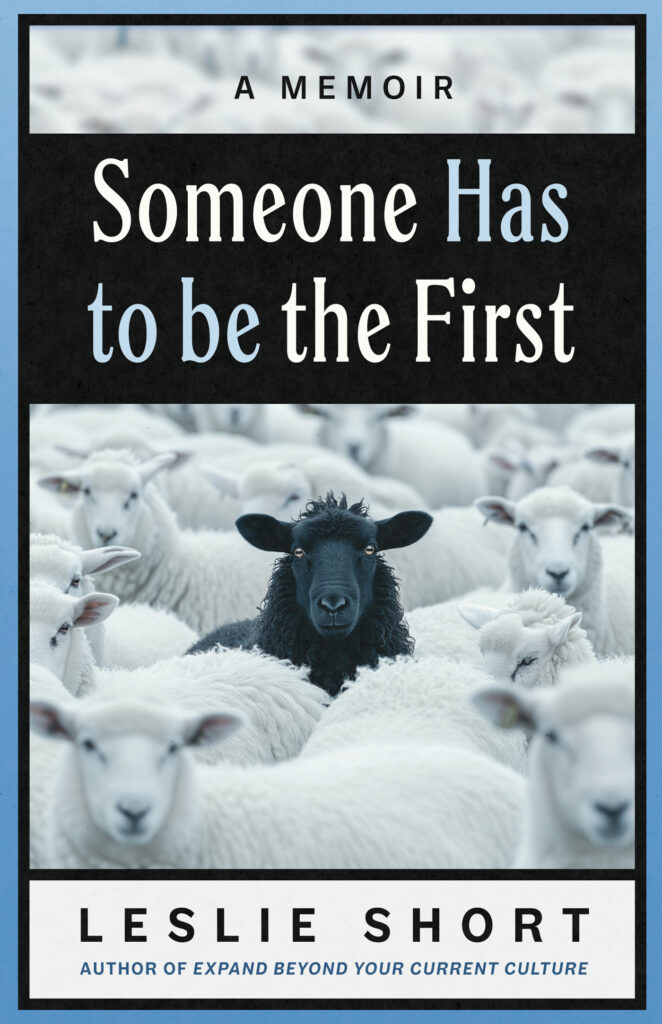 The title Someone Has to Be the First suggests both courage and responsibility. What emotional and mental weight comes with being “the first,” especially as a Black woman navigating predominantly white or male-dominated spaces?
There will be times you walk into a space/place and not know you are the first because you are there to accomplish a goal, and the next thing you know, the next conversation is well, you know you are the first to… That’s when you have to remind yourself that you are there because you earned the right to be there, and you will continue to do the work needed and stay true to who you are, understanding that processes and procedures may not have been built with you in mind, and you will need to build additional inroads where you can be seen and valued without having to sell your soul to fit in.
I keep in the back of my mind that others came before me, and I will approach this so others can come after me, and hopefully before I leave. I didn’t let it weigh on me because it can consume you, hold you back, and keep others from having opportunities when you are holding on tightly to what you have.
I also never felt I needed to be the smartest in the room. I just need to know when to show my cards in spaces that didn’t look like me or move like me. Allow your talent to speak for you, and, if needed, use your voice to set the tone that you are aware of the situation and don’t agree with their approach. If I say No, I have a solution as an alternative. If I need to say no and that’s the solution, then I’m clear that it is the only solution.
Your story includes groundbreaking work like building Japan’s first male revue show. What did that experience teach you about cultural navigation, leadership, and creating something entirely new in unfamiliar territory?
Building a business in Japan means understanding Japan’s culture and designing it for the Japanese people. I had ideas in my head, but I lived in Japan for two years, studying how people moved and asking questions. I was clear that I needed to build a business that made sense for the consumers I wanted to come to the theater. From marketing and branding to ticket prices, I needed to make sure I was respectful of their culture, not the culture I wanted to share with them. I had to understand their relationship to leadership and blend that in a way that allowed employees to respect what I needed from them and for them to respect me.
I received death threats because some people thought I was trying to change the culture. I was offering an alternative; most outings are catered to men. After people realized who my business partners were and saw the reaction from those attending the show, I was accepted into the culture as someone who respects it. Bottom line, it wasn’t about me. It was tailoring what I offered to make it make sense for a country that lives by cultural norms.
You speak candidly about racism and sexism throughout your journey. How did you maintain both your ambition and your humanity while confronting those realities in real time?
I had a strong foundation in family and faith. When you realize that racism and sexism aren’t about you personally but are shortcomings of the other person, it gives you the inner strength to stand with your head held high, grounded in your strengths and talents. It can be tiring, but I am not going to let someone else’s thoughts get in the way of the goals I set for myself, because there is more than one way to get into rooms and be a valued voice in them. Don’t wait for someone else to tell you the path they think you should travel. Sit and look at the big picture, then ask yourself where you bring value for yourself and others. Make a plan, have a backup plan, and keep moving! If I listened to every racist or sexist comment, I would be curled up in a ball, hiding.
Many people aspire to “break barriers,” but fewer think about what comes after. What does it truly mean to not only open doors—but keep them open—for the next generation?
If you are in a position to be the only one or the first, treat the space as if you are expecting company. You look around, and when something is out of place, bring it up and let people know there are better ways to handle the situation or enhance it.
Be vocal. I may be the first, but I don’t want to be the last. Set policies and speak about your experiences, both good and bad, with solutions. Mentor, share resources, and lead by example because representation matters.
When I meet young people who are interested in what I do or have done, I look for those who are putting in the work. I tell them to reach out and call me, and I share what I know because it means nothing if I’ve accomplished all of these things and don’t pass them along to the next generation for them to build on.
This book is both a memoir and a call to action. What do you hope readers— especially women who feel boxed in or overlooked—will do differently after reading your story?
I hope women who feel boxed in will take inventory of their lives, recognize all the skills they have, not only work skills but also life skills, and know they can transfer them to any field or idea they want. I want them to know they have to cheer for themselves. I want them to know they don’t need others to validate them and that every step can be a step toward what they desire. Age is a barrier only if you allow it to be. You may not become a classical ballet dancer at 30, 40, or 50, but you can take lessons and perform.
I started boxing in my late 40s and went on to win a championship belt. Live life out loud in the way that suits you! Most of all, set the stage for the next one, two, or three to have opportunities.
How can our readers connect with you:
Book Release Date: May 5th, 2026
Pre-sale until April 21st: https://promo.porchlightbooks.com/pages/promotions/someoneps
Sale: https://www.amazon.com/Someone-Has-First-Leslie-Short/dp/1969935227/ref=sr_1_1?crid=2LXBC3FZ885OO&dib=eyJ2IjoiMSJ9.CpuJ0PXU08yJn0TpVF8FpFZniHcgsug4g1_agLjP7J8.1HfLBnInJNUcF0zGedRTb8ffWcm0LSoBPTLd5PHAHus&dib_tag=se&keywords=someone+has+to+be+the+first+by+leslie+short&nsdOptOutParam=true&qid=1775483188&sprefix=Someone+Has+to+be+the+First%2Caps%2C162&sr=8-1
Additional Links:
linkedin.com/in/leslie-short-1020052
http://instagram.com/TheCavuGroup
http://facebook.com/TheCavuGroup
https://www.youtube.com/channel/UCBtGZ7_ZEAH1LKNRK34EtAA/videos
https://linktr.ee/thecavugroup
threads.net/@thecavugroup
https://instagram.com/someone_has_to_be_the_first
The title Someone Has to Be the First suggests both courage and responsibility. What emotional and mental weight comes with being “the first,” especially as a Black woman navigating predominantly white or male-dominated spaces?
There will be times you walk into a space/place and not know you are the first because you are there to accomplish a goal, and the next thing you know, the next conversation is well, you know you are the first to… That’s when you have to remind yourself that you are there because you earned the right to be there, and you will continue to do the work needed and stay true to who you are, understanding that processes and procedures may not have been built with you in mind, and you will need to build additional inroads where you can be seen and valued without having to sell your soul to fit in.
I keep in the back of my mind that others came before me, and I will approach this so others can come after me, and hopefully before I leave. I didn’t let it weigh on me because it can consume you, hold you back, and keep others from having opportunities when you are holding on tightly to what you have.
I also never felt I needed to be the smartest in the room. I just need to know when to show my cards in spaces that didn’t look like me or move like me. Allow your talent to speak for you, and, if needed, use your voice to set the tone that you are aware of the situation and don’t agree with their approach. If I say No, I have a solution as an alternative. If I need to say no and that’s the solution, then I’m clear that it is the only solution.
Your story includes groundbreaking work like building Japan’s first male revue show. What did that experience teach you about cultural navigation, leadership, and creating something entirely new in unfamiliar territory?
Building a business in Japan means understanding Japan’s culture and designing it for the Japanese people. I had ideas in my head, but I lived in Japan for two years, studying how people moved and asking questions. I was clear that I needed to build a business that made sense for the consumers I wanted to come to the theater. From marketing and branding to ticket prices, I needed to make sure I was respectful of their culture, not the culture I wanted to share with them. I had to understand their relationship to leadership and blend that in a way that allowed employees to respect what I needed from them and for them to respect me.
I received death threats because some people thought I was trying to change the culture. I was offering an alternative; most outings are catered to men. After people realized who my business partners were and saw the reaction from those attending the show, I was accepted into the culture as someone who respects it. Bottom line, it wasn’t about me. It was tailoring what I offered to make it make sense for a country that lives by cultural norms.
You speak candidly about racism and sexism throughout your journey. How did you maintain both your ambition and your humanity while confronting those realities in real time?
I had a strong foundation in family and faith. When you realize that racism and sexism aren’t about you personally but are shortcomings of the other person, it gives you the inner strength to stand with your head held high, grounded in your strengths and talents. It can be tiring, but I am not going to let someone else’s thoughts get in the way of the goals I set for myself, because there is more than one way to get into rooms and be a valued voice in them. Don’t wait for someone else to tell you the path they think you should travel. Sit and look at the big picture, then ask yourself where you bring value for yourself and others. Make a plan, have a backup plan, and keep moving! If I listened to every racist or sexist comment, I would be curled up in a ball, hiding.
Many people aspire to “break barriers,” but fewer think about what comes after. What does it truly mean to not only open doors—but keep them open—for the next generation?
If you are in a position to be the only one or the first, treat the space as if you are expecting company. You look around, and when something is out of place, bring it up and let people know there are better ways to handle the situation or enhance it.
Be vocal. I may be the first, but I don’t want to be the last. Set policies and speak about your experiences, both good and bad, with solutions. Mentor, share resources, and lead by example because representation matters.
When I meet young people who are interested in what I do or have done, I look for those who are putting in the work. I tell them to reach out and call me, and I share what I know because it means nothing if I’ve accomplished all of these things and don’t pass them along to the next generation for them to build on.
This book is both a memoir and a call to action. What do you hope readers— especially women who feel boxed in or overlooked—will do differently after reading your story?
I hope women who feel boxed in will take inventory of their lives, recognize all the skills they have, not only work skills but also life skills, and know they can transfer them to any field or idea they want. I want them to know they have to cheer for themselves. I want them to know they don’t need others to validate them and that every step can be a step toward what they desire. Age is a barrier only if you allow it to be. You may not become a classical ballet dancer at 30, 40, or 50, but you can take lessons and perform.
I started boxing in my late 40s and went on to win a championship belt. Live life out loud in the way that suits you! Most of all, set the stage for the next one, two, or three to have opportunities.
How can our readers connect with you:
Book Release Date: May 5th, 2026
Pre-sale until April 21st: https://promo.porchlightbooks.com/pages/promotions/someoneps
Sale: https://www.amazon.com/Someone-Has-First-Leslie-Short/dp/1969935227/ref=sr_1_1?crid=2LXBC3FZ885OO&dib=eyJ2IjoiMSJ9.CpuJ0PXU08yJn0TpVF8FpFZniHcgsug4g1_agLjP7J8.1HfLBnInJNUcF0zGedRTb8ffWcm0LSoBPTLd5PHAHus&dib_tag=se&keywords=someone+has+to+be+the+first+by+leslie+short&nsdOptOutParam=true&qid=1775483188&sprefix=Someone+Has+to+be+the+First%2Caps%2C162&sr=8-1
Additional Links:
linkedin.com/in/leslie-short-1020052
http://instagram.com/TheCavuGroup
http://facebook.com/TheCavuGroup
https://www.youtube.com/channel/UCBtGZ7_ZEAH1LKNRK34EtAA/videos
https://linktr.ee/thecavugroup
threads.net/@thecavugroup
https://instagram.com/someone_has_to_be_the_first
Discover more from Connected Woman Magazine
Subscribe to get the latest posts sent to your email.