
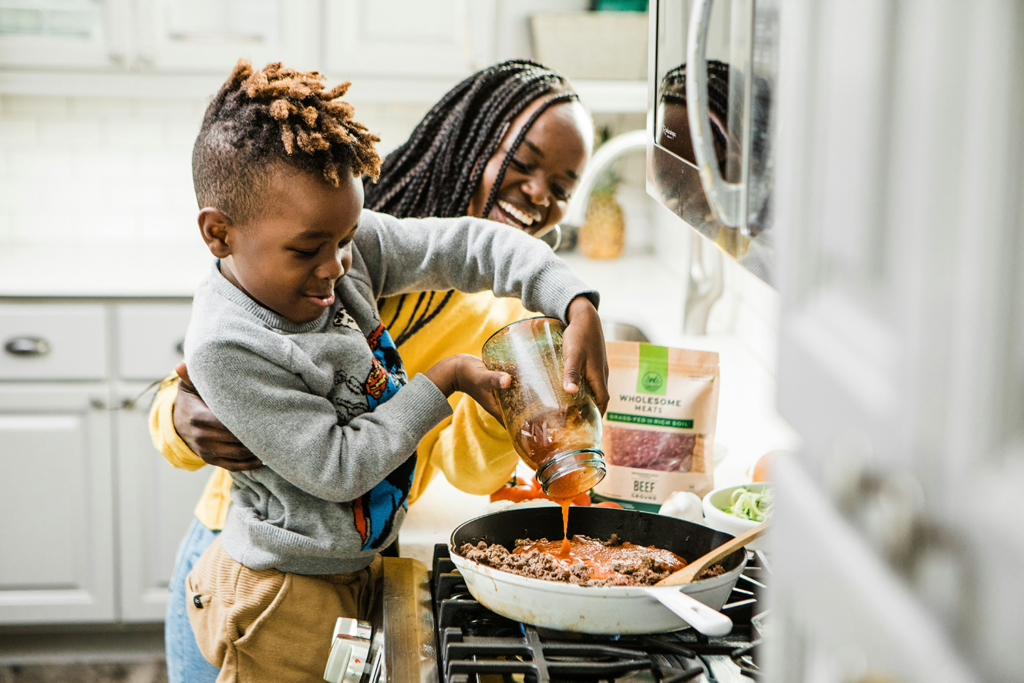
 There’s something powerful about a child who feels at home in the kitchen. Not just because they can stir pancake batter or sprinkle cheese on tacos—but because the kitchen becomes a place of confidence, creativity, independence, and connection. For many women, especially those balancing busy schedules, the idea of involving kids in cooking can feel like “more work.” More mess. More time. More patience required.
But here’s the truth: getting your kids comfortable in the kitchen early is one of the most valuable life skills you can give them—and it doesn’t have to be overwhelming.
This isn’t about raising tiny chefs overnight. It’s about raising capable, confident kids who aren’t afraid to try, fail, and try again.
Start Early—Even Earlier Than You Think
You don’t need to wait until your child can read a recipe or safely use a knife. Toddlers can begin by washing fruits and vegetables, stirring ingredients, or simply observing. The earlier they are exposed to the kitchen environment, the more natural it becomes.
Children are naturally curious. They want to touch, taste, and explore. When you invite them into the kitchen, you’re tapping into that curiosity instead of shutting it down.
Yes, it might slow you down at first. But what you’re building is familiarity. Comfort. Confidence.
Make the Kitchen Feel Like a Safe Space, Not a “Do Not Touch Zone”
Too often, the kitchen becomes a restricted area—hot surfaces, sharp tools, breakable items. While safety is important, it’s also important that kids don’t associate the kitchen with fear or constant correction.
Instead of “Don’t touch that!” try “Let me show you how to use this safely.”
Set clear boundaries, but pair them with guidance. Create a space where your child feels trusted, not micromanaged.
Consider setting up a “kid-friendly zone” in your kitchen:
- A lower drawer with safe utensils
- A step stool so they can reach the counter
- Plastic bowls and tools they can use independently
This small shift makes a big difference in how they engage.
Give Them Real Tasks (Not Just Busy Work)
Kids know the difference between being included and being entertained. If you want them to truly feel comfortable, give them meaningful roles.
Even young children can:
- Crack eggs (with supervision)
- Measure ingredients
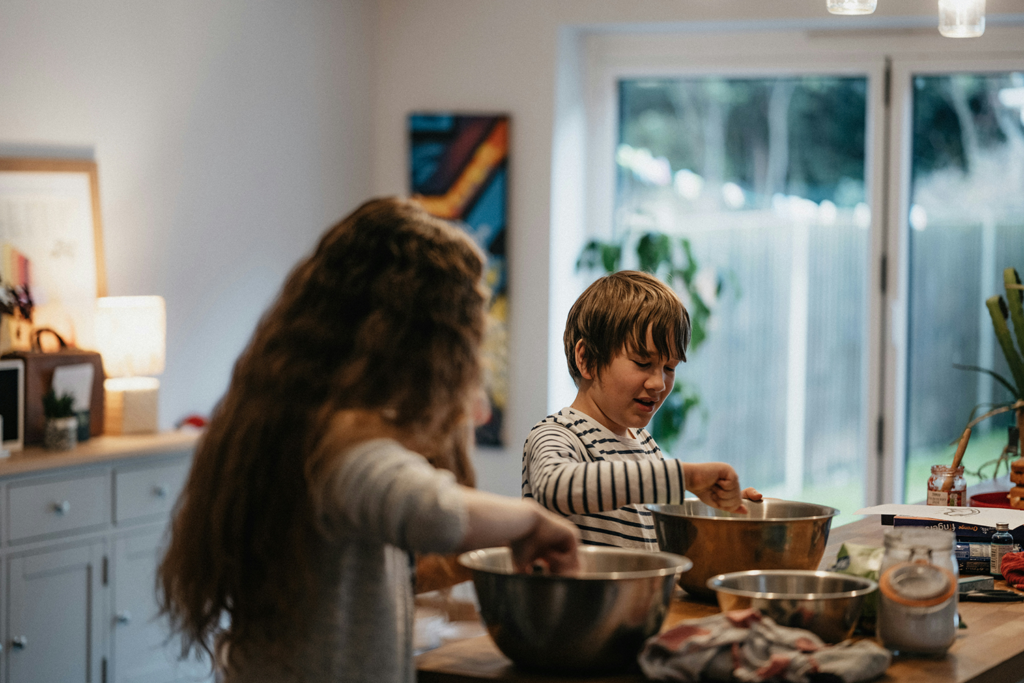
- Mix batters
- Rinse produce
- Assemble simple dishes
Older kids can take it further:
- Read recipes aloud
- Chop soft foods with kid-safe knives
- Plan simple meals
- Help with grocery lists
When children feel like their contribution matters, their confidence grows. They begin to see themselves as capable—and that mindset extends far beyond the kitchen.
 Expect the Mess—and Let It Go
 Expect the Mess—and Let It Go
Let’s be honest: cooking with kids is messy.
Flour will end up on the floor. Eggs might get cracked incorrectly. Something will spill. Something might even burn.
But here’s the mindset shift: the goal isn’t perfection—it’s participation.
If you focus too much on keeping things clean and controlled, your child will pick up on that tension. They’ll start to feel like they’re “doing it wrong” or that they’re in the way.
Instead, embrace the process. Keep a towel nearby. Laugh when things go sideways. Teach them how to clean up as part of the experience.
You’re not just teaching cooking—you’re teaching resilience.
Turn It Into Connection Time, Not Just Task Time
The kitchen is one of the easiest places to build real, meaningful connection with your kids.
There’s something about cooking together that naturally opens the door for conversation. It’s less formal than sitting down for a “talk,” but just as impactful.
Ask questions. Share stories. Let them talk about their day while you stir, chop, and prep together.
These are the moments they’ll remember:
- Laughing over a failed recipe
- Tasting something new together
- Feeling proud of a meal they helped create
In a world full of distractions, the kitchen can become your space to reconnect.
Let Them Explore Their Own Tastes
One of the biggest benefits of getting kids in the kitchen early is that they become more open to trying new foods.
When kids help prepare a meal, they’re far more likely to eat it—even if it’s something they would normally reject.
Give them choices:
- “Do you want broccoli or green beans tonight?”
- “Should we add cheese or keep it simple?”
Let them experiment. Maybe they want to add extra seasoning. Maybe they want to try a new ingredient.
Even if it doesn’t turn out perfectly, they’re learning to trust their instincts and develop their own preferences.
Teach Skills in Layers
You don’t have to teach everything at once. Think of cooking skills as something that builds over time.
Start simple:
- Washing and mixing
Then move to:
- Measuring and assembling
Then gradually introduce:
- Cutting
- Timing
- Following recipes
By the time they’re older, they won’t feel intimidated by the kitchen—they’ll feel at home in it.
Celebrate Their Wins (Big and Small)
When your child helps make a meal, celebrate it.
It doesn’t have to be a big production. A simple “You did such a great job with this” or “I’m proud of you for trying that” goes a long way.
Confidence grows through acknowledgment.
And don’t just celebrate the outcome—celebrate the effort:
- Trying something new
- Sticking with a task
- Helping clean up
These small affirmations build a strong foundation of self-belief.
Be Patient—This Is a Long Game
Getting your kids comfortable in the kitchen isn’t something that happens overnight. It’s a process.
There will be days when it feels easier to just do it yourself. Days when you’re tired, in a rush, or just not in the mood for the extra effort.
And that’s okay.
You don’t have to involve them every single time. But the more you invite them in, the more natural it becomes—for both of you.
The Bigger Picture
At its core, teaching your kids to feel comfortable in the kitchen is about more than cooking.
It’s about:
- Independence
- Confidence
- Creativity
- Responsibility
- Connection
You’re raising children who won’t grow up intimidated by basic life skills. Who won’t rely on convenience for everything. Who feel capable of taking care of themselves and contributing to a household.
And maybe, just maybe, one day they’ll cook for you—and you’ll sit back, smile, and realize it all started with letting them stir the batter.
That’s the real win.
Discover more from Connected Woman Magazine
Subscribe to get the latest posts sent to your email.