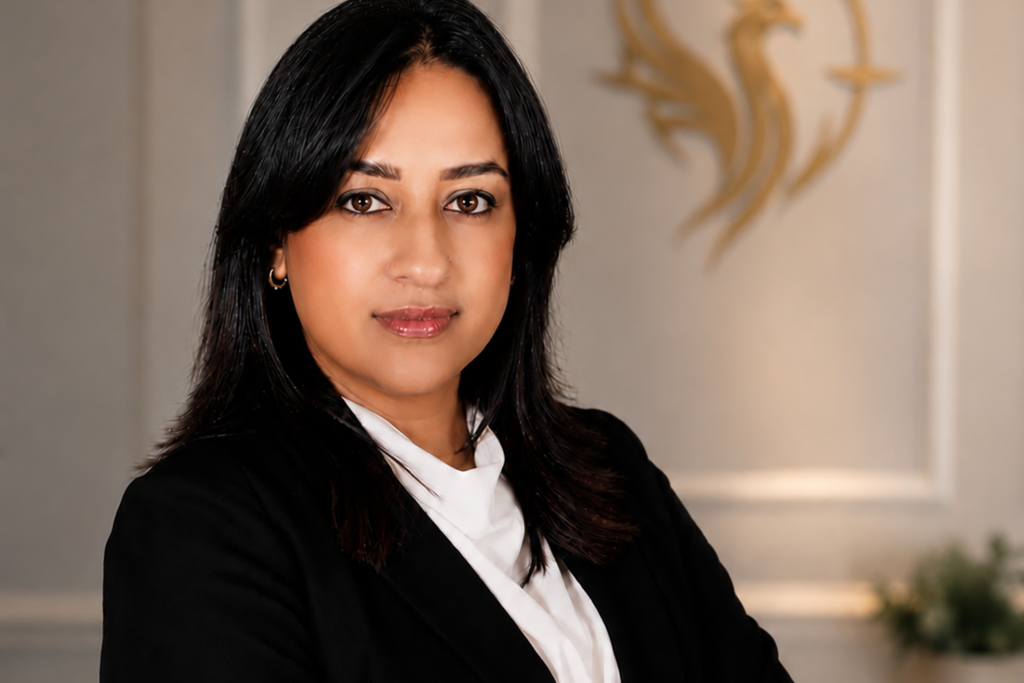
 Survivor, author, and founder Christina A. Cole shares how devastating illness, an overwhelming healthcare journey, and a second chance at life inspired her to build solutions rooted in the people healthcare is meant to serve.
For Christina A. Cole, surviving septic shock, cardiac arrest, months in the ICU, and multiple amputations was only the beginning. What followed was the difficult work of rebuilding her life while navigating a healthcare system that often left patients and caregivers overwhelmed by information, decisions, and fragmented care. Rather than allowing those experiences to end with her recovery, Christina transformed them into purpose. As founder of Cole Meridian LLC and creator of Phoenix Health Compass and Phoenix Navigator, she is using lived experience to help shape more patient-centered approaches to healthcare and responsible technology. She also shares the deeply personal side of her journey in her memoir, Through the Ashes. In this conversation, Christina discusses surviving the unimaginable, rebuilding identity after catastrophic illness, the importance of the patient voice, responsible AI in healthcare, and what it truly means to rise after life changes everything.
Your life changed dramatically after septic shock, cardiac arrest, months in the ICU, and multiple amputations. When you look back at the woman who entered that medical crisis and the woman who eventually emerged from it, how did the experience reshape your identity, your understanding of strength, and what you believed was possible for your life after survival?
Before I became critically ill, I was a wife, a mother, and a federal public servant accustomed to responsibility and helping others. I trusted my ability to handle difficult situations. Then, in 2023, a medical procedure was followed by septic shock, cardiac arrest, months of hospitalization, and surgeries that changed my body permanently. I had bilateral transmetatarsal amputations, meaning portions of both feet were amputated, and I lost several fingertips.
It affected much more than my mobility. It changed how I experienced motherhood, independence, work, and the ordinary routines I had barely thought about before.
My understanding of strength became much more personal. Strength could mean learning to walk again, accepting help, admitting I was overwhelmed, or resting when I wanted desperately to keep going. I had to make room for grief without treating it as a failure to be grateful.
My son remains one of my deepest reasons to keep moving forward. I want him to see that his mother can have limitations and still have ambition, purpose, and a voice.
I am still rebuilding. Becoming an author, advocate, and founder has shown me that there are possibilities in this life I could not have imagined from a hospital bed. Those possibilities coexist with pain and ongoing recovery. Both deserve to be acknowledged.
Surviving sepsis was only the beginning of your journey, because you and your family then had to navigate recovery, specialists, rehabilitation, medical information, ongoing decisions, and a healthcare system that can feel incredibly fragmented. What were some of the most significant gaps you experienced as a patient, and when did you realize those frustrations could become the foundation for Cole Meridian LLC, Phoenix Health Compass, and Phoenix Navigator?
One of the most significant gaps was patient education, beginning during my hospitalization and continuing into recovery. I needed someone to explain what had happened to me, what was happening to my hands and feet, and what the road ahead might involve. Medical terminology was being used, but I did not always understand it. I felt sheltered from information about my own body when I needed help understanding it.
Leaving the hospital brought another set of questions. There were specialists, rehabilitation, ongoing procedures, and daily limitations to navigate. My family and I were trying to understand how all those pieces fit together while also processing what we had survived. I felt alone in ways I had not expected.
The idea for Cole Meridian LLC and the Phoenix platforms grew from those repeated experiences. I kept coming back to the resources I wished had been available to us.
Phoenix Health Compass focuses on helping people make more informed choices about providers and hospitals. Phoenix Navigator focuses on helping patients and caregivers understand and navigate the experience of receiving care and moving through recovery.
My purpose is to make information easier to understand and use, so people can prepare questions, organize what matters, and participate more confidently in their care. Families should have support before confusion becomes another burden they have to carry.
Healthcare innovation is often discussed from the perspective of technology, institutions, and industry experts, but your work began with lived experience. What do healthcare and technology leaders miss when they develop solutions without meaningfully including patients and caregivers, and how has your own experience influenced the way you define truly patient-centered innovation?
When patients and caregivers are left out, leaders can miss the circumstances in which their technology will actually be used. Someone may be exhausted, frightened, in pain, or struggling to concentrate. A caregiver may be reading information between work, childcare, and a hospital visit. n instruction that seems clear in a conference room can feel impossible under those conditions.
My experience also makes accessibility very concrete. Changes to my hands affect how I interact with the world. My mobility needs affect how I plan an appointment or get through a day. I think about whether a person can comfortably use a tool and whether it reduces the work they have to do.
For me, patient-centered innovation begins with listening before the major decisions are made. Patients and caregivers should help define the problem, test the proposed solution, and shape revisions. That involvement should include people with disabilities, different language needs, limited resources, and varying comfort with technology.
The questions I care about are practical: Can someone understand the information? Can they identify their next step? Can they prepare for a conversation with their care team? Do they feel more capable after using the tool?
Lived experience helps reveal where a solution needs to change. It deserves a meaningful place in the development process.
Artificial intelligence has enormous potential to help people understand complicated health information, but healthcare also requires trust, transparency, privacy, empathy, and human judgment. As you develop patient-centered technology, what does “responsible AI” mean to you, and how can AI be used to empower patients without creating another layer of confusion—or attempting to replace the human relationships that remain essential to quality care?
For me, responsible AI begins with recognizing how vulnerable someone may be when they ask a health question. I remember needing explanations and reassurance while trying to understand a frightening situation. That makes me especially conscious of the harm that confident but inaccurate information could cause.
The standard I want to build toward is clear: understandable language, credible sources, honest acknowledgment of uncertainty, and clear limits on what the technology can do. People should know when they are interacting with AI and understand how their information is handled. Privacy should be explained in language an ordinary person can follow.
I see value in helping someone understand unfamiliar terminology, organize their concerns, or prepare questions for an appointment. Those uses can help a patient arrive at a conversation feeling less overwhelmed and better prepared.
Clinical decisions still require qualified professionals who can evaluate the individual and their circumstances. AI should make it easier to reach that human support when it is needed.
Empathy also requires humility. A system can produce a compassionate sentence, but it cannot know what it feels like to wake up in a changed body. I want the technology I develop to respect that difference and strengthen the connection between patients, caregivers, and their care teams.
During a catastrophic health event, families and caregivers may suddenly find themselves making life-altering decisions while exhausted, frightened, and trying to understand unfamiliar medical language. Based on what you and your family experienced, what practical strategies would you encourage families to use to stay organized, ask better questions, advocate effectively, and prepare for the transition from an acute medical crisis into the often much longer journey of recovery?
I would encourage families to start with one place to keep information, whether that is a notebook, a binder, or a shared digital resource the patient is comfortable using. Keep track of the care team, medication changes, questions, appointments, and the next steps you have been given. Write down who provided an explanation and when, because it can be difficult to remember details during a crisis.
Give yourself permission to ask for plain language. You can say, “I do not understand that term,” or, “Can you explain what this means for our family today?” Repeating the explanation back in your own words can help uncover anything that is still unclear.
Before going home, ask the team to walk through the practical details: what care will be needed, who will provide it, what changes require urgent attention, whom to contact with concerns, and which follow-up appointments need to be arranged. Be honest about what your family can realistically manage and ask what support is available.
Caregivers need relief, too. When possible, let others help with meals, transportation, household responsibilities, or taking notes.
Most of all, remember that you do not have to know the perfect question to deserve an explanation. Families are learning under extraordinary pressure. The responsibility for clear communication must be shared by the people providing care.
September is Sepsis Awareness Month, yet many people may not fully understand how quickly sepsis can become life-threatening or how complicated life after sepsis can be for survivors and their families. What do you wish more people understood about sepsis—not only about recognizing a medical emergency, but also about the physical, emotional, logistical, and identity-related challenges that can remain long after someone leaves the ICU?
I wish people understood that my story continued long after the emergency ended. Surviving septic shock was the beginning of a recovery that still affects my body, my family, and my daily life.
Before seeking emergency care, I experienced excruciating pain and delirium. Looking back, I wish I had understood more about sepsis before it became part of my life. That is one reason I care so deeply about public education and listening when someone says something is seriously wrong.
The aftermath deserves the same attention. For me, it has included amputations, reconstructive surgeries, rehabilitation, pain, swelling, and learning how to move through the world differently. It has also meant grieving parts of my former life while trying to build a future.
Some of those challenges are visible; others are easy to miss. I am an ambulatory wheelchair user. I can walk and stand, and I also need a wheelchair. Seeing me on my feet does not tell someone how far I can go, how much pain I am managing, or what that activity will cost me afterward.
I want awareness to include preparation for life after the hospital: understandable education, follow-up support, attention to emotional recovery, and recognition of what families carry. Being alive is something I am profoundly grateful for. Living with the aftermath still requires care.

Your memoir, Through the Ashes, takes readers beyond the medical facts of what happened to you and into the deeply personal process of surviving, grieving what was lost, adapting to a changed body, rebuilding your identity, and discovering purpose on the other side. What was most important for you to tell with complete honesty in this book, and what do you hope someone facing their own seemingly impossible season carries with them after reading the final page?
It was important to me to tell the truth about what happens after people hear that you survived. There is relief and gratitude, but there can also be grief, fear, anger, and uncertainty about who you are becoming. I wanted to give those feelings room without forcing them into a neat recovery story.
I needed to be honest about adapting to a changed body and about the losses that cannot be captured in a medical record. Independence, confidence, familiar routines, and your sense of safety can all become things you have to rebuild. Being a wife and mother adds another emotional layer: ou are trying to find your own footing while the people you love are also adjusting.
Writing Through the Ashes gave me a way to speak about experiences that can feel very lonely. I wanted readers to feel that someone was willing to say the difficult parts out loud.
For someone facing their own impossible season, I hope the book offers permission to move at their own pace. You can be thankful and hurting. You can need help and still have something valuable to contribute. You do not have to turn your suffering into a public mission for your life to matter.
Advocacy has become part of my purpose. What I hope readers find is the possibility of discovering their own way forward, even when they cannot yet picture what it will look like.
How can our readers connect?
http://www.christinaacole.com and Christina Cole on LinkedIn
Discover more from Connected Woman Magazine
Subscribe to get the latest posts sent to your email.