
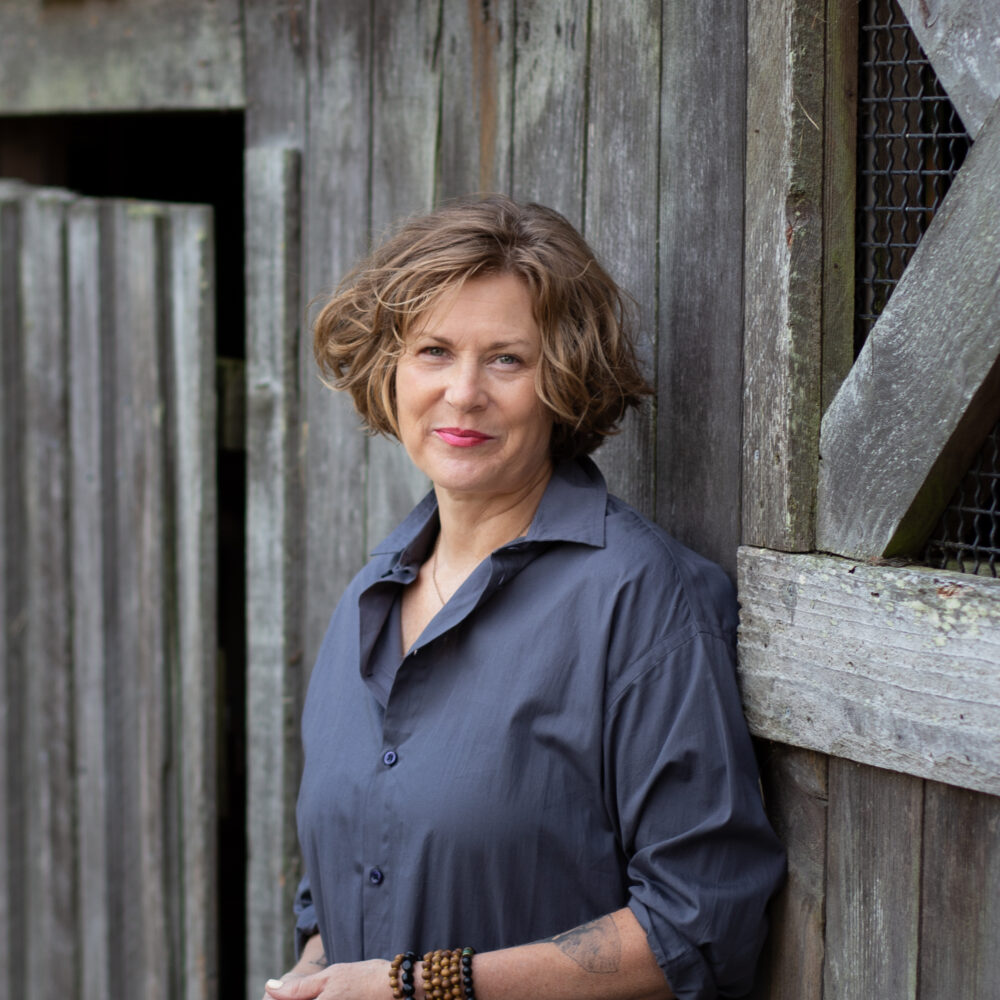
 Carrie Asby is a wellness coach, author, and retreat founder whose work gently guides people back home to themselves. Rooted in her own powerful journey from burnout and disconnection to healing and presence, Carrie blends ecotherapy, mindful rituals, and nature-based practices to help others cultivate peace and resilience in everyday life. As the author of Your Morning Ritual: Mindful Habits for Peace & Resilience, founder of Nature Heart Retreats, and creator of community-centered experiences like Yoga in the Park, Carrie invites us to slow down, listen inward, and reconnect with the natural world as a pathway to wholeness. In this interview, she shares her story, her philosophy, and the quiet power of choosing presence—one sacred step at a time. Let’s meet her…
Your journey into wellness began after a life-changing breakdown—one that brought you “back to your truth.” Can you take us into that moment? What did returning to yourself look and feel like in those early days of healing?
My journey into wellness didn’t begin with a peaceful moment — it began with a breaking point. I call it “the Night of 8 Bottles.” After years of chasing success, validation, and numbing my pain rather than facing it, I found myself alone in my apartment, emotionally unraveling. At the bottom of that eighth bottle of wine, I whispered a sentence that changed everything: “This is not Carrie Asby.”
It wasn’t a dramatic awakening — it was a quiet realization that I had gone completely off course. The next morning, still shaky and exhausted, I walked into a pay-what-you-can yoga class. I moved through the poses as I always had, but something shifted when I lay down on my mat. Because of the state I was in, I finally listened to what the teacher was saying. I wasn’t there for a workout — I was there because something in me needed to change. And in that class, for the first time, I was introduced to the idea of self-love. That simple teaching landed in a way it never had before, and I felt a release I hadn’t ever experienced.
Returning to myself in those early days looked like small, imperfect steps. It wasn’t linear. It was messy, tender, and full of experimenting with what actually supported me. Mindfulness in nature became my anchor. A short walk, the sound of leaves, a patch of sunlight — these simple things reminded me that I was still here, and that peace was possible.
Those early days of healing weren’t about achievement. They were about softness. About learning to breathe again. About remembering that beneath the chaos, there was a truer version of me waiting to be reclaimed.
Your book Your Morning Ritual: Mindful Habits for Peace & Resilience encourages small, daily practices rooted in self-love. What is one morning ritual from the book that changed your life the most—and why?
Using my senses to connect with nature changed everything for me. It can be as simple as stepping outside and noticing the way the air feels, how the light is moving, or the sound of a bird nearby.
For years, my mornings were rushed — straight into my phone, straight into work, straight into stress. Engaging my senses brought me back into my body and into the present moment. It signals the parasympathetic nervous system to calm down, which is something most of us desperately need before the day even begins.
That ritual taught me that healing doesn’t require hours of practice. It starts with one intentional pause, one breath, one moment of noticing. That small shift completely changed how I begin my day and how I move through my life.
You use the phrase “journey of remembering.” What do you believe most people have forgotten about themselves, and how do your coaching and retreats help them return to that inner knowing?
Most people forget that they’re allowed to belong to themselves. They forget that they are on their own timeline, their own path, their own unfolding. Modern life pulls us into constant comparison, and in that noise, we lose sight of who we truly are.
My work helps people remember what’s underneath that noise. Nature reflects back the truth: nothing in nature compares itself or rushes its own becoming. When people spend intentional time outdoors — whether through retreats, coaching, or daily practices — they reconnect with a steadier rhythm.
In that clarity, people begin to recognize themselves again. They remember their intuition, their strengths, and their inherent worthiness. The remembering isn’t about becoming someone new; it’s about returning to who they’ve always been.
You’ve completed extensive training—from Ecotherapy Certification at Pacifica Graduate Institute to Bhakti Flow and chakra work. How do these diverse disciplines come together in the healing experiences you create?
Each training has given me a different lens into the human experience — mind, body, energy, and environment. But the common thread is that they support the whole being.
Ecotherapy grounds people in the wisdom of the Earth. Bhakti Flow opens the heart through devotion and movement. Chakra work brings awareness to where energy flows or gets blocked. None of these practices live only in the mind; they work through the body, breath, and nervous system.
I don’t teach concepts for the sake of theory. I teach what I’ve lived — what has genuinely shifted something inside me. I translate those experiences into simple, accessible practices people can integrate into everyday life.
Many people confuse routines with rituals. From your perspective, what makes a ritual transformative, and why is connecting with nature such a powerful anchor for those practices?
A routine is something we do automatically. A ritual is something we do with intention. And intention changes everything — it brings meaning, presence, and purpose.
Nature strengthens ritual because it naturally pulls us into the present moment. A breeze, a beam of sunlight, the sound of birds — these moments interrupt autopilot and reconnect us with what’s real.
When people practice rituals in or near nature, they meet themselves more honestly. They become grounded, clear, and aligned. Rituals transform us because they remind us who we are beneath the noise.
As the founder of Nature Heart Retreats, what are some of the most profound transformations you’ve witnessed when people immerse themselves in natural environments?
The most profound transformations often begin with the smallest shifts. People arrive carrying tension — in their thoughts, their bodies, their breath. Then, within hours of being in nature, something softens.
Nature gives people permission to let go. As the pressure releases, clarity emerges. People remember what matters. They reconnect with their intuition, their joy, and their sense of possibility.
One woman once told me, “I feel like I’m finally meeting myself.”
That is the heart of this work: reconnection, remembrance, and the return of joy.
You’ve led Yoga in the Park in both Portland and Central Park. What inspired that project, and what have these gatherings taught you about healing in community?
A donation-based yoga studio once helped save my life, so offering free or donation-based yoga was my way of paying that forward. Practicing outdoors made it accessible, flexible, and welcoming.
During my travels across the U.S., I offered Yoga in the Park in many cities. At the start of each class, I invite people to meet someone new. That simple act breaks down walls and creates connection.
What I’ve learned is that healing expands when it’s shared. Breath by breath, movement by movement, strangers become community. Some of my closest friendships were formed through healing together.
In your work, you emphasize presence over perfection. In a world driven by achievement and productivity, how do you help people reclaim the art of simply being?
I bring people back to their breath. A gentle inhale and a slow, full exhale signals safety to the body and brings awareness into the present moment.
Eckhart Tolle teaches that when we focus on the breath, we step out of the past — where guilt lives — and the future — where anxiety grows. Presence creates clarity.
I also remind people that stillness isn’t laziness and rest isn’t something to earn. Being is an essential human state. When people reconnect with presence, even briefly, their nervous system unwinds and they reconnect with their own inner wisdom.
Carrie Asby is a wellness coach, author, and retreat founder whose work gently guides people back home to themselves. Rooted in her own powerful journey from burnout and disconnection to healing and presence, Carrie blends ecotherapy, mindful rituals, and nature-based practices to help others cultivate peace and resilience in everyday life. As the author of Your Morning Ritual: Mindful Habits for Peace & Resilience, founder of Nature Heart Retreats, and creator of community-centered experiences like Yoga in the Park, Carrie invites us to slow down, listen inward, and reconnect with the natural world as a pathway to wholeness. In this interview, she shares her story, her philosophy, and the quiet power of choosing presence—one sacred step at a time. Let’s meet her…
Your journey into wellness began after a life-changing breakdown—one that brought you “back to your truth.” Can you take us into that moment? What did returning to yourself look and feel like in those early days of healing?
My journey into wellness didn’t begin with a peaceful moment — it began with a breaking point. I call it “the Night of 8 Bottles.” After years of chasing success, validation, and numbing my pain rather than facing it, I found myself alone in my apartment, emotionally unraveling. At the bottom of that eighth bottle of wine, I whispered a sentence that changed everything: “This is not Carrie Asby.”
It wasn’t a dramatic awakening — it was a quiet realization that I had gone completely off course. The next morning, still shaky and exhausted, I walked into a pay-what-you-can yoga class. I moved through the poses as I always had, but something shifted when I lay down on my mat. Because of the state I was in, I finally listened to what the teacher was saying. I wasn’t there for a workout — I was there because something in me needed to change. And in that class, for the first time, I was introduced to the idea of self-love. That simple teaching landed in a way it never had before, and I felt a release I hadn’t ever experienced.
Returning to myself in those early days looked like small, imperfect steps. It wasn’t linear. It was messy, tender, and full of experimenting with what actually supported me. Mindfulness in nature became my anchor. A short walk, the sound of leaves, a patch of sunlight — these simple things reminded me that I was still here, and that peace was possible.
Those early days of healing weren’t about achievement. They were about softness. About learning to breathe again. About remembering that beneath the chaos, there was a truer version of me waiting to be reclaimed.
Your book Your Morning Ritual: Mindful Habits for Peace & Resilience encourages small, daily practices rooted in self-love. What is one morning ritual from the book that changed your life the most—and why?
Using my senses to connect with nature changed everything for me. It can be as simple as stepping outside and noticing the way the air feels, how the light is moving, or the sound of a bird nearby.
For years, my mornings were rushed — straight into my phone, straight into work, straight into stress. Engaging my senses brought me back into my body and into the present moment. It signals the parasympathetic nervous system to calm down, which is something most of us desperately need before the day even begins.
That ritual taught me that healing doesn’t require hours of practice. It starts with one intentional pause, one breath, one moment of noticing. That small shift completely changed how I begin my day and how I move through my life.
You use the phrase “journey of remembering.” What do you believe most people have forgotten about themselves, and how do your coaching and retreats help them return to that inner knowing?
Most people forget that they’re allowed to belong to themselves. They forget that they are on their own timeline, their own path, their own unfolding. Modern life pulls us into constant comparison, and in that noise, we lose sight of who we truly are.
My work helps people remember what’s underneath that noise. Nature reflects back the truth: nothing in nature compares itself or rushes its own becoming. When people spend intentional time outdoors — whether through retreats, coaching, or daily practices — they reconnect with a steadier rhythm.
In that clarity, people begin to recognize themselves again. They remember their intuition, their strengths, and their inherent worthiness. The remembering isn’t about becoming someone new; it’s about returning to who they’ve always been.
You’ve completed extensive training—from Ecotherapy Certification at Pacifica Graduate Institute to Bhakti Flow and chakra work. How do these diverse disciplines come together in the healing experiences you create?
Each training has given me a different lens into the human experience — mind, body, energy, and environment. But the common thread is that they support the whole being.
Ecotherapy grounds people in the wisdom of the Earth. Bhakti Flow opens the heart through devotion and movement. Chakra work brings awareness to where energy flows or gets blocked. None of these practices live only in the mind; they work through the body, breath, and nervous system.
I don’t teach concepts for the sake of theory. I teach what I’ve lived — what has genuinely shifted something inside me. I translate those experiences into simple, accessible practices people can integrate into everyday life.
Many people confuse routines with rituals. From your perspective, what makes a ritual transformative, and why is connecting with nature such a powerful anchor for those practices?
A routine is something we do automatically. A ritual is something we do with intention. And intention changes everything — it brings meaning, presence, and purpose.
Nature strengthens ritual because it naturally pulls us into the present moment. A breeze, a beam of sunlight, the sound of birds — these moments interrupt autopilot and reconnect us with what’s real.
When people practice rituals in or near nature, they meet themselves more honestly. They become grounded, clear, and aligned. Rituals transform us because they remind us who we are beneath the noise.
As the founder of Nature Heart Retreats, what are some of the most profound transformations you’ve witnessed when people immerse themselves in natural environments?
The most profound transformations often begin with the smallest shifts. People arrive carrying tension — in their thoughts, their bodies, their breath. Then, within hours of being in nature, something softens.
Nature gives people permission to let go. As the pressure releases, clarity emerges. People remember what matters. They reconnect with their intuition, their joy, and their sense of possibility.
One woman once told me, “I feel like I’m finally meeting myself.”
That is the heart of this work: reconnection, remembrance, and the return of joy.
You’ve led Yoga in the Park in both Portland and Central Park. What inspired that project, and what have these gatherings taught you about healing in community?
A donation-based yoga studio once helped save my life, so offering free or donation-based yoga was my way of paying that forward. Practicing outdoors made it accessible, flexible, and welcoming.
During my travels across the U.S., I offered Yoga in the Park in many cities. At the start of each class, I invite people to meet someone new. That simple act breaks down walls and creates connection.
What I’ve learned is that healing expands when it’s shared. Breath by breath, movement by movement, strangers become community. Some of my closest friendships were formed through healing together.
In your work, you emphasize presence over perfection. In a world driven by achievement and productivity, how do you help people reclaim the art of simply being?
I bring people back to their breath. A gentle inhale and a slow, full exhale signals safety to the body and brings awareness into the present moment.
Eckhart Tolle teaches that when we focus on the breath, we step out of the past — where guilt lives — and the future — where anxiety grows. Presence creates clarity.
I also remind people that stillness isn’t laziness and rest isn’t something to earn. Being is an essential human state. When people reconnect with presence, even briefly, their nervous system unwinds and they reconnect with their own inner wisdom.
 You’ve said that “self-love is activism.” How does individual healing ripple outward into families, communities, and even global well-being?
Self-love shapes how we show up in the world. When we care for ourselves, we make calmer choices, communicate with more compassion, and set healthier boundaries.
One person healing creates ripples — in families, workplaces, and communities. And when people feel grounded and whole, they make more thoughtful decisions for the planet as well.
Self-love isn’t self-indulgence. It’s responsibility.
It’s activism because it influences every interaction and every choice we make.
You’ve volunteered at Phinda Private Game Reserve in South Africa and contributed to the Wildlife Conservation Society. How has wildlife conservation shaped your understanding of ecotherapy and interconnectedness?
Wildlife conservation isn’t only about saving a single species. Many animals suffer because their habitats are disappearing. In conservation work, the animal becomes a symbol of an entire ecosystem in need of protection.
Ecotherapy teaches the same truth: humans cannot thrive in isolation. Our well-being is inseparable from the health of the natural world. Healing — personal or ecological — requires harmony.
When we care for the Earth, we create the conditions for our own healing as well. It’s all interconnected.
Nervous system regulation is at the core of your teaching. How does spending intentional time outdoors physiologically shift the body—and why is this so essential today?
Nature activates the parasympathetic nervous system — the part of the body responsible for rest, repair, and recovery. Chronic stress keeps many people stuck in fight-or-flight, which affects cardiovascular, digestive, immune, hormonal, and reproductive systems.
Simply spending time outdoors slows the heart rate, deepens breathing, reduces stress hormones, and clears the mind. The body finally gets permission to exhale.
In today’s fast-paced, overstimulated world, time in nature isn’t optional — it’s essential for balance and health.
Many leaders, caregivers, and entrepreneurs feel depleted but don’t realize the root of their burnout. How does nature-based healing help them rediscover clarity, resilience, and sustainable purpose?
Burnout often comes from living out of rhythm with ourselves. People push through exhaustion and ignore their inner signals until something breaks down.
Nature invites us to slow down without judgment. As the nervous system settles, clarity returns. People remember what matters, what needs to change, and what they truly care about.
From that grounded place, resilience grows naturally. Purpose becomes sustainable again because it’s rooted in truth rather than pressure.
When guiding clients one-on-one, what signals indicate someone is ready to release old patterns and step into deeper transformation?
Readiness often shows up quietly — a willingness to be honest, a softening of resistance, or the courage to name what’s been avoided.
My role is to create a safe, supportive space where clients feel heard and unjudged. When someone feels grounded enough to speak openly, there’s a shift toward curiosity, possibility, and desire rather than fear or self-protection.
True change happens when someone decides they’re ready to release what no longer serves them and step toward the life they want. My job is to help them hear that readiness within themselves.
For someone who has never attended a wellness retreat, what can they expect to experience emotionally, physically, and spiritually?
Emotionally, they can expect spaciousness — room to breathe, feel, and set down what they’ve been carrying.
Physically, they can expect deep rest and a nervous system that begins to settle. When people step away from constant stimulation, the body remembers what ease feels like.
Spiritually, retreats often bring clarity and reconnection. When the noise quiets, people hear themselves more clearly and reconnect with their inner compass.
A retreat isn’t about escaping life — it’s about returning to it more grounded and aligned.
As a wellness coach, author, and retreat founder, what legacy do you hope your work leaves behind?
I hope my work helps people see themselves — and the Earth — as sacred. I want to be part of a cultural shift that values care, presence, and interconnectedness over extraction and overwhelm.
If someone thinks of my work, I hope they feel a sense of coming home — to themselves, to their truth, and to what genuinely matters.
You’ve said that “self-love is activism.” How does individual healing ripple outward into families, communities, and even global well-being?
Self-love shapes how we show up in the world. When we care for ourselves, we make calmer choices, communicate with more compassion, and set healthier boundaries.
One person healing creates ripples — in families, workplaces, and communities. And when people feel grounded and whole, they make more thoughtful decisions for the planet as well.
Self-love isn’t self-indulgence. It’s responsibility.
It’s activism because it influences every interaction and every choice we make.
You’ve volunteered at Phinda Private Game Reserve in South Africa and contributed to the Wildlife Conservation Society. How has wildlife conservation shaped your understanding of ecotherapy and interconnectedness?
Wildlife conservation isn’t only about saving a single species. Many animals suffer because their habitats are disappearing. In conservation work, the animal becomes a symbol of an entire ecosystem in need of protection.
Ecotherapy teaches the same truth: humans cannot thrive in isolation. Our well-being is inseparable from the health of the natural world. Healing — personal or ecological — requires harmony.
When we care for the Earth, we create the conditions for our own healing as well. It’s all interconnected.
Nervous system regulation is at the core of your teaching. How does spending intentional time outdoors physiologically shift the body—and why is this so essential today?
Nature activates the parasympathetic nervous system — the part of the body responsible for rest, repair, and recovery. Chronic stress keeps many people stuck in fight-or-flight, which affects cardiovascular, digestive, immune, hormonal, and reproductive systems.
Simply spending time outdoors slows the heart rate, deepens breathing, reduces stress hormones, and clears the mind. The body finally gets permission to exhale.
In today’s fast-paced, overstimulated world, time in nature isn’t optional — it’s essential for balance and health.
Many leaders, caregivers, and entrepreneurs feel depleted but don’t realize the root of their burnout. How does nature-based healing help them rediscover clarity, resilience, and sustainable purpose?
Burnout often comes from living out of rhythm with ourselves. People push through exhaustion and ignore their inner signals until something breaks down.
Nature invites us to slow down without judgment. As the nervous system settles, clarity returns. People remember what matters, what needs to change, and what they truly care about.
From that grounded place, resilience grows naturally. Purpose becomes sustainable again because it’s rooted in truth rather than pressure.
When guiding clients one-on-one, what signals indicate someone is ready to release old patterns and step into deeper transformation?
Readiness often shows up quietly — a willingness to be honest, a softening of resistance, or the courage to name what’s been avoided.
My role is to create a safe, supportive space where clients feel heard and unjudged. When someone feels grounded enough to speak openly, there’s a shift toward curiosity, possibility, and desire rather than fear or self-protection.
True change happens when someone decides they’re ready to release what no longer serves them and step toward the life they want. My job is to help them hear that readiness within themselves.
For someone who has never attended a wellness retreat, what can they expect to experience emotionally, physically, and spiritually?
Emotionally, they can expect spaciousness — room to breathe, feel, and set down what they’ve been carrying.
Physically, they can expect deep rest and a nervous system that begins to settle. When people step away from constant stimulation, the body remembers what ease feels like.
Spiritually, retreats often bring clarity and reconnection. When the noise quiets, people hear themselves more clearly and reconnect with their inner compass.
A retreat isn’t about escaping life — it’s about returning to it more grounded and aligned.
As a wellness coach, author, and retreat founder, what legacy do you hope your work leaves behind?
I hope my work helps people see themselves — and the Earth — as sacred. I want to be part of a cultural shift that values care, presence, and interconnectedness over extraction and overwhelm.
If someone thinks of my work, I hope they feel a sense of coming home — to themselves, to their truth, and to what genuinely matters.
Discover more from Connected Woman Magazine
Subscribe to get the latest posts sent to your email.