
Beth Mazza and Victoria Sivrais share why profitability isn’t enough—and what women need to know about scaling, selling, motherhood, and building for freedom.
For many women, entrepreneurship is sold as the ultimate path to freedom—but what happens when the business you built becomes the very thing controlling your time, energy, and life? Serial entrepreneurs, mothers, and business leaders Beth Mazza and Victoria Sivrais know firsthand that building a profitable company is only part of the equation. After building and selling consulting firms while raising nine children between them, they are challenging women to think differently about growth, wealth, leadership, and what it really means to create a business that works without consuming its founder.
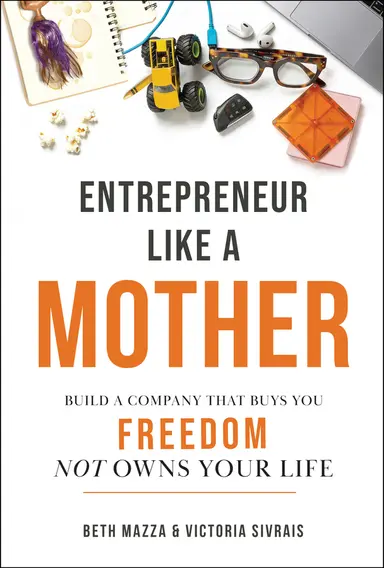
In their new book, Entrepreneur Like a MOTHER: Build a Company That Buys You Freedom, Not One That Owns Your Life, Beth and Victoria share practical lessons for choosing the right business model, avoiding costly scaling mistakes, creating a strong support system, and building a company with value beyond the woman who founded it. In this conversation, they discuss how motherhood has shaped their leadership, why some successful businesses are surprisingly difficult to sell, and how women can pursue serious ambition without surrendering the lives they worked so hard to build.
Both of you have successfully built and sold consulting firms while raising nine children between you. Looking back at those seasons of intense growth, what did you learn about the difference between building a successful business and building a successful life, and were there moments when you realized one was beginning to come at the expense of the other?
Our best revenue growth year was our worst year mentally, and we were very absent moms. It’s still so upsetting to think about. Beth remembers coming home late one night to her #3 daughter, Ava, wide awake and waiting for her. Beth’s heart broke when Ava said she had nightmares if Mom wasn’t home when she went to bed.
After that year, we decided to set personal non-negotiables. For Victoria, she would always take the 4:45 train home if we weren’t traveling. She would be home for dinner and bedtime, and get back online after the kids were asleep. For Beth, she shut the computer off on the weekends. She stopped taking the Sunday night call from one of our largest clients. Both had implications for our business – clients with big, time-sensitive problems now had to choose other firms that would work through the weekend.
The interesting thing is that revenue tailed down, but not much. Employee turnover also suddenly dropped. It turned out we were better counselors, better bosses, and better moms when we weren’t working 24/7.
In Entrepreneur Like a MOTHER, you challenge the assumption that a profitable founder-led business is automatically a valuable or sellable business. What are some of the biggest warning signs that a founder has unintentionally built a company that depends too heavily on them, and what should entrepreneurs begin putting in place today if they eventually want the option to sell?
We know from experience that potential buyers heavily discount owner-focused businesses. That is one of the primary reasons why Beth’s first business was valued at 1x revenue, and the second at 4x revenue. The buyer knows that even if the seller has to stay with the business for a prescribed period, they might not work as hard. And more importantly, if the owner leaves, there is very little intellectual property left in the business they bought.
A few warning signs if you are “this” type of owner:
- You’re in every pitch and on every major account. We said this one ourselves: “The client will leave if I’m not personally leading the account.”
- You can’t take ten days off without a laptop. If the wheels come off by day three, a buyer will find out in diligence.
- Clients hire you by name, not the firm.
- One client is a big slice of revenue. We once walked away from buying a firm where a single client was more than 30 percent of revenue. Within a year, that client cut ties with them completely.
Here is what we put in place in the second business to make sure the business didn’t revolve around us:
- We simplified the offerings to the market and made sure they could be sold and delivered by our senior team.
- We kept our names out of the pitch book until the last slide.
- We spent several hours a week training and working with our senior team to be able to do #1.
- We gave our senior people phantom stock in the business, a form of equity, so they were as focused on building real value as we were.
Your message encourages women to “build a seven-figure business without sacrificing motherhood or your ambition.” For women who have been conditioned to believe that extraordinary business success requires extraordinary personal sacrifice, how do you redefine ambition in a way that allows women to pursue wealth, leadership, family, and freedom without constantly feeling they must choose between them?
Well, let’s start with the uncomfortable part. We sacrificed plenty.
First, we sacrificed financially in the beginning. We put groceries and even tuition on credit cards while our second firm ramped up. We were the last of our friends to buy new cars or bigger houses. We didn’t start saving for college until our kids were in kindergarten.
Second, we sacrificed the peace of mind that stay-at-home moms get every day, that they have some semblance of control over their kids’ lives. We didn’t know what lunch table our kids sat at, we couldn’t be the playground monitor, and we missed a few games and performances. Or, maybe worse, we weren’t present at the moments kids might have needed us to be.
But, slowly, as we became more confident in our business and we set our personal non-negotiables, we began to have more control over our lives than we might have as senior people in the corporate world. It was all about deciding the trade-offs ahead of time. Some things were fixed. Dinner and bedtime most nights. Being first on the scene when a kid was in real pain. Big games. Other things were negotiable for a few years: money, cars, vacations, sleep. When you decide that up front, the business gets built around the fixed things, not the other way around.
So our definition of ambition is specific. It’s a number and a set of non-negotiables. We walked away from our businesses when our kids were still dependent on us, retired, and probably got a little too into their lives. Our kids have no college debt, we spend as much time with them now as they will let us, and most importantly, they know the payoff of really hard work.
In Entrepreneur Like MOTHER, we give moms the formula to choose a business model that fits their life. We introduce a tool called the Mompreneur Mayhem Matrix that lets them understand exactly the impact on their family’s lives of different business model choices. Some models pay off big and bring total mayhem: outside capital, tight timelines, investors calling the shots. That can be the right call. The model to run from is low return with total mayhem, where you work around the clock, and the bank account doesn’t move. For most of the women we talk to, the target is strong returns with a level of chaos they can live with.
After our second sale, the lesson we’d put on a sticky note is this: find the model that works for you as a mom, and don’t stray from it, no matter how much money gets thrown your way.
And say the money part out loud. Wanting to get rich is ambition. So is wanting to be home for dinner. Moms can have both.
Scaling is often celebrated as the natural next step for entrepreneurs, but growth can also create more expenses, responsibilities, employees, and stress. What are some of the most common scaling mistakes you have witnessed women entrepreneurs make, and how can founders determine whether an opportunity represents strategic growth or simply more work disguised as success?
The biggest mistake is treating more revenue as proof you’re scaling. Growing usually means more revenue and more hours, but it also means more profit. If you don’t have more profit, stop scaling immediately until you do. The only way to scale and keep your sanity is to delegate the responsibilities others can do even 75% at the level you can, and focus on the ones only you can do. At Clermont, that looked like hiring a CFO to manage payables, receivables, and billing, and a senior salesperson to focus on getting us into the right rooms and ready for the close. These seemed like big investments at the time, but they took less than one year to pay off.

Motherhood requires constant prioritization, adaptability, delegation, problem-solving, and decision-making, many of the same skills required in entrepreneurship. How has raising children influenced the way each of you leads, takes risks, manages people, and makes difficult business decisions, and what leadership strengths do you believe mothers often bring to entrepreneurship that are still undervalued in traditional business culture?
Without a doubt, motherhood made us better listeners, quicker thinkers, and more committed to making the time we spend away from our family pay off. Moms get twice the work done in half the time simply because we have to. We juggle at home, and we bring those same skills to work. We also became real empaths, and we found that our mostly male, older clientele were much more comfortable being vulnerable and truthful with us; because of that, we could craft their messaging to the investment community faster, and in a way they could deliver better every time.
You introduce practical concepts such as your “Power Moves” and “Kitchen Cabinet” frameworks in the book. Can you explain how these frameworks help women make smarter decisions about their businesses, finances, and support systems, and why having the right people around you can become just as important as having the right business strategy?
The Power Moves are the five decisions every founder faces, roughly in the order they show up:
- Prioritize the right idea over your passion project.
- Build yourself a Kitchen Cabinet.
- Make the money moves that matter.
- Start before you are ready.
- Respect the pivot.
We promise, every single founder is going to face moments when they must tackle each of the problems addressed in our Power Moves. The book gives you the exact playbook on framing the problem correctly, finding the people who can help you move through it, and then giving yourself the grace, again and again, to make mistakes and fix them. It distills major business moves down easily and quickly, and provides questions and workbooks to help mompreneurs move through them. The playbook comes from how we learned to make better decisions and deal with mistakes better over 20 years.
The title Entrepreneur Like a MOTHER: Build a Company That Buys You Freedom, Not One That Owns Your Life makes a powerful distinction between owning a business and essentially becoming an employee of the company you created. After building and exiting your own companies, what does entrepreneurial freedom mean to each of you today, and what do you hope women will reconsider about success, wealth, motherhood, and ambition after reading this book?
We want women to learn that they get to write their own definition of freedom and then go for it, ambitiously, but prudently. The most important part is deciding what business model to pursue and what personal and financial non-negotiables to set in place BEFORE you start your business. This is the most worthwhile exercise in the book, and we know women will be more successful, personally and financially, if they spend the time doing this.
Our definition of freedom is the ability to make the daily calls about our schedule on our own, no corporate overlord, and no client calls on the docket. We are both immensely grateful for this freedom, and we want to help other mompreneurs achieve it too.
How can our readers connect?
https://www.instagram.com/femalemavericks
https://www.linkedin.com/in/bethmazza/
https://www.linkedin.com/in/victoria-sivrais-92359a4/
Discover more from Connected Woman Magazine
Subscribe to get the latest posts sent to your email.