
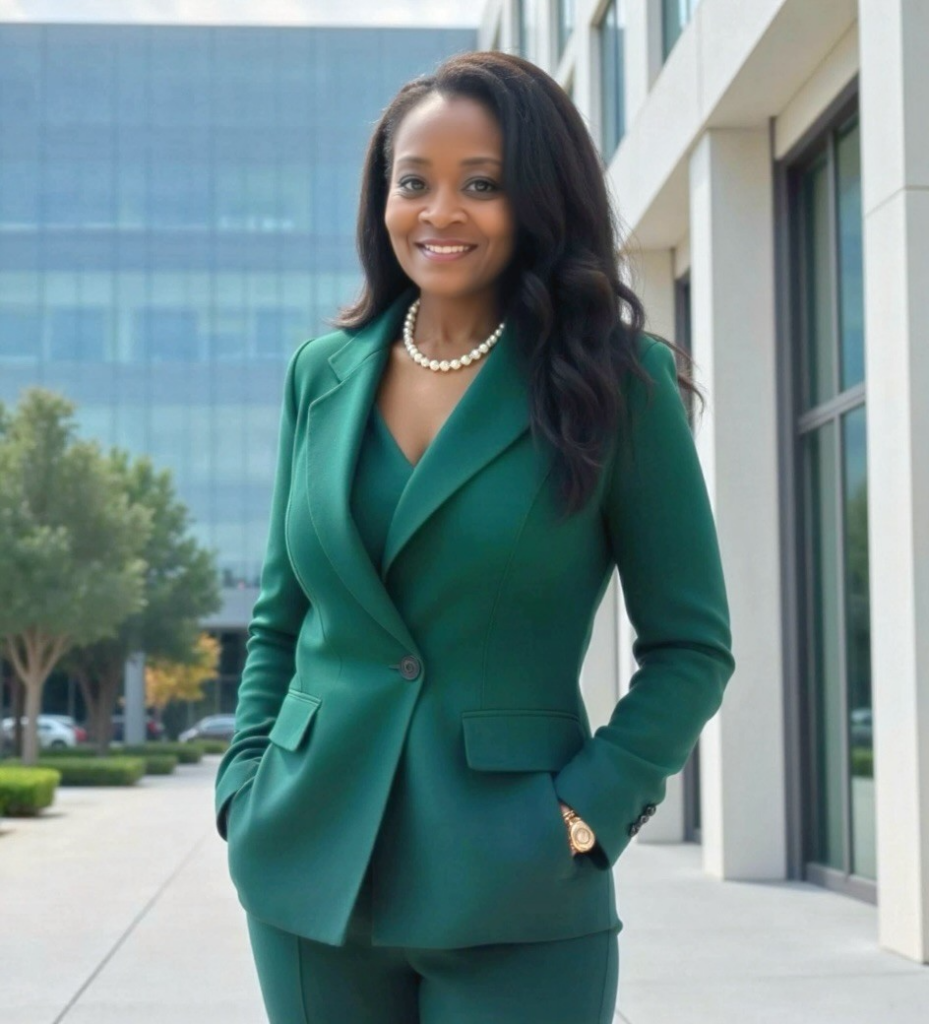
 Today we spotlight Lani Shaw, Esq.—a seasoned federal attorney turned executive coach whose unique blend of legal precision and leadership strategy is reshaping how women approach career advancement. With more than two decades in high-stakes regulatory law, Lani brings a structured, results-driven approach to her coaching, helping women build clear, compelling cases for promotions, salary negotiations, and leadership opportunities. Rather than relying on surface-level confidence, she guides clients to align their accomplishments with their goals and articulate their value with clarity and authority. At the core of her work is a powerful redefinition of executive presence—one rooted not in appearance, but in self-trust, sound judgment, and the ability to lead with authenticity and intention. Let’s meet her…
Your career spans more than two decades in high-stakes federal regulatory law. Looking back, what defining moments or pivotal decisions most shaped your professional identity, and how did those experiences influence your transition into executive coaching and leadership strategy?
Over the course of my career, I have had the opportunity to operate in high-stakes federal regulatory environments where the impact of decisions is significant. One defining realization for me was understanding that technical excellence alone is not enough to advance. I consistently saw highly capable, brilliant professionals remain in place, not because they lacked skill, but because they lacked visibility, strategic positioning, or access to sponsorship. At the same time, I was navigating my own growth. I had to learn how to advocate for myself, how to clearly communicate my value, and how to operate at the next level before I was formally given the title. Those experiences shaped how I view leadership and advancement. My transition into executive coaching was not a pivot away from my career. It was an expansion of it. I wanted to take everything I had learned about navigating complex systems, influencing decision makers, and positioning for advancement and use it to help other high performing women accelerate their growth in a more intentional and supported way.
You have navigated complex governmental systems and advised senior leadership at the highest levels. What lessons about power, influence, and credibility did you learn in those environments that women outside of government or law can still apply in their own industries?
One of the most important lessons I learned is that power is not always tied to a title. It is often tied to perception, relationships, and the ability to consistently deliver and communicate value. Credibility is built over time through preparation, consistency, and how you show up in critical moments. Influence comes from understanding how decisions are made and positioning your contributions in a way that aligns with what matters most to leadership. For women outside of government or law, the application is the same. It is not enough to do great work. You have to make your work visible, relevant, and connected to outcomes. The professionals who advance are often those who make it easy for decision makers to understand their impact and trust their judgment.
Many women struggle with translating experience into advancement. From your perspective, why do accomplished professionals often undersell themselves, and what practical mindset or documentation practices can help them clearly articulate their value?
Many accomplished women undersell themselves because they have been conditioned to focus on execution rather than impact. They list responsibilities instead of results. They assume that if they work hard, someone will notice. They also tend to wait until they feel fully ready before pursuing the next opportunity. The shift begins with intentional reflection and documentation. You have to move from thinking about what you did to understanding what it meant. What was the outcome? What changed because of your work. Who benefited? When you can clearly articulate that, your confidence increases because it is grounded in evidence, not emotion.
You often speak about “documenting wins.” How does this practice change the trajectory of a woman’s career, and what specific methods do you recommend for professionals who have never formally tracked their achievements before?
Documenting wins is one of the most practical and powerful strategies I teach. It changes how you see yourself and how others see you. When you consistently track your accomplishments, you are no longer scrambling to remember what you have done. You are able to clearly and confidently communicate your value in real time. For professionals who have never done this before, I recommend starting simple. Keep a running document and update it weekly or monthly. Capture what you worked on, the results, any metrics, and any positive feedback you received. Over time, this becomes a comprehensive record of your impact. It becomes the foundation for your resume, your interviews, your performance reviews, and your promotion conversations. Documenting wins leads to aggregating your accomplishments and that provides a full and complete picture of how you are progressing.
Your dual expertise in law and coaching is unique. How has your legal background enhanced your coaching approach, particularly when helping women prepare for promotions, salary negotiations, or leadership visibility?
My legal background has had a significant influence on how I coach. As an attorney, I was trained to think critically, analyze complex situations, and build strong, well supported arguments. You learn how to present information in a way that is clear, structured, and persuasive. I bring that same approach into my coaching practice. When I work with clients, we are not relying on general confidence or vague talking points. We are building a clear case. We identify their accomplishments, align them with the role or opportunity, and develop a narrative that demonstrates why they are the right choice. This is especially important in promotions and salary negotiations where clarity and positioning make a measurable difference.
Executive presence is a recurring theme in your work. How do you define executive presence beyond appearance or communication style, and what deeper qualities should women cultivate to build authentic authority rather than performative confidence?
Executive presence is often misunderstood as appearance or communication style, but it goes much deeper than that. At its core, it is about alignment and self-trust. It is how you think, how you make decisions, how you handle pressure, and how you carry responsibility. It includes clarity, composure, sound judgment, and the ability to inspire confidence in others. Authentic authority comes from knowing your value and consistently showing up in a way that reflects it. It is not about performing confidence for others. It is about being grounded in your competence and operating from that place consistently.
Burnout prevention is increasingly critical in high-achieving spaces. In your experience, what are the earliest warning signs women overlook, and how can professionals protect their ambition without sacrificing their well-being?
The early signs of burnout are often easy to overlook, especially for high achieving women who are used to pushing through. It can show up as constant fatigue, lack of motivation, irritability, or feeling disconnected from work that once felt meaningful. Because many women are used to performing at a high level, they normalize these feelings instead of addressing them. Protecting your ambition requires intentional systems. It is not just about working harder or managing time better. It is about managing energy. That includes setting boundaries, building in rest, and regularly evaluating how your time is being spent. I often remind clients that sustainability is a leadership strategy. If you cannot sustain your performance, it will eventually impact your results.
At CWM we celebrate both progress and ongoing challenges that matter to women. From your vantage point, what systemic shifts have you observed over the course of your career, and where do you believe the most urgent work for gender equity still remains?
Sponsorship, visibility, and access to high impact work continue to be areas where gaps remain. The most urgent work is ensuring that women are not just included but positioned to advance. That requires intentional leadership, transparency in decision making, and a commitment to developing diverse talent in a meaningful way.
Today we spotlight Lani Shaw, Esq.—a seasoned federal attorney turned executive coach whose unique blend of legal precision and leadership strategy is reshaping how women approach career advancement. With more than two decades in high-stakes regulatory law, Lani brings a structured, results-driven approach to her coaching, helping women build clear, compelling cases for promotions, salary negotiations, and leadership opportunities. Rather than relying on surface-level confidence, she guides clients to align their accomplishments with their goals and articulate their value with clarity and authority. At the core of her work is a powerful redefinition of executive presence—one rooted not in appearance, but in self-trust, sound judgment, and the ability to lead with authenticity and intention. Let’s meet her…
Your career spans more than two decades in high-stakes federal regulatory law. Looking back, what defining moments or pivotal decisions most shaped your professional identity, and how did those experiences influence your transition into executive coaching and leadership strategy?
Over the course of my career, I have had the opportunity to operate in high-stakes federal regulatory environments where the impact of decisions is significant. One defining realization for me was understanding that technical excellence alone is not enough to advance. I consistently saw highly capable, brilliant professionals remain in place, not because they lacked skill, but because they lacked visibility, strategic positioning, or access to sponsorship. At the same time, I was navigating my own growth. I had to learn how to advocate for myself, how to clearly communicate my value, and how to operate at the next level before I was formally given the title. Those experiences shaped how I view leadership and advancement. My transition into executive coaching was not a pivot away from my career. It was an expansion of it. I wanted to take everything I had learned about navigating complex systems, influencing decision makers, and positioning for advancement and use it to help other high performing women accelerate their growth in a more intentional and supported way.
You have navigated complex governmental systems and advised senior leadership at the highest levels. What lessons about power, influence, and credibility did you learn in those environments that women outside of government or law can still apply in their own industries?
One of the most important lessons I learned is that power is not always tied to a title. It is often tied to perception, relationships, and the ability to consistently deliver and communicate value. Credibility is built over time through preparation, consistency, and how you show up in critical moments. Influence comes from understanding how decisions are made and positioning your contributions in a way that aligns with what matters most to leadership. For women outside of government or law, the application is the same. It is not enough to do great work. You have to make your work visible, relevant, and connected to outcomes. The professionals who advance are often those who make it easy for decision makers to understand their impact and trust their judgment.
Many women struggle with translating experience into advancement. From your perspective, why do accomplished professionals often undersell themselves, and what practical mindset or documentation practices can help them clearly articulate their value?
Many accomplished women undersell themselves because they have been conditioned to focus on execution rather than impact. They list responsibilities instead of results. They assume that if they work hard, someone will notice. They also tend to wait until they feel fully ready before pursuing the next opportunity. The shift begins with intentional reflection and documentation. You have to move from thinking about what you did to understanding what it meant. What was the outcome? What changed because of your work. Who benefited? When you can clearly articulate that, your confidence increases because it is grounded in evidence, not emotion.
You often speak about “documenting wins.” How does this practice change the trajectory of a woman’s career, and what specific methods do you recommend for professionals who have never formally tracked their achievements before?
Documenting wins is one of the most practical and powerful strategies I teach. It changes how you see yourself and how others see you. When you consistently track your accomplishments, you are no longer scrambling to remember what you have done. You are able to clearly and confidently communicate your value in real time. For professionals who have never done this before, I recommend starting simple. Keep a running document and update it weekly or monthly. Capture what you worked on, the results, any metrics, and any positive feedback you received. Over time, this becomes a comprehensive record of your impact. It becomes the foundation for your resume, your interviews, your performance reviews, and your promotion conversations. Documenting wins leads to aggregating your accomplishments and that provides a full and complete picture of how you are progressing.
Your dual expertise in law and coaching is unique. How has your legal background enhanced your coaching approach, particularly when helping women prepare for promotions, salary negotiations, or leadership visibility?
My legal background has had a significant influence on how I coach. As an attorney, I was trained to think critically, analyze complex situations, and build strong, well supported arguments. You learn how to present information in a way that is clear, structured, and persuasive. I bring that same approach into my coaching practice. When I work with clients, we are not relying on general confidence or vague talking points. We are building a clear case. We identify their accomplishments, align them with the role or opportunity, and develop a narrative that demonstrates why they are the right choice. This is especially important in promotions and salary negotiations where clarity and positioning make a measurable difference.
Executive presence is a recurring theme in your work. How do you define executive presence beyond appearance or communication style, and what deeper qualities should women cultivate to build authentic authority rather than performative confidence?
Executive presence is often misunderstood as appearance or communication style, but it goes much deeper than that. At its core, it is about alignment and self-trust. It is how you think, how you make decisions, how you handle pressure, and how you carry responsibility. It includes clarity, composure, sound judgment, and the ability to inspire confidence in others. Authentic authority comes from knowing your value and consistently showing up in a way that reflects it. It is not about performing confidence for others. It is about being grounded in your competence and operating from that place consistently.
Burnout prevention is increasingly critical in high-achieving spaces. In your experience, what are the earliest warning signs women overlook, and how can professionals protect their ambition without sacrificing their well-being?
The early signs of burnout are often easy to overlook, especially for high achieving women who are used to pushing through. It can show up as constant fatigue, lack of motivation, irritability, or feeling disconnected from work that once felt meaningful. Because many women are used to performing at a high level, they normalize these feelings instead of addressing them. Protecting your ambition requires intentional systems. It is not just about working harder or managing time better. It is about managing energy. That includes setting boundaries, building in rest, and regularly evaluating how your time is being spent. I often remind clients that sustainability is a leadership strategy. If you cannot sustain your performance, it will eventually impact your results.
At CWM we celebrate both progress and ongoing challenges that matter to women. From your vantage point, what systemic shifts have you observed over the course of your career, and where do you believe the most urgent work for gender equity still remains?
Sponsorship, visibility, and access to high impact work continue to be areas where gaps remain. The most urgent work is ensuring that women are not just included but positioned to advance. That requires intentional leadership, transparency in decision making, and a commitment to developing diverse talent in a meaningful way.
You emphasize intentional growth instead of reactive career moves. What does intentional career planning truly look like in practice, especially for women balancing personal responsibilities, evolving interests, and competitive markets? Intentional career planning means making decisions based on where you want to go, not just what is available in the moment. It requires clarity about your long-term goals and aligning your current actions with that vision. In practice, that means identifying the skills you need, seeking out opportunities that build those skills, and developing relationships that support your growth. It also means regularly reassessing your direction and making adjustments as needed. For women balancing multiple responsibilities, it is about being realistic with your time while still making consistent progress toward your goals. As an ICF-certified executive coach, you work with professionals at different stages of leadership. What common patterns or limiting beliefs do you see repeated across industries, and how do you guide clients to move beyond them? Across industries, I see the same patterns. Women waiting until they feel completely ready. Believing that hard work alone will lead to recognition. Hesitating to speak up or advocate for themselves. I help clients move beyond these beliefs by focusing on evidence and strategy. We look at what they have already accomplished and how that translates into value. We build clear messaging and create a plan for visibility and advancement. Confidence becomes a byproduct of preparation and action, not something they have to wait to feel. Influence often precedes advancement. What strategies do you recommend for women who are highly competent but struggle with visibility or recognition in environments where their contributions are not immediately acknowledged? Visibility is often misunderstood as self-promotion, but it is really about communication and positioning. Many women assume their work is visible when it is not. I encourage clients to be proactive. Share updates on your work. Connect your contributions to outcomes. Build relationships with people who influence decisions. This can be done in a way that feels natural and aligned. The goal is not to be performative. The goal is to ensure that your impact is seen, understood, and remembered. You have helped clients secure promotions and higher salaries even in tight job markets. What frameworks or preparation practices make the greatest difference when opportunities seem scarce or competition feels overwhelming? In a competitive job market, strategy becomes even more important. I guide clients to focus on clarity, positioning, and preparation. Clarity on what roles they are targeting. Positioning their experience so it clearly aligns with those roles. Preparation that allows them to confidently communicate their value in interviews. We also focus heavily on networking and direct outreach because many opportunities are influenced before they are publicly posted. Legacy is a powerful concept in your messaging. How do you define legacy for modern professional women, and how can someone begin building one long before they reach executive titles or retirement milestones? Legacy is something you build over time through your decisions, your impact, and how you show up for others. It is not reserved for the end of your career. For modern professional women, legacy includes the opportunities you create, the standards you set, and the people you influence along the way. It is about being intentional not only about your own success, but also about the impact you leave on others. For women entering traditionally male-dominated or highly regulated fields today, what advice would you offer about navigating credibility, confidence, and resilience without compromising their authenticity? In environments that are traditionally male dominated or highly structured, credibility is built through preparation, consistency, and clarity. You have to know your material and understand the environment you are operating in. At the same time, you do not have to compromise who you are to be effective. Authenticity and credibility can coexist. The goal is to show up prepared, confident, and grounded in your value. Challenges will come, but they are part of the environment, not a reflection of your capability. We continue to focus on honoring women here so when you look toward the future, what message would you share with women who feel qualified but hesitant to pursue leadership roles, negotiate their worth, or step into spaces where they have not historically been represented? For women who feel qualified but hesitant, I want you to understand that readiness is not about perfection. It is about willingness. There will rarely be a moment where you feel completely ready. The women who advance are often the ones who move forward anyway. They apply, they speak up, they negotiate, and they step into spaces even when it feels uncomfortable. You do not need permission to pursue leadership. You are allowed to take up space and go after what you want.Visit her ask COACH LANI column now!
Discover more from Connected Woman Magazine
Subscribe to get the latest posts sent to your email.