
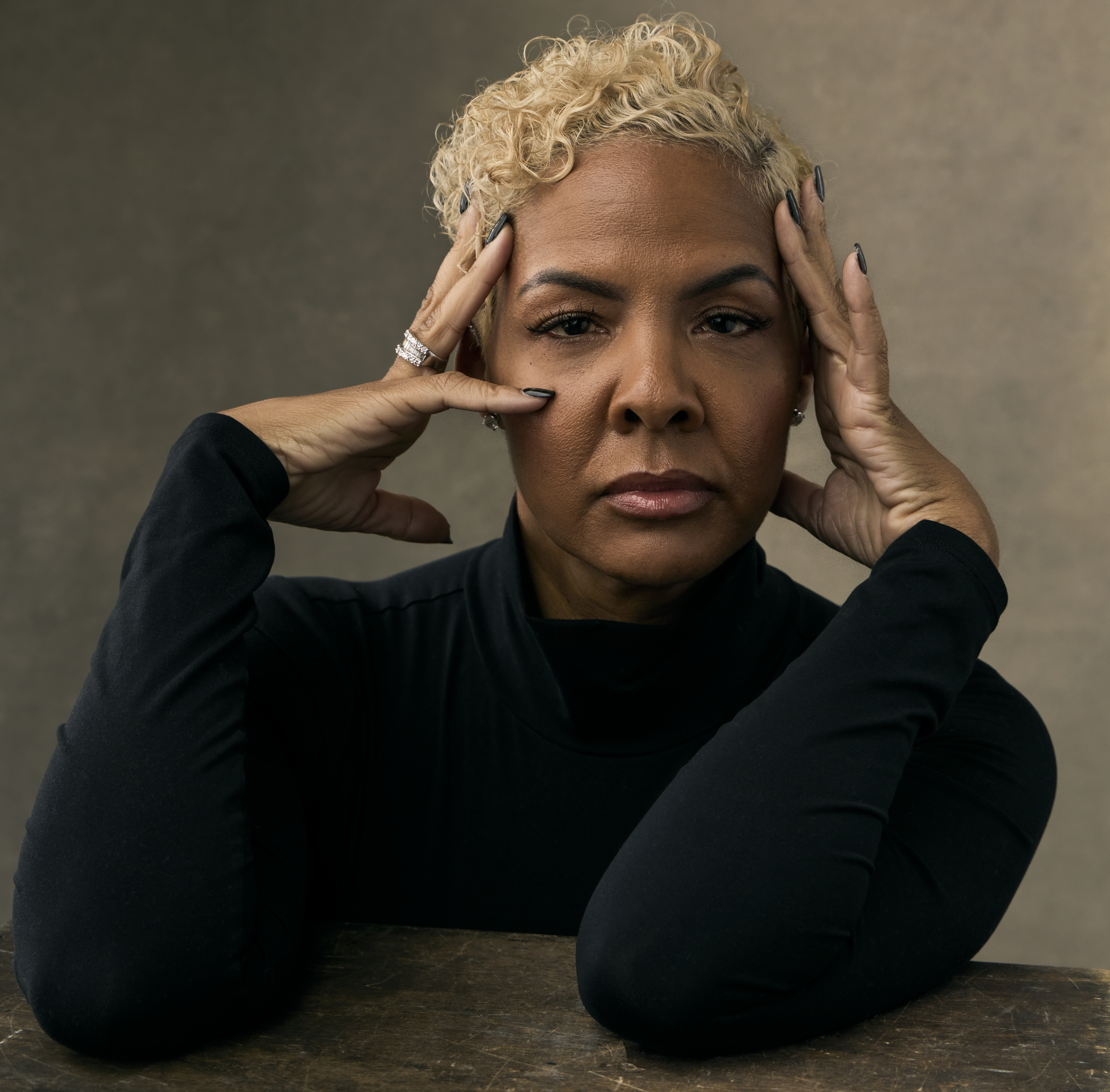
 Los Angeles–based author J. Elaine makes a powerful literary debut with Beyond the Fireworks, a novel that explores the quiet emotional terrain that exists after life’s most explosive moments. Using the striking imagery of fireworks—the beauty, the noise, the sudden rupture, and the lingering silence that follows—Elaine crafts a deeply human story about trauma, resilience, and the complicated work of healing. Through the journey of her protagonist, Celine, the novel examines the psychological aftermath of domestic abuse, the tension between motherhood and self-preservation, and the courage required to rebuild a life when the spectacle fades and reality settles in. In this interview, J. Elaine reflects on the symbolism behind the story, the responsibility of portraying survivor experiences with care and dignity, and the emotional courage it took to write a debut novel that sits bravely in the gray spaces of identity, forgiveness, and renewal. Let’s meet her…
Beyond the Fireworks uses the imagery of explosions, silence, and aftermath to mirror emotional trauma and healing. What inspired you to use fireworks as a central metaphor, and how did that symbolism evolve as you developed Celine’s Story?
Fireworks have always been complicated for me. I don’t actually enjoy them. The noise, the unpredictability, the suddenness — they’ve always felt more jarring than celebratory. And that tension stayed with me.
On the surface, fireworks are beautiful. People gather, they look up, they celebrate. But there’s also something violent about them. They explode. They disrupt the sky. And then just as quickly, they disappear — leaving smoke, silence, and sometimes debris behind.
That contrast felt emotionally honest.
When I began writing Celine’s story, I was thinking about intensity — relationships that look bright and passionate from the outside but feel destabilizing up close. Fireworks became a natural metaphor for that. The spectacle versus the lived experience.
But as the novel developed, the focus shifted. I became less interested in the explosion and more interested in what happens afterward. The quiet. The internal reckoning. The rebuilding that no one applauds.
That’s really what the book is about — what happens beyond the noise. Beyond the moment that defines everything. Beyond the fireworks.
The novel explores the devastating impact of both physical and emotional abuse within a marriage. What responsibility did you feel, as a storyteller, to portray domestic violence with honesty while also protecting the dignity and humanity of survivors?
I felt a deep responsibility to approach the subject with honesty, restraint, and dignity. Trauma can easily be sensationalized in fiction, and I was committed to avoiding that. The goal was never to dramatize violence for shock value, but to portray its psychological complexity — how it shapes identity, perception, and decision-making.
At the same time, I wanted Celine to remain a fully realized woman, not a symbol of suffering. Survivors are not defined solely by what they endure. They are layered, intelligent, flawed, hopeful, evolving. Preserving that humanity was essential to me.
I believe storytelling should illuminate without exploiting. My responsibility was to hold both truth and care at the same time.
Celine is forced to navigate the tension between motherhood and her own
survival and healing. Why was it important for you to explore that intersection,
and what do you hope readers—especially mothers—take away from her
internal struggle?
Motherhood complicates everything. It heightens fear, sharpens instinct, and often silences personal needs. I wanted to explore that tension — the internal conflict between protecting your child and preserving yourself.
For many women, survival is not just about leaving or staying. It’s about navigating guilt, responsibility, love, and self-doubt simultaneously. Celine’s struggle reflects that layered reality.
My hope is that mothers who read this story feel seen in the complexity of their decisions. There is no simple formula for courage. Sometimes strength looks like staying steady in uncertainty. Sometimes it looks like choosing yourself so you can be whole for your children.
Your writing has been described as tender yet unflinching. How did you balance emotional vulnerability with narrative strength when telling a story that deals with trauma, identity, and personal rebirth?
I’ve always believed vulnerability and strength are not opposites — they coexist. In writing this novel, I allowed emotional intimacy on the page, but I paired it with structure and discipline in the storytelling.
The prose leans lyrical at times because trauma is often experienced internally, in fragments, in sensation. But I was careful to ground those moments in clarity. The story needed to move forward. Celine needed agency.
Tenderness without direction can feel indulgent. Strength without vulnerability can feel hollow. The balance was intentional.
Beyond the violence itself, the novel examines what happens after—the quiet,
complicated process of rebuilding. Why was it important for you to focus on the
aftermath rather than solely the crisis?
So many narratives stop at the crisis — the explosion, the leaving, the confrontation. But I was more interested in what happens after the headlines fade.
The aftermath is where identity shifts. It’s where doubt creeps in. It’s where rebuilding quietly takes place.
Healing is rarely cinematic. It’s incremental. It’s inconvenient. It’s nonlinear. By focusing on the aftermath, I wanted to honor that quieter, more complex journey — the part that doesn’t always receive applause but requires immense courage.
The re-emergence of feelings for Celine’s lifelong friend introduces themes of
rediscovery and emotional awakening. What role does love—whether romantic,
platonic, or self-directed—play in the healing process within this story?
Love in this novel is not limited to romance. It’s layered and expansive. It includes friendship, memory, self-forgiveness, and rediscovery.
When someone from Celine’s past re-enters her life, it isn’t simply about rekindling something romantic. It’s about being seen — and remembering who she was before she began shrinking herself to survive. That connection becomes less about chemistry and more about recognition.
In many ways, love in this story functions as a mirror. It reflects possibility. It challenges self-doubt. It gently asks whether she is willing to choose herself.
Ultimately, the most transformative love in the novel is self-directed. Healing doesn’t arrive because someone rescues her. It begins when she begins to believe she is worthy of light again.
Many survivors struggle with rewriting the narrative they once believed defined their lives. How does Celine’s journey reflect the power—and difficulty— of reclaiming authorship over one’s own story?
Celine’s journey reflects something many women experience: the slow realization that the story they’ve been living inside no longer aligns with who they are becoming.
Reclaiming authorship is not a dramatic moment. It’s incremental. It begins with small internal shifts — questioning old beliefs, recognizing patterns, allowing discomfort. It requires confronting the narrative you once accepted as truth and asking whether it still serves you.
For Celine, the difficulty lies in untangling identity from circumstance. When you’ve adapted for survival, it can be hard to remember where coping ends and authenticity begins. Rewriting your story means acknowledging what happened without allowing it to dictate your future.
The power comes in choosing again. In deciding that while you may not control what happened, you do have influence over what happens next. That shift — from reaction to intention — is where authorship begins.
As a debut novelist, what personal or emotional risks did you take in writing Beyond the Fireworks, and were there moments during the process that transformed you as much as they did your character?
Writing this novel required emotional courage, but not in the way people might assume. The risk wasn’t in recounting specific experiences — it was in allowing complexity to exist on the page.
It’s easier to write characters who are clearly right or clearly wrong. It’s harder to write gray space. To explore contradiction. To allow a woman to be strong and uncertain, loving and self-protective, hopeful and afraid — sometimes all at once.
There were moments during the writing process when I had to sit with difficult questions about identity, forgiveness, and self-worth. Fiction creates a safe container for exploring those themes, but the exploration is still real.
In many ways, the process reinforced something I already believed: growth rarely looks dramatic. It looks like quiet decisions made repeatedly. That understanding deepened my own appreciation for resilience.
Your work centers on resilience, renewal, and the courage to begin again. How does this novel reflect your broader mission as a writer, and what conversations do you hope it sparks among readers?
At its core, my writing is interested in becoming — in the spaces where women evolve, reclaim themselves, and begin again.
Beyond the Fireworks reflects that mission by focusing not just on rupture, but on renewal. Not just on survival, but on self-definition. I’m less interested in the spectacle of conflict and more interested in what happens afterward — when a woman decides she deserves a fuller life.
I hope this novel sparks conversations about agency. About the quiet ways women diminish themselves — and the strength it takes to stop. I hope it opens dialogue about emotional complexity, about boundaries, about the courage to step toward something uncertain but aligned.
Most of all, I hope readers see that beginning again is not failure. It is evolution.
With Beyond the Fireworks set to release in July 2026, what does this milestone represent for you personally, and what do you hope readers feel in the final moments after they close the book?
Releasing Beyond the Fireworks represents following through on something that mattered to me. Writing a novel requires commitment — sitting down, doing the work, and trusting that the story is worth finishing. Publication is really the moment when that private process becomes something you share with readers.
Personally, it represents stepping fully into my voice as a writer.
For readers, I hope the book leaves them thinking about the idea of beginning again. Life rarely moves in a straight line, and many of us carry stories about who we are or what we deserve that were shaped by difficult experiences. I hope readers close the book feeling a little more open to the possibility that those narratives can change.
If the novel does anything, I hope it reminds people that their story is still unfolding — and that they have more agency in that story than they might realize.
Los Angeles–based author J. Elaine makes a powerful literary debut with Beyond the Fireworks, a novel that explores the quiet emotional terrain that exists after life’s most explosive moments. Using the striking imagery of fireworks—the beauty, the noise, the sudden rupture, and the lingering silence that follows—Elaine crafts a deeply human story about trauma, resilience, and the complicated work of healing. Through the journey of her protagonist, Celine, the novel examines the psychological aftermath of domestic abuse, the tension between motherhood and self-preservation, and the courage required to rebuild a life when the spectacle fades and reality settles in. In this interview, J. Elaine reflects on the symbolism behind the story, the responsibility of portraying survivor experiences with care and dignity, and the emotional courage it took to write a debut novel that sits bravely in the gray spaces of identity, forgiveness, and renewal. Let’s meet her…
Beyond the Fireworks uses the imagery of explosions, silence, and aftermath to mirror emotional trauma and healing. What inspired you to use fireworks as a central metaphor, and how did that symbolism evolve as you developed Celine’s Story?
Fireworks have always been complicated for me. I don’t actually enjoy them. The noise, the unpredictability, the suddenness — they’ve always felt more jarring than celebratory. And that tension stayed with me.
On the surface, fireworks are beautiful. People gather, they look up, they celebrate. But there’s also something violent about them. They explode. They disrupt the sky. And then just as quickly, they disappear — leaving smoke, silence, and sometimes debris behind.
That contrast felt emotionally honest.
When I began writing Celine’s story, I was thinking about intensity — relationships that look bright and passionate from the outside but feel destabilizing up close. Fireworks became a natural metaphor for that. The spectacle versus the lived experience.
But as the novel developed, the focus shifted. I became less interested in the explosion and more interested in what happens afterward. The quiet. The internal reckoning. The rebuilding that no one applauds.
That’s really what the book is about — what happens beyond the noise. Beyond the moment that defines everything. Beyond the fireworks.
The novel explores the devastating impact of both physical and emotional abuse within a marriage. What responsibility did you feel, as a storyteller, to portray domestic violence with honesty while also protecting the dignity and humanity of survivors?
I felt a deep responsibility to approach the subject with honesty, restraint, and dignity. Trauma can easily be sensationalized in fiction, and I was committed to avoiding that. The goal was never to dramatize violence for shock value, but to portray its psychological complexity — how it shapes identity, perception, and decision-making.
At the same time, I wanted Celine to remain a fully realized woman, not a symbol of suffering. Survivors are not defined solely by what they endure. They are layered, intelligent, flawed, hopeful, evolving. Preserving that humanity was essential to me.
I believe storytelling should illuminate without exploiting. My responsibility was to hold both truth and care at the same time.
Celine is forced to navigate the tension between motherhood and her own
survival and healing. Why was it important for you to explore that intersection,
and what do you hope readers—especially mothers—take away from her
internal struggle?
Motherhood complicates everything. It heightens fear, sharpens instinct, and often silences personal needs. I wanted to explore that tension — the internal conflict between protecting your child and preserving yourself.
For many women, survival is not just about leaving or staying. It’s about navigating guilt, responsibility, love, and self-doubt simultaneously. Celine’s struggle reflects that layered reality.
My hope is that mothers who read this story feel seen in the complexity of their decisions. There is no simple formula for courage. Sometimes strength looks like staying steady in uncertainty. Sometimes it looks like choosing yourself so you can be whole for your children.
Your writing has been described as tender yet unflinching. How did you balance emotional vulnerability with narrative strength when telling a story that deals with trauma, identity, and personal rebirth?
I’ve always believed vulnerability and strength are not opposites — they coexist. In writing this novel, I allowed emotional intimacy on the page, but I paired it with structure and discipline in the storytelling.
The prose leans lyrical at times because trauma is often experienced internally, in fragments, in sensation. But I was careful to ground those moments in clarity. The story needed to move forward. Celine needed agency.
Tenderness without direction can feel indulgent. Strength without vulnerability can feel hollow. The balance was intentional.
Beyond the violence itself, the novel examines what happens after—the quiet,
complicated process of rebuilding. Why was it important for you to focus on the
aftermath rather than solely the crisis?
So many narratives stop at the crisis — the explosion, the leaving, the confrontation. But I was more interested in what happens after the headlines fade.
The aftermath is where identity shifts. It’s where doubt creeps in. It’s where rebuilding quietly takes place.
Healing is rarely cinematic. It’s incremental. It’s inconvenient. It’s nonlinear. By focusing on the aftermath, I wanted to honor that quieter, more complex journey — the part that doesn’t always receive applause but requires immense courage.
The re-emergence of feelings for Celine’s lifelong friend introduces themes of
rediscovery and emotional awakening. What role does love—whether romantic,
platonic, or self-directed—play in the healing process within this story?
Love in this novel is not limited to romance. It’s layered and expansive. It includes friendship, memory, self-forgiveness, and rediscovery.
When someone from Celine’s past re-enters her life, it isn’t simply about rekindling something romantic. It’s about being seen — and remembering who she was before she began shrinking herself to survive. That connection becomes less about chemistry and more about recognition.
In many ways, love in this story functions as a mirror. It reflects possibility. It challenges self-doubt. It gently asks whether she is willing to choose herself.
Ultimately, the most transformative love in the novel is self-directed. Healing doesn’t arrive because someone rescues her. It begins when she begins to believe she is worthy of light again.
Many survivors struggle with rewriting the narrative they once believed defined their lives. How does Celine’s journey reflect the power—and difficulty— of reclaiming authorship over one’s own story?
Celine’s journey reflects something many women experience: the slow realization that the story they’ve been living inside no longer aligns with who they are becoming.
Reclaiming authorship is not a dramatic moment. It’s incremental. It begins with small internal shifts — questioning old beliefs, recognizing patterns, allowing discomfort. It requires confronting the narrative you once accepted as truth and asking whether it still serves you.
For Celine, the difficulty lies in untangling identity from circumstance. When you’ve adapted for survival, it can be hard to remember where coping ends and authenticity begins. Rewriting your story means acknowledging what happened without allowing it to dictate your future.
The power comes in choosing again. In deciding that while you may not control what happened, you do have influence over what happens next. That shift — from reaction to intention — is where authorship begins.
As a debut novelist, what personal or emotional risks did you take in writing Beyond the Fireworks, and were there moments during the process that transformed you as much as they did your character?
Writing this novel required emotional courage, but not in the way people might assume. The risk wasn’t in recounting specific experiences — it was in allowing complexity to exist on the page.
It’s easier to write characters who are clearly right or clearly wrong. It’s harder to write gray space. To explore contradiction. To allow a woman to be strong and uncertain, loving and self-protective, hopeful and afraid — sometimes all at once.
There were moments during the writing process when I had to sit with difficult questions about identity, forgiveness, and self-worth. Fiction creates a safe container for exploring those themes, but the exploration is still real.
In many ways, the process reinforced something I already believed: growth rarely looks dramatic. It looks like quiet decisions made repeatedly. That understanding deepened my own appreciation for resilience.
Your work centers on resilience, renewal, and the courage to begin again. How does this novel reflect your broader mission as a writer, and what conversations do you hope it sparks among readers?
At its core, my writing is interested in becoming — in the spaces where women evolve, reclaim themselves, and begin again.
Beyond the Fireworks reflects that mission by focusing not just on rupture, but on renewal. Not just on survival, but on self-definition. I’m less interested in the spectacle of conflict and more interested in what happens afterward — when a woman decides she deserves a fuller life.
I hope this novel sparks conversations about agency. About the quiet ways women diminish themselves — and the strength it takes to stop. I hope it opens dialogue about emotional complexity, about boundaries, about the courage to step toward something uncertain but aligned.
Most of all, I hope readers see that beginning again is not failure. It is evolution.
With Beyond the Fireworks set to release in July 2026, what does this milestone represent for you personally, and what do you hope readers feel in the final moments after they close the book?
Releasing Beyond the Fireworks represents following through on something that mattered to me. Writing a novel requires commitment — sitting down, doing the work, and trusting that the story is worth finishing. Publication is really the moment when that private process becomes something you share with readers.
Personally, it represents stepping fully into my voice as a writer.
For readers, I hope the book leaves them thinking about the idea of beginning again. Life rarely moves in a straight line, and many of us carry stories about who we are or what we deserve that were shaped by difficult experiences. I hope readers close the book feeling a little more open to the possibility that those narratives can change.
If the novel does anything, I hope it reminds people that their story is still unfolding — and that they have more agency in that story than they might realize.Discover more from Connected Woman Magazine
Subscribe to get the latest posts sent to your email.