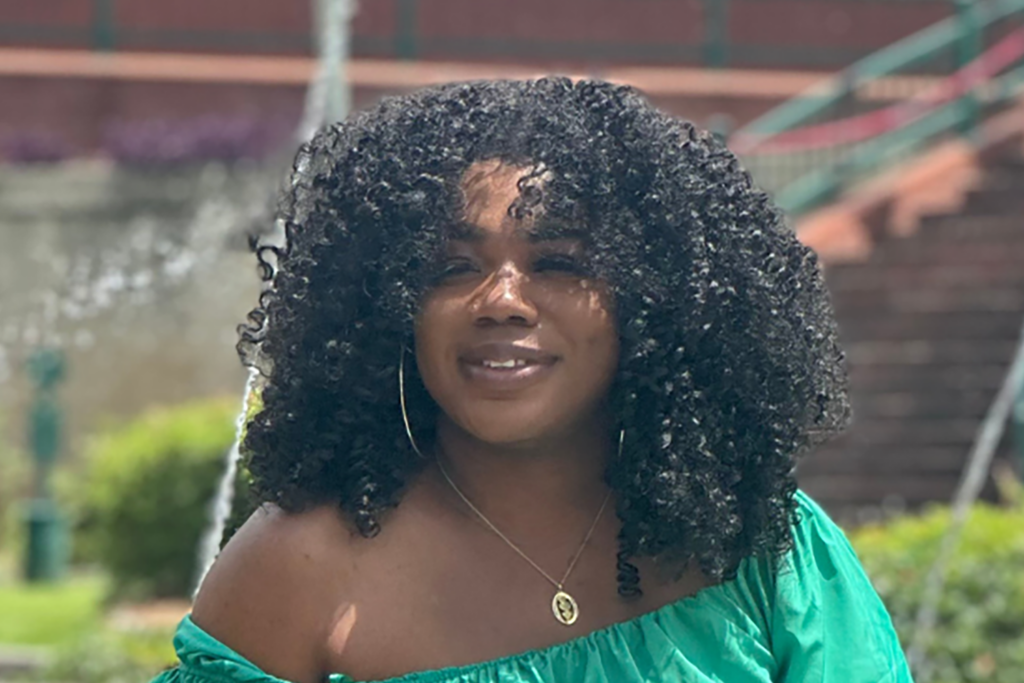
 Through faith, transparency, and an unwavering commitment to healing, Briana Nicole has transformed some of life’s most painful experiences into purpose-driven work that is helping women reclaim their identity and wholeness. As a certified biblical life coach, healing advocate, and CEO of Enamor Effect, Briana creates spaces where women are encouraged to confront emotional wounds, release generational burdens, and embrace both spiritual and practical pathways toward healing. Her journey through infertility, PCOS, domestic violence, and deeply rooted family trauma has given her a unique understanding of how emotional pain can impact every area of a woman’s life—from relationships and self-worth to physical and mental wellness.
In this powerful conversation, Briana opens up about recognizing the connection between unresolved generational trauma and the patterns she normalized in her own life, particularly as a Black woman navigating survival mode, emotional stress, and relationship wounds. She shares how what once felt like setbacks ultimately redirected her toward her calling, blending psychology, biblical principles, and practical healing strategies to help women get to the root of their pain rather than simply masking symptoms. Through storytelling, coaching, and faith-centered guidance, Briana continues to inspire women to move beyond survival and step fully into the healing, freedom, and transformation God intended for them. Let’s meet her…
Your journey includes overcoming infertility, PCOS, domestic violence, and generational trauma—experiences that can deeply shape a person. How did each of these seasons uniquely contribute to the woman, coach, and healer you are today?
One of the most defining revelations in my journey is that nothing I experienced existed in isolation—everything was interconnected. The emotional wounds I carried as a child, particularly within my relationship with my parents, were rooted in generational trauma that had gone unaddressed for years. As a Black woman, I’ve come to understand how deeply our bodies can carry what our families never had the space to process. That emotional weight doesn’t just stay in the mind—it can impact us physically as well.
When I was diagnosed with PCOS, I initially saw it as purely hormonal. But as I began to heal, I started exploring how chronic stress and prolonged emotional distress may affect the body and hormonal health. I also began reflecting on how mother-daughter dynamics in Black families—especially where love exists but emotional safety may be inconsistent—can create patterns of survival mode, internalized stress, and self-neglect. Over time, those patterns can take a toll emotionally, mentally, and physically.
My relationship with my father also played a significant role. Experiencing fragmentation there shaped how I showed up in relationships. I found myself choosing men who mirrored what felt familiar, even when it didn’t serve me. That pattern eventually led me into relationships that reflected my unhealed wounds, including one that was abusive. It forced me to confront not just what I had been through—but what I had normalized.
Even infertility, for me, wasn’t just a medical diagnosis—it was part of a generational pattern. The women in my family have long experienced reproductive challenges—early hysterectomies, miscarriages, endometriosis, ectopic pregnancies. I had to ask deeper questions: What are we carrying that has yet to be released? What cycles have we accepted as “normal” that are actually rooted in unresolved pain?
Each of these seasons—infertility, trauma, relationship struggles—pushed me into deeper awareness and ultimately, deeper healing. They taught me that healing isn’t surface-level. It requires honesty, accountability, and a willingness to confront both the spiritual and practical aspects of our lives.
Today, as a coach and healer, I don’t just address symptoms—I help women get to the root. Because I know firsthand that when you begin healing emotionally and spiritually, it creates space for transformation in every area of your life.
As a certified biblical life coach, how do you balance spiritual guidance with practical, actionable strategies when helping women navigate trauma and healing?
What makes my approach unique is that I don’t separate the spiritual from the practical—I believe true healing requires both. I’ve always been curious about why people are the way they are. Even as a child, I could see the connection between what someone had experienced and how they showed up in the world. That curiosity led me to study psychology with the goal of becoming a military family life counselor, especially because both of my parents are retired military. I later began pursuing my MSW at Florida A&M, but when my health declined due to PCOS, I stepped away. What felt like a pause in my journey was actually a redirection—because years later, God led me back to those same foundational concepts with a deeper, spiritual lens.
One of the most pivotal moments in building my coaching framework was when God brought me back to Maslow’s Hierarchy of Needs. At its core, the theory explains that humans have layered needs—from basic physiological needs like safety and stability, to love and belonging, esteem, and ultimately
self-actualization. What God showed me is that many women are striving to become who they’re called to be, but trauma disrupts those foundational needs. When safety is violated, when love is inconsistent, when identity is attacked—it causes a person to get stuck. So while they may be growing physically and aging biologically, emotionally and mentally, they’re still operating from the place where the trauma occurred.
That understanding is what shaped how I coach today. The tagline for my business is, “I help women fall out of love with their trauma and fall in love with their God-given identity.” For many women, trauma becomes familiar—it becomes the lens through which they see themselves and the standard they accept in their lives. But the truth is, their identity was established by God long before any painful experience tried to redefine it.
So in my work, I combine biblical truth with practical strategy. I don’t just tell women to pray about it—I help them process it. I give them the tools to identify patterns, confront what’s been buried, and actively renew their mindset. Because while faith is essential, the Bible is clear that faith without works is dead. Healing requires participation. It requires both surrender and strategy.
That balance is what allows women not just to feel inspired, but to actually experience transformation—spiritually, emotionally, and in how they show up in their everyday lives.
The work you do through Enamor Effect centers on helping women embrace their God-given identity. What are some of the most common identity struggles you see in women of faith today?
One of the most common identity struggles I see—especially among women of faith in the South—is the tendency to define themselves by the roles they play rather than who they truly are. We’re taught, directly and indirectly, to be everything for everyone: a good wife, a present mother, a supportive partner, the strong one. And while those roles are meaningful, they were never meant to be the foundation of our identity.
The challenge is that when life shifts—as it inevitably does—our sense of self can begin to unravel. I’ve seen women lose themselves in motherhood, in marriage, even in ministry, because their identity became rooted in what they do instead of who they are. And when something disrupts that role, it can feel like everything is lost.
I experienced that personally after I miscarried, even after being miraculously healed from PCOS. In that moment, I didn’t just grieve the loss—I internalized it. I felt like I had failed my body and failed my baby. My identity shifted from “healed” to “broken” almost instantly. And that’s what many women wrestle with—we allow painful experiences to rename us.
Another common struggle is performance-based identity—the belief that who you are is tied to how well you show up, how much you achieve, or how strong you appear. In faith spaces especially, there can be pressure to look whole even when you’re hurting. So instead of processing pain, many women suppress it, and over time, they lose connection with their authentic selves.
What I help women understand is that identity should never be built on roles, outcomes, or experiences—because all of those things can change. True identity is rooted in who God says you are, and that remains constant regardless of what you go through. When women begin to separate who they are from what they’ve experienced, that’s when real healing and freedom begin.
Many women carry emotional burdens silently. What are some signs that someone may be holding onto unprocessed trauma, even if they appear “strong” on the outside?
One of the biggest misconceptions about trauma is that it has a “look.” The truth is, it doesn’t. There’s no universal behavior that clearly signals someone is carrying unprocessed pain—because for many women, it becomes so normalized that it blends into their everyday life. They function, they show up, they’re dependable, they’re “strong.” But strength and unprocessed trauma can exist at the same time.
Instead of focusing on how it looks, I encourage women to pay attention to how they respond. Our reactions are often the greatest indicators of what’s happening beneath the surface. If you find yourself reacting in ways that feel disproportionate, confusing, or even “out of character,” that’s worth exploring. It doesn’t always have to be something dramatic—it can show up in subtle, patterned ways.
For me, one of those signs was struggling to accept compliments. When it came to performance, I had a hard time receiving affirmation because I had spent so much of my life tying my worth to how well I did something. So instead of simply receiving the compliment, I would deflect it or downplay it. The same was true when it came to my appearance. If someone called me beautiful, I would shrink back—not because I didn’t want to believe it, but because I didn’t hear it growing up, so it felt unfamiliar and uncomfortable.
Unprocessed trauma often reveals itself in those quiet moments—in what makes you uncomfortable, what triggers you, what you avoid, or even what you overcompensate for. It can look like people-pleasing, hyper-independence, difficulty trusting others, or constantly feeling like you have to prove your worth.
So the real question isn’t, “Does trauma have a look?” It’s, “What are my patterns trying to tell me?” Because when you begin to get curious about your responses instead of judging them, you open the door to deeper awareness—and ultimately, healing.
Your story includes surviving domestic violence. What does healing from that experience look like beyond just leaving the situation, and how do you guide women through that deeper emotional and spiritual restoration?
Healing from domestic violence is so much deeper than physically leaving—it’s an internal separation that has to happen first. To be honest, like many women, I mentally left before I ever walked away. When my son was around one, I knew I needed to leave, but I didn’t. I was navigating fear, uncertainty, and the weight of what my life would look like on the other side. When I became pregnant again, that pressure intensified. I didn’t know what I was going to do, and then I experienced a miscarriage. So I was carrying grief on top of the anxiety of not knowing what I would walk into when I got home each day.
What’s interesting is that while the relationship was getting worse, God was giving me instructions. He told me to write—ebooks, a journal, resources—and I obeyed, even though I didn’t fully understand why at the time. I thought I was creating something to help other women, but in reality, those resources became the very tools that helped save me.
That’s what healing beyond leaving looks like. It’s not just about distance from the person—it’s about detoxing from the patterns, the mindset, the emotional attachment, and the identity you formed in that environment. Many women leave physically but are still mentally and emotionally tied to the relationship. I was able to leave and not look back because I had already begun doing the internal work through my obedience.
One of the most impactful tools in my own healing was my journal, Healing After Him: 90 Days to Rebuild. It’s a guided process that walks women through grieving the relationship, being honest about what they experienced, confronting what they tolerated, and intentionally rebuilding their identity. It’s not surface-level—it’s structured to help women move step by step from heartbreak to wholeness.
In the work I do now, I guide women through that same deeper restoration. We don’t just focus on what happened—we focus on what it created within them. We address the beliefs, the emotional wounds, and the spiritual disconnect that often follows trauma.
Because true healing is when you don’t just leave the situation—you become someone who would never settle for it again.
Infertility and PCOS can bring both physical and emotional challenges. How did your faith evolve during that journey, especially in moments where answers or outcomes may not have come as expected?
Infertility and PCOS were some of the most defining seasons of my faith—not because everything worked out the way I expected, but because it forced me into a level of honesty with God I had never experienced before. It’s easy to have faith when life is going well, but when you’re facing something as personal and devastating as infertility—especially as a woman who has been taught that your body was created to do this—it challenges everything you thought you believed.
In those moments, my faith didn’t disappear—it deepened. But it deepened through discomfort. I had to be brutally honest with God. I remember praying, “God, this is where I am. I don’t understand this, and if You don’t do something, I don’t know how I’m going to make it.” That level of vulnerability was new for me, because like many people, I had learned how to show up in strength, even with God. I had to unlearn the idea that I needed to present myself as “okay” in His presence.
After my miscarriage, that honesty became even more real. I remember telling God that I felt like He wasn’t who I thought He was. And that was hard to admit, but it was necessary. Because I realized that some of my beliefs about God weren’t based on my own relationship with Him—they were based on what I had been told. In that season, I had to release secondhand faith and allow God to reveal Himself to me personally.
That’s how my faith evolved. It shifted from something performative to something deeply personal and relational. I stopped trying to control the outcome and started seeking understanding, intimacy, and truth. I allowed God to meet me in my questions, in my grief, and even in my disappointment.
And what I learned is that faith isn’t the absence of doubt—it’s the willingness to stay, to wrestle, and to trust God enough to be honest with Him. Those seasons didn’t just strengthen my faith—they refined it.
You’ve created self-guided healing resources, including programs like Healing After Him. What inspired you to develop these tools, and how do they differ from traditional coaching or therapy models?
The tools I’ve created, including Healing After Him, were born out of obedience before they were ever built for business. In one of the most difficult seasons of my life—while I was still in an unhealthy relationship and navigating grief, confusion, and emotional exhaustion—God instructed me to write. I didn’t fully understand why at the time. I thought I was creating something to help other women, but in reality, I was documenting my own path to healing in real time.
What I realized is that many women don’t just need inspiration—they need structure. They need something they can return to in the quiet moments, when no one is around, when they’re trying to process what they’ve been through but don’t know where to start. Healing After Him is a 90-day guided journal designed to walk women step by step through that process—grieving the relationship, telling the truth about what happened, confronting patterns, and intentionally rebuilding their identity.
What makes my approach different from traditional coaching or therapy models is that it bridges three layers of healing: spiritual, emotional, and practical. Therapy often focuses on processing the past, and coaching focuses on moving forward—but my work integrates both while grounding it in biblical truth. It’s not just about talking through pain or setting goals—it’s about transformation from the inside out.
I also intentionally create resources that allow women to take ownership of their healing. Not everyone is ready for one-on-one coaching, and not everyone has immediate access to therapy. Self-guided tools give women the ability to start where they are, at their own pace, while still being guided with intention and depth.
At the core of it all, these resources exist because I understand what it feels like to need something tangible to hold onto while you’re trying to rebuild your life. I didn’t just create them as a coach—I created them as someone who needed them first.
In your experience, what role does forgiveness—both of others and of self— play in the healing process, and how do you help women navigate that without minimizing their pain?
Forgiveness is a cornerstone of healing—but it’s also one of the hardest parts. And I think it’s important to say that openly, because sometimes people expect that once you “know better” or step into this work, forgiveness becomes easy. It doesn’t. I’m a coach, I’m equipped, and I still have to actively walk this out in real time.
Right now, I’m navigating what it looks like to forgive someone who has continually caused harm—someone whose actions haven’t necessarily changed, yet there’s still an expectation to love them the same. That tension is real. I’ve gained new revelation in this area, but that doesn’t remove the emotional weight of it. It just gives me a healthier way to process it.
What I’ve learned is that forgiveness is not about excusing behavior or minimizing pain—it’s about releasing yourself from being emotionally bound to what happened. And often, the harder part isn’t forgiving others—it’s forgiving yourself. Personally, I give grace to everyone else, but when it comes to me, I’ve had to confront my own unrealistic expectations of perfection. I had to learn how to extend that same grace inward.
In my work, forgiveness is something I guide women through intentionally. It’s actually a key part of my process—what I call “neutralizing your experiences.” That means taking a step back and looking at the full picture, not just the isolated moment of pain. When you begin to understand that people’s behaviors are often shaped by what they’ve been through, it doesn’t make what they did right—but it gives context.
For example, I have a complicated relationship with my parents. But my ability to forgive deepened when I realized there was a story before me. Before August 6, 1992, they had their own experiences, their own wounds, their own limitations. They were doing the best they could with what they had. That shift in perspective didn’t erase what I felt—but it softened my heart enough to release the weight I was carrying.
That’s how I help women navigate forgiveness without minimizing their pain. We don’t rush it. We don’t pretend it didn’t hurt. We honor the experience—but we also refuse to stay stuck in it. Because forgiveness isn’t about them—it’s about your freedom.
Generational trauma is often deeply rooted and normalized within families. How can women begin to identify and break cycles that they may not have even realized they were part of?
Generational trauma is one of the most difficult things to identify because, for many of us, it doesn’t feel abnormal—it feels familiar. It’s what we grew up around, what we saw modeled, and what was often left unspoken. So recognizing it requires a different level of awareness and honesty. You have to be willing to look beyond isolated situations and start asking deeper questions about patterns.
One of the first ways women can begin to identify generational cycles is by paying attention to where there is consistent dysfunction or emotional disconnect in their family. Where are the rifts? What keeps repeating? It might not be obvious all at once. For me, it came in pieces—through things I personally experienced, stories I heard about older family members, and behaviors I witnessed across generations. Over time, I began to connect the dots and see the similarities. That’s when I realized I wasn’t just dealing with my own experiences—I was encountering patterns that existed long before me.
Once those cycles are identified, the work doesn’t start with trying to “fix” everyone else—it starts within. That was a hard but necessary shift for me. It’s not my responsibility to change my entire family, but it is my responsibility to do something different with what I now know. I had to make a decision that their resistance to healing would not delay mine.
For example, both of my parents come from broken homes, and my maternal grandmother did as well. There wasn’t a strong foundation of emotional affirmation or consistent pouring into the children. Recognizing that gave me clarity—it helped me understand what was missing, but also what needed to change. So I made it intentional to pour into myself first. And when I became a mother, I became even more intentional. I began teaching my son affirmations as soon as he could talk. Now, his confidence is something I’m incredibly proud of—he speaks life over himself daily, even when I’m not around.
That’s what breaking generational cycles looks like. It’s not always loud or dramatic—it’s often in the quiet, consistent decisions to do something different. To respond differently. To speak differently. To show up differently. And while you may not change the past, you absolutely have the power to change what continues.
Faith-based spaces can sometimes unintentionally encourage silence around pain. How do you create safe environments where women feel empowered to be honest about their struggles without fear of judgment?
often silences the very people who need healing the most. So for me, creating a safe environment starts with one thing—I show up as my full, authentic self.
I’ve always been open-minded, even when it wasn’t popular. I grew up in church, but I was also the person who asked questions—who wanted to understand, not just accept. I’ve never believed that faith should eliminate curiosity or compassion. Over the years, I’ve had experiences that deepened my ability to hold space for people from all walks of life without judgment, and that’s something I carry into my work today.
A lot of people are intimidated by Christians because they feel like they have to clean themselves up before they can even have a conversation. I intentionally disrupt that. When women encounter me, I want them to feel like they can exhale. Yes, my faith is central to who I am—but I don’t present it in a way that feels performative or unattainable. I’m honest about my journey, my struggles, and the areas where I’m still growing.
That authenticity is what creates safety. When people see that you’re not hiding, it gives them permission to stop hiding too.
I also make it clear that healing is not about perfection—it’s about honesty. You can’t heal what you won’t acknowledge. So in my spaces, women are encouraged to tell the truth about where they are without fear of being judged, shamed, or dismissed. We can hold both truth and grace at the same time.
Because at the end of the day, my role is not to judge—it’s to meet women where they are and walk with them toward who they’re becoming. And that journey always begins with feeling safe enough to be real.
As a storyteller and mentor, vulnerability is a key part of your work. How do you personally navigate sharing your story while still protecting your peace and boundaries?
I’ve learned that vulnerability is powerful—but wisdom has to guide it. I’m naturally an open book, and storytelling is a huge part of how I connect, teach, and help others feel less alone. But one of the biggest lessons I’ve learned is this: heal before you share.
There’s a difference between sharing from a scar and sharing from an open wound. When we share too early, before we’ve processed what we’ve been through, we risk bleeding on the very people we’re trying to help. That can turn storytelling into emotional exposure instead of purposeful impact. For me, healing has always had to come first.
For example, I was able to speak about my experience with domestic violence relatively quickly—but that’s because my healing began before I physically left. I had already started mentally, emotionally, and spiritually processing what I was experiencing. So when I began sharing, it wasn’t from a place of chaos—it was from a place of clarity.
I also believe boundaries are essential. Just because I’m open doesn’t mean I owe the world every detail of my life. I’m intentional about what I share and what I keep sacred. People know what I’m comfortable allowing them to know, but I’ve learned that protecting your peace sometimes means keeping certain parts of your story private.
A personal standard I use is simple: if I’m not comfortable sharing a detail with the people closest to me, then I’m not sharing it publicly. I never want my healing journey—or my family’s pain—to become content before it’s been handled with care.
For me, storytelling is about purpose, not performance. I share to heal, to empower, and to create connection—but never at the expense of my peace. Vulnerability is not about telling everything. It’s about telling the truth responsibly. And sometimes, protecting your boundaries is just as powerful as sharing your story.
For women who feel disconnected from their identity or purpose, where do you recommend they begin when everything feels overwhelming or unclear?
When women feel disconnected from their identity or purpose, especially in seasons where everything feels overwhelming or unclear, my first answer is always the same: start with God.
Scripture tells us in Matthew 6:33 to “seek ye first the Kingdom of God and His righteousness, and all these things shall be added unto you.” That verse is foundational to how I approach identity because if God is our Creator, then He is the only one who fully knows who we are, why we’re here, and what we were created to do. Jeremiah 1:5 reminds us that before we were formed in our mother’s womb, God already knew us.
That means our identity and purpose were never random—they were established by Him long before life, trauma, or other people tried to define us.
The challenge is that so many women have adopted what they’ve been through or what others have said about them as truth. Pain, rejection, disappointment, and trauma can become false identities if we’re not careful. We start believing we are what happened to us, instead of returning to the One who created us.
That’s why I encourage women to seek God first—not just for answers, but for relationship. Because as you continue to seek Him, spend time in His Word, pray, and intentionally build that relationship, God begins to reveal things to you. James 4:8 says, “Draw near to God, and He will draw near to you.” The closer you get to Him, the clearer His voice becomes. He begins to reveal what needs healing, what needs releasing, where He’s calling you, and who He created you to be. Purpose often unfolds through proximity.
Personally, when I’ve felt lost, I’ve had to return to Scripture and remind myself what God says about me—not what pain said, not what fear said, not what failure said. His truth becomes the anchor.
From there, I believe in practical reinforcement. Healing and identity restoration don’t happen through one breakthrough moment alone—they happen through intentional daily practice. That’s why I create resources like biblical affirmations, self-guided healing tools, and my upcoming Main Character by Grace planner, which is designed to help women prioritize their healing, reconnect with God, and intentionally pour back into themselves every day.
Because when life feels overwhelming, sometimes the answer isn’t to figure everything out at once—it’s to return to the Source. Seek God first. Build the relationship. Let Him reveal who you are. And from that place, clarity, healing, and purpose begin to unfold.
What misconceptions do you think people have about “healing,” especially within Christian communities, and how do you challenge those beliefs through your work?
One of the biggest misconceptions people have about healing—especially within Christian communities—is that healing is instant, linear, or solely spiritual. There’s often this unspoken belief that if you pray hard enough, have enough faith, or “give it to God,” then one day you’ll simply wake up and the pain will be gone. But in my experience, healing doesn’t work that way.
Healing is much more like faith itself—it’s a journey. It has highs, lows, setbacks, breakthroughs, and moments where grief resurfaces when you thought you were doing better. True healing often requires grieving—not just people, but possibilities. Sometimes you have to grieve the marriage you thought would work, the version of yourself you thought you’d be by now, the child you imagined, or the life you hoped to have.
Another misconception is that honesty and accountability are optional. They’re not. Healing requires the courage to look inward and confront what we tolerated, normalized, ignored, or refused to address. That doesn’t mean blaming yourself for what happened to you—it means becoming aware enough to stop repeating unhealthy patterns.
Forgiveness is another area people oversimplify. Many assume that because you’re a Christian, forgiveness should come naturally. But forgiveness can be deeply challenging. Sometimes it means choosing release repeatedly, not just once.
Most importantly, I challenge the idea that healing is passive. Prayer is essential. Faith is
essential. God is absolutely central. But healing also requires participation. You have to process the pain, confront the trauma, change the patterns, and intentionally rebuild healthier ways of thinking and living.
Healing takes time because rebuilding takes time. You are often deconstructing versions of yourself that have existed for years and learning how to become someone healthier, freer, and more whole.
Through my work, I help women understand that healing is both spiritual and practical. Yes, pray. Yes, trust God. But also journal. Set boundaries. Process grief. Seek wisdom. Be honest. Do the work.
Because healing is not a lack of faith—it’s often the evidence of it.
As the CEO of Enamor Effect, how have you built a brand that not only speaks to healing but also embodies it in its mission, messaging, and community impact?
What has allowed Enamor Effect to stand out is that I never built it from a place of hierarchy—I built it from humanity.
From the beginning, I’ve been intentional about not positioning myself as someone standing above my audience with all the answers while they sit below needing to be “fixed.” Healing doesn’t work that way. It’s not a destination where you suddenly arrive as a perfected version of yourself. Life continues to reveal new layers, new challenges, and new opportunities for growth. I’m still in that process too, and I don’t hide that.
So when I show up as the CEO of Enamor Effect, I show up as a woman with tools—not as a woman who is better. I’ve been given language, frameworks, and experiences that helped me begin healing, and my assignment is to make those tools accessible for women who may not yet have had that exposure.
That posture shapes everything: the messaging, the content, and the community itself. I don’t only share polished testimonies or “after” moments. I share the reality of growth, the lessons I’m learning, and the areas where God is still working on me. That honesty creates permission for other women to do the same without shame.
I’m also intentional about not turning every moment into a sales moment. Of course, I run a business, but my deeper desire is for women to actually become whole—not just become customers. If someone encounters my content and leaves feeling more self-aware, more grounded, or more hopeful, that still matters to me.
Ultimately, Enamor Effect embodies healing because it refuses to perform perfection. It creates space for real women, real faith, real struggles, and real transformation.
Looking ahead, what legacy do you hope to leave through your coaching, writing, and ministry—and what do you want women to ultimately walk away with after encountering your work?
If I had to define the legacy I want to leave in one word, it would be transformation.
Not inspiration that fades after a moment. Not motivation that feels good temporarily. I mean real, lived-in transformation—the kind that changes how a woman sees herself, how she heals, how she shows up in her life, and ultimately how she walks with God.
Through my coaching, writing, and ministry, my heart is not to create dependency, but to create capacity. I never want women to feel like they need me in order to be whole, healed, or stable. My role is to be a guide, not a gateway. I provide tools, language, and frameworks—but everything ultimately points back to God as the source.
Because healing doesn’t come from a personality, a program, or a platform. It comes from relationship with God, honesty with yourself, and the willingness to do the work.
When women encounter my work, I want them to walk away with more than inspiration. I want them to leave with ownership of their healing. To know they are not powerless, not disqualified, and not too broken to rebuild.
And if women encounter my work and leave believing that healing is possible, that they are worthy of love, and that God still has purpose for their life after pain—then I’ve fulfilled my assignment.
Where can our readers connect with you?
instagram.com/sincerelybriananicole