
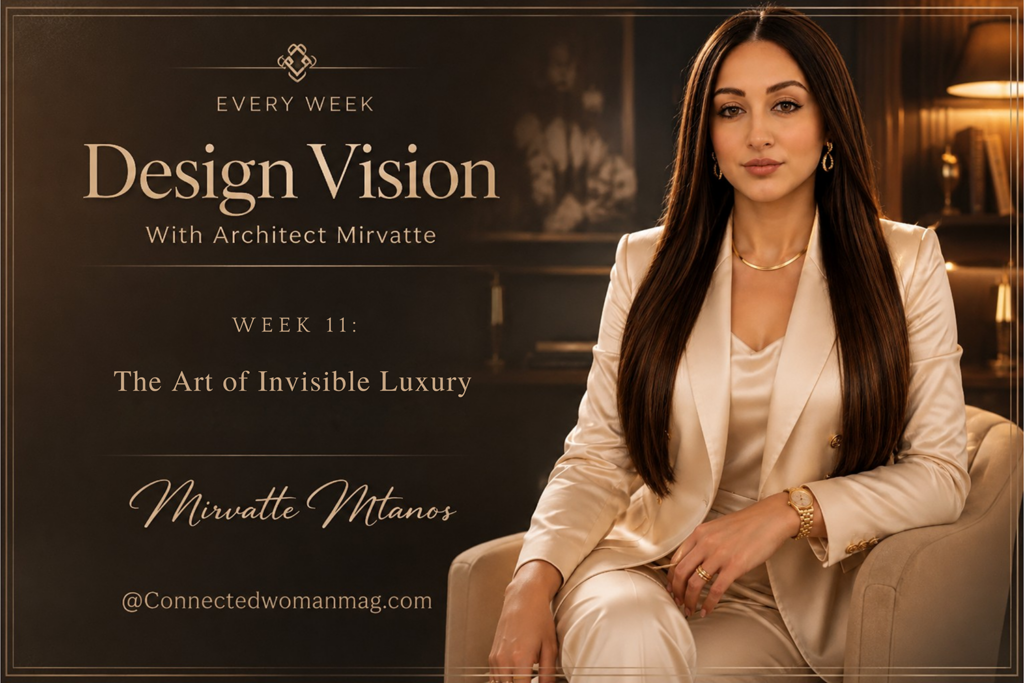
 Luxury is rarely announced. It is not the logo on a wall, nor the price of the furniture, nor the size of the space. True luxury is perceived before it is understood. It is felt before it is explained.
Some spaces immediately communicate value without saying anything at all. You walk in and your body reacts before your mind does. The air feels considered. The proportions feel intentional. The silence feels designed.
This is not decoration. This is psychology. Luxury, in its highest form, is perception engineering.
Luxury Begins Before Design Begins
Most people think luxury is applied at the end of a design process—through materials, finishes, or styling. In reality, it begins much earlier: in decisions that are invisible to the untrained eye. It begins with proportion.
A space that feels expensive has little to do with size. It has everything to do with balance. Ceiling heights that respect human scale. Distances that allow breathing, not just movement. Negative space that is intentional. Luxury is often the absence of visual noise.
The Psychology of Calm
The human brain associates luxury with calmness and control. When a space feels chaotic, the mind works harder. This creates cognitive friction, interpreted as lower quality.
Luxury spaces reduce cognitive load. They guide the eye gently instead of forcing it. They create hierarchy so the brain knows where to rest. A luxurious space is not one that impresses instantly—it is one that relaxes instantly.
Materials as Emotional Language
Materials are emotional signals. Stone communicates permanence. Linen softness. Brass warmth. Glass honesty. Wood memory.
Luxury is restraint and intention. A single material executed well often feels more luxurious than many competing ones. Consistency signals confidence.
Light as Invisible Architecture
Luxury spaces use layered lighting: natural diffusion, indirect glow, controlled shadows. The result is atmosphere.
Harsh lighting exposes everything equally. Luxury lighting reveals selectively, creating depth and intimacy.
Silence and Visual Breathing
Luxury is also absence. Visual silence is space without competition. Surfaces are not overloaded. Walls are not over-styled.
This silence allows interpretation. The mind participates, and value increases. Luxury is what is intentionally withheld.
The Discipline of Restraint
Luxury requires discipline. Anyone can add elements. Few can remove the unnecessary.
It is restraint: fewer objects, fewer materials, higher precision. The subconscious reads order before the conscious mind understands it.
Why Some Spaces Feel Expensive Instantly
Alignment creates luxury: proportion, material, light, silence, simplicity, depth.
When aligned, the space becomes clear. Clarity is the highest form of luxury.
Final Thought
Luxury is not about showing more. It is about communicating less—but meaning more.
People remember how a space made them feel before they understand why.
“Luxury is not what you add. It is what you refuse to overdo.”
— Mirvatte Mtanos