
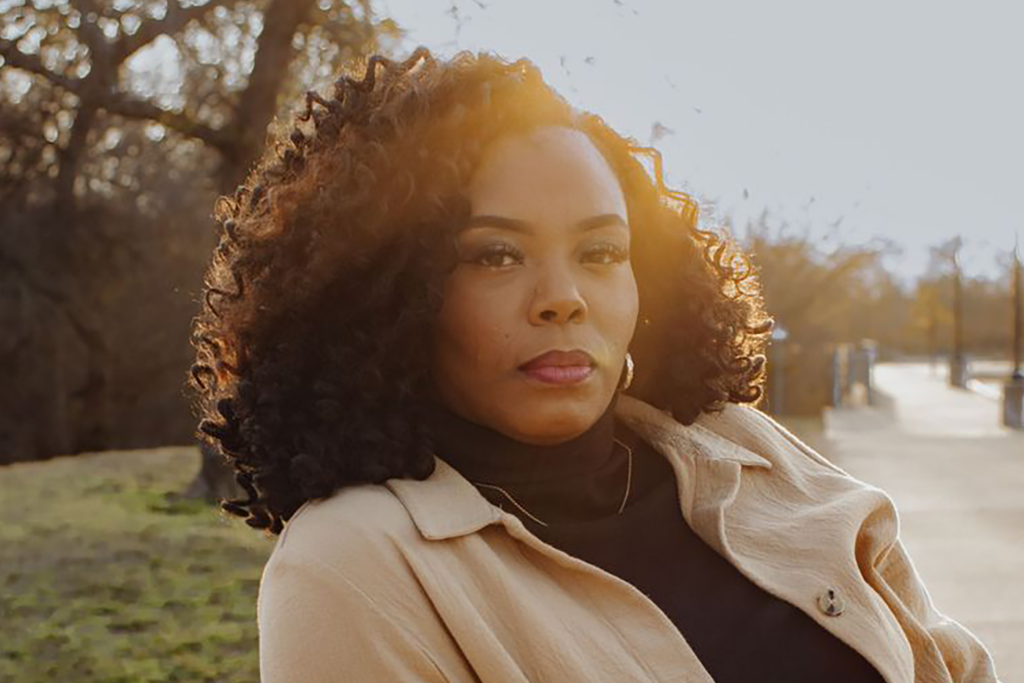
 For many people, gifts fit neatly into one category. For Melody Faith Dunlap, purpose has unfolded across multiple spaces—ministry, entrepreneurship, music, writing, strategy, and leadership. Born in Tulsa, Oklahoma, Melody has spent years using her voice both on stage and behind the scenes, helping transform organizations, shape powerful stories, and encourage others to step boldly into who God created them to be. Whether leading worship, developing systems that bring vision to life, or building platforms that challenge insecurity, her work reflects a mission rooted in faith and intentional impact.
In this feature, Melody opens up about the journey of embracing every gift God placed inside of her—even the ones she didn’t immediately recognize as gifts at all. From writing songs and recording music to contributing to New York Times bestselling projects and launching initiatives that help others overcome insecurity, she shares how creativity, faith, and purpose have become deeply intertwined. Through her story, Melody reminds us that our words carry power, our gifts often work together in unexpected ways, and purpose sometimes grows in the very places we once overlooked. Let’s meet her…
Your journey spans ministry, entrepreneurship, music, and writing. How have these different callings worked together to shape your overall purpose and impact?
It honestly took me a very long time to embrace all the different gifts God gave me — or even to see them all as gifts! I just knew that I loved music, so writing and singing became a creative outlet for me that eventually turned into opportunities for entrepreneurship and ministry. In addition to leading worship in churches, I performed solos at community events, recorded studio background vocals for other artists, and even wrote and released my own album. I also love helping to bring order to chaos and create systems that help strategically move visions forward, so even that administrative gift has played a significant role in my journey of self-discovery.
You’ve worked behind the scenes on major projects, including New York Times bestselling books. What did those experiences teach you about storytelling, influence, and the power of words?
I’ve always loved writing. When I was in junior high school, I won my first creative writing competition with a short fictional story. Even when I was younger than that, I used to write additional verses to my favorite songs, write in journals and diaries, and compose poems. Imagination is a God-given gift that can even act as a coping mechanism during tough seasons of life, helping us to express what’s in our minds and hearts and escape our complex realities. Words are not only our primary form of communication, they also hold creative power. Just as our Creator spoke the world into existence, we have the ability to form worlds with our words. I’m always honored to partner with people who have stories to tell and messages to share that can uplift and encourage others or express something emotionally. It helps create pathways to healing, wholeness, and the endless possibilities of purpose.
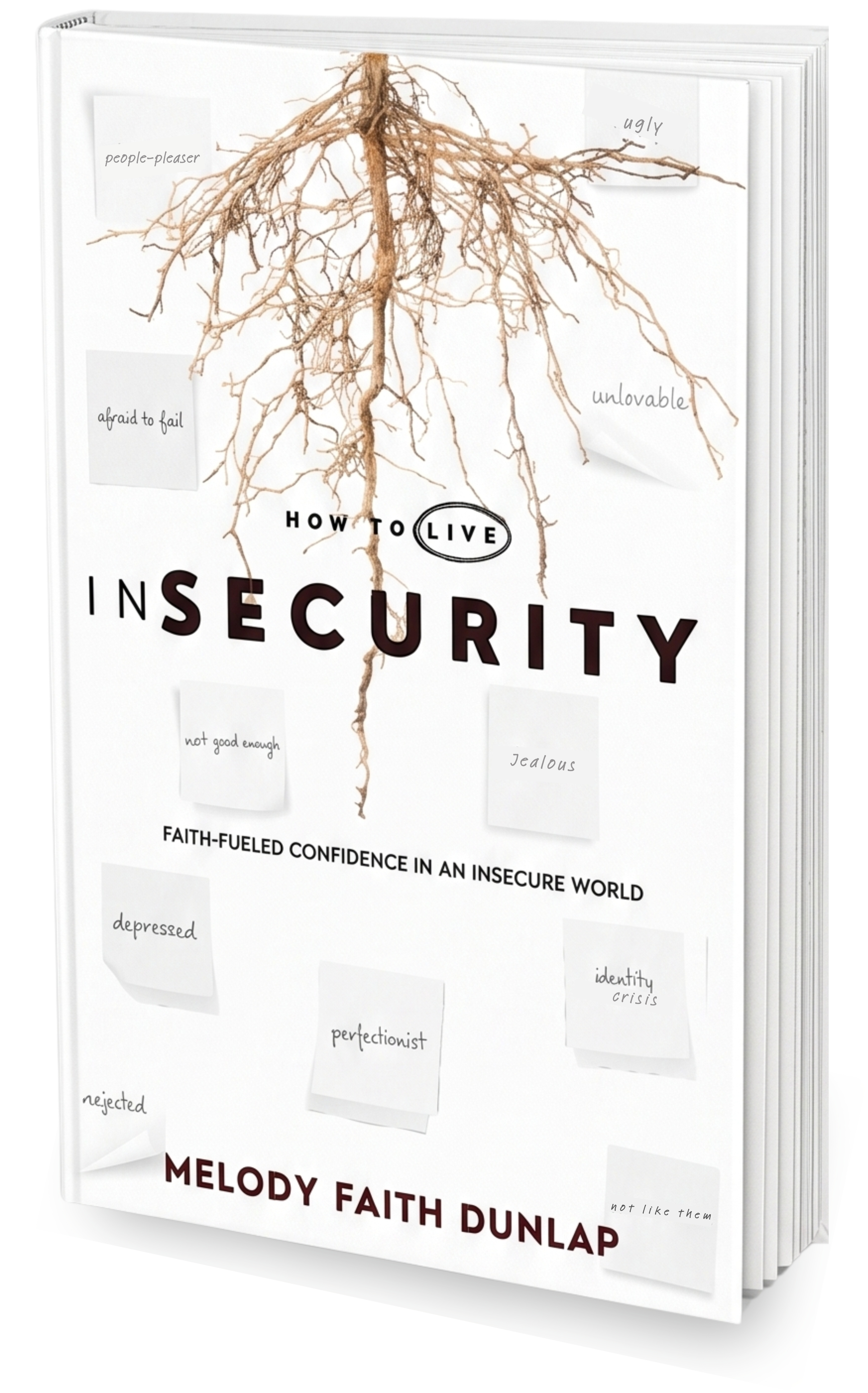 Your upcoming book focuses on overcoming insecurity and “giving God a return on His investment.” Can you unpack what that phrase means personally and spiritually for you?
I truly believe God makes no mistakes and has zero regrets about who He makes, chooses, calls, or sends. He also partners with people to do everything He wants to do in the earth for people. He’s a good father, and also a good investor who wants to see a return. He has invested into each of us things to steward over and grow in — gifts, talents, and passions to make the world better, enrich people’s lives, and build His Kingdom to bring Him glory. He was intentional about every single person He created and sent here, from the way we look to the way we reason and think. If we all overcame our insecurities and fully functioned in our God-ordained purposes, we would have remedies for everything wrong in the world readily available and answers from heaven sent through people to help and heal. When we use our gifts on purpose God gets a return on His investment.
The concept behind your brand Live inSecurity is powerful and layered. How did this idea come to you, and what does it look like to truly “live in security” in today’s world?
I like to think I’m pretty creative, but I can’t even take credit for this idea! It really was inspired by the Holy Spirit. God will often call you to make impact on others who are struggling in the same areas where you now have a testimony. In my case, I used to be the most insecure person I know. God lovingly helped me understand that, as a human being, I will always have areas where I’m not completely sure or confident, but that’s okay! I know the One who is. Whatever I don’t know, He’s sure of, and whatever I lack, He already has or is. He is my security. The only way to overcome insecurity is to live in the security our Creator God provides, trusting in Him and putting our confidence in Him. Living inSecurity means knowing the God of the universe who looked down here on earth and decided this world needed a “me” also lives in me, walks with me, and helps me do great things for His glory.
 Through your Safe inSecurity podcast, you tackle deep, often uncomfortable conversations. What has been one of the most impactful or surprising moments you’ve experienced while hosting?
My Safe inSecurity Podcast is a safe space to be vulnerable and still feel valuable, so we address many topics that will help expose the roots of common insecurities. One of the most impactful episodes was recorded the day after I found out my close friend had unexpectedly passed away. I talked transparently about my discovery of the intersection between grief and gratitude. You never really realize the impact someone has made on your life until they are removed, and you have no choice but to see the crater they left behind. Grief is proof of love, and when you love someone deeply who is no longer here, it can make you feel extremely insecure. Tears are the overflow of every human emotion; you can feel just about anything and cry to express it. I like to think it was God’s way of giving us an outlet for a slow leak, but when we don’t allow emotions to flow freely, the pressure bottles up and causes internal damage to our souls and bodies. So, I cried and smiled and shared stories of my wonderful friend and how I was processing her death in hopes that it would help someone else who is grieving a loss.
In a world that often rewards perfection and performance, how do you help people confront the root causes of insecurity rather than just masking it?
You know, it’s so funny because all of us are insecure in some way, but few of us will actually admit it! I believe that vulnerability is the only way to overcome insecurity, and people will only be vulnerable where they feel safe to be exposed. That’s why I’m on a mission to create safe spaces for others and inspire other people to do the same. Every one of us is human, and that all by itself implies that we are perfectly imperfect. Yet, when God made us, He called us “good.” That’s something to think about. The expectation was never for us to be perfect, but to be good and to trust in the One who was made perfect for us — Jesus.
As a faith-filled entrepreneur, how do you balance obedience to God’s direction with the practical demands of building and scaling businesses?
I’ve really had to reframe what success looks like to me. Most people think success is determined by numbers — followers, subscribers, dollar amounts, clients, and customers. In my opinion, success is defined by obedience to carry out the vision and trust in the God who holds my future. As believers, our number one goal should be to hear Him say, “Well done.” Even if I don’t make millions of dollars or win a bunch of awards, if God is pleased and people are helped, then I have succeeded. Awards, rewards, and accolades are usually based on human opinion which is fickle and subject to be swayed at a moment’s notice. God is consistent and faithful, and His standards are sure, so I’ll take heaven’s validation over human validation anyway.
You and your husband co-founded JMD Productions to help brands tell their stories. What makes a story not just compelling—but transformational?
There are really three foundational components to telling any good story: the truth, the turning point, and the testimony. JMD Productions is a marketing consulting company with a unique approach. Our mission is to help people dig deeper into their vision and mission behind their brands to find the “why.” Why does your organization or platform exist? Why do you do what you do? Then we can help them identify who it’s for and how to best reach them. When you tell the truth about your why, you’re identifying a problem you feel called or compelled to help solve. Then, you can bring the solution that creates a turning point in people’s lives and in their perceptions. They realize they have a need, and this opens the door for a testimony — it could be from the brand owner or from someone else who has been enriched by the product or service being offered. Great stories sell, and great products transform.
Your ministry, Heart Over Gift, emphasizes restoring the heart of worship. Why do you believe this message is so critical for creatives and worship leaders today?
Worship is so much more than a song or a part of a church service. It’s meant to be a lifestyle surrendered to God and a heart posture submitted to His will. That heart posture has a sound. It’s intimate. It’s intentional and focused only on Jesus. So many of our worship experiences in churches around the world are focused on the wrong things, and because of these distractions, people are not experiencing the power and presence of God that changes lives and breaks chains. What good is a worship experience without encountering the One we’re supposedly worshiping? An atmosphere can have all the right vibes with no anointing. A song can have the most impressive or creative arrangement with no power. But if the leaders who set the atmosphere and sing and play the songs are focused on the God who gave them their gifts, He will manifest as all that He is every time we gather, and people will leave empowered to access that same presence in their daily lives.
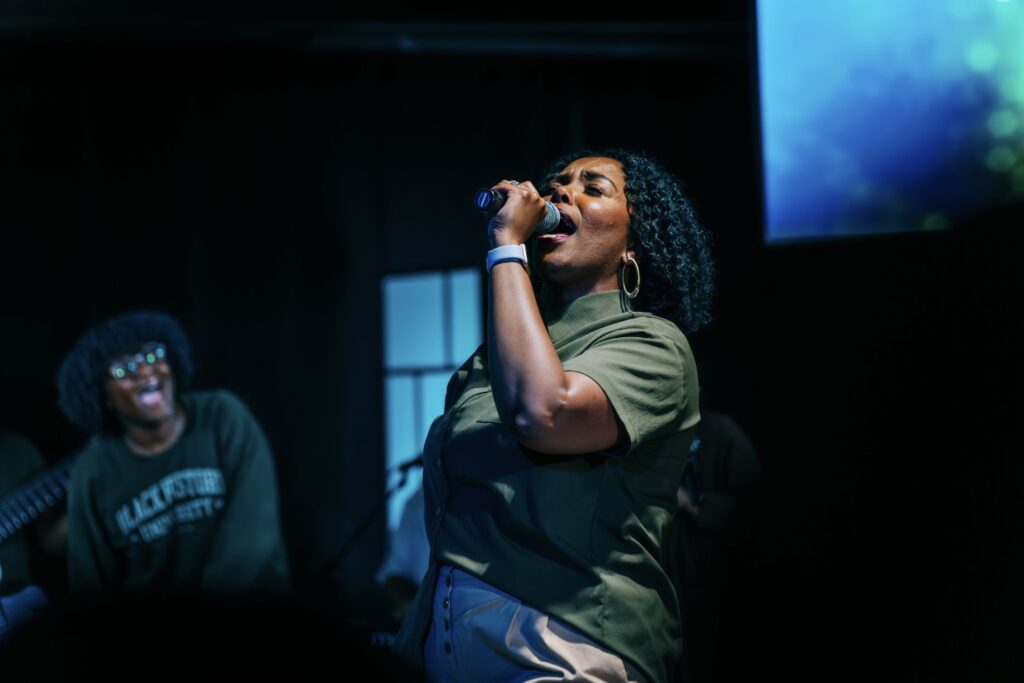 You’ve ministered through both music and speaking. How does leading worship differ from speaking or teaching when it comes to impacting people’s hearts?
Music is a current that carries a message. So, in a lot of ways, they’re not much different from each other. Praise and worship music as we know it today was implemented into church gatherings for the purpose of helping people to memorize scripture. They sung Psalms as hymns that would get stuck in people’s heads — similarly to how you probably learned your ABCs as a kid. I believe in the power of spoken word, because as I said before,
words have creative power. I also love to sing great lyrics for the same reason, knowing that the music behind them will carry the message into their hearts. Even in more secular environments like corporate or community events, I am a singer and a public speaker who loves to creatively communicate stories, strategies, and messages that will help people live more enriched lives.
Many women struggle with feeling unseen or undervalued despite their gifts. What advice would you give to someone who knows they’re called but feels stuck in insecurity?
As a Black woman in America, I feel this deeply. Women have long been underestimated and belittled as if they have nothing to give but cooking meals and bearing children. Even in Bible days, we see the dichotomy of God using women to do extraordinary exploits, all while men subject them to being concubines and illiterate servants. My greatest comfort comes from 1 Corinthians 1:26-29 — this passage tells me that God uses what people consider insignificant to do the phenomenal for His glory and our benefit! So, if people belittle you, they might actually be setting you up to be used by God in the most amazing way. Step out in faith, knowing that El Roi (the God who sees) knows you, loves you with an everlasting love, and has called you to be an answer in the earth. Heaven will back you even when humans don’t.
As a critical thinker and strategist, how do you approach problem-solving differently in ministry spaces versus corporate or entrepreneurial environments?
Many people don’t consider the fact that churches and ministry organizations really are businesses. Most are nonprofits, so they thrive off of volunteer power more than large staff departments, but the framework is very similar to any corporation. The overarching premises that govern how each type of entity solves problems and makes decisions should be identified in their mission and vision statements, core values, and standard expectations. A ministry is in the business of helping people heal and learn about God to feed their spirits while a restaurant is in the business of feeding people’s bodies and creating entertaining experiences. Both may have similar tasks or positions but will have slightly different values they prioritize. Entrepreneurs can fit into either space, being called to provide services, products, or enrichment to others. I always consider the size and impact of the organization and who each decision will affect and also look to optimize systems and structure that will help them better reach their goals and accomplish their intended missions.
You’ve been described as someone who uproots “the weeds of insecurity.” What are some of the most common “weeds” you see, and how can people begin to pull them out at the root?
Some of the most common insecurities are deeply rooted, affecting one’s perception of their identity. On the surface, you may feel insecure about how you look, how you think, your opinions and ideas, the sound of your voice, the amount of money you make, etc. But if we dig a little deeper, it’s bound to be revealed that you believe you should have something that you lack. It’s vitally important to learn and accept that God is not holding out on you; He’s just holding you. He’s holding you for what He has prepared for you, and it may not look like someone else’s journey. You might not fit in, because you were meant to stand out. You are not what you do or what you’ve done. You are who your Creator says you are, and as you learn more about who He is, that truth gets easier to embrace.
Looking back at your journey—from Tulsa to building multiple platforms—what were the defining moments that required you to choose faith over fear?
Can I be vulnerable and honest? I’ve been faced with that “faith or fear” decision my whole life! I’ve been doing some level of ministry since I was a young teenager and entrepreneurship followed shortly after that, so it’s been quite a process. I can’t say that I’ve always gotten it right. But I am extremely proud of the progress I’ve made with truly learning to rely on God, take risks in faith, and allow the fear of God to overrule all other fears in my mind. Moving from Tulsa, Oklahoma to Fort Worth, Texas was certainly a huge test of my and my husband’s faith, and we’ve faced enormous challenges since taking that step — loss of friends, family members, jobs, and opportunities, grief, frustration, anger, and struggles in our finances and in our marriage. But the constant theme has been God sustaining us and helping us to emerge stronger than ever! We are grateful that He really is who He said He is, and we’re learning more each day to believe we really are who He says we can be.
As you prepare to release your first book and continue expanding your brand, what legacy do you hope to leave—not just in business or ministry, but in the lives of the people you serve?
This book’s release has been in the making for years, so I’m extremely excited and honored to present it to the world, and I pray it reaches many, many people! More than anything else, I pray that people are empowered to believe who God is and what God said about them so they can stand unapologetically firm in their callings and give him a return on His investment in them. Even for those who don’t believe just yet, there are truths they can apply that will inevitably produce transformation in their lives and lead them to freedom from insecurity. I want to be remembered as someone who made everyone they encountered feel seen, safe, loved, and valued.
Where can readers connect?