
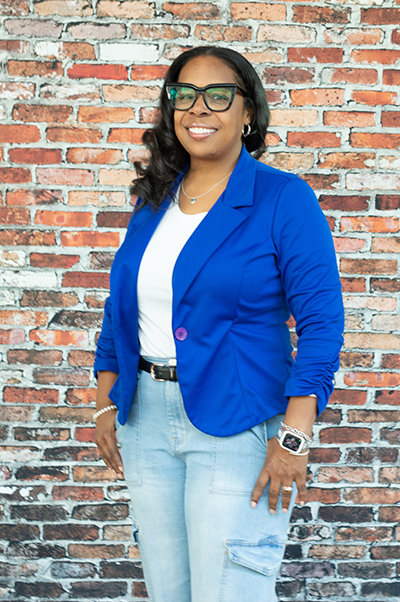
 For Kylah Seabrooks, leadership is not defined by titles, but by transformation. A middle-grades expert, national presenter, school leader, and educational consultant with more than 15 years of experience, she is dedicated to helping schools strengthen student engagement, improve teacher retention, and build cultures rooted in empathy and accountability. Her journey—from a student who once struggled to feel seen to a leader shaping educational systems nationwide—has given her a deeply personal and strategic leadership lens. Now pursuing her Ph.D. while consulting and speaking nationally, Seabrooks embraces both authority and authenticity, sharing her story “with clarity rather than caution” and reminding women that their lived experiences are not liabilities, but powerful foundations for purpose-driven leadership. Let’s meet her..
Your leadership journey began long before your professional title. Can you take us back to your high school years and share how your experiences with truancy and disengagement shaped the educator and leader you are today?
In high school, I was deeply disconnected. I did not feel that what I was learning was relevant to my life, and that disconnection quietly snowballed. One skipped class turned into two, then three, then several days at a time. At the same time, I was navigating social-emotional challenges at home that I did not have the language or support to process. My behavior was not loud or disruptive, it was silent withdrawal. What I wasn’t saying was the real issue.
That experience reshaped how I lead today. When I encounter disengagement, I do not immediately ask, “What’s wrong with this student?” I ask, “What’s happening around this student?” Behavior is often a signal, not a character flaw. My journey taught me that students must be seen before they can succeed.
You describe the middle-grade years as “messy but meaningful.” What makes this developmental stage so pivotal, and why do you believe it deserves more strategic focus in schools nationwide?
I remember my own middle school years as vibrant and full of discovery, but the transition to high school felt abrupt and overwhelming. Suddenly, the message shifted to, “This counts now,” and “You need to decide what you want to do for the rest of your life.” That was real pressure, and for me it created a great deal of anxiety rather than aspiration and I folded.
Students are navigating who they are becoming while adults are often reacting to how that becoming shows up. Identity is forming in real time, socially, emotionally, and academically and it rarely unfolds neatly. Middle school should not be treated as a holding space before high school; it should be a launchpad where students build the skills, confidence, and clarity they need for what comes next. When we approach these years with design instead of reaction, the “mess” becomes meaningful growth.
With over 15 years in education as a Teacher and Assistant Principal, what patterns have you observed in student behavior that schools often misunderstand or mishandle?
One pattern I see repeatedly is adults reacting to behavior without investigating its root. We are quick to label students as defiant, unmotivated, or disrespectful without pausing to examine unmet needs, skill gaps, or environmental stressors. I once had a student who walked the halls with what I call a “mean mug” every single day. If you asked a question, the response was immediate — “What?!” — followed by eyes rolling. It would have been easy to match that energy. Instead, I ignored the performance.
Because I refused to reinforce the negative attention, something shifted. Soon, every time I walked down the hallway, I heard, “Miss… Miss…” That wall they were holding up slowly came down. I waited it out because I knew what they truly wanted was connection, not confrontation. As educators, we have to stop personalizing student behavior and start analyzing it. When we do, we move from reaction to strategy and strategy is where transformation happens.
Teacher retention is one of the most pressing issues in education. From your perspective, what are the root causes of burnout, and what actionable frameworks can school leaders implement immediately to improve retention?
Teachers are not leaving education because they dislike students; they are leaving because they feel unsupported in managing behavior and overwhelmed by competing demands. Many educators enter the profession passionate and prepared to teach content, but they are often underprepared for the behavioral, social-emotional, and family dynamics that show up daily in classrooms. Add excessive testing requirements, limited instructional time, and inconsistent leadership support, and burnout becomes inevitable. In some cases, teachers are also navigating supervision from leaders who were never fully developed to lead adults effectively.
Some immediate shifts are simple but powerful. I believe in leading with grace and empathy, treating others the way you want to be treated. When teachers feel heard, supported, and coached instead of criticized, the culture shifts. Leaders can establish consistent feedback loops, protect instructional time from unnecessary interruptions, and create collaborative problem-solving structures where teachers are not carrying challenges alone. Retention improves when educators feel equipped, valued, and aligned with a clear vision, not just evaluated.
What are the top three shifts schools must make to build a positive, sustainable school-wide culture?
First, institutionalize advocacy. Every student should be able to identify at least one adult in the building who knows their goals, strengths, challenges and how to descalate them when needed.
Second, align adult behavior with student expectations. Students cannot be expected to regulate in environments where adults are reactive or inconsistent. If we demand accountability, we must model it.
Third, expand parental participation beyond extracurricular events. Parents should feel welcomed into classrooms and academic spaces, not just athletic programs. At the same time, families must understand their critical role at home in reinforcing expectations, routines, and communication.
How do you help educators see students beyond their behavior and recognize the deeper story beneath disengagement?
I often ask educators a simple but disarming question: If this were your child, how would you want the teacher to respond? My own children are not perfect, and I don’t expect them to be. But I do expect that they are treated fairly, with patience and professionalism. That question shifts the tone immediately. It forces us to release grudges, stop personalizing behavior, and approach situations with perspective instead of pride.
Disengagement rarely appears overnight. Students do not wake up and decide to fail, nor do they walk into school planning to have a bad day. For many, the day may have already started wrong before they even enter the building. Students often disengage because they do not feel capable, safe, or connected.
What does being “seen, known, and advocated for” look like in practical terms?
Being seen, known, and advocated for begins with proactivity. Advocacy means getting involved earlier rather than waiting for a major incident to force action. It means refusing to allow students to slip quietly through the cracks. Our students are constantly giving signals, shifts in attitude, increased defiance, sudden aggression, or even unusual silence.
In practical terms, being seen means adults actively monitoring trends instead of waiting for crisis points. Being known means taking the time to understand a student’s strengths, triggers, and goals. Being advocated for means systems that respond quickly, mentorship structures, family communication, and collaborative problem-solving, so that challenges are addressed before they escalate.
Many women in leadership struggle with balancing visibility, vulnerability, and authority. How have you learned to lead with both strategy and story without compromising your credibility?
I am finally sharing my story with clarity rather than caution. For years, I carried parts of it quietly because of what I thought others might say. But I no longer seek external validation to confirm my credibility. My lived experience is mine, and the internal work to understand it has strengthened my leadership lens. At the same time, my expertise is grounded in years of study, practice, and measurable results.
Women are often told to choose between strength and softness, authority and authenticity. I do not believe we have to choose. We can lead with strategy and story, firmness and empathy, depending on what the moment requires.
What systems or mindset shifts have helped you sustain momentum without burnout?
I rely heavily on my spirituality to ground me during moments of overwhelm. It provides perspective and reminds me that my work is purpose-driven, not pressure-driven. I also lean into my accountability circle of women educators and entrepreneurs. We support one another because we understand that the education system can be demanding and, at times, unforgiving.
Equally important, I have learned that not every opportunity requires a yes. Protecting my time and aligning my commitments with my mission allows me to sustain momentum without sacrificing well-being.
What has been the most challenging leadership lesson you’ve had to learn?
Some of my most challenging leadership lessons have come from serving under principals whose leadership style did not align with my values. Those seasons required me to confront the difference between endurance and alignment. It wasn’t about just going along with something, it was about the fact that leadership culture deeply impacts both morale and effectiveness and not every environment is designed for you to thrive. In turn, I became clearer about the kind of culture I want to build: one rooted in transparency, empathy, and accountability. That growth allowed me to know when to step forward or out of a space that aligns or does not with my mission.
For leaders in under-resourced communities, what practical steps can strengthen engagement?
In under-resourced communities, it’s easy to focus on what schools lack. But engagement does not begin with money, it begins with consistency. Clear expectations, predictable routines, and adults who follow through build stability for students who may not always experience it elsewhere. That kind of structure costs attention, not funding. There are plenty of non-tangible ideas that do not cost a thing that will strengthen student engagement.
Another powerful step is elevating the student voice. Create space for student leadership teams, peer mentors, or advisory groups that allow students to feel ownership in the school environment. When students feel heard, they invest more. And finally, lean into community partnerships. Local businesses, faith organizations, and nonprofit groups often want to support schools but don’t always know how. Do not be afraid to reach out to organizations and ask them for support.
How do you bridge the gap between schools and families who feel disconnected?
Some parents have had adverse experiences in their own educational journeys, and I understand how that feels. Because of that history, they may be naturally guarded and protective, wanting something better for their children. Bridging that gap begins with empathy. I encourage structured listening sessions, transparent data sharing, and proactive outreach before concerns escalate. Keep the lines of communication open and position parents as allies, not adversaries.
What would you say to a woman who feels her past makes her unworthy of leadership?
Mistakes do not disqualify you; they deepen your credibility. It makes you relatable when someone can see themselves in you. Your past may be the very foundation that equips you to lead with empathy, insight, and discernment. No one’s journey is perfect, and perfection is often the most fragile narrative of all. What builds trust is reflection and growth. People are drawn to leaders who can acknowledge their humanity, demonstrate vulnerability with wisdom, and show how their experiences shaped their strength. Your story is not a liability, it is leadership material.
What does the future of middle-grade education look like in your vision?
It looks messy, but manageable 🙂We need systems that recognize middle grades as a distinct developmental stage and targeted funding that provides specialized training and leadership pipelines built specifically for this age group. There are some great organizations out there already who are doing this work, but we still have a long way to go.
What guiding principles have helped you stay aligned?
Once I found my voice, I realized that the only barrier in my path was myself. My goal is not to compete with others, but to outgrow the version of me from yesterday. I believe there are no limits on what is possible and that there is abundance available to all of us, but you have to be willing to ask, to move, and to believe you are worthy of receiving it.
How can our readers connect with you and your business?
K. Seabrooks Educational Consulting leads a monthly live series designed for educators and school leaders who believe “Middle school is messy, but manageable”. Registration information is available on the website and social media links.
- Website: http://www.kseabrooksedconsulting.com
- IG: @kseabrooksedconsulting
- LinkedIn: Seabrooks Educational Consulting
- Facebook: Seabrooks Educational Consulting
