
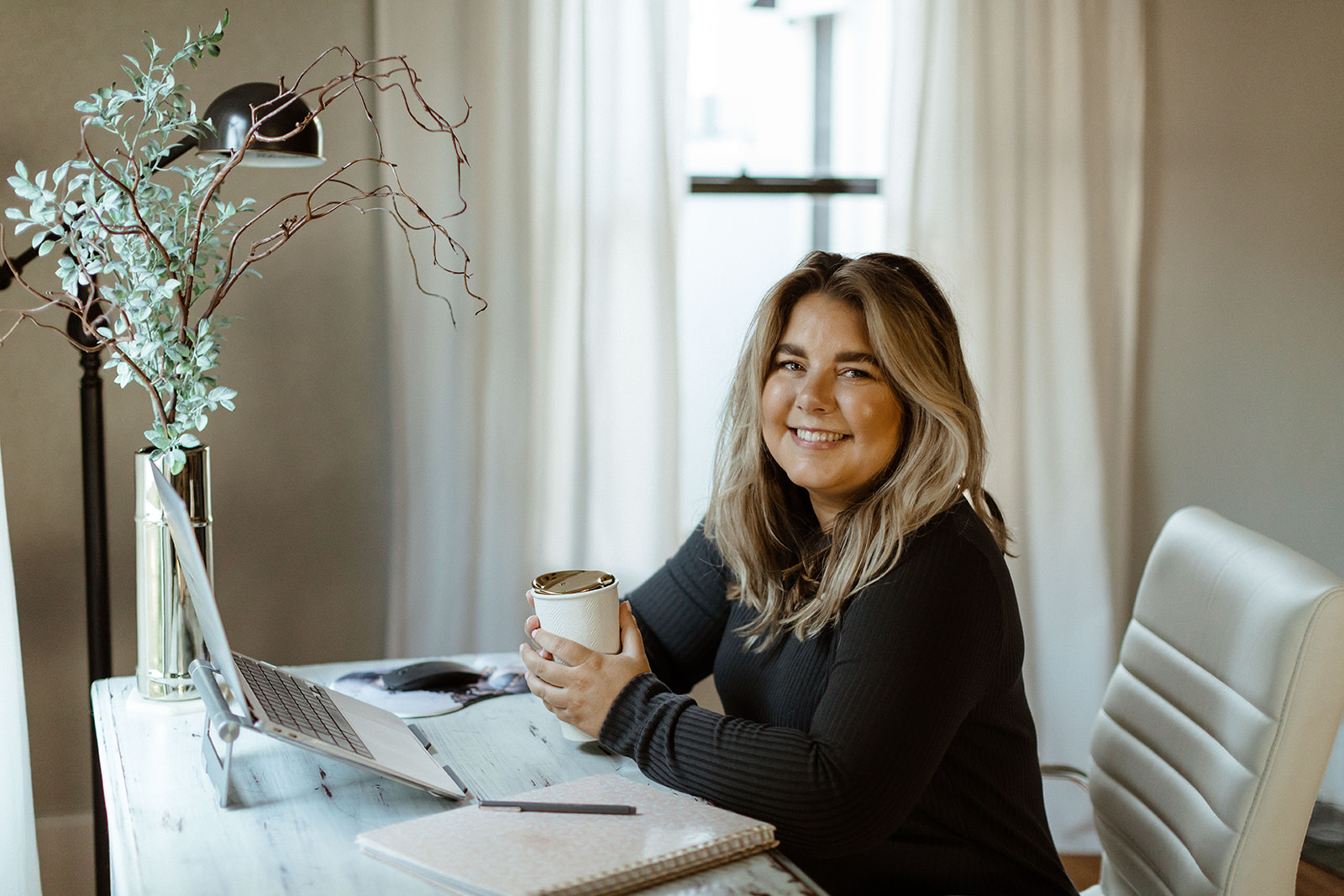
 The journey into motherhood is often described as joyful and transformative, but for many women it can also bring unexpected emotional challenges that are rarely discussed openly. Xenia Hatzilias, LPC, LMHC, founder of Xen Family Therapy, understands this reality firsthand. After experiencing a traumatic birth and navigating the complex emotional landscape of postpartum life, she was inspired to create a therapeutic space dedicated to supporting women through fertility struggles, pregnancy, birth trauma, postpartum adjustment, and the evolving identity of motherhood. Let’s meet her…
Your journey into founding Xen Family Therapy began during one of the most vulnerable seasons of your life—fresh postpartum after a traumatic birth experience. Can you share what that period taught you about yourself and how it ultimately shaped your professional calling?
After going through the most difficult season of my life to date, I was in the midst of postpartum when I realized I needed more support- and that I needed to learn more about what happens to women during that time and how we can change so drastically in such a seemingly short period. I was eager to learn about the hormonal changes, emotional shifts, and what happens to our bodies and minds while our identities are also evolving. The education I pursued taught me so much about those shifts, but the experiences I was living simultaneously are what I look back on and recognize as proof of how resilient we are as women- and how much strength it takes to navigate challenges like pregnancy, birth (traumatic or not), postpartum, and motherhood.
Many women describe motherhood as both beautiful and disorienting. From a mental health perspective, how does the transition into motherhood reshape a woman’s identity, and why is that shift often underestimated?
It’s so often underestimated because we already take on so many challenges in life as women. We are handed expectations to meet and we carry them throughout our lives. Motherhood is no exception. We think we should instinctively know how to do it – even though we were never actually taught – and we are often conditioned to dismiss our emotions and “keep going,” whether something feels difficult or not. So much of that comes from societal pressure, and we internalize it and place those expectations on ourselves even when we have the freedom to choose differently. It’s what we’re used to, and it’s what the women before us modeled. So even when we crave comfort and validation from previous generations, we’re often met with comparisons and left feeling invalidated and self-conscious.
You created Xen Family Therapy as a judgment-free space for mothers to process fertility, pregnancy, birth, and postpartum experiences. Why is it so important for women to have spaces where they can speak honestly about motherhood—even when their feelings don’t align with societal expectations?
It’s so important for women to have a space to express even the deepest, sometimes darkest, feelings of motherhood. It can feel scary to broach those topics, especially when you’re uncertain how you’ll be received, but keeping everything bottled up can feel truly isolating. Xen Family Therapy is a place where your feelings are validated, understood, and never dismissed.
Birth trauma and postpartum mental health challenges are still rarely discussed openly. What are some signs that a woman may be experiencing postpartum depression, anxiety, or trauma—and what should she do if she recognizes those symptoms in herself?
Trauma during birth, postpartum anxiety, and postpartum depression can feel so scary to talk about- especially with friends, family, or even doctors. Sometimes it’s a fear about what will happen to your baby if you express how you’re really feeling, or it’s rooted in shame or overwhelm. The first step is finding a safe space to share. If you’re not comfortable speaking to your doctor, your child’s pediatrician, or someone close to you, there are so many supportive spaces online – you are not alone. Postpartum Support International is a wonderful place to start. There is also a Maternal Mental Health Hotline you can call or text 24/7, staffed by professionals who can help you find the support you need at 1-833-TLC-MAMA.
If you are looking for a therapist and live in Florida, Pennsylvania, Tennessee, or West Virginia, I would love to support you at Xen Family Therapy. If you’re located elsewhere, you can find virtual or in-person therapy through Psychology Today, Alma, or Postpartum Support International. Be sure to filter by insurance acceptance and look for someone with perinatal or postpartum mental health experience. I know that process can feel overwhelming, so if you’d like a referral, I’m always happy to help – you can reach me at xenia@xenfamilytherapy.com.
Many mothers feel intense pressure to appear strong, capable, and “grateful,” even while silently struggling. Why do you think so many women feel they must hide their emotional reality during motherhood?
It can feel incredibly vulnerable to share how you’re really feeling during postpartum, because there’s this expectation to appear grateful — for a healthy baby, for maternity leave, for any of it. We are constantly compared to one another, and we compare ourselves just as much. It’s deeply invalidating to our own experiences. The truth is, motherhood is nuanced. We can feel profoundly grateful and overjoyed by this beautiful baby and also feel anxious, sleep-deprived, and blindsided by how much harder this is than we ever expected.
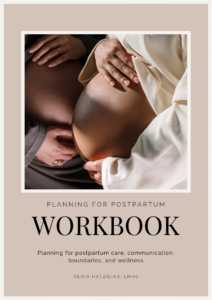 You specialize in working with women who are often the emotional support system for everyone else. How does constantly caring for others without prioritizing oneself impact mental health over time, and how can women begin to reclaim balance?
When you’re always the caretaker – responsible for everyone, carrying the mental load- it takes a toll. We manage it and cope, and then we become mothers and realize the strategies that worked before simply don’t work anymore. I see this with moms of older children too. It doesn’t come naturally to put yourself first, especially when we grew up watching our own mothers operate the same way. That pattern leads to resentment and frustration over time.
What I want women to hear is this: putting yourself on the back burner does not make you a good mom. Valuing your time, energy, and wellbeing is actually what allows you to show up more fully – as a mom, a partner, and a friend. It’s an adjustment and it isn’t easy, but it is absolutely worth it.
Fertility challenges and pregnancy loss can be deeply isolating experiences. In your clinical work, what are some of the most common emotional responses women experience during these journeys, and what support do they need most?
Working through fertility struggles and pregnancy loss involves so much grief. Part of that grief is coming to terms with the fact that the journey to pregnancy didn’t go the way you had imagined or planned, and learning to release that. There’s also the shame and guilt that so often arise, as though we have any control over what our bodies do. It happens inside us, so it truly feels personal, and that confusion is exhausting and heartbreaking.
Then there’s the anxiety that follows once pregnancy does happen. How isolating it can be to feel terrified when you want so badly to feel excited. Constantly dreading appointments, monitoring every symptom, never quite feeling safe – it’s an incredibly heavy way to carry a pregnancy. You don’t have to go through it alone and working through that grief and anxiety can often lead to a better postpartum experience.
How did your own lived experience as a mother influence your therapeutic approach, empathy, and understanding when working with clients navigating similar transitions?
Becoming a mother is what led me to pursue continued education in perinatal mental health, but I have always loved this work and being part of the mental health community. The lived experience of becoming a mother has been invaluable – it gives me a deeper level of empathy and understanding for the moms I work with who are navigating pregnancy and postpartum. I juggle life as a mom, partner, therapist, daughter, and more every single day, so I truly understand that none of us are in this alone and I want my clients to feel the relief of not having to be in isolation as well.
As both a licensed therapist across multiple states and a qualified supervisor for mental health interns, what changes would you like to see within the mental health profession to better support mothers and families?
I would love to see mental health taken far more seriously across all sectors, especially for women navigating pregnancy, grief and loss, and postpartum. It’s difficult to wrap your head around the fact that many mothers have to use FMLA or unpaid leave for maternity, and that postpartum medical support in this country remains so limited. There is significant work to be done to support mothers in ways that actually make returning to work feel possible.
Childcare is expensive and often anxiety-inducing, and so many moms are returning to work just weeks after giving birth. All while still physically healing, still navigating decisions around feeding their baby – all on a timeline that wasn’t set by them. Those pressures alone can contribute to postpartum anxiety and depression. Real, systemic support, not just from partners and family, but from employers, communities, and our culture, is what can help prevent these struggles. That is simply not something we prioritize enough in the U.S. or even in our communities.
Many women struggle with guilt—guilt for needing help, guilt for feeling overwhelmed, or guilt for not enjoying every moment. How can women begin to release the unrealistic expectations they place on themselves?
There is so much guilt that we absorb or place on ourselves, and letting go of it can be incredibly difficult. What I’ve found is that when we start aligning with our values, setting boundaries, and prioritizing our own needs, that’s when we actually begin to release those feelings. The word “guilt” implies we’ve done something wrong – but when we recognize that we haven’t, we can start to examine why we actually feel bad. Often, it comes down to consistently putting everyone else’s needs ahead of our own, and that pattern breeds resentment. Choosing ourselves isn’t selfish. It’s what actually allows us to show up for the people we love and be the best version of ourselves. The person that our children can look up to.
 In your experience, what role do partners, families, and communities play in supporting—or sometimes unintentionally failing—new mothers during postpartum recovery?
Partners and support systems are everything to new mothers. Pregnancy, postpartum, and motherhood as a whole can be profoundly isolating. Building community gives moms a sense of being held, of not being alone in their feelings, and the powerful reminder that no mother is perfect. When that support exists, we compare ourselves less, which actually creates the space to prioritize ourselves and our relationships more fully.
Motherhood often forces women to confront deeper emotional wounds, identity shifts, and questions about who they are outside of caregiving. How can therapy help women reconnect with themselves during this season?
So often, women go through life masking their feelings, behaviors, and emotions. We’re taught to do so from a very young age, whether it was explicitly stated or quietly modeled within our families. During motherhood, we reach a point of maximum capacity where our old coping mechanisms simply stop working. Therapy offers a nonjudgmental, safe space to explore those feelings and understand how they’re affecting us. It provides a much deeper look at what’s working and what no longer is – and it helps bridge the gap as mothers step into a new identity, because motherhood truly changes us in ways we never anticipated.
For women who may be hesitant or afraid to seek therapy, especially due to stigma or cultural expectations, what would you want them to know about taking that first step?
It is so common to feel nervous about therapy, whether you’ve had a negative experience before, or grew up surrounded by stigma around it. What I want you to know is that you are not alone, and simply expressing those hesitations in therapy can feel therapeutic in itself. When we say our thoughts out loud, we give them value and validity, and sometimes we realize they were just internalized fears keeping us isolated for so long. Speaking those thoughts in a place that is free of judgement- and full of curiosity- strips away their power.
Building Xen Family Therapy while navigating early motherhood required both vulnerability and courage. What were some of the biggest challenges you faced in building your practice, and what kept you motivated to continue?
Some of the biggest challenges in starting Xen Family Therapy were simply learning how to operate and build a business. It’s something I genuinely enjoy now, but it absolutely had a learning curve. In graduate school, we learn so much about how to be a therapist. After five years of practicing before launching the practice, I felt confident in that. But stepping into completely new territory as a business owner was both intimidating and incredibly worthwhile. Xen Family Therapy is my other baby in a way. I have dedicated so much of myself to it and am so passionate about helping other moms become the best version of themselves. I feel so grateful for what I get to do every day and don’t take for granted the trust my clients put in me to walk with them through this journey.
As you continue expanding Xen Family Therapy, what is your long-term vision for supporting mothers and changing the conversation around maternal mental health?
Expanding Xen Family Therapy means growing, adding more therapists, and creating more opportunities to support moms in every phase of life. I’m currently working on a program for mothers that combines education, postpartum planning, and a community component that begins during pregnancy and carries into postpartum. I’m so excited about this because it will bring accessibility for moms who aren’t ready for therapy, or who don’t have the time or financial means to commit to it right now. As you can probably tell, this is something I am deeply passionate about and very excited to have on the horizon!
Where can women connect with you?
