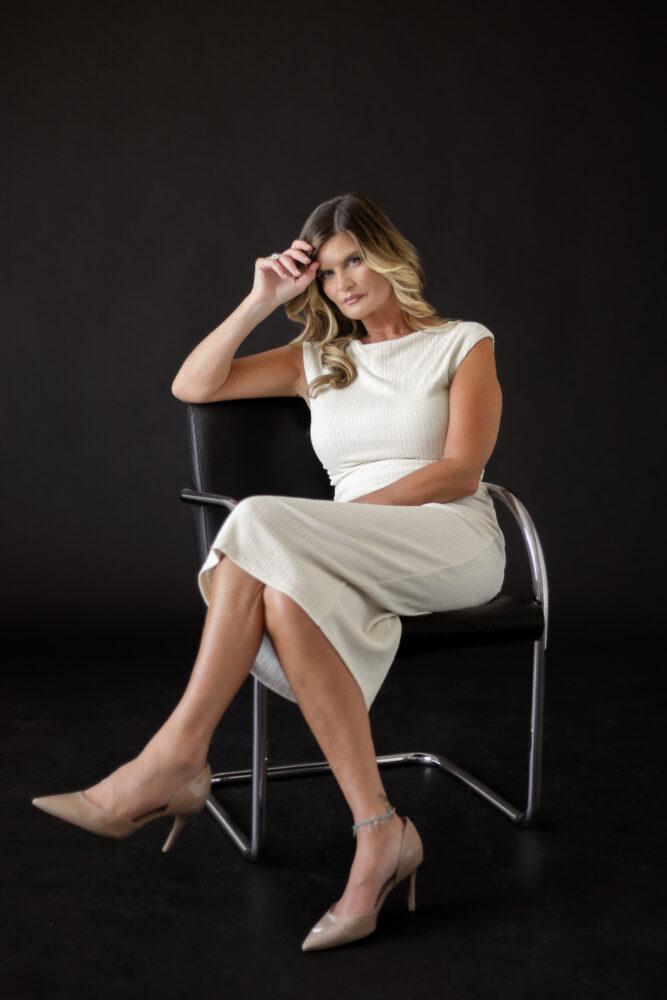
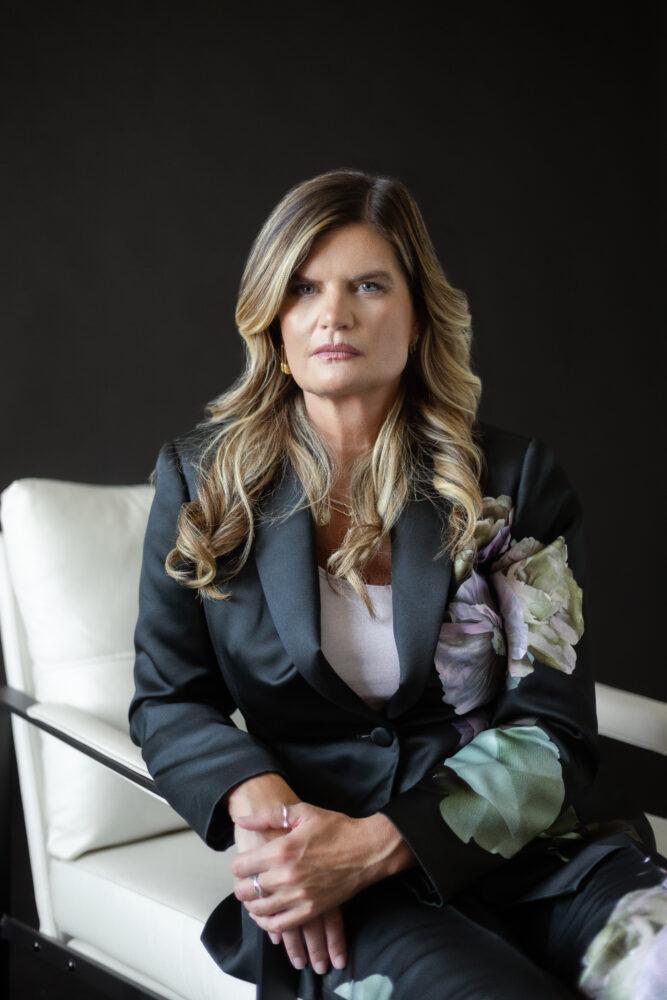
Nina Hobson has spent more than 15 years on the front lines of law enforcement—leading undercover operations into murder, rape, kidnapping, and multi-million-dollar fraud, exposing systemic corruption inside the British police force, and protecting some of the world’s most recognizable figures. As the only woman operating at her level in the elite world of executive protection, the 2x Australian Woman of the Year finalist and UK Woman of the Year finalist has broken barriers in a field where women were never expected to lead.
But Nina’s story isn’t just about grit, danger, or accolades—it’s about tenacity, authenticity, and the power of community. Despite facing doubt, dismissal, and the constant pressure of a male-dominated industry, she has risen by relying on knowledge, integrity, and the unwavering support of the people around her. As she shares in our interview, even in the toughest moments, finding “good people”—mentors, allies, and teams like her Torchstone Global family—has been her greatest asset.
Today, Nina stands as a force for justice, mental-health awareness, and global protection work. Her message to the next generation, especially young women stepping into law enforcement or security, is simple yet profound: never give up, never dim your voice, and surround yourself with those who lift you higher. Her journey proves that even when you’re underestimated, unheard, or overlooked—your determination can reshape an entire industry. Let’s meet her…
Trailblazing in Executive Protection
You’ve built a groundbreaking career in a male-dominated field, protecting global figures. What has it truly taken to command respect and authority in rooms—and industries—where women were never expected to lead?
Tenacity. And a hypothetical bulletproof vest!! It has been a long road to get to where I am, and sometimes I still get sniggered at, doubted, and looked past. But once you are able to show authenticity and knowledge, it’s harder to be ignored.
How do you balance the immense pressure of keeping other people safe with maintaining your own sense of personal safety and mental health?
I am always on the job, and it is so annoying—especially for my family. You can’t go out for dinner with me without knowing I will pick where you sit, and it’s even worse if you have a team dinner; that’s even more of a challenge. I think my personal safety and situational awareness are inherent at this point.
My own mental health I manage by having time with my family. Having normal time with normal people allows me not to think that the world is a bad place. As I always say in our profession, we are only there for 1% of the time because we are living in a wonderful world.
What do you believe separates an average security professional from a truly exceptional one—especially at the elite, executive-protection level where you operate?
Character. You can teach the skills, but you can’t teach character. I have worked with great professionals—great operators—with the wrong character, and I have worked with lesser-skilled operators with the right character. And guess who are the ones who survive the journey? Of course good training and good fitness (good looking—joke!) play a part, but it’s good character that matters.
Courage, Whistleblowing, and Integrity
In 2006, you risked everything to expose corruption within the British police force, leading to the Undercover Copper documentary. Looking back, what was the emotional toll of that year—and what gave you the courage to continue filming when the personal stakes were so high?
The emotional toll was incredible because I couldn’t tell anyone. I wanted to share the experience with someone, but I didn’t want to place them at risk. It was tough to keep it a secret. It wasn’t a pair of shoes or a handbag; it was a life-changing, terrifying secret I had to keep to myself, and that was tough.
At times I wanted to end all the filming and go back to being normal—just a cop—and not worry every second of every day if this was the last time I would see my kids. It makes me feel sick even now, all these years later. I truly hated myself at times.
The kids were the reason I wanted to stay home and quit, and my kids were the reason I kept going. Sometimes I looked at my kids and hated that their mum was doing this, and sometimes I looked at my kids and knew that they were the reason their mum was doing this—that I wanted to make a change, to make things better not just for them but for society.
I have been undercover many times, but being undercover with friends and family was the hardest thing I have ever done.
After the BAFTA-nominated documentary aired, how did that experience reshape your understanding of truth, loyalty, and justice?
I held my breath when it aired. I had no idea if I would be loved or hated by the UK. Thankfully, the response was amazing. I received so much love—people I had never met thanking me for being a voice, officers wanting to shake my hand.
Of course, there were some people who weren’t so fuzzy about the whole thing, but the majority were amazing. I know I did it for the right reasons and because I wanted to make a difference, and I think most people saw that too.
The police couldn’t be loyal to me, the whistleblower, but I truly believe that despite the media line they had to give, they understood it. Now I know that’s the case, because only recently—20 years after I made it—it is still talked about in the corridors of senior officers as something they should have taken more notice of to prevent the issues we are facing today.
Do you believe systemic corruption has changed within law enforcement since your undercover work, or are the issues simply more hidden now?
I am not there to see it anymore; my experiences were from the inside out. But do I think it still exists? Yes. And the police are not the only place.
Did I make a difference then? Yes. Do I think it has made a difference now? Not so much.
Frontline Experiences and Lessons from the Field
You’ve worked on some of the most intense cases imaginable—murder, rape, kidnapping, and large-scale fraud. What single moment or case has stayed with you most profoundly, and why?
I looked into the eyes of a rape victim who told me it was all going to be okay. I was the cop, and she was telling me it would be okay. How was she able to do that?
She had just gone through a horrific rape, and I had little to no confidence we would catch the perpetrator. But her strength in that moment changed my police career—and me.
When you’re protecting high-profile clients, what’s one misconception people have about what “security” actually looks like at that level?
Kevin Costner—haha.
You’ve led operations across continents—from the UK to Zimbabwe’s anti-poaching units. How do cultural and political differences shape the way you approach protection, investigation, and justice?
Local knowledge is crucial. Intelligence is key. Being aware of where you are and what the risks are—not only to your client but to you and your team.
When working in Zim, it’s definitely not the same as working in the UK. In Zim you sleep with a gun on the pillow and a passport in your hand. In the UK you’d be arrested for that…
Mental Health, Loss, and Humanity Behind the Badge
Losing your brother to suicide has clearly deepened your advocacy around mental health. How did that personal tragedy change the way you approach both your work and your own emotional wellbeing?
The death of my brother changed my understanding of mental health. Until that point, I had personally seen suicide the way society had taught me— as a weakness and something with stigma. Shame on me.
Now I see it very differently. I am acutely aware of behaviors and high-stress situations, knowing that one thing can push someone over the edge.
I feel that building trust with clients so they can tell me their own fears for themselves is something I pride myself on. Asking someone “Are you okay?” goes a long way.
In an era of increasing public violence and psychological distress, such as recent transit attacks, how do you think society can begin to address the link between mental health and public safety more effectively?
We have to deal with the root causes. We need better services for people with mental health issues, addictions, unemployment. Social media is a huge issue for the younger generation’s mental health.
We should all be aware of our surroundings, and we should be prepared to look out for one another. If you feel something isn’t right, do something about it. If your gut is wrong, who cares? If it’s right, you could have saved a life.
You’ve witnessed trauma up close—both as an investigator and as a human being. What practices or philosophies help you process what you’ve seen and avoid emotional burnout?
Humour, family, and the occasional gin and tonic!!
I once went to a doctor to see what was wrong with me, as I had seen all the dark sides of life and here I was—normal. I am one of the lucky people who can rescue a child or investigate a murder and then go home and tell her (grown) son to pick his clothes off the floor, and for that I’m very grateful.
Philanthropy and Global Impact
Your work with anti-poaching teams in Zimbabwe and anti-trafficking operations speaks to a global mission of protection beyond human clients. What draws you to these causes, and what have they taught you about humanity?
I was hugely privileged to work with the anti-poaching unit, and despite my love of animals, that found me rather than me seeking it out.
I am driven by justice, and my mum drilled into me the difference between right and wrong.
My first domestic case as a cop, the perpetrator—a man married for 25 years—asked the young fresh-faced woman what the f..k I knew about marriage, to which I replied: “Nothing, but I know it’s not okay to hit someone.”
That has been my philosophy through life and my career.
As someone who’s faced danger and corruption head-on, how do you define courage now—compared to when you first started in law enforcement?
I have realized there is a fine line between courage and stupidity! Courage is knowing the fear and facing it; stupidity is ignoring the fear and doing it anyway.
When I joined the police, due to age and inexperience, I saw courage as a grand gesture. Now I see courage in the tiniest of actions.
For me, I might have been courageous in taking on the police force, but I sure as hell will never be courageous enough to be in the same room as a spider.
Legacy and the Next Generation
What message do you most want young women entering law enforcement or security to take from your journey—especially those who feel underestimated or unseen in their pursuit of justice?
Find your Kevin Costner (yes Chris, that’s you), your Oprah, your Keanu Reeves, your Chadwick Boseman, your Tom, Dick, or Harry—whoever it is. Just find good people. Find people who care. Find people who share your passion, your morals, your standards, and your vision. And never give up.
I am very fortunate. I work for an amazing company called Torchstone Global (shout-out to you—you all know who you are). I have amazing people around me—people who inspire me, motivate me, support me.
When days are tough, they have my back. When we need help, we come together.
Thirty years in the business, and the people I am surrounded by—both professionally and personally—never cease to wow me, every day!!!
Don’t be discouraged. Don’t let your race, gender, age, or anything else stop you from giving it a go, and if you are not being heard, shout louder—and eventually someone will listen.
