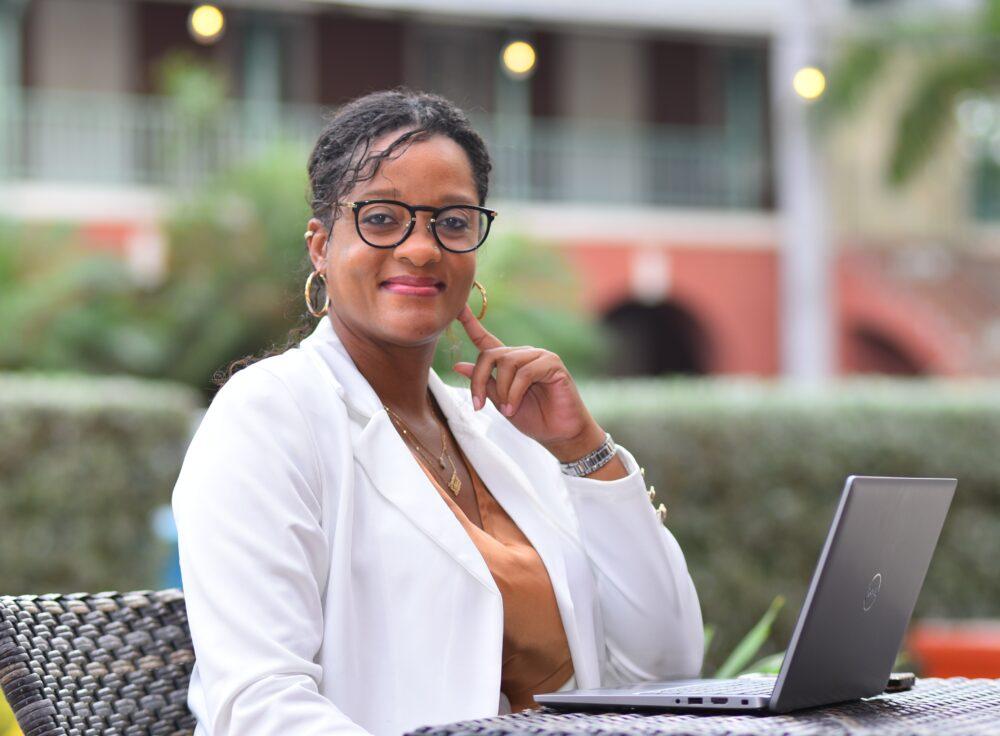
 Today, we are honored to sit down with Gayle Marshall, a distinguished risk management professional with over 15 years of experience in the financial services sector. Born and raised in the vibrant island of Barbados, Gayle carries with her a deep-rooted sense of family, community, and a passion for helping others.
Throughout her career, she has not only guided organizations through the complexities of risk management—covering everything from business disruption to financial, legal, and strategic risks—but she has also dedicated herself to empowering individuals. Her training sessions, presentations, and advisory services have touched countless lives, making risk management accessible and actionable.
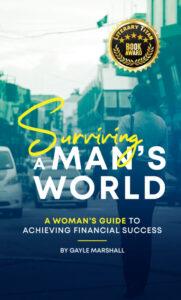
Gayle is also the author of Surviving a Man’s World, a powerful book written to uplift financially challenged women by equipping them with the knowledge and confidence to navigate risks and create opportunities. Her mission extends beyond technical expertise; it is about creating avenues for growth, resilience, and empowerment for communities near and far.
With her blend of professional skill and heartfelt dedication, Gayle Marshall continues to stand as a role model for women in male-dominated fields and as a changemaker in the global conversation on risk, resilience, and empowerment. Let’s meet her…
Where were you born/raised and where are you based now?
I was born and raised in the island of Barbados. I still live and work there now and I hope that in everything I do I represent my country well.
Growing up in Barbados, you were surrounded by a culture deeply rooted in family and community. How did this upbringing shape your values and influence your path into risk management?
Growing up in Barbados didn’t directly lead me into risk management, but it did shape the values that inspired my book, Surviving a Man’s World: A Woman’s Guide to Achieving Financial Success. I was raised in a community that felt more like an extended family than just a neighborhood; people looked out for each other and shared what they had. I also grew up observing a deep respect for women, especially mothers, many of whom were single and found ways to hold everything together. When there were gaps, others stepped in to help, and that collective strength left a big impression on me.
My grandmother, in particular, was a major influence. She was only earning a pension when I was growing up, but she devoted her resources to help raising my sister and me. Only after she passed did I learn that she had quietly been helping many others long before us. That spirit of selflessness and resilience inspired me to want to make a genuine contribution in the lives of others, which continues to guide my work and writing today.
Tell our readers about yourself, how you got started in your current field.
I am a risk management professional, but my path to this field was not a straight line. Growing up, I was drawn to many different professions but none of them felt like the right fit. The one constant I recognized early on was my strength in mathematics, though I wasn’t sure how to channel it beyond teaching. To keep my options open, I pursued a Bachelor’s degree in Economics and Mathematics, which gave me a strong foundation in analytical thinking.
It was during that time that I came across actuarial science as a potential career. While researching it, I discovered the broader field of risk management, an area that resonated deeply with my personality and interests. That realization inspired me to complete a Master’s degree in Risk Management, after which I gained practical experience in both general insurance and capital markets.
Along the way, I had the opportunity to expand my expertise into enterprise risk management and compliance, which really rounded out my skill set. Today, I work with a financial regulator, which provides me with a unique perspective on risk management from the oversight side of the industry. Beyond my professional role, I also teach risk management as part of an insurance programme and conduct seminars for individuals and groups. For me, risk management is not just a career, it’s a passion that allows me to combine analysis, strategy, and education in meaningful ways.
What are you most known for and have you let that control the reigns of your trajectory or do you still feel like you are being your authentic self?
I am known for my efficiency and all round analytical capabilities. I incorporate risk management principles into everything I do which helps to encourage me in taking more risks. I know this is counterintuitive but a better understanding of my risk exposure helps me to better understand and approach tasks and activities that I want to undertake, whether professionally or personally. This life approach helps me in achieving work life balance and overall satisfaction with my life and career as it is now.
Many people see risk management as a technical discipline. How do you make it relatable and accessible to groups or individuals who may not have a financial or business background?
I make risk management relatable by showing people that risk is something we all deal with every day, it isn’t just about business or finance. For example, if you’re sick, you decide whether to take medication or stay home to avoid spreading the illness. That’s risk management in action.
Money is another area where risk shows up for almost everyone. Whether you have a lot or just enough to get by, you’re constantly making choices about how to use it. When money decisions are unplanned or impulsive, you risk ending up in a difficult financial position and missing out on opportunities you could have afforded had you approached it differently.
When people begin to see risk in the context of their own lives, through simple, real-world examples, they usually become much more open to understanding why effective risk management matters.
 Your book Surviving a Man’s World speaks directly to financially challenged women. What personal or professional experiences motivated you to write it, and what message do you most hope women take away from it?
What really motivated me to write Surviving a Man’s World were the stories of women I encountered who suddenly found themselves in financial crises because they had relied entirely on someone else to manage the money. One of the first situations I came across was a woman whose husband had passed away. He had always handled the household finances, so when he died, she was not only grieving, but also blindsided by mortgage payments, insurance policies, and other obligations she hadn’t even known existed. She only discovered them when the cancellation and non-payment letters began arriving.
Experiences like that made me think about the women in my own life and my family. In smaller societies like mine, money challenges are often not talked about openly; and I wondered whether the women closest to me would suffer in silence if they ever faced something similar. Writing the book was my way of providing some guidance to help women understand those critical first steps to take, and most importantly, encouraging them to actually take them.
Beyond your professional work, you’ve dedicated yourself to creating avenues for people to learn from your knowledge. What gaps in education or resources do you see most often, especially for women, when it comes to financial literacy and risk awareness?
Some of the biggest gaps I see in financial literacy and risk awareness is that the information is often either too academic or too sales-driven. On the academic side, some people focus heavily on technical principles, which can be fascinating for those of us in the field, but it doesn’t always translate into practical guidance for the average person who could really benefit from it.
On the other hand, a lot of financial advice comes from institutions trying to sell a product, like a bank encouraging you to open a specific account or make certain investments. While there’s nothing wrong with guidance, it often doesn’t take your personal income, goals, or limitations into account. Without that context, people can’t really make informed decisions; they’re just reacting to what’s being sold to them.
Bridging this gap means providing financial and risk education that is practical, relatable, and unbiased; so people, especially women, can understand how to make decisions that truly work for their lives.
You provide training and advisory services in areas like business disruption, financial, legal, and strategic risks. Which type of risk do you believe organizations underestimate the most, and why?
All of these risk categories are significant in their own way, but business disruption stands out to me, especially after the COVID-19 pandemic. That period gave us a real-life example of how unprepared many organizations were for a large-scale, long-term disruption.
Before COVID, a lot of companies planned for interruptions lasting a few days or weeks, like fires or storms. Some even considered a pandemic scenario, but usually in the context of staff illnesses or absences, not a global shutdown that would bring business activity to a halt. When borders closed and offices shut down, many businesses faced severe financial strain, and entire economies were affected.
At the same time, we also saw positive risks emerge. Many people seized opportunities by moving their businesses online, often using social media as a cost-effective alternative to brick-and-mortar operations.
For me, this showed just how crucial it is to really understand the scope of a risk and build realistic contingency plans that account for different scenarios. Without that, even the best-prepared organizations can find themselves caught off guard.
The world has faced increasing uncertainty in recent years—from pandemics to economic downturns. How has this shaped the way you approach risk management solutions for businesses today?
Risk management is often seen as theoretical, since the goal is to plan for risks before they happen. But with the recent surge of simultaneous events, like pandemics and economic shifts, there’s much more real-world information available that can be incorporated into strategies, even if it’s not drawn directly from the organization’s own operations.
This has made organizations more open to embedding risk management into their strategy and budgeting. Solutions now tend to be broader in scope because it’s clear how one risk can affect multiple areas of operations. For risk management professionals, this actually makes it easier to demonstrate the value of pre-planning. Accurately scoping risks is increasingly seen not as highlighting weaknesses, but as ensuring that all areas of the business have the necessary coverage to withstand disruptions.
You’ve blended technical expertise with a strong desire to help others. Looking ahead, how do you envision expanding your impact in risk management, both regionally in the Caribbean and globally?
Looking ahead, I hope to expand my impact, both in the Caribbean and beyond. One key focus is promoting my book, especially in regions where women are marginalized and could benefit from the guidance it offers. I also want to increase my involvement in public speaking, which allows me to reach groups directly, engage with them, and provide deeper, tailored insights where needed.
Partnerships with organizations and associations will be essential to making this possible. Many of the communities I want to reach may not have the resources to bring me in independently, but by collaborating with local groups, we can create solutions that extend the reach of this information and benefit everyone involved.
Have you ever failed at anything? How did you recover?
Failure is a part of life. It is how we learn. I think my background in risk management has helped me to accept that in failing we figure out what “not” to do which helps us to determine better options to move forward. I apply this in everything I do and it helps me to fear failure a lot less and drives me to open myself to new challenges.
If you could go back and share one thing with yourself as a 16-22 year old what would it be and why?
Embrace life. Make mistakes. Let life be your greatest lesson and you can conquer the world, even if in a small way.
Who are you at your core and in life what matters the most to you?
At my core I think I am someone who is trying to make a difference in my own unique way. I try to do my best in everything I do. I try to respect everything and everyone around me. I don’t always succeed but I think growth is a continuous pursuit and every target you set gets you closer to that goal. What matters the most to me is that when I leave this earth I would have made an impact in at least one person’s life that really made a difference.
What sets you apart?
I think what sets me apart is my drive to take action. I don’t fear failing at initiatives that I take on. What I’ll do is just assess the potential for loss and decide to what extent I’m okay with that, and proceed to suit. Many people have a tendency to want things but not do what it takes to get them. But I think my willingness to forge ahead and pursue my dreams sets me apart.
When life gets crazy, how do you decompress and recover you?
To decompress I take time away from everyone and everything. Just to process my own thoughts and feelings. It’s important to me that I get a true understanding about how I feel about the circumstances and not let external influences or people heighten my frustration with their opinions. People mean well but I think my happiness is my responsibility and that I need to figure out how to level myself out when needed.
Is being intentional important to you? Why or why not?
Yes I think that it is very important to be intentional in things I say or do. This is how people respect me as reliable and trust develops in any initiative that I put forward. Even though there is always room for jokes or not being serious, especially in building my professional persona, it is important to be intentional.
Tell us about any point in your life’s journey that you felt changed you for the better?
I think that I have had many turning points in my life and I like to reflect regularly on where I’ve come from and where I hope to go. One such turning point was actually the COVID19 pandemic and when we were under lockdown in my country. Having a lot of my extracurricular activities paused gave me a lot more time to really think about what I wanted to do and who I wanted to be. It was also during this period that I wrote my first book “Surviving a Man’s World: A Woman’s Guide to Achieving Financial Success”.
How do you connect or maintain connection-with business colleagues, family or friends?
Being very honest this can be a challenge sometimes. Time really goes very quickly and before you know it you realize that you haven’t seen someone important to you in weeks, months or years. What I try to do is to reach out to people whenever they cross my mind. Whether we chat for a minute or an hour I genuinely appreciate the connection and in many cases I feel like they appreciate it as well.
Has there been a time where adapting to a major change was life altering for you?
I can’t think of a major change but what I can say is that going through the COVID19 pandemic was somewhat life altering to me, especially in terms of my perspective about a number of things. The number of deaths and just understanding the value of life and really living was very impactful. I have always been career driven, mostly because I love to challenge myself. But I think it made me really think about getting to a place in my life where I could afford to work a lot less and focus more on just doing things I enjoy. Even now where I might not have a lot of free time or financial independence to do anything, I think of what I can do that actually fits within those restrictions and I press ahead.
What do you like to do when you are not working?
I think this question needs to be a bit more specific. When I am not working for the organization where I work full time, I try to engage myself with other projects. For example, I am working to set up a consultancy business to help individuals manage their financial circumstances and also to assist small businesses in incorporating effective risk management tools into their operations. The financial consultancy for individuals also is supported by the information that I have compiled in my book “Surviving a Man’s World: A Woman’s Guide to Achieving Financial Success”. I think this is a good way to give back while using the skills I have acquired in my background. As it relates to when I’m not working at all, I just like to relax and let my mind wander. This really helps boost my creativity generally and helps me to really pinpoint what makes me happy.
Of all your roles, which are you most proud of and if different, which one has been the most fulfilling?
I feel like my life is one where I wear several hats. For me I think my most important role is that of a daughter. My parents are both still here with me and I treasure my relationship with them. I love spending time with them and hearing all the stories from when they were growing up. I think, regardless of what we do in life, we need to have people there where we feel genuine and unselfish love and I feel that with them.
Complete this sentence, “If it had not been for my faith,_________________.”
If it had not been for my faith, I would have nothing. I believe that God has taken me through my life and supported me through all my challenges. Even sometimes when I look back at a dark time in my life and I really think about it, I realize that in going through it, I might actually have been saved from something much worse. And I give thanks for that. I also believe that God’s guidance has helped me to take leaps that other people might be hesitant about taking. Things like failed relationships, changed jobs, private projects and challenges; even when it didn’t turn out as planned I believe that they strengthened me.
What is one thing that you’re not good at that you wish you had a better grasp of?
I wish that I was better sometimes at giving up. This isn’t a terrible thing in some situations. I think that the way my brain works is that where something isn’t working I will think about something else to try. Sometimes the best strategy is to just move on and being able to feel and act on that timing can make a huge difference.
How do you support, empower or uplift other women?
In everything I do I try to support or empower other women. When I wrote my book, it was primarily targeted towards helping women who might not have access to the type of financial information that I had that could be used to make their lives better. Gender inequality is a big problem and my aim was to even the scales even if just a bit. I also try to empower women through my own actions. It can admittedly be exhausting at times, but I try to always push myself to be my best so that hopefully I can inspire others to try to aim for what I aimed for and achieved. Even when I fail at something I give myself grace and hope that it motivates other women who see me not to let fear of failure prevent them from meeting their goals.
What is up next for you? Do you have any projects, events or products to promote?
I want to promote my current book “Surviving a Man’s World: A Woman’s Guide to Achieving Financial Success”. This won a literary award in 2024 and has received excellent reviews from both males and females on the overall value of the information provided. I am also hoping to add to this by publishing other books in the near future so I would love if you can keep listening out for any new projects that might come up. I’ve also been taking on more public speaking engagements to be able to extend my message to as many audiences as possible so feel free to follow my social media to keep up with all my future events.
How can our readers connect with you for more information?
Readers can connect with me at my website: www.gaylemarshall.com. My social media links are all there as well.
If you could give one piece of advice to young women in small communities who aspire to enter male-dominated industries, what would it be—and how do you hope your journey serves as a model for them?
If I could give one piece of advice to young women, it’s this: if you believe you can make a genuine contribution, whether small or significant, go for it. There will always be obstacles, and others may point out even more, but use those challenges to strengthen your plan rather than to discourage yourself.
Gender inequality remains a reality globally, and entering male-dominated industries can be difficult. You may have to work harder, but I believe that makes the achievement even more rewarding. Even if things don’t go as planned, the experience and lessons you gain are valuable and can always be applied elsewhere.
I hope my journey serves as an example that persistence and giving your best really do matter. I haven’t always gotten what I aimed for, but by continuing to try and contribute meaningfully, I’ve found growth, accomplishment, and genuine satisfaction along the way.

A fantastic article. Gayle is an inspiration to many.