
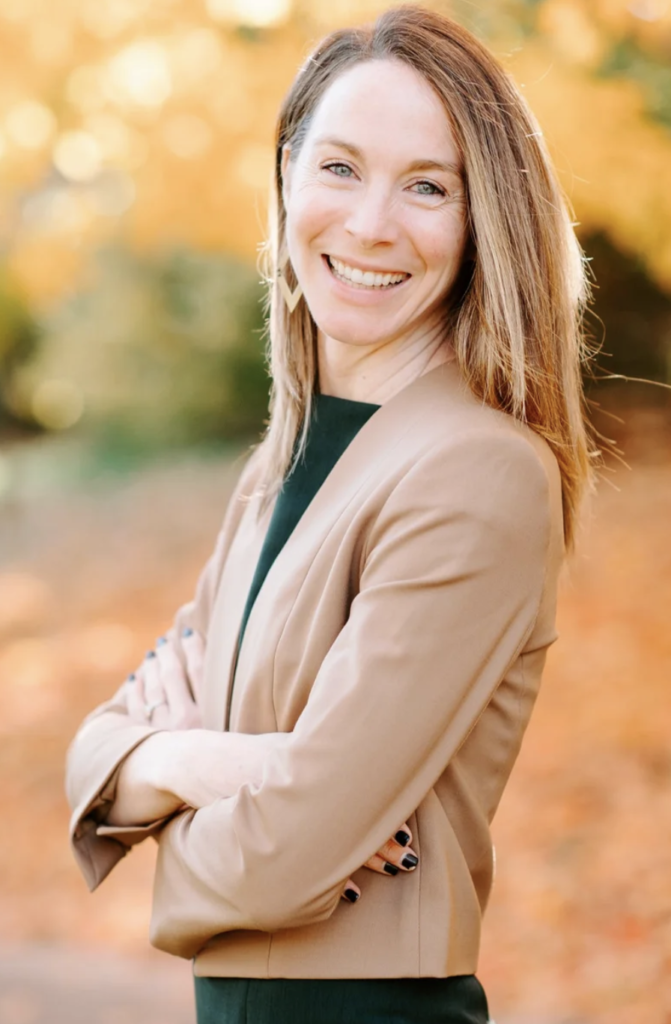
Real leadership begins with listening. Whitney Hegseth shares why empowering student voices is essential to building a more inclusive and compassionate future in education.
What if transforming education began with something as simple as listening? For Whitney Hegseth, Assistant Professor of Educational Leadership at the University of La Verne and author of Talk to Us Normally, empowering the next generation starts with recognizing that students deserve more than instruction—they deserve understanding, respect, and a voice in shaping their educational experiences. Through her work as an educator, author, and advocate for student-centered leadership, Whitney challenges traditional approaches to education while encouraging leaders to embrace empathy, inclusion, and meaningful connection. In this inspiring conversation with Connected Woman Magazine, she shares insights from her professional journey, the importance of mentorship, and how women in leadership can help create educational environments where every young person has an opportunity to be seen, heard, and valued.
Your career has led you to your current role as Assistant Professor of Educational Leadership at the University of La Verne, where you have an opportunity to influence the next generation of educational leaders. What initially inspired you to pursue a career in education, and how have your personal experiences, professional challenges, and defining moments shaped your leadership philosophy?
My whole life has revolved around education. The first jobs I had were nannying or tutoring. I then went on to become a K-12 teacher, an educational researcher, and now a professor of educational leadership (I’m also a soccer coach for my kiddos on the side!).
Throughout my career, I have always felt deeply motivated and fulfilled by my work. The way I see it, education is the foundation we need to be able to address any of the myriad problems with which our society is faced. Whether the issue relates to climate change or political polarization, domestic violence or curing a rare cancer, the people who are going to inherit these problems are our youth. It is our children who will determine whether these problems persist, or whether they get resolved. By focusing all of my attention on them and the amazing people who educate them, I feel I am doing my best to contribute to this world in a positive way.
You emphasize that meaningful educational change begins when we stop treating students as problems to solve and start recognizing them as individuals with valuable perspectives. What do you believe young people can teach today’s leaders about creating environments where students feel respected, empowered, and invested in their own success?
I am continually amazed by the fact that I simply cannot predict what a young person will think or say. Whether I am teaching, researching, or parenting, every time I assume, I get it wrong! I think many of us do. Young people are deeply wise, and they are the ones who bear the brunt of our educational policies, reforms, and decisions. For that reason, we need to continually ask them about their ideas and opinions, and we need to give them the space and time to respond. These young people see problems and solutions from an entirely different angle; they often know better than we do how to make their school day better.
If we want young people to feel respected and genuinely listened to, we need to talk to them. And, as the little girl who helped me title my book said, we need to talk to them normally, they’re not babies anymore.
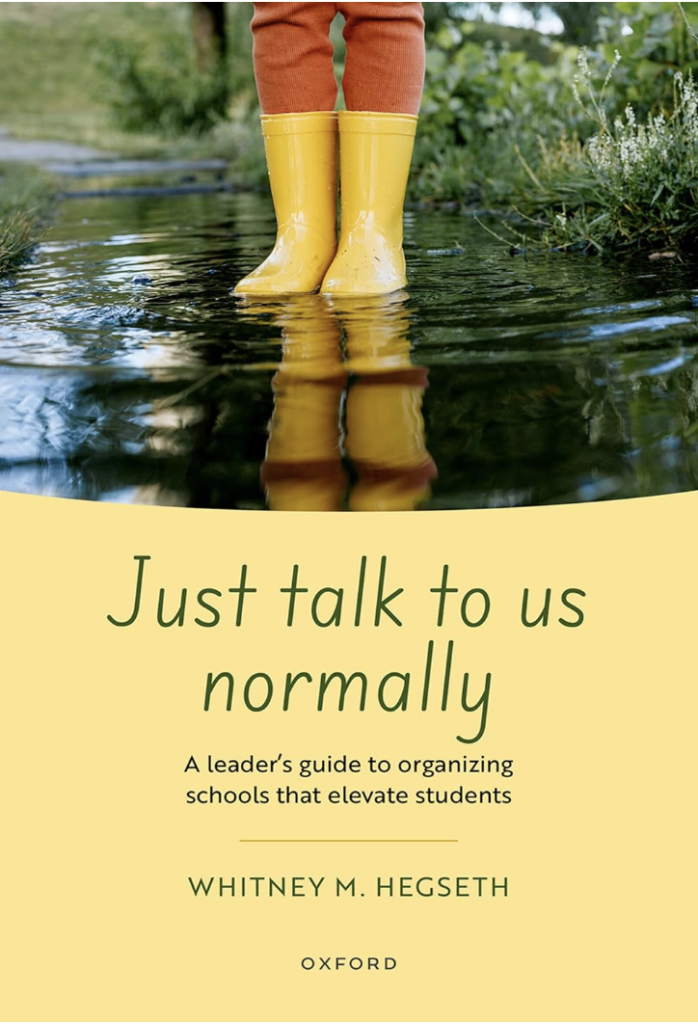 Your book, Just Talk to Us Normally, challenges traditional approaches to educational leadership and encourages a more human-centered understanding of students. What inspired you to write this book, and what conversations or experiences convinced you that this message needed to reach a broader audience?
My book is motivated by a problem I’ve observed over the years, and across countless different contexts. The problem is this: we, as a society, tend to chronically underestimate our young people. We overlook how capable and good they inherently are. This problem is particularly acute when a person is, for example, young and Black, young and female, young and an English language learner.
And so, my book is meant to be a guide for teachers, principals, and superintendents; a guide that helps them transform actions and beliefs toward young people. In this book, I tell two, related stories. The first is a story of culture change. I offer examples of schools and systems that transformed teachers and students, actions and assumptions. The second story I tell is about how educators can do the work they are already doing in more strategic ways. I offer a framework for using one’s instructional supports — like curriculum, standards, or professional development — in ways that can elevate students and their daily experience.
My hope is this book will be a book club book for teams of educators. In addition to case studies, I offer reflection questions, a framework, and other tools to help readers apply lessons from the book to their own context.
Many schools promote student engagement and inclusion, yet young people may still feel that their opinions are welcomed only when they align with decisions adults have already made. From your perspective, what does an authentically student-centered school culture look like, particularly for students who have historically felt overlooked, misunderstood, or excluded? How can educational leaders create meaningful opportunities for students to participate in shaping their learning environments while ensuring that student input leads to tangible action rather than becoming another symbolic initiative?
There are two topics I have written about quite a lot. The first is mutual respect, which I define as the work of disrupting power imbalances between adults and students, and among diverse groups of students. In my research and writing about respect, I show many options for how schools can respect students. Teachers and leaders can respect students socially, but also instructionally, and in terms of how they organize students and their school day. Additionally, there are a lot of different dimensions of respect; for example, respecting students by giving them more autonomy, or by making sure that all students feel included and represented throughout the school day.
The second topic I write about — one that features heavily in my book — is educational infrastructure. Educational infrastructure is the water we swim in as educators. It’s all those things we design and use daily to support teaching and learning. Infrastructure can be a curriculum or test, but it can also be a certain role, routine, or schedule. Educators can design infrastructure that continually gives youth a seat at the decision-making table, and that holds adults accountable to responding to the youth’s feedback. For example, leaders might routinely invite student representatives into meetings or professional development to lend their insights and perspectives. There are a lot of different options; the systems and structures are there to be activated!
Women in leadership often navigate unique expectations surrounding authority, communication, compassion, and the balance between being approachable and being respected. Throughout your professional journey, how have you developed your own leadership voice, and what challenges or lessons have shaped your confidence as a woman working in educational leadership? How do you believe women can use empathy, emotional intelligence, and their lived experiences to challenge outdated leadership models and help transform school cultures without having their compassion mistaken for a lack of strength or authority?
It’s hard for me to see myself as a leader, and I recognize that that’s likely the case because I have been socialized as a woman. I feel much more comfortable viewing myself as a supporter of educational leaders. I feel pretty confident in that role. In that role, I treat educational leaders the same way I want to be treated. I acknowledge and make space for their personal lives alongside their professional careers. I teach the hidden curriculum of higher education; I make visible all those norms and skills educational leaders need to know to navigate their doctoral work. When things have been, or are, difficult for me, I say it out loud, thereby inviting other people to be vulnerable, too. I hope against all hope that the environments I create are safe enough for the leaders I support to make mistakes.
As someone who has studied respect quite a bit, I enter every relationship assuming I need to earn respect. I don’t want to be respected because of my degrees, title, experience, or identity. I want to be respected because I have seen and honored the humanity in someone, even as I have challenged and helped them to be better, and to do better.
Mentorship can be transformative for young people, particularly those who may not have consistent access to encouragement, positive role models, or opportunities to envision themselves in leadership positions. Who were some of the individuals who helped shape your own professional journey, and what lessons from those relationships continue to influence how you mentor and support others today? How can educators, women leaders, and community members become more intentional about recognizing potential in young people who may not fit traditional definitions of achievement, confidence, or leadership?
I have had so many wonderful mentors throughout every stage of my life. These mentors have helped me get to and through college, to and through graduate school. These mentors helped inspire and equip me to write a book, and to become the professor I have dreamed of being ever since my first year of college (even though I had no clue what it meant and what it took to be a professor!). I may never be able to pay back these mentors, but I certainly hope to pay it forward.
For those people who could become a mentor, I think a certain mindset is helpful as you enter that relationship. First, I think it helps to recognize that you are learning and benefitting just as much from your mentee as they are from you. Second, again, I think it’s essential to recognize that these mentees are far more capable than you may assume. If you can mentor with that mindset, I think you are off to a good start.
As you reflect on your career, your work as an author, and your commitment to helping educational leaders rethink how they engage with students, what do you hope your lasting contribution to education will be? If you could challenge today’s school administrators and future leaders to reconsider three fundamental beliefs about students, leadership, and success, what would they be?
I hope that my lasting contribution is helping educators, helping people, to reconsider a few different assumptions. The work that I do, the book that I wrote, is meant to support people in seeing children differently. I offer ideas for how educators can continually challenge their assumptions around teaching and learning, children and change. I offer ideas for how we might leverage our systems to work toward change that is too difficult for any individual to sustain.
I also want to acknowledge how impossible it is to be a teacher or educational leader right now. This work has always been hard, but in today’s society it is getting even more difficult. With this in mind, I want to remind leaders to rest, and to prioritize their health. As difficult as it can be to rest, our best work cannot happen when we are not well. And, though this may feel counter-intuitive, our best ideas continue to get stronger when we put down our work to sleep, spend time with loved ones, get outside, or pursue distracting and delightful hobbies. If you’re an educator and you’re reading this, know that I’m rooting for you. The work you do is so urgent and so challenging, please rest so that you can stay in this fight.
Discover more from Connected Woman Magazine
Subscribe to get the latest posts sent to your email.