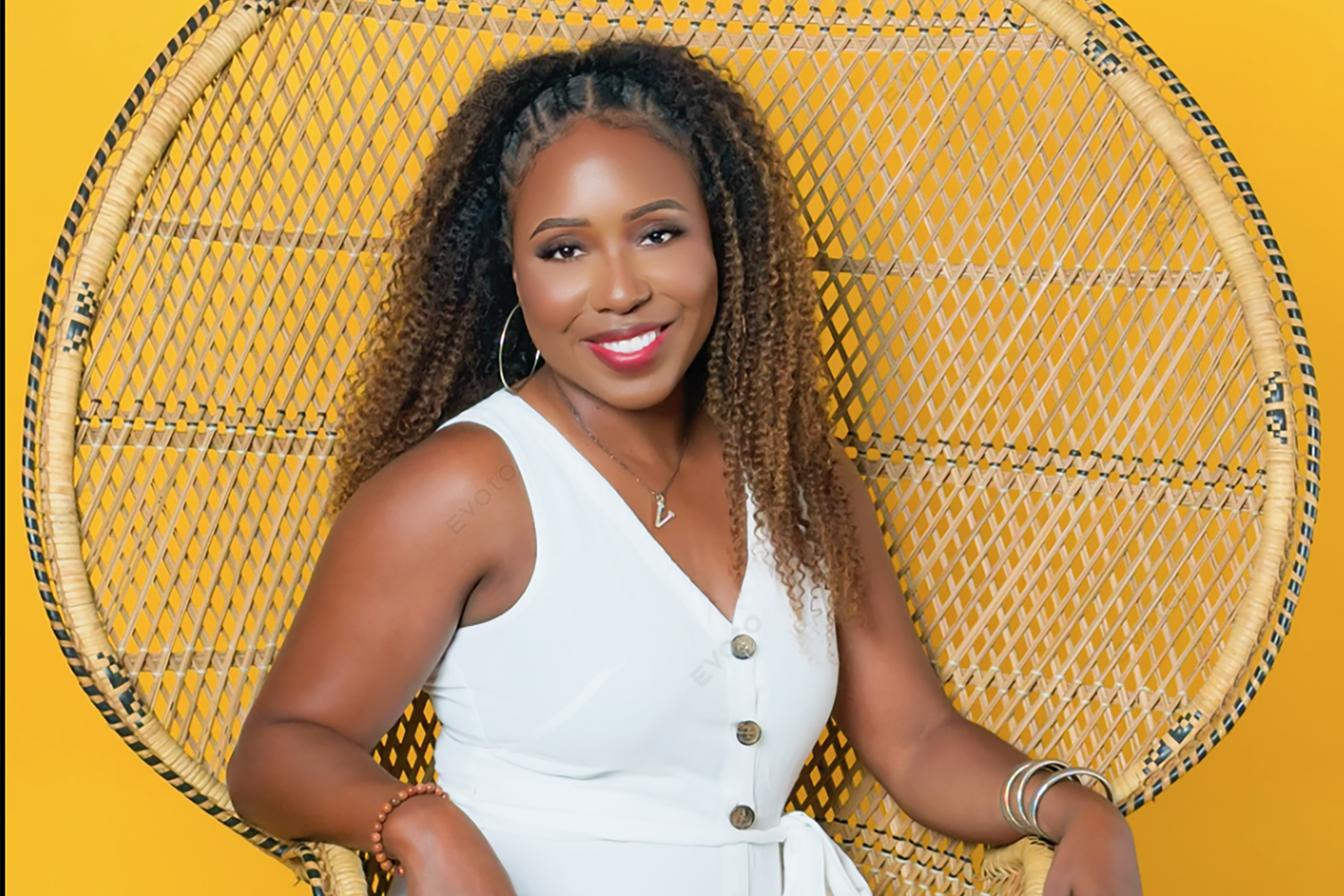
Blending psychology, filmmaking, and fearless storytelling, Victoria Renee creates space for Black women to be complicated, vulnerable, ambitious, and unapologetically themselves.
Black women have mastered the art of navigating spaces that don’t always allow them to show up as their authentic selves. But what happens when they decide to stop switching, stop shrinking, and start owning every complicated, beautiful, and unapologetic part of who they are? Author, screenwriter, and filmmaker Victoria Renee explores that very question in her bold debut book, The Black Switch, releasing October 23 through Victoria Renee Productions.
Blending her background in clinical psychology with her passion for filmmaking, Renee introduces four original television pilots that explore identity, ambition, relationships, grief, survival, and the pressures of code-switching. Raw, relatable, and refreshingly unfiltered, her stories challenge traditional portrayals of Black women while offering emerging creatives a glimpse into the screenwriting process. In this Connected Woman Magazine feature, we explore the inspiration behind The Black Switch, the importance of authentic representation, and Renee’s mission to create stories where Black women can finally remove their capes and simply be human.
Your debut book, The Black Switch, explores the complicated ways Black women navigate identity, expectations, ambition, and survival while moving between different environments. From professional spaces to personal relationships, many Black women recognize the pressure to adjust their language, behavior, appearance, or even personality to be accepted or taken seriously. What personal experiences, observations, or defining moments inspired you to create The Black Switch, and what does the title represent to you? As a Black woman and storyteller, how have you personally navigated the tension between showing up authentically and becoming who the world expects you to be?
I’ve been fascinated by the concept of masking and code-switching since childhood once my mother introduced me to Paul Laurence Dunbar’s 1896 poem “We Wear the Mask.” The poem expresses how Black people conceal parts of themselves, including our pain, behind a socially acceptable mask. Even as a young girl, I thought the idea was fascinating, almost like becoming a character. That fascination with becoming a character and writing characters ultimately led me here, to storytelling. But what’s even more intriguing to me is how this poem from the 1800s and W. E. B. Du Bois’s concept of double consciousness are still very relevant today. Throughout history, we’ve had to learn how to navigate spaces by hiding parts of our full, authentic selves for safety and survival.
As a young adult, I started referring to myself as a “sophisticated ratchet.” As a girl who grew up on the Southside of Atlanta and eventually navigated the prestigious halls of Columbia University and Cambridge University in the U.K., I thought it was cool to be a chameleon of sorts embracing certain parts of myself in different environments without fully abandoning myself.
Yet as I got older, I began to recognize how exhausting it can be to habitually flip different parts of yourself on and off. Not only is it a chore but it I also recognized that it could be quite isolating after a while. And that realization stayed with me.
So, as I started learning screenwriting back in 2016 and began writing the pilots in this book in 2017, I never intended to specifically explore masking or code-switching. But once I looked back at the pilots I wrote from 2017 to 2021, which were collecting digital data dust in my episodic content folder on my computer, I began to recognize that my fascination with identity and how it impacts behavior was a throughline across all four pilots. Each protagonist, in her own way, is navigating the expectations placed on her versus who she really is. So, once I clocked that I put them together as one book called The Black Switch.
The Black Switch represents the experience of Black women having to mask or flip between different versions of themselves depending on the circumstances. I know this phenomenon is not specific to Black women but as a Black woman, I wanted to center our experiences. I wanted to create a body of work where Black women feel seen and safe enough to flip their switches off, remove their masks, and take off their ‘super strong Black women capes’.
Ultimately, I want the Black Switch to encourage us to embrace the freedom to be multifaceted.
Your background in clinical psychology brings a fascinating dimension to your work as a screenwriter and filmmaker. Throughout The Black Switch, your characters confront grief, trauma, identity conflicts, family obligations, and the emotional weight of constantly having to prove themselves. How has your understanding of human behavior, psychological resilience, and emotional survival influenced the way you develop characters and their relationships? Additionally, how do you approach portraying Black women’s mental health in ways that challenge the expectation that they must always be strong, self-sacrificing, or emotionally invincible?
Honestly, I’ve always been curious, even before I studied psychology, about why people do the things they do, why they believe what they believe, and how those things influence how they show up in the world. My background in psychology, along with my professional experience in the field, definitely informs the characters I create and the stories I tell.
I’ve worked in clinical, research, and forensic settings because, in the past, I wanted to be “Dr. V,” the expert on all things forensic mental health. Through that work, I encountered children, youth, and adults navigating different challenges. I remember their stories, the things they shared and concealed, and the ways their experiences showed up in their lives. Those experiences helped deepen my understanding of human behavior and gave me insight into the many ways people respond to what they’ve been through. I draw on that understanding when developing characters and thinking about what motivates them, how they relate to others, and how their experiences shape their decisions.
My mental health background also influences how I tell stories. For example, a lot of my work is entertaining, but I also tend to weave in some sort of advocacy component. I want my stories to contribute to conversations about healing, therapy, mental health, and wellness.
Sometimes that message is direct, and other times it’s subtle. Sometimes, I explore grief or trauma, and other times those themes are woven into a character’s behavior, relationships, or circumstances.
My psychology experience also affects how I approach portraying mental health challenges on screen. For example, if I’m writing a character who experiences a particular mental health condition, I think about how that condition might manifest in her behavior and relationships. But I don’t want the character to feel like a textbook or a collection of symptoms. I want the character to feel like a whole person. So, I ask myself, “How can I portray that experience in a way that feels human, nuanced, and authentic rather than simply defining the character by her diagnosis?”
That’s one of the things I love about storytelling. I can take something that folks might find frightening, something they might misunderstand, or something that carries a significant stigma and humanize it. It is my hope that someone might watch, listen, or read something I’ve created and recognize something about themselves or someone they know. Hopefully, they’ll walk away thinking, “Oh, this person is more like me than I realized.” That recognition can help challenge misconceptions and make conversations about mental health feel less intimidating.
I also think recognizing the humanity in storytelling is especially important for Black women. We can be resilient without being invincible. We can love our work and families and still struggle with the weight of those obligations. We can experience grief, need support, and have moments when we simply don’t know what to do next. And, we need books, films, and shows that reflect that vulnerability and remind us that we’re not alone in these feelings.
From Karma Jones navigating career uncertainty and friendships in Sophisticated Ratchets to Nia Harris confronting professional competition and supernatural experiences in Not Guilty By Reason of Insanity, your four television pilots present Black women whose lives, personalities, and circumstances are remarkably different. By the Code and Highly Inappropriate further explore family loyalty, cultural identity, grief, and unexpected responsibility. What inspired you to bring these four particular stories together in one collection, and how does each protagonist represent a different dimension of Black womanhood? Was there one character whose story challenged you emotionally or creatively more than the others, and what did writing her teach you about yourself?
What inspired me to bring these four stories together was realizing they shared a throughline beyond all being centered on Black women. Each story explores, in its own way, what happens when women feel expected to present themselves a certain way and how those expectations can affect their sense of identity. Once I recognized that common thread, I knew I wanted to bring the pilots together in one collection. I also included reflections on their development because each story represents different aspects of my lived experiences, observations, and curiosities.
In Sophisticated Ratchets, Karma Jones is a young woman fresh out of college who is trying to figure out what adulthood looks like beyond the college bubble. She went to school to become an engineer because everyone told her it was the safe choice, but she doesn’t necessarily want to do that for the rest of her life. Now she’s trying to figure out her next move while managing bills, budding romances, and the compromises that come with living with roommates. I wanted to explore that transitional period when you’re trying to build a life for yourself while questioning whether the life you’ve been working toward is actually the one you want. Karma represents the experience of giving yourself permission to pivot, even when you’ve already invested time and energy into a particular path.
Not Guilty By Reason of Insanity is directly inspired by my experience working in forensic psychology. One of the introductory cases is based on a real case I encountered while working with the forensic psychiatry department at Kings County Hospital in Brooklyn Criminal Court. The story also grew out of a question I had: We see racially targeted mass shootings, but what if someone shot back at the shooter? And what if that person were Black?
I also drew on my experience of being the only Black woman intern in that environment at the time. That informed the creation of Dr. Nia Harris, a Black woman conducting assessments and working with Black and Brown defendants while carrying the weight of wanting to help people navigate a complicated system. But I didn’t want Nia to exist solely to solve cases or be the strong, capable professional who always has the answers. I wanted to explore her life beyond work, including her romantic relationships and family dynamics. I wanted her to be fully realized: raw, messy, vulnerable, and human. Her story explores what happens when the responsibility of being good at what you do collides with the reality that you’re still figuring out your own life.
With By the Code, I was intrigued by the opportunity to tell the story of an Afro-Latina navigating multiple worlds. She’s contending with cultural identity and the experience of being the daughter of immigrants, while also navigating the expectations associated with attending an Ivy League institution. She’s a coder, an entrepreneur, and someone who assumes a new role as a gang leader. Each environment comes with its own rules and expectations, its own code to live by. I wanted to explore how she navigates those competing identities and what happens when the different worlds she’s trying to occupy collide. Her story examines the pressure to be everything to everyone while figuring out who you are beneath those expectations.
Highly Inappropriate was inspired by the pandemic and my relationship with my godchildren. I started thinking, “What if something happened to their mother and I had to step up from being the fun auntie to becoming their guardian? What would that look like?” I developed that premise into a story about older children with difficult backgrounds being placed in a more middle-class, suburban environment. There’s a fish-out-of-water element to it, but I also wanted to explore the reality that grief and trauma don’t disappear simply because someone’s circumstances change.
Having seen how families come together after tragedy, I know that adjustment can be difficult. Nobody is automatically okay just because people are trying to do the right thing. The children are dealing with grief and trauma, but so are the adults. Everyone is trying to figure out how to move forward, and not everyone knows how. I wanted to explore that honestly while also pushing the boundaries of comedy. Shows like Degrassi, Shameless, and Skins made me think about what it means to give characters permission to go all the way there, even into uncomfortable territory. With Highly Inappropriate, I wanted to explore what a Black show could look like with that same freedom.
As for which story challenged me the most, I’d say By the Code and Highly Inappropriate presented different challenges. Because I’m not Afro-Latina, writing By the Code required research and conversations with people who could help me better understand experiences outside my own. I wanted to approach that protagonist and her world thoughtfully rather than assume I already understood them.
Highly Inappropriate, meanwhile, was fun to write, but it also required me to think deeply about what I’d learned from working with children and how young people navigate difficult circumstances. I had to consider how the children would grow, how the adults would show up for them, and how to balance the show’s comedic sensibility with the realities of trauma and grief. Writing it taught me a lot about my own approach to comedy and how humor can coexist with painful, complicated truths.
Developing the series bible for Highly Inappropriate challenged me in a different way. It forced me to think about how many storylines I had, how those threads could weave together, and what I wanted this world to look and feel like beyond the pilot. It stretched me as a storyteller and pushed me to think more expansively about the characters and the world I was creating.
But the process also taught me something about myself: I’m complicated. I’m messy. I’m still figuring things out, and I don’t have all the answers. And that’s okay. One of the beautiful things about writing a series is that you give your characters room to grow. As they evolve from episode to episode, you grow alongside them as a writer. I realized that I, too, am growing, both creatively and personally.
Ultimately writing these stories made me reflect on how I extend grace to myself, what I give myself grief about, and how I distinguish between a lack of discipline and a genuine limitation in capacity. Those aren’t always easy questions to answer, but the process of exploring them has been illuminating. The writing process reminded me that growth doesn’t require having everything figured out.
Sometimes, it simply requires being willing to sit with the messiness, keep asking questions, and allow yourself the room to evolve.
One of the most compelling aspects of The Black Switch is its invitation for Black women to remove their metaphorical superwoman capes and embrace the full range of their humanity. Your characters are ambitious, imperfect, funny, complicated, vulnerable, and sometimes unapologetically inappropriate. Yet mainstream television has historically struggled to consistently provide Black women with the same freedom to be multifaceted as other characters. What stereotypes or limitations surrounding Black women’s representation were you most determined to challenge through these stories? How important is it for audiences to see Black women making mistakes, embracing sexuality, expressing anger, pursuing unconventional ambitions, and experiencing vulnerability without their entire identities being reduced to those moments?
During my undergraduate psychology studies, I focused my thesis research on the Black community. I came across three archetypes for Black women known as the Mammy, the Jezebel, and the Sapphire.
The Mammy is traditionally portrayed as an older, often larger, dark-skinned Black woman whose identity revolves around caring for others. She’s always cooking, cleaning, nurturing, and offering wisdom. Everyone can bring their problems to her because she’s almost magical in her ability to solve everything. She’s the ever-loving, self-sacrificing caretaker who always has the right answer and rarely, if ever, gets to have needs of her own.
Then you have the Jezebel, who is almost the opposite. She’s traditionally portrayed as an oversexualized Black woman, often depicted as light-skinned, slender, and defined by her sexuality. Where the Mammy is positioned as morally upright, the Jezebel is cast as immoral or promiscuous. Both stereotypes deny Black women the freedom to define their own relationships with sexuality, morality, and desire.
And then there’s the Sapphire, aka the angry Black woman who is bitter, abrasive, loud, sometimes ignorant, and difficult to love. She’s often avoided at all costs.
My research and lived experiences have taught me how problematic these archetypes are. They force Black women into narrow categories with little room for nuance. There’s no room for the Mammy to have a life outside of servitude. There’s no room for the Jezebel to have a moral compass, emotional depth, or ambitions beyond attention and affection. And there’s no room for the Sapphire to be understood as anything beyond her anger. That, in itself, is problematic because anger is often rooted in grief. But how often do folks stop and ask if an “angry Black woman” is actually exhausted, disappointed, or hurting? Do people ask what support she needs to ease her pain? Far too often these inquiries are nonexistent and the anger is silenced and deemed the result of poor personal coping instead of prompting people to address the roots of the emotion.
Consequently, when I create Black women characters, I aim to dismantle these stereotypes by creating fully realized Black women who are allowed to contradict expectations. I create Black women who can be sexy and nurturing like Candice in Highly Inappropriate. Women who can be angry and soft like Brooklyn in Sophisticated Ratchets. Women who can be businesswomen with big ambitions and still struggle with doubt, hesitation, and insecurity like Nia in NGBRI and Amirah in By the Code. We can be confident in one area of our lives and completely unsure of ourselves in another and that’s reality.
And it’s important to me to center Black women’s realities. We deserve to be centered, not relegated to the roles of assistants, sidekicks, or supporting characters. In The Black Switch, you’re getting main character energy throughout the book. Black women’s interior lives, their desires, their mistakes, their relationships, and their contradictions are central to the stories.
And that’s how I dismantle stereotypes by drenching my characters in specificity, nuance, layers, vulnerability, and complexity.
The Black Switch goes beyond presenting four original television pilots by incorporating reflections on their development and offering readers an inside look at the creative process. For emerging writers, particularly Black women who may lack industry connections, mentorship, or access to traditional filmmaking opportunities, the entertainment industry can feel intimidating and inaccessible. What have been some of the most significant obstacles, unexpected lessons, or moments of self-doubt you’ve encountered while developing your career in screenwriting and filmmaking? Why was it important to share not only your finished scripts but also the experiences behind creating them, and what practical advice would you offer aspiring writers who have compelling stories?
I laugh at this because I talk about this a little bit in the book. I think the reflections give readers a behind-the-scenes look at how these stories developed: what sparked the ideas, what concepts brought them together, what I was trying to accomplish with the scripts, what opportunities they earned me, and where they ultimately took me.
For a while, these scripts were just sitting on my computer as attempts, as effort, and, at certain points, as failures. That’s what I thought they were. Cute, close enough, but not quite there. They needed more work, more rewriting. They weren’t good enough. But I think there’s so much significance in the process itself.
Everybody gets obsessed with the final product. It’s like watching somebody finally master a jump shot or score a field goal. I’m no sports expert, but I do know there’s value in watching the reps, the practice, the attempts, and the development. Even in filmmaking, I geek out asking, “How did somebody master that shot? What did it take to get there or pull that off?” I obsess over that. ‘Cause, I mean, I love a good “Come Up” story and as Miley Cyrus sang, “it’s all about The Climb.” So, I love autobiographies, biographies, behind-the-scenes footage, and the making-of documentaries.
My goal has always been to inspire others. So, when I thought about my pilots, although Hollywood didn’t jump at them, I knew that my intended audience would not only likely embrace them but would also feel inspired by them. So that’s what’s given me the courage to put this out there. Because art and writing are hard. And if sharing my process helps pull back the curtain, resonates with someone, or gives someone a reason to keep going, then I hope it does exactly that.
Besides, I don’t know any real artist who doesn’t experience self-doubt on some level. And I naively used to believe that once I finally reached a particular point in my career as a storyteller, all the doubt, hesitation, and insecurity would disappear. But after listening to showrunners who openly talk about having imposter syndrome and other insecurities, I accepted that there isn’t going to be some grand epiphany moment when I suddenly become fully realized and never experience struggle or insecurity again. That idea is a myth. Once I accepted that, I started asking myself what my goal really was. Yes, I want to tell stories, but I also want to inspire others. And I believe I can do that by sharing my process and being honest about the journey.
And honesty includes acknowledging that there’s no such thing as an overnight sensation. Just hours of discipline and devoted practice to get those reps in. And I can’t say I want to write characters who are authentic, vulnerable, and maskless and then refuse to be vulnerable myself. So, I’m sharing my messy, imperfect scripts in the hope that somebody else will see them and think, “You know what? If Victoria Renee did that, watch me. Throw me the ball, Coach. Let me get in the game and go even harder.”
That’s what sharing these scripts means to me. I want aspiring writers, especially Black storytellers who may not have access to the connections, mentorship, or opportunities they deserve, to see that the finished product isn’t the whole story. There’s value in the reps, the rewrites, the disappointments, and the growth. You don’t have to have everything figured out before you begin, you don’t need all the stars to align, and you don’t have to be perfect to make progress by putting something out there. Sometimes, you just have to get in the game and push your pen.
Through Victoria Renee Productions, you’re creating space for stories that celebrate unapologetic Black culture without necessarily conforming to conventional expectations of what Black-centered television should look like. At a time when conversations about diversity, representation, and creative ownership continue throughout the entertainment industry, Black women are still advocating for greater opportunities to control their narratives both on-screen and behind the camera. What does authentic representation mean to you beyond simply seeing Black women cast in prominent roles? How do you balance creating stories that reflect recognizable cultural experiences with resisting pressure to make those stories more commercially acceptable or palatable to audiences unfamiliar with those experiences? Ultimately, what changes would you like to see in how television executives, producers, and networks invest in Black women storytellers?
Ooh, what a complex question, you hear me?
Authentic representation goes beyond who’s cast. Storytelling, especially when it comes to identity-specific stories, starts with the story itself. I’m a big proponent of “nothing about us without us,” so it starts with the writing. When it comes to television, it starts with who’s in the writers’ room. That doesn’t mean the writers’ room should be a monolith. Even an all-Black writers’ room isn’t necessarily monolithic because Blackness isn’t monolithic. But what I will say is that it starts with the story and how it’s written.
From there, it moves into producing, directing, lighting, casting, and all the other elements that shape what audiences ultimately see. All of these things impact how we tell identity-specific stories, especially when it comes to Black storytelling. I ain’t gonna hold you. I can usually tell when I’m watching something with Black characters, but without any Black creatives involved in the story-related decisions. It’s like the soul is missing. The story doesn’t have the nuance or the cultural richness it should have. And that’s why it’s so important to me that authentic representation starts at the beginning and carries through every stage of production.
As for balancing recognizable cultural experiences with resisting the pressure to make stories more commercially acceptable or palatable, I think, honestly, that’s probably part of the reason I wasn’t as successful in Hollywood. For one, I was in my late 20s when I moved to LA, which by some definitions is older than most. For another, I had a whole previous career in psychology, which can intimidate some people in Hollywood for different reasons. And, third, I knew that if my story lost its soul, I likely wouldn’t want to proceed.
But that’s different from being a writer for hire and coming onto somebody else’s project. In that case, you’re contributing your voice to someone else’s vision, and you’ve gotta be more malleable. But when it comes to projects I’ve conceived myself, there are certain reasons I make certain creative choices that might not be immediately apparent to someone outside the culture. Within the culture, though, people understand exactly why certain moments resonate. That shared understanding matters. Again, having authenticity behind the camera is really important to me.
But ultimately, I’m firmly against making stories more palatable just to make them commercially acceptable. When I was president of the African American Cinema Society (AACS) at USC, one of the programs I implemented during my tenure focused on demystifying the application process in the hope of increasing the Black student population at SCA. I used to tell aspiring applicants to be true to their story and true to their characters. So, if a character speaks a certain way, write in their voice. If they dress a certain way or move a certain way, honor that. As my USC professor, David Balkan, would say, “Bring honor to the work.”
Even as a director working with actors, that’s something I emphasize. Whatever aspect of the story you’re responsible for, honor the work, the story, and the character. Because honoring the work is how you bring forth the truth, and that’s what you have to preserve above everything else.
As for what I’d like to see change in how television executives, producers, and networks invest in Black women storytellers, yes, I would love to see traditional television wake up one day, after years of evidence and research, and recognize the value of people of the global majority, meaning people of color, and, even more specifically in the context of this project, Black women.
But whether or not that epiphany ever happens, I’m choosing to direct my book and my messaging toward the people: the audience, the consumers, or the term I prefer most, “the community.” That’s where I’d rather focus my attention and efforts because I don’t necessarily want to spend all my energy chanting at Hollywood or trying to convince Hollywood to see things differently. I want to speak directly to the community. I want to reach the community, uplift the community, create work that makes the community feel seen, and in return receive the community’s support. That’s the new goal.
And with that being said, I hope the community rocks with my work and looks forward to seeing it grow into new and different iterations.
With The Black Switch making its debut on October 23, you’re introducing readers to four distinct television worlds while also establishing your voice as an author, screenwriter, and creative visionary. Publishing this collection represents an important milestone, but it also opens the door to conversations about what these stories could eventually become. What would success for The Black Switch look like beyond book sales, and do you envision any of these pilots making the transition from the page to the television screen?
Success for The Black Switch looks like people actually consuming it, right? But it also looks like people reaching out and saying that it did exactly what I hoped it would do, which is inspire them to keep writing, keep acting, feel less alone, or recognize something they were going through in their own lives and seek support. If it does anything like that, then the book will be successful. And it’s already doing that for beta readers and ARC readers. So, the book is already “booking,” as in doing its job.
As far as the pilots transitioning from the page to television or any other formats? Well, I’m big on maximizing intellectual property. So, I’d love to first evolve the stories into audio narratives. I would love to have actors table-read the scripts, record their voices, and add music and sound effects to the recordings. So, stay tuned for that in the new year. That would be really cool.
And, yes, I do want to see maybe one or two of these stories really come to life on screen. The book’s finale, Highly Inappropriate, is a script I didn’t share too much because I knew it was wild, and I knew a lot of people wouldn’t be ready for it. I said this would have to be independently created if it ever wanted to see the light of day. So, that’s one of the pilots I want to bring to fruition. It’s one of the pilots for which I already have a series bible, and I want to put together an independent writers’ room in Atlanta and work with various Atlanta directors to shoot Season One. That would be a dream come true.
Sophisticated Ratchets would also be cool to shoot. The other two, Not Guilty by Reason of Insanity and By the Code, are bigger in terms of set pieces and execution. But Not Guilty by Reason of Insanity is another fan favorite among my beta and ARC readers. So, if they wanted to see that come to life, I’d bring that to life, too, with the right resources.
But I also think success could look like seeing Black actors use The Black Switch for scene study. I feel like we often see Black women actors performing certain audition materials, monologues, and scenes over and over again. I think it would be fye to see someone use The Black Switch for scene study, or to see someone put these scripts on their feet in a class, in a theater, or wherever. I also think the book could be used to teach the basics of screenwriting. All of those would be really cool ways to measure success, and that would be wonderful.
As you reflect on your journey and the woman you’ve become through this creative process, what would you say to Black women who have spent years masking their identities, minimizing their ambitions, or waiting for permission to pursue their creative dreams?
I don’t think my ambitions have ever been minimal. I’ve always been full of grandeur or, if you will, grandiose delusions. But you gotta be a little delulu to make it do what it do do, in this industry. Lol.
But I will say that I have spent years masking and code-switching, and I think what this process is teaching me is that “yeen gotta lie to kick it, right?,” or you ain’t gotta mask to be successful. That’s what I was taught and I tried to do it that way. But what’s going to be my key to freedom and success? I truly believe, for me, it’s going to be embracing all of me, the full, Sophisticated Ratchet version of myself, and being willing to put myself out there more.
I think when I was in L.A., I spent a lot of time trying to silence myself and conform on some “when in Rome,” type of vibe. But, baby, that is not me. I am an ATL Georgia Peach all day! So, I’m just going to be me and embrace who I am. And, again, those who rock with me and my material are going to rock with this book. If not, then it’s just not for them, and that’s okay because this book is not for everybody.
I hope The Black Switch becomes a very niche, Black classic, an urban legend, if you will. I just want to see “What the Book Gonna Do,” which is the title of the making-of series about this book on my TikTok and Youtube. And I hope that, over time, more and more people discover the significance of it and continue to support it. I kinda feel like I’m dropping a mixtape of sorts with it. You know what I mean? Lol. But I think a steady build in readership, significance, and impact would be good for a book like this.
Most importantly, what do you hope readers will discover about themselves when they finally close the book?
I hope they discover that this journey isn’t about proximity or perfection. It’s about persistently progressing toward prosperity. Look at me with this alliteration of P’s, right? But that’s what it is. It’s about being able to persevere through it all.
Furthermore, I hope that, even if these readers aren’t artists or writers, they can see themselves in my journey. I get very vulnerable about the challenges I’ve faced, connecting them to different areas of my life and even to some of my ancestors. So, I hope that when they finish this book, they feel like, “Dang, someone out there gets it and isn’t afraid to exist in the midst of still figuring it out, still trying to climb this mountain, still trying to get their reps in, still trying to build.”
Likewise, I hope that the book inspires them to keep pursuing whatever goals they have and whatever dreams they’re building. I’m hoping they feel safe, seen, supported, encouraged, and embraced. I also hope they feel tickled and entertained!
And I hope readers reach out to me and say, “Okay, girl, so what’s happening next with these characters?” I hope the book creates a hunger for more, not just for the pilots I’m putting out, but for the other stories I have in the works. I’ve got a whole slate of stories and a bunch of things I’m trying to roll out. So, I hope people stay connected with me.
How can readers connect and anything to add?
My website is www.VictoriaRenee.net. They can also find me on Instagram at @VictoriaReneeATL and @VictoriaReneeProductions and on Facebook at @VictoriaReneeATL. I’m doing shenanigans on TikTok @VictoriaReneeATL, and I’ve got my old YouTube channel that I’m starting to post on again.
Again, I’m about community. So, this isn’t about throwing a product at you. This is really about creating conversation, creating dialogue, and facilitating support. I’m a real person who put out some real stories, and I’m really accessible. So hit me up!
And thank you for reading.
Discover more from Connected Woman Magazine
Subscribe to get the latest posts sent to your email.