
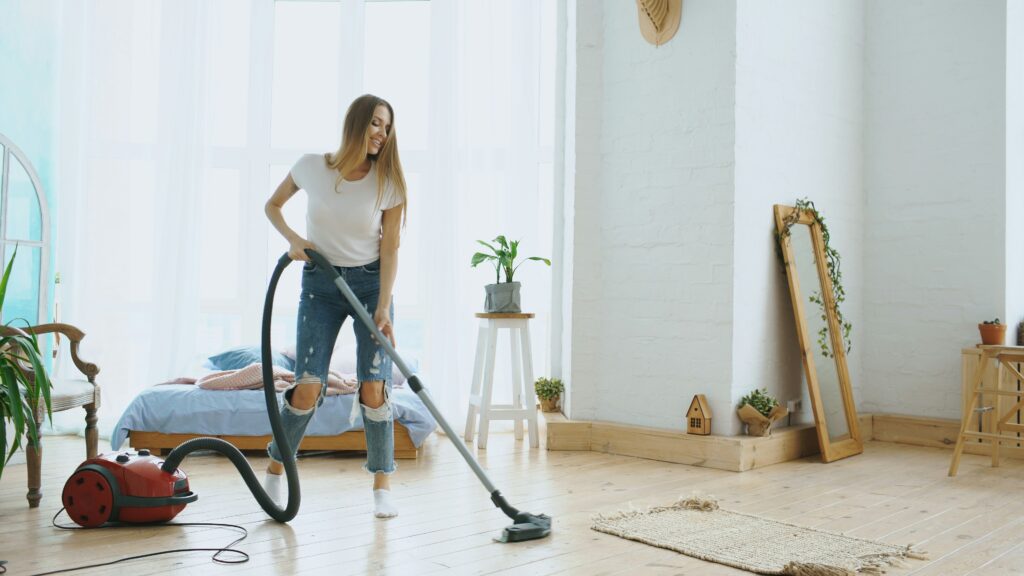
 There are many important conversations couples should have before building a life together.
Money.
Children.
Religion.
Career goals.
Where you want to live.
And apparently, whether leaving one spoon in the sink overnight constitutes a perfectly normal human activity or the beginning stages of societal collapse.
Because nothing reveals differences between two people quite like sharing a home.
One person walks into the living room and sees a perfectly acceptable room.
The other walks into the exact same room and sees three pillows that need repositioning, a blanket that should be folded, a glass that belongs in the kitchen and evidence that civilization has completely fallen apart.
Neither person necessarily understands how the other can possibly see things differently.
Welcome to domestic partnership.
“Clean” Is Surprisingly Subjective
Most of us assume our definition of clean is simply what clean means.
It isn’t.
Our standards are often influenced by how we grew up.
Maybe your mother cleaned every Saturday morning and nobody was allowed to do anything until the house smelled like lemon cleaner.
Maybe your partner grew up in a home where dishes sometimes stayed in the sink overnight and nobody considered it an emergency.
One person may associate cleanliness with peace, comfort and order.
Another may view household chores as tasks that need to be completed eventually but don’t deserve immediate attention.
Neither automatically makes someone a better person.
The challenge begins when different standards create unequal labor, resentment or disrespect.
The Cleaner Partner Shouldn’t Automatically Become the Cleaner
This happens frequently.
One partner notices mess sooner, so that person cleans it.
They notice laundry piling up, so they wash it.
They see the bathroom needs attention, so they clean it.
Eventually, “You’re better at cleaning” becomes a convenient excuse for one person carrying most of the household labor.
No.
Noticing something first shouldn’t sentence you to doing it forever.
There’s also an invisible mental workload involved in maintaining a household: noticing supplies are running low, remembering sheets need changing, realizing the refrigerator needs cleaning, scheduling repairs, knowing when trash day is and figuring out what needs to happen before guests arrive.
When one person becomes the household manager while the other waits for instructions, resentment can grow quickly.
Stop Arguing About Whose Standard Is Correct
If you spend every disagreement trying to prove your cleanliness standard is objectively superior, you may never solve the actual problem.
Instead, establish a shared household standard.
Maybe dishes don’t have to be washed immediately after every meal, but everyone agrees the kitchen will be reset before bed.
Perhaps the house doesn’t need vacuuming daily, but you agree it happens twice a week.
Maybe your partner doesn’t care whether decorative pillows are arranged perfectly. If that detail matters specifically to you, it may reasonably remain your preference rather than becoming a mandatory household rule.
Not every personal preference has to become a shared obligation.
The goal is distinguishing between reasonable household maintenance and individual perfectionism.
Divide Responsibility, Not “Helping”
Language matters.
If two adults live in a home, one adult shouldn’t be “helping” the other maintain it.
You both live there.
Instead of one partner being the household CEO who delegates tasks, divide areas of ownership.
One person might handle laundry and bathrooms while another manages the kitchen and floors.
Maybe one handles grocery shopping while the other handles meal cleanup.
The exact arrangement matters less than whether both people believe it is fair.
And fair does not always mean 50/50 every single day.
There will be seasons when one partner is overwhelmed at work, pregnant, sick, grieving, studying, caregiving or simply struggling. Healthy relationships allow temporary adjustments.
The important word is temporary.
A difficult week shouldn’t quietly become a permanent arrangement where one person carries everything.
Don’t Weaponize Incompetence
“I don’t know how.”
There are legitimate situations where one partner genuinely doesn’t know how to perform a household task.
Fortunately, we live in the era of online tutorials.
Adults can learn.
A badly folded towel is one thing. Repeatedly doing a task carelessly because you know your partner will eventually take over is another.
That behavior sends a message:
My time is more valuable than yours.
And that’s why arguments about dishes often aren’t really about dishes.
They’re about consideration.
The Cleaner Partner Has Responsibilities Too
There is another side to this conversation.
If you have extremely specific standards, your partner may never be able to satisfy them.
If towels must be folded exactly one way, countertops must be completely empty, cans must face forward and nobody can sit on the couch after you’ve arranged the pillows, you may need to ask whether some expectations belong to the household or specifically to you.
Your partner should contribute.
But contribution doesn’t always mean doing everything exactly the way you would.
If the bathroom is genuinely clean, re-cleaning it because it wasn’t done according to your personal method can create frustration too.
Sometimes “different” isn’t the same as “wrong.”
Have the Conversation Before You’re Furious
Don’t wait until you’re angrily banging cabinet doors at 11:37 p.m.
Choose a neutral time.
Explain what is bothering you without turning the conversation into an indictment of someone’s entire character.
Instead of:
“You never clean anything.”
Try:
“I feel overwhelmed because I’ve been handling the kitchen, laundry and bathrooms most weeks. We need a better division of responsibilities.”
Specific problems are easier to solve than sweeping accusations.
A Clean Home Shouldn’t Cost You a Peaceful Relationship
Your home should function for the people who live inside it.
That may require compromise.
The neat partner may need to loosen certain preferences.
The messier partner may need to raise their standard.
Both need to recognize that maintaining a shared space is part of sharing a life.
Because eventually, the argument isn’t about whether a coffee cup stayed on the table overnight.
It is about whether both people feel considered.
And that’s the standard that matters most.
Connected Woman Question: If you live with a partner, are your definitions of “clean” similar—or hilariously different?
Discover more from Connected Woman Magazine
Subscribe to get the latest posts sent to your email.