
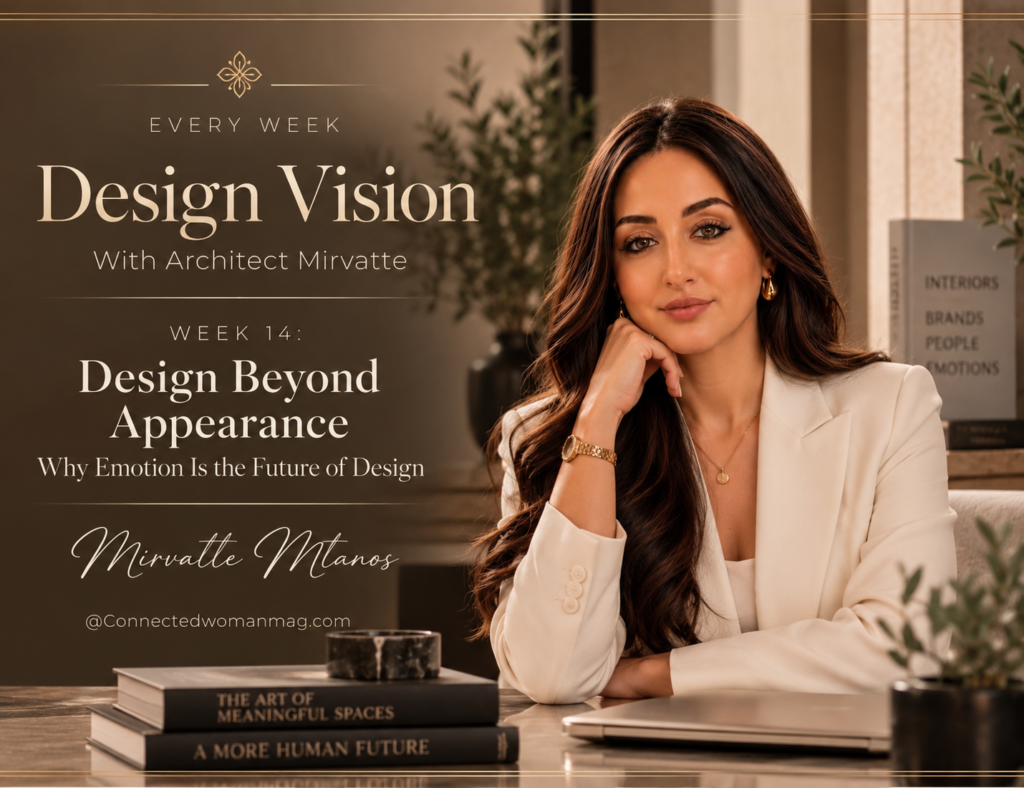
 We often describe design through what we can see: color, materials, furniture, lighting, typography, composition.
But the strongest design is rarely remembered only because it looked beautiful.
It is remembered because it made us feel something.
A space can make us feel calm before we even understand why. A brand can feel trustworthy, sophisticated, warm, or distant within seconds. A room can create comfort, confidence, intimacy, energy, or belonging without saying a single word.
This is why I believe the future of design is not simply visual.
It is emotional.
We often describe design through what we can see: color, materials, furniture, lighting, typography, composition.
But the strongest design is rarely remembered only because it looked beautiful.
It is remembered because it made us feel something.
A space can make us feel calm before we even understand why. A brand can feel trustworthy, sophisticated, warm, or distant within seconds. A room can create comfort, confidence, intimacy, energy, or belonging without saying a single word.
This is why I believe the future of design is not simply visual.
It is emotional.
Design Begins With the Human Experience
Before choosing materials, colors, furniture, or decorative details, there is a more important question: How should the person experiencing this design feel? For me, this question changes everything. A home should not simply reflect a style. It should reflect the life, personality, memories, and rhythm of the people living inside it. A restaurant should not only serve food in a beautiful environment. Its atmosphere should become part of the experience. A workplace should support focus, confidence, communication, comfort, and productivity. A brand should communicate more than a name. It should create a feeling that people recognize and remember. When we begin with human experience, every design decision becomes more intentional.The Psychology Behind What We See
Our surroundings influence us constantly, often without us consciously realizing it. Lighting can make a space feel peaceful or dramatic. Texture can create warmth, softness, or refinement. Proportion can make us feel protected or exposed. Color can affect mood, energy, and perception. The movement through a space can create ease, curiosity, or tension. The same principle applies to visual identity. Typography can feel elegant, playful, authoritative, modern, or traditional. A color palette can change the perceived personality of an entire brand. Even the amount of empty space within a design influences whether it feels luxurious, crowded, calm, or energetic. Design therefore sits at the intersection of aesthetics and psychology. We are not simply arranging elements. We are shaping perception.Luxury Is Becoming More Personal
For many years, luxury was often communicated through expensive materials, decorative richness, and visible status. Today, I believe people are searching for something deeper. True luxury is becoming personal. It is the feeling that something has been considered specifically for you. It is a space that understands your lifestyle rather than simply following a trend. It is a brand identity that feels distinctive rather than copied from what is currently popular. It is craftsmanship, meaning, detail, comfort, and individuality. This is why I have never believed that great design should depend entirely on trends. Trends change quickly. Identity lasts. The strongest projects are not the ones that look like everything else at a particular moment. They are the ones that continue to feel authentic because they belong to a person, a story, or a purpose.Designing With Emotion
My own philosophy, Design With Emotion®, developed from this belief. For me, every meaningful design should answer three questions: What should people see? What should they feel? What should they remember? When these three elements work together, design moves beyond decoration. It begins to communicate. A beautiful interior may attract attention, but an emotionally meaningful interior creates attachment. A beautiful logo may be noticed, but a meaningful identity creates recognition. This emotional layer is what transforms design from something people simply observe into something they experience.When Interior Design and Branding Speak the Same Language
One of the most interesting areas of design today is the growing connection between interior architecture and brand identity. Businesses are no longer experienced only through logos, advertisements, or websites. They are experienced physically. A customer enters a restaurant, boutique, hotel, clinic, or showroom and immediately begins forming an impression. The colors, lighting, materials, signage, music, packaging, typography, and layout all communicate something. When these elements are disconnected, the brand experience feels fragmented. When they are designed around one clear emotional direction, the experience becomes much stronger. The interior becomes an extension of the brand. The brand becomes part of the space. And the customer does not simply see the identity. They feel it.Technology Will Change Design — But Humanity Will Define It
Artificial intelligence and digital tools are transforming the creative industries. Designers can visualize ideas faster, explore more possibilities, and communicate concepts in ways that were impossible only a few years ago. These tools are powerful. But they also remind us of something important. Technology can generate options. It can generate images. It can accelerate processes. But meaningful design still requires understanding. Understanding people. Understanding culture. Understanding emotion. Understanding why one solution feels right while another feels empty. The designer of the future will therefore need more than technical ability. The designer will need empathy, observation, curiosity, and the ability to translate human experience into visual and spatial language.Design That People Remember
We live in a world filled with images. We see beautiful interiors every day. We scroll past thousands of carefully designed brands. Beauty alone is no longer enough to create lasting impact. The question is no longer only: “Does this look good?” The more meaningful question is: “Does this connect?” Because when design connects with emotion, identity, and experience, it becomes more than something we look at. It becomes something we remember. And perhaps that is where the true future of design begins.Discover more from Connected Woman Magazine
Subscribe to get the latest posts sent to your email.