
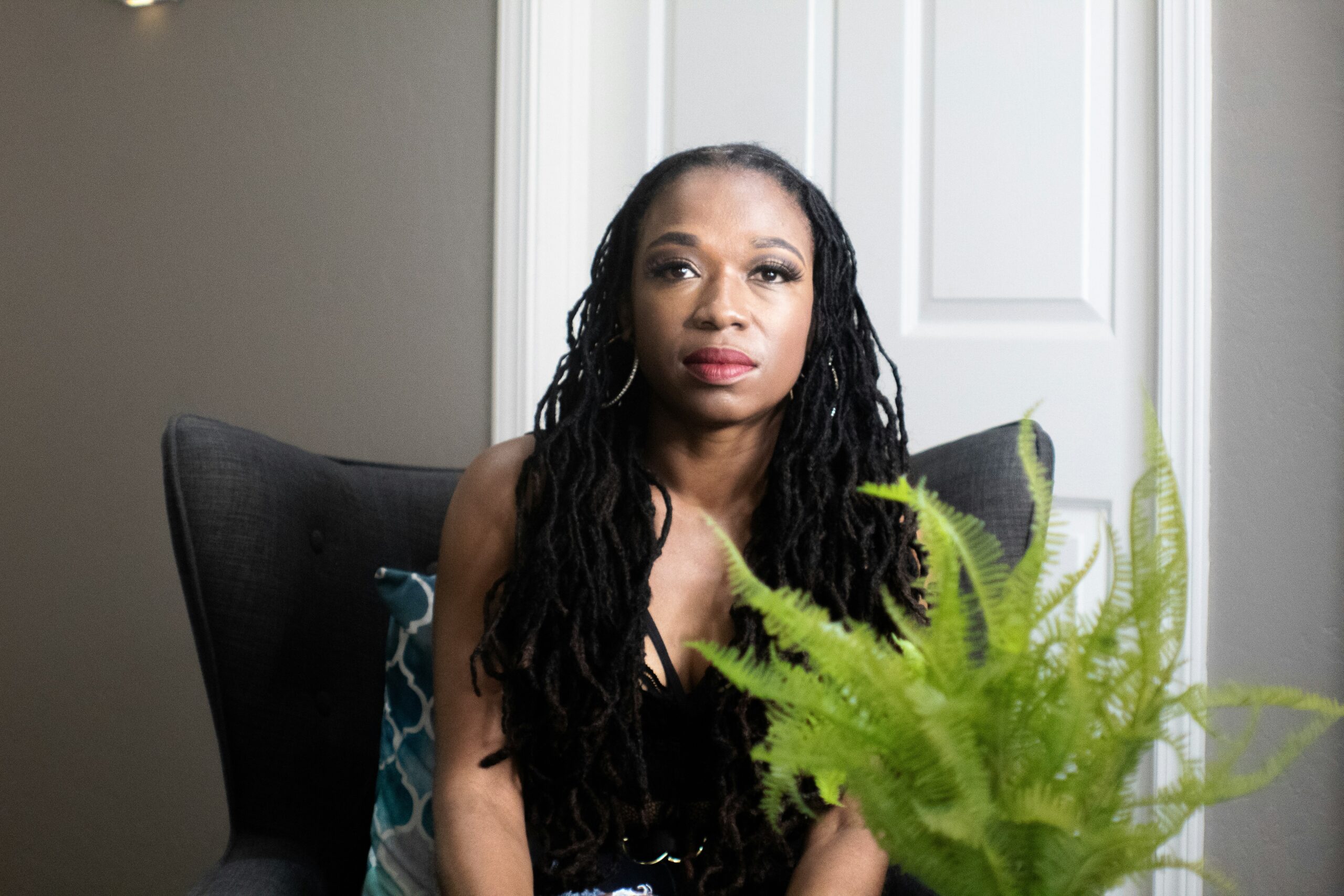
There can be a quiet sense of relief when a Black woman walks into a new workplace and sees another Black woman.
Especially when there aren’t many of us in the room.
You notice her.
She notices you.
Maybe there is a smile.
A nod.
A quick conversation in the break room.
And somewhere in the back of your mind, you may think:
Okay. At least there’s somebody here who might understand.
Understand what?
Maybe what it feels like to be the only Black woman in a meeting.
Maybe the calculation behind deciding whether to address something offensive or let it go.
Maybe why somebody repeatedly touching your hair is not a compliment.
Maybe why being called “articulate” for the seventh time doesn’t necessarily feel flattering.
Maybe the difference between being assertive and being labeled aggressive.
Maybe why you’re exhausted from code-switching.
Maybe why being mistaken for the only other Black woman in the department—who looks absolutely nothing like you—isn’t funny anymore.
You may hope another Black woman will be someone you don’t have to explain everything to.
A familiar face.
An ally.
Perhaps even a safe space.
And sometimes?
She is.
There are Black women who will quietly tell you what you need to know.
They will explain the culture.
Warn you about the politics.
Correct your name when someone mispronounces it.
Say, “She wasn’t finished,” when you’re interrupted.
Mention your contribution when somebody else attempts to claim it.
Tell you about an opportunity.
Recommend you for a position.
Celebrate your promotion.
Pull you aside when you need honest feedback.
Speak your name in rooms you haven’t entered yet.
Those women exist.
And when Black women genuinely support one another professionally, it can be powerful.
But there is another lesson many Black women eventually learn:
Shared skin does not automatically mean shared values.
And sometimes the woman you assumed would understand you becomes the person you most need to watch.
All skinfolk aren’t kinfolk.
Familiarity Is Not the Same as Safety
Seeing someone who looks like you can create an immediate sense of familiarity.
But familiarity is not trust.
Trust must still be earned.
You don’t know someone’s character because you know her complexion.
You don’t know her ethics.
Her ambition.
Her insecurities.
Her relationship with competition.
Her workplace survival strategy.
Her views about other Black women.
Her willingness to challenge unfairness.
Her willingness to participate in unfairness if doing so benefits her.
Race can create shared experiences.
It does not create identical personalities.
Black women are not a monolith.
We have different backgrounds, values, temperaments, politics, priorities, experiences, and approaches to work.
We can have solidarity.
We can also have conflict.
Both things can be true.
The mistake is assuming someone is emotionally or professionally safe before her behavior has demonstrated that she is.
Sometimes You Discover She Has Distanced Herself From Other Black Women to Survive
This can be painful to witness.
You enter a workplace and meet a Black woman who has been there for years.
You assume she will help you navigate the environment.
Instead, she seems almost irritated by your presence.
She corrects you more harshly than everyone else.
She watches you more closely.
She distances herself publicly.
She seems uncomfortable when you mention race.
She may even participate in stereotypes about Black employees.
Why?
There can be many reasons.
Sometimes a Black woman has survived a predominantly white workplace by making herself the exception.
She may have consciously or unconsciously built professional safety around the idea:
I’m not like those other Black women.
Then you arrive.
Confident.
Qualified.
Visible.
Perhaps unapologetically Black.
And your presence disrupts a position she has spent years creating.
That does not excuse harmful behavior.
But it can help explain why solidarity cannot simply be assumed.
The “Only One” Mentality Can Create Competition
When workplaces have historically created limited opportunities for Black women, scarcity can become part of the culture.
There is one leadership opportunity.
One “diversity” seat.
One highly visible project.
One Black woman who gets invited into certain rooms.
Instead of questioning why opportunities feel artificially limited, employees may begin competing for the one available spot.
And when another Black woman enters the workplace, she isn’t automatically viewed as community.
She is viewed as competition.
This is how systems can encourage people from marginalized groups to police and compete with one another.
But another Black woman’s success does not automatically reduce yours.
There should be room for more than one.
More than one Black woman can be talented.
More than one can lead.
More than one can receive recognition.
More than one can be promoted.
More than one can be brilliant in the same room.
We should be questioning environments that make us feel otherwise.
Sometimes It Is Plain Old Jealousy—and Race Has Nothing to Do With It
We also need to be careful not to over-intellectualize everything.
Sometimes somebody simply doesn’t like you.
Sometimes she is competitive.
Sometimes she is jealous.
Sometimes you are.
Sometimes personalities clash.
Sometimes one woman wants the promotion the other woman received.
Sometimes somebody is difficult.
Not every disagreement between two Black women is a racial case study.
Black women are allowed to have ordinary interpersonal conflict.
We don’t have to turn every disagreement into:
“Why can’t Black women support each other?”
Nobody asks why all white women aren’t best friends.
We should not burden Black women with an expectation of universal friendship simply because we share a racial identity.
The issue isn’t that every Black woman must like every other Black woman.
The issue is whether we can disagree without weaponizing racial stereotypes, sabotaging one another, or participating in systems that harm women who look like us.
The Betrayal Can Feel Different
A workplace slight from another Black woman can sting differently because you expected understanding.
Maybe she calls you “aggressive” when you were simply disagreeing.
Maybe she tells leadership you’re “intimidating.”
Maybe she complains that your hair is “unprofessional.”
Maybe she participates in tone policing.
Maybe she tells you to make yourself smaller because she has learned that is how Black women survive there.
Maybe she repeats something you shared privately about experiencing bias.
Maybe she sits silently while something inappropriate happens and later says:
“Girl, I knew exactly what they were doing.”
And you’re thinking:
Then why didn’t you say anything?
The disappointment isn’t necessarily because she owed you unconditional allegiance.
It comes from believing someone who understands the stereotype would be less willing to weaponize it.
When she does anyway, it can feel particularly painful.
Black Women Can Participate in Bias Too
Being affected by racism does not automatically make someone incapable of perpetuating bias.
People can internalize messages from the cultures around them.
Colorism.
Texturism.
Classism.
Respectability politics.
Bias against certain accents or dialects.
Ideas about which Black women are “professional.”
Judgments based on hair.
Skin tone.
Body type.
Neighborhood.
Education.
Income.
Cultural expression.
Some Black women have experienced being treated differently by other Black people because they are darker-skinned.
Some lighter-skinned Black women have experienced assumptions about their identity or belonging.
Some natural-haired women are judged.
Some women who wear wigs or extensions are judged.
Some women are considered “too Black.”
Others “not Black enough.”
We can reproduce hierarchies that harm our own communities.
Shared identity does not automatically eliminate bias.
Self-examination is still necessary.
Be Careful With the Workplace Sisterhood Speed Run
You’ve known her four days.
Please stop telling her everything.
Yes, she is Black.
Yes, she laughed at the same joke.
Yes, you discovered you both grew up watching the same television shows.
Yes, she complimented your braids.
This is still your coworker.
Slow down.
Workplace friendships can become genuine friendships, including beautiful lifelong ones.
But allow relationships to develop.
Observe.
Does she gossip?
Does she repeat private information?
How does she discuss other coworkers?
Does she tell you everybody else’s business during your first week?
Because if she gives you everyone else’s confidential information, please understand that yours may eventually become part of the orientation package for the next new employee.
Watch behavior.
Trust patterns.
Not familiarity.
Do Not Hand Someone Ammunition Because You Mistook Cultural Connection for Confidentiality
Be thoughtful about what you share at work.
Your frustrations with your supervisor.
Your plans to leave.
Your complaints about coworkers.
Your financial situation.
Your personal relationships.
Your opinions about leadership.
Your job applications.
Your disciplinary issues.
Your grievances.
Your workplace accommodations.
Your private life.
You don’t have to become paranoid.
But professional boundaries matter.
A coworker can feel like a sister on Tuesday and become your supervisor on Friday.
Now she knows everything.
Maintain enough boundaries that a workplace relationship changing does not leave you professionally exposed.
Watch What Happens When You Succeed
Success reveals people.
You get praised in a meeting.
How does she respond?
You receive the promotion.
Does her energy change?
You get selected for a project.
Does she congratulate you—or immediately explain why she should have received it?
Your work receives visibility.
Does she support you?
Or suddenly begin highlighting every mistake you make?
A colleague does not need to throw you a parade every time something goes well.
But repeated discomfort with your success can tell you something.
Pay attention without becoming obsessed.
Sometimes a coworker is simply having a bad day.
Patterns matter more than isolated moments.
Also Watch Yourself
This conversation cannot only point outward.
Are you a safe Black woman for other Black women at work?
Do you assume another Black woman is competition?
Do you withhold information that could help her?
Do you judge her more harshly than others?
Do you describe her as “loud,” “ghetto,” “angry,” “difficult,” or “unprofessional” for behavior you tolerate from someone else?
Do you expect perfection because you fear her mistakes will reflect on you?
Do you resent her because leadership seems to favor her?
Do you participate when others criticize her unfairly because you want to prove you’re objective?
Do you tell yourself:
“I had to figure it out myself, so she can too”?
Sometimes the unsafe Black woman in the workplace might be us.
That’s worth examining.
You Do Not Have to Protect Bad Behavior Because Someone Is Black
Solidarity does not mean dishonesty.
If another Black woman is bullying employees, behaving unethically, mistreating staff, or abusing authority, you do not have to defend her because she’s Black.
Accountability is not betrayal.
Representation should not mean:
“Support every Black woman regardless of behavior.”
It can mean ensuring people are treated fairly.
That includes fair accountability.
You can want Black women to succeed while acknowledging that every Black woman in leadership will not be a good leader.
We are human.
Some of us are excellent bosses.
Some of us should not supervise a houseplant.
Equality means we get the full range.
But Make Sure You’re Not Holding Her to a Higher Standard
This is where discernment matters.
Would you call the same behavior “aggressive” if a white colleague did it?
Would you describe a man as “confident” for the exact behavior you’re calling “arrogant” in her?
Are you expecting another Black woman to be flawless because you believe her mistakes reflect on all of you?
Black women should not have to achieve perfection to deserve fairness.
Accountability and bias can coexist.
Check both.
Find Safe People, Not Just Familiar People
Your safest workplace ally may be another Black woman.
She may be Latina.
Asian.
White.
A man.
Older.
Younger.
Someone from a completely different background.
Safety is demonstrated through behavior.
Who keeps confidences?
Who gives credit?
Who tells the truth?
Who doesn’t participate in bullying?
Who advocates consistently?
Who treats people respectfully when leadership isn’t watching?
Who can disagree without becoming vindictive?
Who doesn’t require you to diminish yourself to maintain the relationship?
Those are your people.
Workplace community can cross identity lines without pretending identity doesn’t matter.
Build Black Women’s Professional Community Beyond Your Workplace
If you don’t have supportive Black women where you work, don’t conclude they don’t exist.
Find community elsewhere.
Professional organizations.
Industry associations.
Mentorship groups.
Networking events.
Conferences.
Alumni networks.
Online professional communities.
Former coworkers.
Black women in adjacent industries.
You may need a professional sisterhood that isn’t tied to your employer.
That can be especially valuable because those relationships exist outside your workplace hierarchy.
You can receive perspective from women who understand certain experiences but are not entangled in your office politics.
When Another Black Woman Hurts You, Address the Behavior—Not Her Entire Identity
If appropriate and safe, be specific.
Not:
“I thought Black women were supposed to support each other.”
Try:
“When I shared that information privately, I expected it to remain confidential.”
Or:
“I noticed you described me as aggressive after I disagreed in the meeting. I’d like to understand what specific behavior you were referring to.”
Keep the focus on conduct.
Specificity creates room for accountability.
It also prevents one workplace conflict from becoming a referendum on Black womanhood.
You Are Allowed to Distance Yourself
Not every relationship needs confrontation.
Sometimes you simply adjust access.
Remain cordial.
Remain professional.
Stop oversharing.
Communicate about work.
Document important matters.
Build other relationships.
Do your job.
You don’t need to create a dramatic workplace divorce.
You don’t have to announce:
“I thought you were my sister, but I see how you are!”
This is not reality television.
Sometimes the most powerful response is quietly updating your understanding of the relationship.
Coworker.
Not confidante.
Not friend.
Not safe space.
Coworker.
And that is enough.
Don’t Let One Experience Make You Distrust Every Black Woman
This matters.
You trusted one woman.
She betrayed you.
Now every Black woman who enters the workplace is met with suspicion.
Be careful.
Protection can become isolation.
One person’s behavior does not represent an entire group.
The lesson isn’t:
“Never trust Black women at work.”
The lesson is:
Don’t automatically trust anyone solely because they share an identity with you.
Let people demonstrate who they are.
Some Black women will disappoint you.
Some will become your greatest professional champions.
Some will become lifelong friends.
Some will remain colleagues.
Some will teach you exactly what not to do.
Leave room for all possibilities.
And When You Find a Safe Black Woman at Work, Value Her
Because those relationships can be extraordinary.
The woman who can glance at you across a conference table and communicate an entire paragraph without moving her lips.
The mentor who tells you:
“Apply for it. You’re ready.”
The coworker who refuses to let someone take credit for your idea.
The supervisor who gives you honest feedback because she wants you to grow.
The colleague who checks on you after a difficult meeting.
The woman who says your name when opportunities arise.
The one who celebrates your promotion without making it about herself.
The one who tells you when you’re wrong without humiliating you.
The one who understands that supporting you doesn’t require shrinking herself.
Protect those relationships.
Reciprocate.
Be that woman for somebody else.
Sisterhood Is a Practice, Not a Skin Tone
Perhaps that is the real lesson.
Sisterhood isn’t automatic.
It is something we practice.
Through integrity.
Advocacy.
Honesty.
Accountability.
Respect.
Generosity.
Boundaries.
Celebration.
Fairness.
Another Black woman does not owe you friendship simply because she is Black.
But neither should either of you feel compelled to participate in systems, stereotypes, or workplace politics that harm the other simply to secure your own position.
There is room for discernment and solidarity.
You can recognize shared experiences without assuming shared character.
You can support Black women without blindly defending every Black woman.
You can protect yourself without becoming suspicious of everyone who looks like you.
And you can be disappointed by one Black woman without turning that disappointment into a belief about Black women collectively.
Sometimes another Black woman will be your safest person in the building.
Sometimes she won’t.
The wisdom is learning not to decide which one she is based on her skin.
Watch what she does.
And while you’re watching?
Make sure your own behavior is showing other Black women that you are safe too.
Your Turn
Have you ever entered a workplace and automatically felt relieved to see another Black woman—only to later realize that she was not a safe space for you?
Maybe you experienced competition, gossip, colorism, respectability politics, sabotage, favoritism, or simply learned that sharing the same racial identity did not mean you shared the same values.
Or perhaps you’ve experienced the opposite: another Black woman became your mentor, advocate, protector, professional sister, or one of the safest people you’ve ever worked beside.
Share your experience in the comments. What taught you that all skinfolk aren’t necessarily kinfolk? How do you determine who is safe at work now? And most importantly, what can Black women do to create healthier professional relationships with one another without expecting automatic friendship or ignoring the need for accountability?
Your experience may help another Black woman understand that discernment is not disloyalty—and genuine sisterhood is not created by simply looking alike. It is demonstrated by how we show up for one another.Discover more from Connected Woman Magazine
Subscribe to get the latest posts sent to your email.