
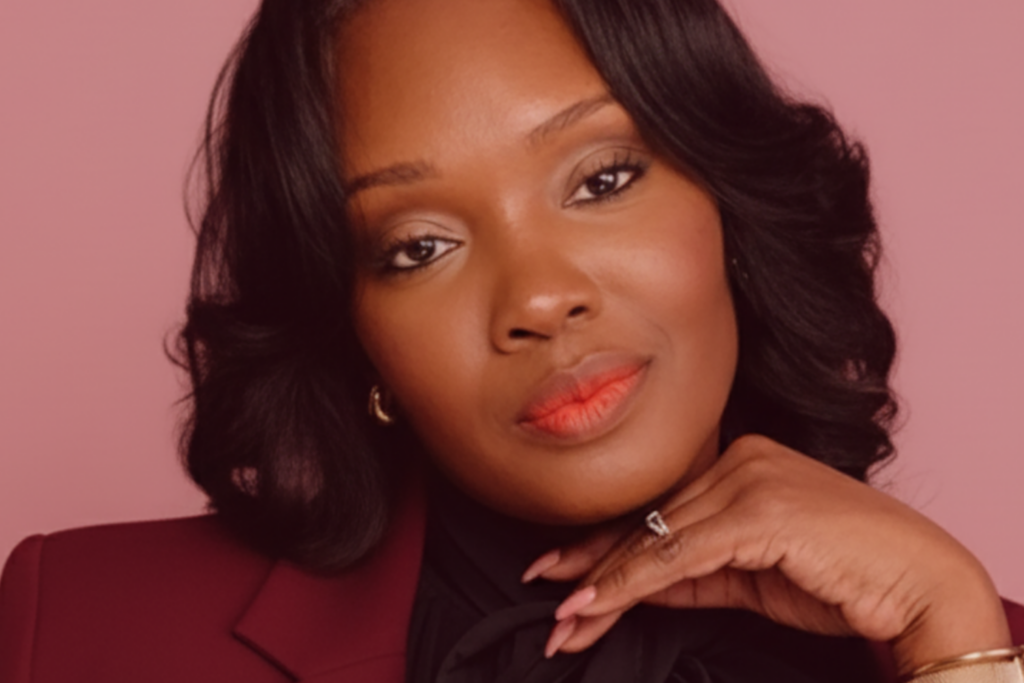
 In a world where many women are accomplished professionally yet still navigating uncertainty in love, Arnitris L. Strong is helping shift the conversation from guesswork to intentionality. As an executive relationship strategist, author, and host of Executive Lessons in Love, she explores how the same wisdom used to build successful careers, businesses, and leadership strategies can also transform the way women approach relationships. Through thoughtful conversations, direct insight, and her signature framework, Divine Relationship Patterns™, Arnitris challenges women to stop relying solely on hope and begin leading their love lives with discernment, alignment, and clarity.
In this feature, Arnitris shares how a simple conversation about marketing unexpectedly inspired her to apply business frameworks to dating and relationships, ultimately leading to the creation of her Divine Relationship Design™ approach. She also opens up about the lessons she has learned from interviewing accomplished women who often realize that values, consistency, compatibility, and boundaries matter just as much in love as they do in business. From recognizing unhealthy patterns early to understanding the emotional cost of delaying difficult decisions, Arnitris offers practical wisdom for women ready to elevate the way they think about relationships and themselves. Let’s meet her…
Your work bridges the gap between executive-level thinking and personal relationships. What inspired you to apply business frameworks to love, and why do you believe this approach resonates with so many women?
I was actually inspired to explore business approaches to love by a conversation with a friend. After I created a framework for marketing, a friend said she could use that same system for dating. That stayed with me.
It made me realize so many women know how to succeed professionally, build businesses, lead teams, and make wise decisions in every other area of life; but when it comes to love, many have been taught to rely on hope instead of wisdom.
Women don’t need more dating tips. They need self-awareness, discernment, and a process for understanding how they are uniquely designed to love and be loved.
There have been several iterations of that process, but it has led me to create the Divine Relationship Design™, a framework that helps women understand how they naturally connect, communicate, and thrive in partnership. While my work focuses on women, the method applies to both men and women, including patterns complement each other,
It resonates because accomplished women are tired of confusion and guesswork. They want love that is approached with intention, true understanding, and peace.
As the host of Executive Lessons in Love, you extract relationship insights from accomplished women. What are some of the most surprising “business lessons” that consistently show up in their love lives?
I’ve met many brilliant women who can lead companies, manage teams, and make high-level decisions, yet still second-guess themselves in relationships.The overarching lesson is that the same principles that create success professionally also matter personally. Values, alignment, consistency, and long-term vision are important for relationship success, too. In business, people understand that partnerships require compatibility. In love, many ignore those principles and hope chemistry will carry what character cannot.
I also see that boundaries are a form of leadership. Women who lead well in the boardroom often discover they must lead themselves emotionally with that same understanding, courage, and self-respect.
Perhaps most importantly, I’ve learned that the problem that most women face is waiting too long to make a decision about whether a relationship will work for her life and how she loves long-term. The longer she delays that decision even when she has all of the information to make it, the greater the attachment grows and the harder it becomes to walk away. In my conversations, I have learned that most women knew early on that the relationship wasn’t a good fit, but they stayed hoping things would change instead of making the decision early.
You speak often about patterns in relationships. How can women begin to identify the difference between a one-time experience and a recurring pattern that needs deeper attention?
A one-time experience may disappoint you. But, a pattern will keep repeating until it is acknowledged – not just in love,but in every area of our lives.
If a woman consistently finds herself entertaining unavailable partners, overextending to keep love, ignoring red flags, settling for inconsistency, or leaving relationships emotionally depleted, she is likely dealing with a pattern rather than coincidence.
Patterns are not meant to shame us—they are meant to show us where healing, wisdom, and change are needed.
Relationships are mirrors that reflect the parts of us that we often hide in the shadows. I encourage women to ask, What keeps repeating, and what part of me is ready to grow? That question shifts you from blaming circumstances to building awareness.
When there is true awareness, frustration no longer has the final word. Wisdom does.
Your framework, Divine Relationship Patterns™, has become central to your work. Can you break down what this means and how it helps women make more aligned relationship decisions?
Divine Relationship Design™ is rooted in the understanding that each person has a unique design for how they love, communicate, build trust, and experience connection.
Many people enter relationships assuming everyone gives and receives love the same way. They do not. Two genuinely good people can care deeply for one another and still struggle—not because love is absent, but because it is being expressed and interpreted differently.
Love languages introduced an important conversation about how people feel cared for. Divine Relationship Design™ builds on that kind of awareness by examining the broader relationship patterns that influence how people connect, communicate, and choose partnership.
My framework helps women identify their natural relationship patterns, emotional needs, strengths, blind spots, and compatibility dynamics. It gives them a process for what works, wisdom around what does not, and understanding about what aligns.
Instead of choosing based only on chemistry or potential, women learn to choose from self-awareness, discernment, and truth.
Many women struggle with second-guessing themselves in love. What are the root causes of this, and how can they begin to rebuild trust in their own judgment?
Second-guessing grows out of past disappointments, misconceptions about #relationshipgoals, ignored intuition, people-pleasing, or a habit of prioritizing someone else’s needs above your own truth.
When a woman repeatedly talks herself out of what she knows deep down, self-trust begins to weaken. She starts looking outside herself for answers that her God-given intuition has already been trying to give her.
Rebuilding trust starts with honoring the small truths daily. Pay attention to what feels peaceful, what feels draining, what is consistent, and what constantly requires excuses.
Trust yourself when something feels off. Trust yourself when something feels right. Trust yourself enough to pause when understanding is missing.
Self-trust is rebuilt one honest decision at a time.
You are known for your direct approach to standards. How do you help women distinguish between having high standards versus unrealistic expectations?
High standards are rooted in values, character, consistency, emotional maturity, and mutual respect. Unrealistic expectations are often rooted in social media influence, fantasy, control, or the desire for someone to perform instead of genuinely partner.
Wanting honesty, kindness, commitment, and healthy communication is not asking for too much—it is asking for what sustains love.
Expecting perfection, mind-reading, effortless compatibility, or a relationship that never requires growth is unrealistic.
I help women understand that standards are meant to protect your future, while unrealistic or unspoken expectations can sabotage connection. The wisdom is knowing the difference between what is essential and what is just a preference. The true test is understanding what is something that requires grace and a conversation and what is misalignment.
For example, I see women complaining that some men only communicate through text when they prefer a phone conversation. How is he to know that if it isn’t expressed? That situation requires conversation and grace. If after having the conversation he continues to communicate primarily through text, then that is misalignment.
A woman should never lower her standards; but she may need to refine her expectations.
In your experience, how does a woman’s professional success influence her relationship choices—both positively and negatively?
A woman’s professional success can be a tremendous asset because it develops confidence, discipline, resilience, discernment, and clarity. Those qualities can serve relationships beautifully.
Success often teaches a woman how to lead, solve problems, build stability, and persevere—all of which can strengthen a healthy partnership.
The challenge comes when success has required hyper-independence, emotional
self-protection, or carrying everything alone for too long. Some women become so accustomed to being the solution that receiving support feels unfamiliar.
At times, achievement can also create pressure to choose relationships that look good on paper rather than feel aligned in reality.
The goal is never to shrink a woman’s success. It is to allow success to be paired with softness, wisdom, vulnerability, and healthy interdependence.
A powerful woman does not need to become less strong to be loved well.
The idea of “pursuit” in relationships can be misunderstood. How do you define healthy pursuit, and what should women be paying attention to in the early stages of dating?
Healthy pursuit is intentional effort expressed through consistency, understanding, and mutual respect. It is the steady desire to get to know someone and move connection forward in a healthy way.
Chasing is different. Chasing usually means one person is running after someone who is unavailable, inconsistent, or uninterested. When someone has to be chased, it signals imbalance rather than genuine readiness for partnership.
I think many women have been taught to create unnecessary distance or play hard to get as a way to test intention. But when a woman is genuinely interested, healthy connection looks less like games and more like reciprocity.
If a man is showing sincere effort, there should be no need for either party to chase the other.Women should be willing to mirror healthy effort with openness, responsiveness, and consistency of her own.
In the early stages of dating, women should pay attention to consistency, emotional steadiness, communication, and most importantly whether words and actions agree.
Interest is easy to perform. Intention reveals itself over time.
Your upcoming Love Elevated Little Black Book Collection sounds like a powerful guide. What gaps in modern relationship advice are you aiming to fill with this series?
A lot modern relationship advice focuses on tactics like what to text, how to attract someone, how to keep attention, or how to appear desirable. While those conversations may be popular, they usually leave women disconnected from themselves.
My work focuses on identity, discernment, healing, and intentional partnership. I believe lasting love is built less on performance and more on self-awareness, emotional wisdom, and aligned choices.
The Love Elevated Little Black Book Collection is also a playful nod to the “little black books” men were once known for keeping—the private playbooks filled with names, access, and dating secrets. I wanted to reclaim that idea and elevate it into something far more valuable: wisdom, standards, and insight that truly serve women.
This collection is designed to help women move beyond surface-level dating strategies into deeper relationship wisdom they can actually build a life on.
I want women to stop chasing outcomes and start becoming women who recognize healthy love when it arrives, receive it well, and reciprocate it wisely
Emotional wisdom is a key theme in your work. How would you define emotional wisdom, and how can women cultivate it in practical, everyday ways?
Emotional wisdom is the ability to feel deeply without being led blindly by emotion.
It means recognizing what you feel, honoring it honestly, and still making decisions rooted in truth rather than impulse, fear, or temporary discomfort.
Part of emotional wisdom is learning the difference between primary and secondary emotions. Many times, the feeling we express first is not the truest feeling. Anger, irritation, or defensiveness may be the secondary emotion, while hurt, sadness, fear, or disappointment is the deeper emotion underneath.
For example, it can feel easier to say, “I’m angry,” than to admit, “I’m hurt.”
When a woman learns to identify the true emotion beneath the reaction, she can make healthier and more informed decisions.
Emotional wisdom grows when women slow down, observe patterns, name emotions honestly, set boundaries, and choose peace over urgency.
Mature love requires both heart and wisdom.
What are some of the most common relationship cycles you see women repeating, even when they are highly accomplished in other areas of life?
I often see women confusing potential with readiness, chemistry with compatibility, attention with intention, and patience with tolerating misalignment.
I also see overgiving—where a woman invests more energy trying to sustain the relationship than both people combined. She becomes the planner, the pursuer, the emotional anchor, and the one doing the labor of two.
Another common cycle is choosing what looks impressive on paper over what feels healthy in practice. Accomplishment can sometimes make women believe they should choose the “right” person rather than the aligned person.
Achievement in one area of life does not automatically heal wounds in another. Success can build confidence, but relationships reveal where deeper healing, self-trust, or emotional wisdom is still needed.
The good news is that cycles can be broken once they are recognized. Awareness is where change begins.
In a world where many women are accomplished professionally yet still navigating uncertainty in love, Arnitris L. Strong is helping shift the conversation from guesswork to intentionality. As an executive relationship strategist, author, and host of Executive Lessons in Love, she explores how the same wisdom used to build successful careers, businesses, and leadership strategies can also transform the way women approach relationships. Through thoughtful conversations, direct insight, and her signature framework, Divine Relationship Patterns™, Arnitris challenges women to stop relying solely on hope and begin leading their love lives with discernment, alignment, and clarity.
In this feature, Arnitris shares how a simple conversation about marketing unexpectedly inspired her to apply business frameworks to dating and relationships, ultimately leading to the creation of her Divine Relationship Design™ approach. She also opens up about the lessons she has learned from interviewing accomplished women who often realize that values, consistency, compatibility, and boundaries matter just as much in love as they do in business. From recognizing unhealthy patterns early to understanding the emotional cost of delaying difficult decisions, Arnitris offers practical wisdom for women ready to elevate the way they think about relationships and themselves. Let’s meet her…
Your work bridges the gap between executive-level thinking and personal relationships. What inspired you to apply business frameworks to love, and why do you believe this approach resonates with so many women?
I was actually inspired to explore business approaches to love by a conversation with a friend. After I created a framework for marketing, a friend said she could use that same system for dating. That stayed with me.
It made me realize so many women know how to succeed professionally, build businesses, lead teams, and make wise decisions in every other area of life; but when it comes to love, many have been taught to rely on hope instead of wisdom.
Women don’t need more dating tips. They need self-awareness, discernment, and a process for understanding how they are uniquely designed to love and be loved.
There have been several iterations of that process, but it has led me to create the Divine Relationship Design™, a framework that helps women understand how they naturally connect, communicate, and thrive in partnership. While my work focuses on women, the method applies to both men and women, including patterns complement each other,
It resonates because accomplished women are tired of confusion and guesswork. They want love that is approached with intention, true understanding, and peace.
As the host of Executive Lessons in Love, you extract relationship insights from accomplished women. What are some of the most surprising “business lessons” that consistently show up in their love lives?
I’ve met many brilliant women who can lead companies, manage teams, and make high-level decisions, yet still second-guess themselves in relationships.The overarching lesson is that the same principles that create success professionally also matter personally. Values, alignment, consistency, and long-term vision are important for relationship success, too. In business, people understand that partnerships require compatibility. In love, many ignore those principles and hope chemistry will carry what character cannot.
I also see that boundaries are a form of leadership. Women who lead well in the boardroom often discover they must lead themselves emotionally with that same understanding, courage, and self-respect.
Perhaps most importantly, I’ve learned that the problem that most women face is waiting too long to make a decision about whether a relationship will work for her life and how she loves long-term. The longer she delays that decision even when she has all of the information to make it, the greater the attachment grows and the harder it becomes to walk away. In my conversations, I have learned that most women knew early on that the relationship wasn’t a good fit, but they stayed hoping things would change instead of making the decision early.
You speak often about patterns in relationships. How can women begin to identify the difference between a one-time experience and a recurring pattern that needs deeper attention?
A one-time experience may disappoint you. But, a pattern will keep repeating until it is acknowledged – not just in love,but in every area of our lives.
If a woman consistently finds herself entertaining unavailable partners, overextending to keep love, ignoring red flags, settling for inconsistency, or leaving relationships emotionally depleted, she is likely dealing with a pattern rather than coincidence.
Patterns are not meant to shame us—they are meant to show us where healing, wisdom, and change are needed.
Relationships are mirrors that reflect the parts of us that we often hide in the shadows. I encourage women to ask, What keeps repeating, and what part of me is ready to grow? That question shifts you from blaming circumstances to building awareness.
When there is true awareness, frustration no longer has the final word. Wisdom does.
Your framework, Divine Relationship Patterns™, has become central to your work. Can you break down what this means and how it helps women make more aligned relationship decisions?
Divine Relationship Design™ is rooted in the understanding that each person has a unique design for how they love, communicate, build trust, and experience connection.
Many people enter relationships assuming everyone gives and receives love the same way. They do not. Two genuinely good people can care deeply for one another and still struggle—not because love is absent, but because it is being expressed and interpreted differently.
Love languages introduced an important conversation about how people feel cared for. Divine Relationship Design™ builds on that kind of awareness by examining the broader relationship patterns that influence how people connect, communicate, and choose partnership.
My framework helps women identify their natural relationship patterns, emotional needs, strengths, blind spots, and compatibility dynamics. It gives them a process for what works, wisdom around what does not, and understanding about what aligns.
Instead of choosing based only on chemistry or potential, women learn to choose from self-awareness, discernment, and truth.
Many women struggle with second-guessing themselves in love. What are the root causes of this, and how can they begin to rebuild trust in their own judgment?
Second-guessing grows out of past disappointments, misconceptions about #relationshipgoals, ignored intuition, people-pleasing, or a habit of prioritizing someone else’s needs above your own truth.
When a woman repeatedly talks herself out of what she knows deep down, self-trust begins to weaken. She starts looking outside herself for answers that her God-given intuition has already been trying to give her.
Rebuilding trust starts with honoring the small truths daily. Pay attention to what feels peaceful, what feels draining, what is consistent, and what constantly requires excuses.
Trust yourself when something feels off. Trust yourself when something feels right. Trust yourself enough to pause when understanding is missing.
Self-trust is rebuilt one honest decision at a time.
You are known for your direct approach to standards. How do you help women distinguish between having high standards versus unrealistic expectations?
High standards are rooted in values, character, consistency, emotional maturity, and mutual respect. Unrealistic expectations are often rooted in social media influence, fantasy, control, or the desire for someone to perform instead of genuinely partner.
Wanting honesty, kindness, commitment, and healthy communication is not asking for too much—it is asking for what sustains love.
Expecting perfection, mind-reading, effortless compatibility, or a relationship that never requires growth is unrealistic.
I help women understand that standards are meant to protect your future, while unrealistic or unspoken expectations can sabotage connection. The wisdom is knowing the difference between what is essential and what is just a preference. The true test is understanding what is something that requires grace and a conversation and what is misalignment.
For example, I see women complaining that some men only communicate through text when they prefer a phone conversation. How is he to know that if it isn’t expressed? That situation requires conversation and grace. If after having the conversation he continues to communicate primarily through text, then that is misalignment.
A woman should never lower her standards; but she may need to refine her expectations.
In your experience, how does a woman’s professional success influence her relationship choices—both positively and negatively?
A woman’s professional success can be a tremendous asset because it develops confidence, discipline, resilience, discernment, and clarity. Those qualities can serve relationships beautifully.
Success often teaches a woman how to lead, solve problems, build stability, and persevere—all of which can strengthen a healthy partnership.
The challenge comes when success has required hyper-independence, emotional
self-protection, or carrying everything alone for too long. Some women become so accustomed to being the solution that receiving support feels unfamiliar.
At times, achievement can also create pressure to choose relationships that look good on paper rather than feel aligned in reality.
The goal is never to shrink a woman’s success. It is to allow success to be paired with softness, wisdom, vulnerability, and healthy interdependence.
A powerful woman does not need to become less strong to be loved well.
The idea of “pursuit” in relationships can be misunderstood. How do you define healthy pursuit, and what should women be paying attention to in the early stages of dating?
Healthy pursuit is intentional effort expressed through consistency, understanding, and mutual respect. It is the steady desire to get to know someone and move connection forward in a healthy way.
Chasing is different. Chasing usually means one person is running after someone who is unavailable, inconsistent, or uninterested. When someone has to be chased, it signals imbalance rather than genuine readiness for partnership.
I think many women have been taught to create unnecessary distance or play hard to get as a way to test intention. But when a woman is genuinely interested, healthy connection looks less like games and more like reciprocity.
If a man is showing sincere effort, there should be no need for either party to chase the other.Women should be willing to mirror healthy effort with openness, responsiveness, and consistency of her own.
In the early stages of dating, women should pay attention to consistency, emotional steadiness, communication, and most importantly whether words and actions agree.
Interest is easy to perform. Intention reveals itself over time.
Your upcoming Love Elevated Little Black Book Collection sounds like a powerful guide. What gaps in modern relationship advice are you aiming to fill with this series?
A lot modern relationship advice focuses on tactics like what to text, how to attract someone, how to keep attention, or how to appear desirable. While those conversations may be popular, they usually leave women disconnected from themselves.
My work focuses on identity, discernment, healing, and intentional partnership. I believe lasting love is built less on performance and more on self-awareness, emotional wisdom, and aligned choices.
The Love Elevated Little Black Book Collection is also a playful nod to the “little black books” men were once known for keeping—the private playbooks filled with names, access, and dating secrets. I wanted to reclaim that idea and elevate it into something far more valuable: wisdom, standards, and insight that truly serve women.
This collection is designed to help women move beyond surface-level dating strategies into deeper relationship wisdom they can actually build a life on.
I want women to stop chasing outcomes and start becoming women who recognize healthy love when it arrives, receive it well, and reciprocate it wisely
Emotional wisdom is a key theme in your work. How would you define emotional wisdom, and how can women cultivate it in practical, everyday ways?
Emotional wisdom is the ability to feel deeply without being led blindly by emotion.
It means recognizing what you feel, honoring it honestly, and still making decisions rooted in truth rather than impulse, fear, or temporary discomfort.
Part of emotional wisdom is learning the difference between primary and secondary emotions. Many times, the feeling we express first is not the truest feeling. Anger, irritation, or defensiveness may be the secondary emotion, while hurt, sadness, fear, or disappointment is the deeper emotion underneath.
For example, it can feel easier to say, “I’m angry,” than to admit, “I’m hurt.”
When a woman learns to identify the true emotion beneath the reaction, she can make healthier and more informed decisions.
Emotional wisdom grows when women slow down, observe patterns, name emotions honestly, set boundaries, and choose peace over urgency.
Mature love requires both heart and wisdom.
What are some of the most common relationship cycles you see women repeating, even when they are highly accomplished in other areas of life?
I often see women confusing potential with readiness, chemistry with compatibility, attention with intention, and patience with tolerating misalignment.
I also see overgiving—where a woman invests more energy trying to sustain the relationship than both people combined. She becomes the planner, the pursuer, the emotional anchor, and the one doing the labor of two.
Another common cycle is choosing what looks impressive on paper over what feels healthy in practice. Accomplishment can sometimes make women believe they should choose the “right” person rather than the aligned person.
Achievement in one area of life does not automatically heal wounds in another. Success can build confidence, but relationships reveal where deeper healing, self-trust, or emotional wisdom is still needed.
The good news is that cycles can be broken once they are recognized. Awareness is where change begins.
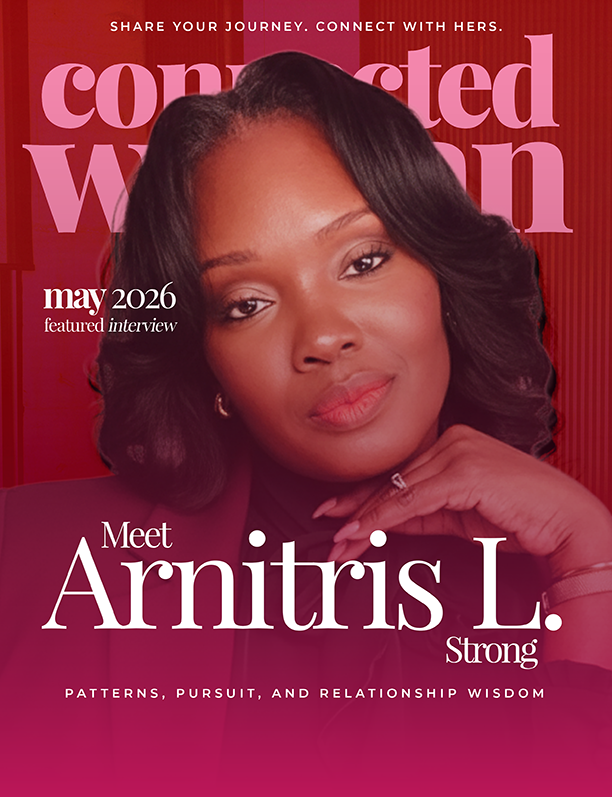
How do you guide women in letting go of relationships or dynamics that no longer align with their standards, especially when emotional attachment is still strong? I remind women that attachment is not always alignment. You can love someone and still recognize they are not healthy for your future. You can care deeply and still choose differently. The wisest relationship decisions are made before deep emotional attachment forms. That is why discernment early in dating matters so much. It is easier to walk away from misalignment at the first red flag than after you have bonded to potential, history, or hope. Many women wait until they are emotionally invested to ask questions they should have asked at the beginning. Understanding their unique relationship needs early can spare unnecessary pain later. In a world of dating apps and fast connections, how can women slow down enough to make intentional choices without feeling like they are missing out? Rushing creates the very thing women fear—wasted time. Slowing down creates room for discernment. It gives a woman space to observe character, consistency, emotional health, communication patterns, and shared values before deep attachment forms. In today’s dating culture, speed is mistaken for progress. But moving quickly with the wrong person is not momentum—it is delay in disguise. Missing out is not the real problem. Mischoosing is. A woman can lose more time recovering from the wrong relationship than she will ever lose being patient for the right one. Intentional dating is not about moving slowly for the sake of it. It is about moving wisely enough to choose well. Confidence and discernment are recurring themes in your message. What does it truly look like for a woman to move through relationships with both? It looks like knowing your worth without needing to announce it constantly. It looks like being open-hearted without being unguarded. Confidence says, “I know what I bring.” Discernment says, “And I’m paying attention to what you bring too.” Confidence allows a woman to show up fully without shrinking, performing, or competing. Discernment helps her notice consistency, character, emotional maturity, and whether words and actions truly align. Together, they allow a woman to love with grace while honoring herself fully. Looking ahead, what legacy do you hope your work leaves for women navigating love, and how do you want them to feel differently about relationships because of your guidance? My hope is that women feel empowered rather than defeated by their relationship experiences. I want them to understand that love is not something they have to beg for, perform for, chase, or lose themselves to receive. Healthy love is their birthright, and wisdom can help them recognize it, receive it well, and reciprocate it wisely. I also want women to see that their relationship history is not a source of shame, but a source of knowledge. Just as professional experience builds skill and insight, relationship experiences can build discernment, emotional wisdom, resilience, and clarity about what truly matters. I encourage women to leverage their relationship résumé—to honor what they have learned, apply those lessons, and choose better moving forward. I want women to move from self-doubt to self-trust and from repeating painful cycles to making intentional choices that honor who they are. If my legacy helps women trust themselves, choose well, heal deeply, and experience love with greater peace, then I will consider the work meaningful. And while much of my work centers on women, my heart’s desire is that healthier women help create healthier relationships, families, and generations. What are you working on? Any upcoming projects? I am currently hosting Love Elevated Sunday School each Sunday at 8 pm EST on @loveelevatedtv on YouTube. A new season of Executive Lessons in Love will air in June. I also invite women to join the next cohort of the Before You Choose intensive where they will gain insight on how they have chosen romantic partners in the past and learn how to choose differently next time. They may join here: bit.ly/beforeyouchoose
Discover more from Connected Woman Magazine
Subscribe to get the latest posts sent to your email.