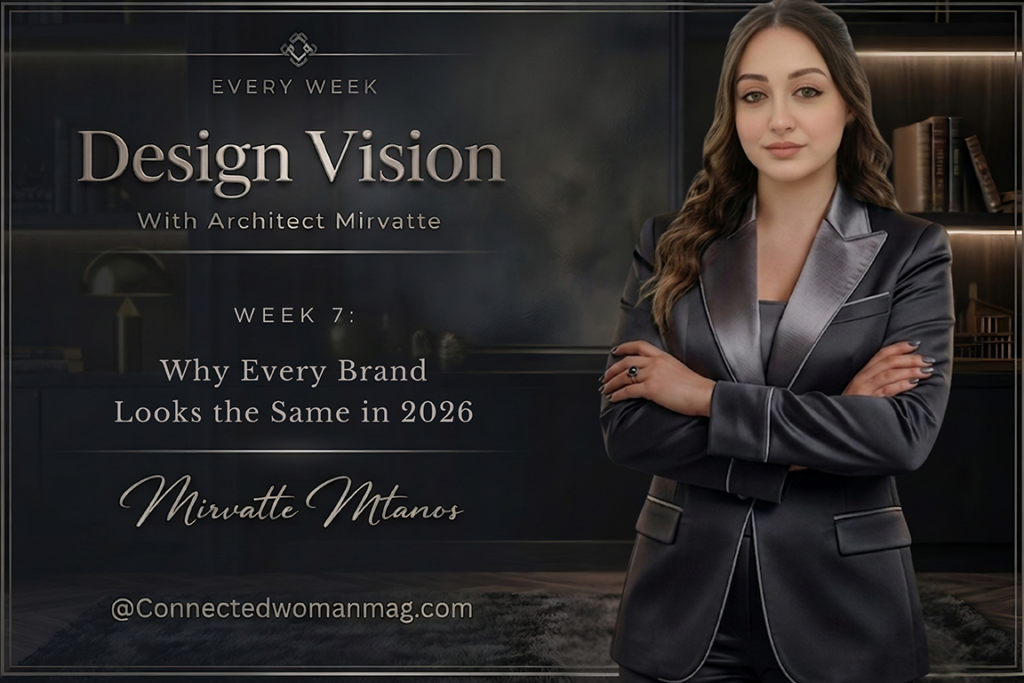
 There is something uncomfortable happening in branding today.
You can scroll through dozens of brands across different industries — fashion, beauty, tech, lifestyle — and yet something feels strangely familiar.
Different names. Same visual language.
Clean fonts. Neutral palettes. Minimal logos. Safe compositions.
At some point, you stop asking what is good design — and start asking a more difficult question:
Why does everything look like it came from the same idea?
The age of controlled design
Modern branding has entered an era of control.
Not creative control — but visual safety control.
Brands today are not only designed to stand out. They are designed to:
Avoid risk
Avoid rejection
Avoid confusion
Fit every digital platform instantly
And in this pursuit of acceptance, design has become less about identity — and more about approval.
Minimalism stopped being a choice
Minimalism was once a design philosophy.
It represented clarity, discipline, and reduction to essence.
But in 2026, minimalism is no longer a direction — it is an expectation.
The result is predictable:
Clean sans-serif typography
Flat, geometric logos
Neutral, “safe” color systems
Emotionally restrained identities
What used to be intentional design thinking has slowly turned into repetition disguised as taste.
Social media reshaped identity
Brand identity no longer lives in one place.
It lives in:
Profile icons
Story thumbnails
Ad formats
Mobile screens
This shift forced a new design rule: be readable everywhere, instantly.
But when everything must survive in a 2cm icon, identity starts to shrink.
And when identity shrinks, differentiation disappears.
The disappearance of memorability
There was a time when brands were recognizable without reading their name.
Now, many brands are visually interchangeable.
Not because designers lack skill — but because they are working inside the same constraints, following the same visual survival strategy.
The outcome is subtle but significant:
Everything looks professional.
But very little feels unforgettable.
The speed of trends is replacing the depth of design
Design used to evolve slowly, with intention and direction.
Today, it moves in cycles:
Bold typography becomes popular
Then everything becomes minimal
Then gradients return
Then muted tones dominate
Designers are no longer only creating identities.
They are constantly adapting to what is currently acceptable.
And in that adaptation cycle, originality becomes harder to sustain.
The real loss is not style — it is character
The issue is not minimalism.
The issue is what gets lost inside it.
When every brand follows the same visual logic, the result is not simplicity.
It is sameness.
And sameness is the opposite of identity.
Because identity is not about being correct — it is about being recognizable.
A shift is quietly needed
The future of branding will not be about rejecting minimalism.
It will be about restoring intention inside it.
The strongest brands moving forward will not be:
The most minimal
The most polished
The most trend-aligned
They will be the ones that:
Dare to feel slightly different
Allow controlled personality
Reintroduce meaning inside simplicity
Because clarity without identity is only emptiness in perfect form.
Conclusion
We are not witnessing a lack of creativity in design.
We are witnessing a lack of creative risk.
And until brands and designers are willing to move beyond safety, we will continue to see a world where everything looks refined — but very little feels truly alive.
There is something uncomfortable happening in branding today.
You can scroll through dozens of brands across different industries — fashion, beauty, tech, lifestyle — and yet something feels strangely familiar.
Different names. Same visual language.
Clean fonts. Neutral palettes. Minimal logos. Safe compositions.
At some point, you stop asking what is good design — and start asking a more difficult question:
Why does everything look like it came from the same idea?
The age of controlled design
Modern branding has entered an era of control.
Not creative control — but visual safety control.
Brands today are not only designed to stand out. They are designed to:
Avoid risk
Avoid rejection
Avoid confusion
Fit every digital platform instantly
And in this pursuit of acceptance, design has become less about identity — and more about approval.
Minimalism stopped being a choice
Minimalism was once a design philosophy.
It represented clarity, discipline, and reduction to essence.
But in 2026, minimalism is no longer a direction — it is an expectation.
The result is predictable:
Clean sans-serif typography
Flat, geometric logos
Neutral, “safe” color systems
Emotionally restrained identities
What used to be intentional design thinking has slowly turned into repetition disguised as taste.
Social media reshaped identity
Brand identity no longer lives in one place.
It lives in:
Profile icons
Story thumbnails
Ad formats
Mobile screens
This shift forced a new design rule: be readable everywhere, instantly.
But when everything must survive in a 2cm icon, identity starts to shrink.
And when identity shrinks, differentiation disappears.
The disappearance of memorability
There was a time when brands were recognizable without reading their name.
Now, many brands are visually interchangeable.
Not because designers lack skill — but because they are working inside the same constraints, following the same visual survival strategy.
The outcome is subtle but significant:
Everything looks professional.
But very little feels unforgettable.
The speed of trends is replacing the depth of design
Design used to evolve slowly, with intention and direction.
Today, it moves in cycles:
Bold typography becomes popular
Then everything becomes minimal
Then gradients return
Then muted tones dominate
Designers are no longer only creating identities.
They are constantly adapting to what is currently acceptable.
And in that adaptation cycle, originality becomes harder to sustain.
The real loss is not style — it is character
The issue is not minimalism.
The issue is what gets lost inside it.
When every brand follows the same visual logic, the result is not simplicity.
It is sameness.
And sameness is the opposite of identity.
Because identity is not about being correct — it is about being recognizable.
A shift is quietly needed
The future of branding will not be about rejecting minimalism.
It will be about restoring intention inside it.
The strongest brands moving forward will not be:
The most minimal
The most polished
The most trend-aligned
They will be the ones that:
Dare to feel slightly different
Allow controlled personality
Reintroduce meaning inside simplicity
Because clarity without identity is only emptiness in perfect form.
Conclusion
We are not witnessing a lack of creativity in design.
We are witnessing a lack of creative risk.
And until brands and designers are willing to move beyond safety, we will continue to see a world where everything looks refined — but very little feels truly alive.
Design Vision with Mirvatte Mtanos Where design is not style — but identity, intention, and impact.
Discover more from Connected Woman Magazine
Subscribe to get the latest posts sent to your email.