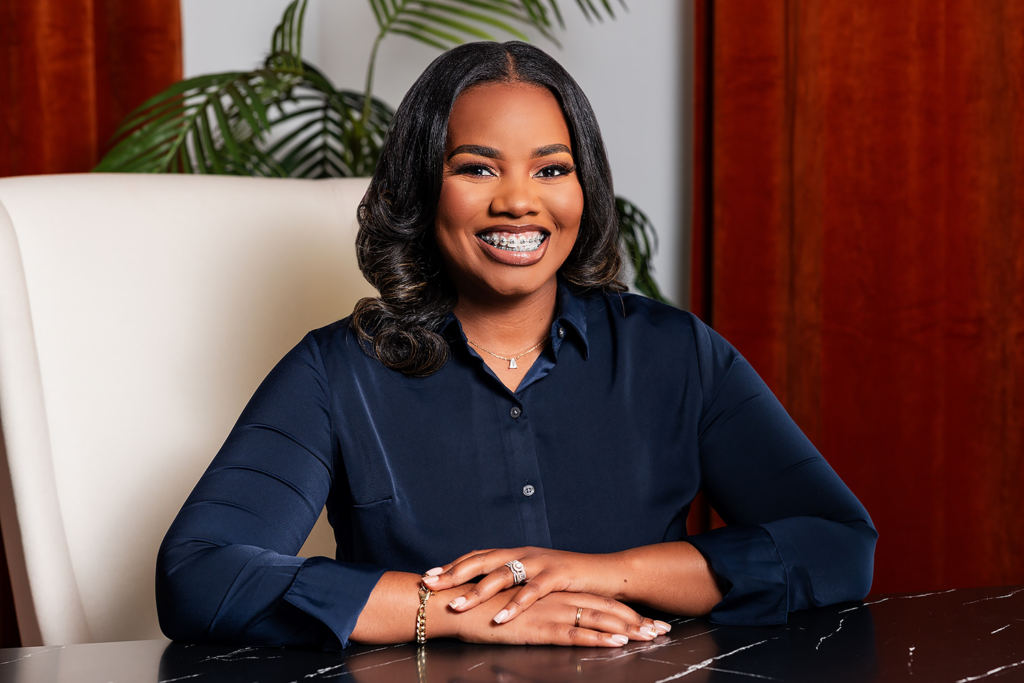
 Educators often carry the quiet weight of exhaustion while continuing to show up for others every day. For Danielle Bertrand, that reality became deeply personal early in her career—and ultimately transformed into a mission to help others thrive. Raised in Baton Rouge, Louisiana and now based in the Dallas–Fort Worth Metroplex, Bertrand is widely known as The Preventative Burnout Specialist, guiding educators and professionals toward sustainable success without sacrificing their well-being.
After experiencing burnout in just her second year of teaching—long before the term was widely discussed—Danielle was forced to pause and reevaluate what it meant to pursue purpose without losing herself in the process. Today, with more than a decade in education and while pursuing her Doctorate in Education, she shares the very strategies that helped her reclaim her joy. Through speaking, writing, and mentorship, Bertrand empowers others to set boundaries, realign with their calling, and prevent burnout before it takes hold—proving that thriving in your assignment should never come at the cost of your peace. Let’s meet her…
Where were you born/raised and where are you based now?
I was raised in Baton Rouge, LA. I now live in the DFW Metroplex.
Tell our readers about yourself, how you got started in your current field.
In year two of teaching, I experienced burnout. However, burnout wasn’t a widely used term back then. I knew I needed to step back and wasn’t sure if I would ever recover. Thankfully, I did. I now use the reversal techniques to share with other educators around the world so that they can reignite JOY. I have now had a successful 11 year career. This also lead to me currently obtaining my Doctorate in Education where my dissertation is around the topic of overcoming burnout against all odds.
What are you most known for and have you let that control the reigns of your trajectory or do you still feel like you are being your authentic self?
I am most known for being The Preventative Burnout Specialist. I am walking in my most authentic self by providing proven strategies to help others fulfill their assignments and not allowing burnout to bury them.
You describe yourself as a Preventative Burnout Specialist rather than someone who simply helps people recover from burnout. What is the difference between burnout recovery and burnout prevention, and why is prevention so critical for educators and professionals today?
The difference between burnout recovery and prevention is how the matter is addressed. For someone recovering from burnout they will need to access what actually led them to this point. That can look like reevaluating what is already on their plate that is leading to emotional exhaustion. Everyone should however be intentional about preventing burnout. The facts are that burnout can affect any person at any time so setting clear boundaries and living in alignment is critical.
You experienced burnout as early as your second year of teaching. Can you take us back to that moment and share what the experience taught you about the realities many educators face behind the scenes?
That moment was tough. The tougher part was realizing that it wasn’t just a moment. Burnout had been compounding over time and going unnoticed. I always knew to just push through but this time it led to a place that I could no longer ignore. It highlighted how educators are not “just teaching” but they often carry the emotional weight of those that have been assigned to them.
They hear the stories, meet the parents, see the test scores and that often is something no one is prepared for.
Many teachers and professionals silently struggle with exhaustion, emotional fatigue, and feeling undervalued. What are some of the earliest warning signs of burnout that people often ignore until it becomes overwhelming?
Some early signs of burnout can include avoiding activities that once brought joy and simply going through the motions. Burnout has a way of blocking the emotion of joy and causing a heaviness to appear. When burnout hits, the ability to feel is often limited. The person can feel as though they are simply existing and not truly living.
You often speak about helping educators and employees “S.T.A.Y. and be well.” Can you break down what the S.T.A.Y. philosophy means and how it helps professionals sustain their purpose without sacrificing their health and joy?
The S.T.A.Y and Be Well framework philosophy focuses on how someone can deal with burnout and still enjoy a career/environment they once loved. Simplify, Transition, Assess and Yield will give strategic guidance on how to recover and create a life that will guard against burnout in the future.
After experiencing burnout yourself, you made a full recovery and turned that experience into a mission. What were the key mindset shifts or lifestyle changes that helped you move from burnout to blazing again?
The mindset shift was that I do not have to say “yes” to everything. I knew how to do a lot and people would ask for assistance. I found myself saying “yes” but frustrated with that decision later on. I was running on fumes and making everyone else’s emergency my emergency. When I changed this, life became brighter and lighter again.
Teaching is often described as a calling, but many educators are leaving the profession due to stress and burnout. What strategies can educators implement immediately to protect their passion for teaching while maintaining personal wellness?
They can immediately realign themselves with the profession of teaching. They need to look at the calendar and plan accordingly. Know when the breaks are, find something to look forward to daily and understand that “no” is a complete sentence.
You have authored several impactful books including Girl, It’s Go Time, Sky Views: Transitioning from Frustration to Freedom, and From Burned Out to Blazing in 90 Days. What message or transformation do you hope readers experience when engaging with your work?
I hope readers will no longer sit and be stagnant. We all have a purpose and many assignments that need to be tended to one at a time. People are often overwhelmed and just stop. I want the transformation to be take it one step at a time but keep walking no matter what.
Your work integrates professional development, personal growth, and faith. How has your faith influenced the way you approach leadership, burnout prevention, and guiding others toward thriving in their assignments?
My faith has been the foundation to everything. Journaling to God has kept me grounded and aware. I have seen my life transform through truly accepting that joy is my portion and I will not allow burnout to bury that.
You have hosted retreats, conferences, mentorship programs, and podcasts for women of faith in business and ministry. What have you observed about the unique pressures women—especially women in leadership—carry that can lead to burnout?
They often carry the expectation that they have to be there for everyone. They need to run the business, show up for PTA meetings, serve in church, cook daily and so much more. That leads to not having enough time to think and process emotions. Before long they are emotionally exhausted. I truly believe that you can have excellence without exhaustion if the right guardrails are put in place.
Many people feel trapped between their purpose and their responsibilities. What advice would you give to someone who feels called to their work but is mentally and emotionally exhausted by it?
They are probably not exhausted by the work itself but the boundaries they refuse to stand on daily. Having boundaries that you do not uphold causes someone to have a toxic relationship with themselves. Keeping promises to themselves will create a space for realignment.
As someone pursuing a Doctorate in Education with a focus on Adult Learners, how do you believe adult education and leadership development can evolve to better support professionals experiencing burnout?
Yes, I truly believe that. This is the reason why it was important that I was well-versed in both. I want to teach adults the way adults learn. Simply providing strategies without the proper way for a busy adult to implement them is not enough. School districts and organizations have budgets that can be used to equip these professionals so that they can thrive inside and outside of the workplace.
You were awarded Teacher of the Year in 2015, which speaks to both your excellence and impact in education. How did that recognition shape your leadership journey and your commitment to helping educators thrive?
It confirmed that I was actually a good teacher. I taught with educators that had once been my educators in high school. To know that they believed in me and saw me as a valuable member of the school community was great. I knew if I could make an impact on my colleagues that I could make a greater impact on my students.
In addition to your professional work, you serve in ministry and were commissioned in the Five-Fold office as a Teacher. How do you balance your calling in faith, education, business, and leadership without falling back into burnout yourself?
I am aware of deadlines and calendars. This gives me the opportunity to say “yes” or “no” prior to accepting assignments. I know what my capacity is and I do not extend myself beyond that. The amount of time I give to each assignment can vary weekly but I make sure that I am able to show up in some way throughout the month.
For professionals who feel like they have lost their joy in their career, what are the first steps they can take to reconnect with their purpose and begin rebuilding their energy and enthusiasm?
I would suggest reading my book “Joy Hunt: What is Joy was never lost, just hidden?”. This book will walk them through the process of finding the gift of joy that God has given His children.
If you could leave educators, entrepreneurs, and professionals with one powerful reminder about protecting their well-being while fulfilling their assignment, what would it be?
I would leave them knowing that their story does not end here. There is light after this. The choices they make will lead to light or darkness. I would love to help them reignite JOY so that they can live a thriving life.
Have you ever failed at anything? How did you recover?
Right out of college, I had the dream of opening a dance studio. I had the business degree but I did not have the money. I started the business but I didn’t last long. That was actually what lead me to becoming a teacher. A few years later I was able to partner with a now friend who already had a studio and we ran it successfully for 5 years.
If you could go back and share one thing with yourself as a 16-22 year old what would it be and why?
I would tell myself that my voice has value. Being quiet is a defense mechanism and not my true identify. I would let myself know that my voice is going to open doors that I never thought I would walk in.
Who are you at your core and in life what matters the most to you?
At my core, I am a teacher. I truly enjoy sharing ideas and strategies with people to improve their quality of life. Once I can teach a concept I know I have truly grasped it. Even as a dance teacher, I was giving people an opportunity to move and express themselves to improve their quality of life.
What sets you apart?
What sets me apart is that I am grounded. I know who I am and whose I am. I move in excellence and compassion. I understand that life may have caused someone to get off track but I know the life giver that can reroute them back to purpose.
Is being intentional important to you? Why or why not?
Being intentional is very important to me. When I host events, big or small, I want all my guests to know they were thought about in advance. I add the small details to show their presence is appreciated. I celebrate others out loud and in meaningful ways to show I see them.
How do you connect or maintain connection-with business colleagues, family or friends?
I connect by checking in. In the world of social media, people can feel connected because they read a post but that could be far from the truth. Spending time talking with others truly buildings lasting relationships.
What do you like to do when you are not working?
I love to travel. I enjoy seeing new things and having new experiences. It reminds me that my problems are small and that I have a lot to be grateful for.
Of all your roles, which are you most proud of and if different, which one has been the most fulfilling?
Of all my roles, being a wire is the one that is the most fulfilling. Doing life with my husband truly brings me joy. He has a brilliant mind and the way he loves me is unmatched. I am also excited to parent our children together.
Complete this sentence, “If it had not been for my faith,_________________.”
If it had not been for my faith, I would have never walked into my true calling and let go of my fear of talking.
What is up next for you? Do you have any projects, events or products to promote?
Next up is the big stages. I have my eyes on speaking at some major conferences like Essence Festival. As well as continuing to sign contracts with school districts to present my S.T.A.Y and Be Well Framework for educators. I am also looking forward to being a podcast guest to speak about burnout prevention/reversal for high-achieving women.
How can our readers connect with you for more information? http://www.renewedconsultingfirm.com IG: @drdanielleloading TikTok: @fulllifeofdani
Educators often carry the quiet weight of exhaustion while continuing to show up for others every day. For Danielle Bertrand, that reality became deeply personal early in her career—and ultimately transformed into a mission to help others thrive. Raised in Baton Rouge, Louisiana and now based in the Dallas–Fort Worth Metroplex, Bertrand is widely known as The Preventative Burnout Specialist, guiding educators and professionals toward sustainable success without sacrificing their well-being.
After experiencing burnout in just her second year of teaching—long before the term was widely discussed—Danielle was forced to pause and reevaluate what it meant to pursue purpose without losing herself in the process. Today, with more than a decade in education and while pursuing her Doctorate in Education, she shares the very strategies that helped her reclaim her joy. Through speaking, writing, and mentorship, Bertrand empowers others to set boundaries, realign with their calling, and prevent burnout before it takes hold—proving that thriving in your assignment should never come at the cost of your peace. Let’s meet her…
Where were you born/raised and where are you based now?
I was raised in Baton Rouge, LA. I now live in the DFW Metroplex.
Tell our readers about yourself, how you got started in your current field.
In year two of teaching, I experienced burnout. However, burnout wasn’t a widely used term back then. I knew I needed to step back and wasn’t sure if I would ever recover. Thankfully, I did. I now use the reversal techniques to share with other educators around the world so that they can reignite JOY. I have now had a successful 11 year career. This also lead to me currently obtaining my Doctorate in Education where my dissertation is around the topic of overcoming burnout against all odds.
What are you most known for and have you let that control the reigns of your trajectory or do you still feel like you are being your authentic self?
I am most known for being The Preventative Burnout Specialist. I am walking in my most authentic self by providing proven strategies to help others fulfill their assignments and not allowing burnout to bury them.
You describe yourself as a Preventative Burnout Specialist rather than someone who simply helps people recover from burnout. What is the difference between burnout recovery and burnout prevention, and why is prevention so critical for educators and professionals today?
The difference between burnout recovery and prevention is how the matter is addressed. For someone recovering from burnout they will need to access what actually led them to this point. That can look like reevaluating what is already on their plate that is leading to emotional exhaustion. Everyone should however be intentional about preventing burnout. The facts are that burnout can affect any person at any time so setting clear boundaries and living in alignment is critical.
You experienced burnout as early as your second year of teaching. Can you take us back to that moment and share what the experience taught you about the realities many educators face behind the scenes?
That moment was tough. The tougher part was realizing that it wasn’t just a moment. Burnout had been compounding over time and going unnoticed. I always knew to just push through but this time it led to a place that I could no longer ignore. It highlighted how educators are not “just teaching” but they often carry the emotional weight of those that have been assigned to them.
They hear the stories, meet the parents, see the test scores and that often is something no one is prepared for.
Many teachers and professionals silently struggle with exhaustion, emotional fatigue, and feeling undervalued. What are some of the earliest warning signs of burnout that people often ignore until it becomes overwhelming?
Some early signs of burnout can include avoiding activities that once brought joy and simply going through the motions. Burnout has a way of blocking the emotion of joy and causing a heaviness to appear. When burnout hits, the ability to feel is often limited. The person can feel as though they are simply existing and not truly living.
You often speak about helping educators and employees “S.T.A.Y. and be well.” Can you break down what the S.T.A.Y. philosophy means and how it helps professionals sustain their purpose without sacrificing their health and joy?
The S.T.A.Y and Be Well framework philosophy focuses on how someone can deal with burnout and still enjoy a career/environment they once loved. Simplify, Transition, Assess and Yield will give strategic guidance on how to recover and create a life that will guard against burnout in the future.
After experiencing burnout yourself, you made a full recovery and turned that experience into a mission. What were the key mindset shifts or lifestyle changes that helped you move from burnout to blazing again?
The mindset shift was that I do not have to say “yes” to everything. I knew how to do a lot and people would ask for assistance. I found myself saying “yes” but frustrated with that decision later on. I was running on fumes and making everyone else’s emergency my emergency. When I changed this, life became brighter and lighter again.
Teaching is often described as a calling, but many educators are leaving the profession due to stress and burnout. What strategies can educators implement immediately to protect their passion for teaching while maintaining personal wellness?
They can immediately realign themselves with the profession of teaching. They need to look at the calendar and plan accordingly. Know when the breaks are, find something to look forward to daily and understand that “no” is a complete sentence.
You have authored several impactful books including Girl, It’s Go Time, Sky Views: Transitioning from Frustration to Freedom, and From Burned Out to Blazing in 90 Days. What message or transformation do you hope readers experience when engaging with your work?
I hope readers will no longer sit and be stagnant. We all have a purpose and many assignments that need to be tended to one at a time. People are often overwhelmed and just stop. I want the transformation to be take it one step at a time but keep walking no matter what.
Your work integrates professional development, personal growth, and faith. How has your faith influenced the way you approach leadership, burnout prevention, and guiding others toward thriving in their assignments?
My faith has been the foundation to everything. Journaling to God has kept me grounded and aware. I have seen my life transform through truly accepting that joy is my portion and I will not allow burnout to bury that.
You have hosted retreats, conferences, mentorship programs, and podcasts for women of faith in business and ministry. What have you observed about the unique pressures women—especially women in leadership—carry that can lead to burnout?
They often carry the expectation that they have to be there for everyone. They need to run the business, show up for PTA meetings, serve in church, cook daily and so much more. That leads to not having enough time to think and process emotions. Before long they are emotionally exhausted. I truly believe that you can have excellence without exhaustion if the right guardrails are put in place.
Many people feel trapped between their purpose and their responsibilities. What advice would you give to someone who feels called to their work but is mentally and emotionally exhausted by it?
They are probably not exhausted by the work itself but the boundaries they refuse to stand on daily. Having boundaries that you do not uphold causes someone to have a toxic relationship with themselves. Keeping promises to themselves will create a space for realignment.
As someone pursuing a Doctorate in Education with a focus on Adult Learners, how do you believe adult education and leadership development can evolve to better support professionals experiencing burnout?
Yes, I truly believe that. This is the reason why it was important that I was well-versed in both. I want to teach adults the way adults learn. Simply providing strategies without the proper way for a busy adult to implement them is not enough. School districts and organizations have budgets that can be used to equip these professionals so that they can thrive inside and outside of the workplace.
You were awarded Teacher of the Year in 2015, which speaks to both your excellence and impact in education. How did that recognition shape your leadership journey and your commitment to helping educators thrive?
It confirmed that I was actually a good teacher. I taught with educators that had once been my educators in high school. To know that they believed in me and saw me as a valuable member of the school community was great. I knew if I could make an impact on my colleagues that I could make a greater impact on my students.
In addition to your professional work, you serve in ministry and were commissioned in the Five-Fold office as a Teacher. How do you balance your calling in faith, education, business, and leadership without falling back into burnout yourself?
I am aware of deadlines and calendars. This gives me the opportunity to say “yes” or “no” prior to accepting assignments. I know what my capacity is and I do not extend myself beyond that. The amount of time I give to each assignment can vary weekly but I make sure that I am able to show up in some way throughout the month.
For professionals who feel like they have lost their joy in their career, what are the first steps they can take to reconnect with their purpose and begin rebuilding their energy and enthusiasm?
I would suggest reading my book “Joy Hunt: What is Joy was never lost, just hidden?”. This book will walk them through the process of finding the gift of joy that God has given His children.
If you could leave educators, entrepreneurs, and professionals with one powerful reminder about protecting their well-being while fulfilling their assignment, what would it be?
I would leave them knowing that their story does not end here. There is light after this. The choices they make will lead to light or darkness. I would love to help them reignite JOY so that they can live a thriving life.
Have you ever failed at anything? How did you recover?
Right out of college, I had the dream of opening a dance studio. I had the business degree but I did not have the money. I started the business but I didn’t last long. That was actually what lead me to becoming a teacher. A few years later I was able to partner with a now friend who already had a studio and we ran it successfully for 5 years.
If you could go back and share one thing with yourself as a 16-22 year old what would it be and why?
I would tell myself that my voice has value. Being quiet is a defense mechanism and not my true identify. I would let myself know that my voice is going to open doors that I never thought I would walk in.
Who are you at your core and in life what matters the most to you?
At my core, I am a teacher. I truly enjoy sharing ideas and strategies with people to improve their quality of life. Once I can teach a concept I know I have truly grasped it. Even as a dance teacher, I was giving people an opportunity to move and express themselves to improve their quality of life.
What sets you apart?
What sets me apart is that I am grounded. I know who I am and whose I am. I move in excellence and compassion. I understand that life may have caused someone to get off track but I know the life giver that can reroute them back to purpose.
Is being intentional important to you? Why or why not?
Being intentional is very important to me. When I host events, big or small, I want all my guests to know they were thought about in advance. I add the small details to show their presence is appreciated. I celebrate others out loud and in meaningful ways to show I see them.
How do you connect or maintain connection-with business colleagues, family or friends?
I connect by checking in. In the world of social media, people can feel connected because they read a post but that could be far from the truth. Spending time talking with others truly buildings lasting relationships.
What do you like to do when you are not working?
I love to travel. I enjoy seeing new things and having new experiences. It reminds me that my problems are small and that I have a lot to be grateful for.
Of all your roles, which are you most proud of and if different, which one has been the most fulfilling?
Of all my roles, being a wire is the one that is the most fulfilling. Doing life with my husband truly brings me joy. He has a brilliant mind and the way he loves me is unmatched. I am also excited to parent our children together.
Complete this sentence, “If it had not been for my faith,_________________.”
If it had not been for my faith, I would have never walked into my true calling and let go of my fear of talking.
What is up next for you? Do you have any projects, events or products to promote?
Next up is the big stages. I have my eyes on speaking at some major conferences like Essence Festival. As well as continuing to sign contracts with school districts to present my S.T.A.Y and Be Well Framework for educators. I am also looking forward to being a podcast guest to speak about burnout prevention/reversal for high-achieving women.
How can our readers connect with you for more information? http://www.renewedconsultingfirm.com IG: @drdanielleloading TikTok: @fulllifeofdani
Discover more from Connected Woman Magazine
Subscribe to get the latest posts sent to your email.