
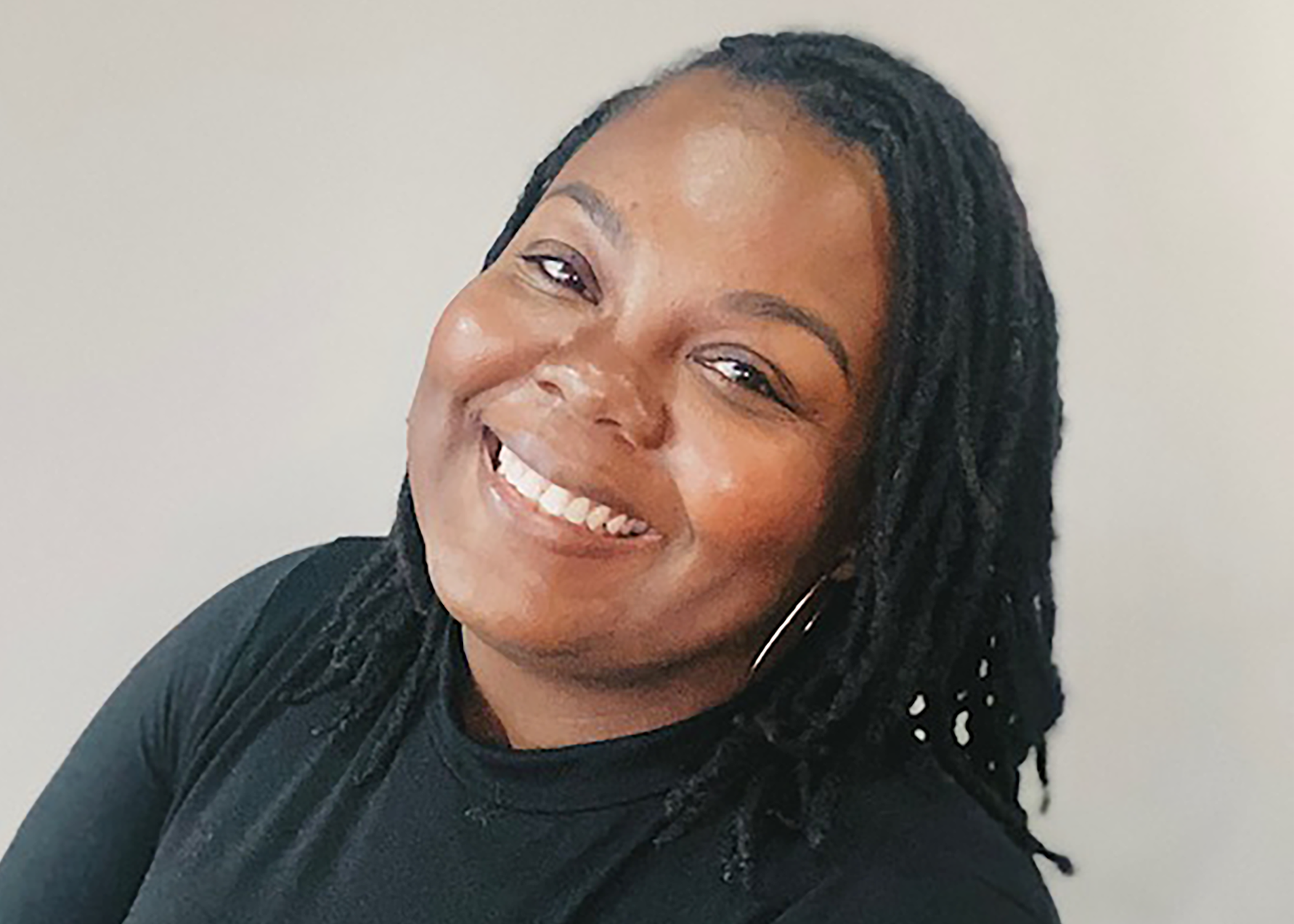
 Chicago-based creative and entrepreneur Brandy Walker is challenging the culture of constant productivity through The Black Woman Sabbatical, a year-long journey exploring what it truly means for Black women to rest. After years of pushing through exhaustion in professional and personal spaces, Walker realized that stepping away wasn’t optional—it was necessary. Without pause, her creativity, clarity, and energy to fully show up in the world were disappearing. Through reflections, video storytelling, and community conversations documented on her Substack, she is asking a powerful question: What if rest wasn’t a reward or a luxury, but something Black women claimed for themselves? For Walker, this sabbatical is about more than self-care—it’s about deconditioning from grind culture, learning to love herself without labor, and discovering how restoration can lead to a more abundant way of living. Let’s meet her…
Your project, The Black Woman Sabbatical, centers on the question, “What if Black women were allowed to rest?” What personal experiences led you to ask that question, and when did you realize that stepping away from constant expectations was necessary for your well-being?
The question, “What if Black women were allowed to rest?” comes straight from my own life. I’ve spent years carrying the weight of everyone else’s expectations, at work, at home, and in my communities, always pushing, always producing, even when I was running on empty. I’ve been through many public failures trying to hold it all together, getting pregnant and nearly dropping out, divorce, eviction, being homeless and people looked at me like I was a lost cause. I was determined to work harder and harder so I never found myself in those situations again, so I would never have to depend on anyone, but I simply couldn;t keep up.
Physically my body was breaking down. Random muscle spasms, migraines, unable to sleep at night even when physically exhausted. Depression, anxiety and then the panic attacks.
I realized stepping away wasn’t optional; it was necessary.
Without pause, my creativity, my clarity, and my energy to show up fully were disappearing. The Black Woman Sabbatical is my way of asking what if rest wasn’t a reward or a luxury, but something we actually claim for ourselves. It’s me proving that taking space, reflecting, and recharging is not about bubble baths and girls trips although those things are important. What I want and need to do is decondition from grind culture, learn how to love myself without labor and figure out how to restore myself in a way that allows me to live life more abundantly.
You’ve described spending much of your life finding your “second, third, and infinity wind” just to keep going. How did that culture of constant pushing show up in your work as a creative, entrepreneur, and nonprofit leader?
I normalized having multiple jobs, surviving n little to no sleep and always being on the go. Writing story ideas on the back of napkins, taking naps while waiting in the car to pick up my son, eating on the go, all these things seemed normal until I met women of other races and saw them ease into their day, take midday yoga and pilates classes and live a soft life. I believed I always have to be doing something and that is just not the case.
Many women—especially Black women—are conditioned to equate productivity with worth. What has it taken for you to begin unlearning that mindset, and what has been the most difficult part of allowing yourself to rest?
In my last role, I did absolutely amazing work. I set records, I increased revenue, I led the organization’s rebrand, I was a strategic partner, I created new programming and not once did anyone I reported to or worked with acknowledged that. I was met with near resentment and told, “that’s good but it could be better”. Better than a 400% return?! I was incensed. Then I realized I had experienced thai before in other jobs with bosses who looked like me and those who hated to look at me. I started to try and find small ways to escape; to focus on self care and my mental health. But the truth is, until you’re out of it, you cannot fully process, understand or begin to rest. That experience followed by losing my job was actually a blessing because it awakened in me the desire for more out of life than a paycheck I had to suffer for. The most difficult part is knowing how to rest. I have not seen this modeled in my life. Even when I am resting my mind does not. That is something I have to work on.
Your sabbatical is not only about personal rest but also about documenting the experience publicly through your Substack. Why was it important for you to share this journey transparently rather than experience it privately?
This is important because too often we watch women experience trauma, burnout and break down, disappear and come back anew. But healing does not happen in isolation and when we continue to nurse our wounds in secret, people may never acknowledge that we’ve actually been hurt.
The project is being supported through a $100,000 fundraising campaign. Some people may be unfamiliar with the idea of crowdfunding rest. How do you explain the value and purpose of financially supporting something as intangible yet powerful as a year dedicated to reflection and healing?
Crowdfunding has grown in popularity and disgust in recent years as this form of collecting currency has been nearly exploited to pay for funerals, healthcare and other basic needs that have gone unmet. In actuality, Black people have been crowdfunding for decades. When Spike Lee was filming Malcolm X on a slim budget, It was community members and actors like Magic Johnson, Bill Cosby, Prince and Janet Jackson who donated money so he could complete the film. Even before that, Marcus Garvey raised funds for his Black Star Line shipping company. Cooperative economics and collective power isn’t new, its just that at some part we started to believe more in our own independence vis-à-vis the American dream, and began to look down upon the villagers who believed that together we could go far.
When people view my campaign it may seem like they are getting nothing in return. I was very intentional about the platform I used. I didn’t want the negative connotation of GoFundMe and I am not promising perks or merch like a typical Kickstarter campaign. However, the benefits are twofold: one unseen and one documented.
When people donate to my campaign they stand in agreement with me that Black women are entitled to rest without labor; that’s the intangible. Its a belief in an idea and a vote of support that allows me to continue to live to tell my story. The tangible is what I create out of this experience. I will be journaling via Substack and recording video field notes that I plan to use to create a documentary film once the project is complete.
The conversation around rest as resistance has gained momentum through voices like Tricia Hersey and the broader cultural dialogue around burnout. How does your sabbatical build upon or expand that movement in your own unique way?
Yes I read this book more than a year ago and what stood out to me was her framework regarding dreamscaping which refers to creating intentional space for dreaming, imagination, and deep rest as a way to reconnect with yourself and envision new possibilities for your life and the world. This year is about pursuing this because in constantly working you barely have time to think about how to survive so you never dream; which means, you never get out of the matrix.
Your background in nonprofit leadership places you in a space where mission driven work can often blur the boundaries between passion and exhaustion. What lessons did you learn about burnout from working in that sector?
Working in nonprofits taught me that the reward for doing good work is doing more work and more work is highly favored. Most people working in nonprofits burnt out years ago and are showing up by way of habit and routine. Of all the jobs I have held, it is the most manipulative when it comes to tricking you into believing that because you are mission led you have to be depleted.
You mentioned that nearly 300,000 Black women lost jobs in 2025, including many in nonprofits. How did those broader economic shifts influence your decision to pause and rethink your relationship with work?
I always saw having a job as stable. This is what my parents wanted for me: do well in school, go to college and get a good job. This was a fantasy. Even while holding multiple degrees, maintaining employment that sustains me, trying to find a job in this economy has proven nearly impossible. I wrote about this in a recent article published on Blackstack, “What Black Women Do With What Didn’t Work”. Losing my job made me feel completely disposable, it was a reality I tried to avoid and an experience I felt even before becoming unemployed. My job doesn’t value me. My job is exhausting me. Work feels heavy.
As you enter this sabbatical during a major life transition—becoming an empty nester—how has motherhood shaped your understanding of time, identity, and the permission to prioritize yourself?
Motherhood has taught me how finite time truly is. That has helped me not to linger in spaces that no longer fit who I am or who I am becoming. I want to rest before I die. I want to enjoy my life and not just work through it. If I don’t no one will. I know that for a fact.
During this year, you plan to interview other women experiencing burnout. What kinds of stories or patterns are you hoping to uncover, and why is it important to amplify those voices?
Based on interactions I have had on social media, I do want to better understand other women who, like me, are at a crossroads in their life and are having to make a choice to pause or keep going. I really want to understand the thought process, the experience and
the implications of my story and others. In doing so, it pushed the envelope beyond this being a personal vacation but an introspection of Black women and the tough choices we have to make about our survival and preservation.
Many people romanticize sabbaticals as luxurious breaks, but you’ve framed yours as intentional work around reflection, creativity, and community building. What does a typical day or week in your sabbatical look like?
Black women are always asked to figure it out. The great thing about this year is that it is one of exploration. I don’t have hard set plans and I love that for me. So much of my life has been about having a plan, having to plan and making preparations for myself and others. I am completely open to what this experience will look like and how each day might look differently based on my evolving interests and needs.
Community is a key component of your project. How do you envision building networks and spaces where women can collectively rethink their relationship with productivity and rest?
Working constantly robs you of community. In the last 10 years I have missed out on gatherings, conversations and the opportunity to experience people for a prolonged period of time. You know the feeling of checking in but not being fully present. I desire to enjoy the moments as they come and for me that means being intentional about the people I connect with, the spaces I take up and allowing myself the privilege of lingering. I am not in a hurry. I think, if we collectively slow down a bit, we can enjoy more of life. Not everything we do has to be about completion or meeting a goal. When I was kid, the older men would play chess in the park. They’d leave the game, come back and pick up where they left off. All day they’d play a game without worrying about time, enjoying each other’s company and knowing they could leave and return to the same energy.
Historically, Black women have often carried the weight of both professional labor and emotional labor within families and communities. How does your sabbatical challenge or disrupt that long-standing expectation?
For a Black woman to say “No.” is a powerful and complete statement. Most women I know would say, “yeah, but..” or “maybe…”. So yes, this project is a form of resistance Historically, Black women have been expected to be endlessly available—to work, to give, to hold things together for everyone else. My sabbatical disrupts that expectation by publicly choosing rest and reflection without apology. It is a decision to step away from constant output and make space for restoration, imagination, and care for myself. In doing so, I hope to model something different: that Black women deserve pauses, not just perseverance
For women reading about your journey who may feel inspired but believe rest is unrealistic for them, what practical or philosophical shifts would you encourage them to start making right now?
I don’t know that I have any at the moment. I have always had a deep belief within myself that I can do all things through Christ who strengthens me. In holding that belief there hasn’t been anything that I have truly wanted that I am not willing to pursue.
Looking ahead, when your year-long sabbatical concludes, what kind of frameworks, insights, or cultural shifts do you hope will emerge from this experiment—and how might they influence the future of leadership, creativity, and wellness for Black women?
First and foremost, I hope to walk away with a nuanced definition of rest backed by my lived experience. It would be a dream to come out of this experience and have something that other Black women can model and perhaps the resources to help them plan their own.
How can our readers connect with you and support your endeavors?
Chicago-based creative and entrepreneur Brandy Walker is challenging the culture of constant productivity through The Black Woman Sabbatical, a year-long journey exploring what it truly means for Black women to rest. After years of pushing through exhaustion in professional and personal spaces, Walker realized that stepping away wasn’t optional—it was necessary. Without pause, her creativity, clarity, and energy to fully show up in the world were disappearing. Through reflections, video storytelling, and community conversations documented on her Substack, she is asking a powerful question: What if rest wasn’t a reward or a luxury, but something Black women claimed for themselves? For Walker, this sabbatical is about more than self-care—it’s about deconditioning from grind culture, learning to love herself without labor, and discovering how restoration can lead to a more abundant way of living. Let’s meet her…
Your project, The Black Woman Sabbatical, centers on the question, “What if Black women were allowed to rest?” What personal experiences led you to ask that question, and when did you realize that stepping away from constant expectations was necessary for your well-being?
The question, “What if Black women were allowed to rest?” comes straight from my own life. I’ve spent years carrying the weight of everyone else’s expectations, at work, at home, and in my communities, always pushing, always producing, even when I was running on empty. I’ve been through many public failures trying to hold it all together, getting pregnant and nearly dropping out, divorce, eviction, being homeless and people looked at me like I was a lost cause. I was determined to work harder and harder so I never found myself in those situations again, so I would never have to depend on anyone, but I simply couldn;t keep up.
Physically my body was breaking down. Random muscle spasms, migraines, unable to sleep at night even when physically exhausted. Depression, anxiety and then the panic attacks.
I realized stepping away wasn’t optional; it was necessary.
Without pause, my creativity, my clarity, and my energy to show up fully were disappearing. The Black Woman Sabbatical is my way of asking what if rest wasn’t a reward or a luxury, but something we actually claim for ourselves. It’s me proving that taking space, reflecting, and recharging is not about bubble baths and girls trips although those things are important. What I want and need to do is decondition from grind culture, learn how to love myself without labor and figure out how to restore myself in a way that allows me to live life more abundantly.
You’ve described spending much of your life finding your “second, third, and infinity wind” just to keep going. How did that culture of constant pushing show up in your work as a creative, entrepreneur, and nonprofit leader?
I normalized having multiple jobs, surviving n little to no sleep and always being on the go. Writing story ideas on the back of napkins, taking naps while waiting in the car to pick up my son, eating on the go, all these things seemed normal until I met women of other races and saw them ease into their day, take midday yoga and pilates classes and live a soft life. I believed I always have to be doing something and that is just not the case.
Many women—especially Black women—are conditioned to equate productivity with worth. What has it taken for you to begin unlearning that mindset, and what has been the most difficult part of allowing yourself to rest?
In my last role, I did absolutely amazing work. I set records, I increased revenue, I led the organization’s rebrand, I was a strategic partner, I created new programming and not once did anyone I reported to or worked with acknowledged that. I was met with near resentment and told, “that’s good but it could be better”. Better than a 400% return?! I was incensed. Then I realized I had experienced thai before in other jobs with bosses who looked like me and those who hated to look at me. I started to try and find small ways to escape; to focus on self care and my mental health. But the truth is, until you’re out of it, you cannot fully process, understand or begin to rest. That experience followed by losing my job was actually a blessing because it awakened in me the desire for more out of life than a paycheck I had to suffer for. The most difficult part is knowing how to rest. I have not seen this modeled in my life. Even when I am resting my mind does not. That is something I have to work on.
Your sabbatical is not only about personal rest but also about documenting the experience publicly through your Substack. Why was it important for you to share this journey transparently rather than experience it privately?
This is important because too often we watch women experience trauma, burnout and break down, disappear and come back anew. But healing does not happen in isolation and when we continue to nurse our wounds in secret, people may never acknowledge that we’ve actually been hurt.
The project is being supported through a $100,000 fundraising campaign. Some people may be unfamiliar with the idea of crowdfunding rest. How do you explain the value and purpose of financially supporting something as intangible yet powerful as a year dedicated to reflection and healing?
Crowdfunding has grown in popularity and disgust in recent years as this form of collecting currency has been nearly exploited to pay for funerals, healthcare and other basic needs that have gone unmet. In actuality, Black people have been crowdfunding for decades. When Spike Lee was filming Malcolm X on a slim budget, It was community members and actors like Magic Johnson, Bill Cosby, Prince and Janet Jackson who donated money so he could complete the film. Even before that, Marcus Garvey raised funds for his Black Star Line shipping company. Cooperative economics and collective power isn’t new, its just that at some part we started to believe more in our own independence vis-à-vis the American dream, and began to look down upon the villagers who believed that together we could go far.
When people view my campaign it may seem like they are getting nothing in return. I was very intentional about the platform I used. I didn’t want the negative connotation of GoFundMe and I am not promising perks or merch like a typical Kickstarter campaign. However, the benefits are twofold: one unseen and one documented.
When people donate to my campaign they stand in agreement with me that Black women are entitled to rest without labor; that’s the intangible. Its a belief in an idea and a vote of support that allows me to continue to live to tell my story. The tangible is what I create out of this experience. I will be journaling via Substack and recording video field notes that I plan to use to create a documentary film once the project is complete.
The conversation around rest as resistance has gained momentum through voices like Tricia Hersey and the broader cultural dialogue around burnout. How does your sabbatical build upon or expand that movement in your own unique way?
Yes I read this book more than a year ago and what stood out to me was her framework regarding dreamscaping which refers to creating intentional space for dreaming, imagination, and deep rest as a way to reconnect with yourself and envision new possibilities for your life and the world. This year is about pursuing this because in constantly working you barely have time to think about how to survive so you never dream; which means, you never get out of the matrix.
Your background in nonprofit leadership places you in a space where mission driven work can often blur the boundaries between passion and exhaustion. What lessons did you learn about burnout from working in that sector?
Working in nonprofits taught me that the reward for doing good work is doing more work and more work is highly favored. Most people working in nonprofits burnt out years ago and are showing up by way of habit and routine. Of all the jobs I have held, it is the most manipulative when it comes to tricking you into believing that because you are mission led you have to be depleted.
You mentioned that nearly 300,000 Black women lost jobs in 2025, including many in nonprofits. How did those broader economic shifts influence your decision to pause and rethink your relationship with work?
I always saw having a job as stable. This is what my parents wanted for me: do well in school, go to college and get a good job. This was a fantasy. Even while holding multiple degrees, maintaining employment that sustains me, trying to find a job in this economy has proven nearly impossible. I wrote about this in a recent article published on Blackstack, “What Black Women Do With What Didn’t Work”. Losing my job made me feel completely disposable, it was a reality I tried to avoid and an experience I felt even before becoming unemployed. My job doesn’t value me. My job is exhausting me. Work feels heavy.
As you enter this sabbatical during a major life transition—becoming an empty nester—how has motherhood shaped your understanding of time, identity, and the permission to prioritize yourself?
Motherhood has taught me how finite time truly is. That has helped me not to linger in spaces that no longer fit who I am or who I am becoming. I want to rest before I die. I want to enjoy my life and not just work through it. If I don’t no one will. I know that for a fact.
During this year, you plan to interview other women experiencing burnout. What kinds of stories or patterns are you hoping to uncover, and why is it important to amplify those voices?
Based on interactions I have had on social media, I do want to better understand other women who, like me, are at a crossroads in their life and are having to make a choice to pause or keep going. I really want to understand the thought process, the experience and
the implications of my story and others. In doing so, it pushed the envelope beyond this being a personal vacation but an introspection of Black women and the tough choices we have to make about our survival and preservation.
Many people romanticize sabbaticals as luxurious breaks, but you’ve framed yours as intentional work around reflection, creativity, and community building. What does a typical day or week in your sabbatical look like?
Black women are always asked to figure it out. The great thing about this year is that it is one of exploration. I don’t have hard set plans and I love that for me. So much of my life has been about having a plan, having to plan and making preparations for myself and others. I am completely open to what this experience will look like and how each day might look differently based on my evolving interests and needs.
Community is a key component of your project. How do you envision building networks and spaces where women can collectively rethink their relationship with productivity and rest?
Working constantly robs you of community. In the last 10 years I have missed out on gatherings, conversations and the opportunity to experience people for a prolonged period of time. You know the feeling of checking in but not being fully present. I desire to enjoy the moments as they come and for me that means being intentional about the people I connect with, the spaces I take up and allowing myself the privilege of lingering. I am not in a hurry. I think, if we collectively slow down a bit, we can enjoy more of life. Not everything we do has to be about completion or meeting a goal. When I was kid, the older men would play chess in the park. They’d leave the game, come back and pick up where they left off. All day they’d play a game without worrying about time, enjoying each other’s company and knowing they could leave and return to the same energy.
Historically, Black women have often carried the weight of both professional labor and emotional labor within families and communities. How does your sabbatical challenge or disrupt that long-standing expectation?
For a Black woman to say “No.” is a powerful and complete statement. Most women I know would say, “yeah, but..” or “maybe…”. So yes, this project is a form of resistance Historically, Black women have been expected to be endlessly available—to work, to give, to hold things together for everyone else. My sabbatical disrupts that expectation by publicly choosing rest and reflection without apology. It is a decision to step away from constant output and make space for restoration, imagination, and care for myself. In doing so, I hope to model something different: that Black women deserve pauses, not just perseverance
For women reading about your journey who may feel inspired but believe rest is unrealistic for them, what practical or philosophical shifts would you encourage them to start making right now?
I don’t know that I have any at the moment. I have always had a deep belief within myself that I can do all things through Christ who strengthens me. In holding that belief there hasn’t been anything that I have truly wanted that I am not willing to pursue.
Looking ahead, when your year-long sabbatical concludes, what kind of frameworks, insights, or cultural shifts do you hope will emerge from this experiment—and how might they influence the future of leadership, creativity, and wellness for Black women?
First and foremost, I hope to walk away with a nuanced definition of rest backed by my lived experience. It would be a dream to come out of this experience and have something that other Black women can model and perhaps the resources to help them plan their own.
How can our readers connect with you and support your endeavors?
- Substack Documentation: https://theblackwomanssabbatical.substack.com/
- Initial Threads Post: https://www.threads.com/@brandywashere_/post/DU_rzWFD8Lq?xmt=AQF02RC7llhZJZoxWy0utDlR7SfX9fYQDunkN9i1nckvrA
- Giving Page / Donate: https://waygiver.com/campaigns/3791
Discover more from Connected Woman Magazine
Subscribe to get the latest posts sent to your email.