
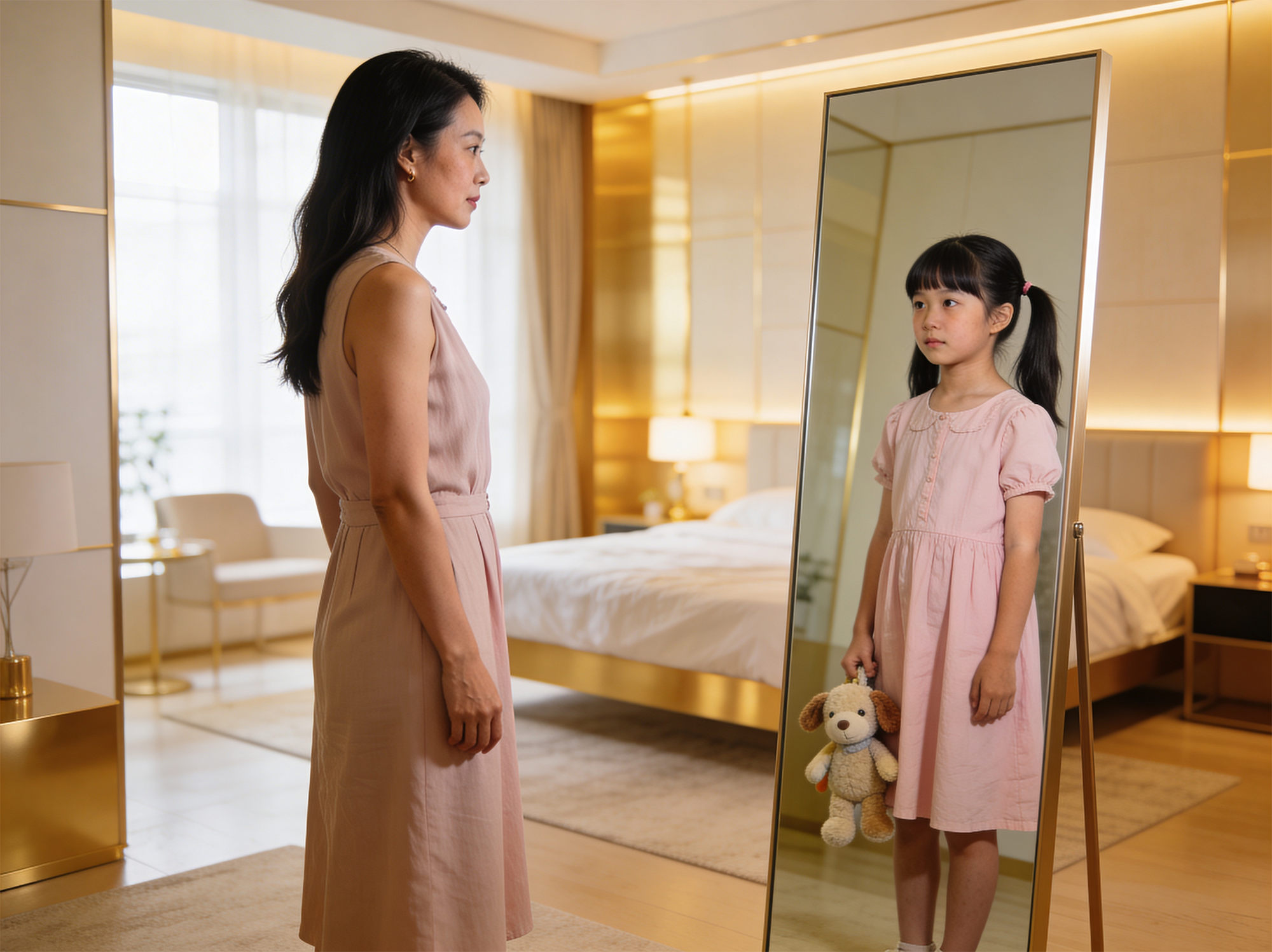
 Many women reach adulthood carrying invisible stories written during childhood. These stories shape how they see themselves, how they respond to challenges, how they form relationships, and how they pursue their dreams. Often, those early experiences—both nurturing and painful—remain quietly embedded within the psyche. The confident professional woman, the devoted mother, the accomplished entrepreneur, or the compassionate caregiver may still carry within her the voice of a younger self seeking reassurance, validation, and healing.
This concept is often referred to as healing the inner child, but for many women, the journey feels deeply personal when framed as healing the inner girl—the younger version of themselves who once dreamed without fear, questioned the world freely, and desired acceptance and love.
Reconnecting with that inner girl is not about dwelling on the past. It is about understanding how childhood experiences influence adult identity and learning to reclaim confidence, self-worth, and authenticity. When women consciously engage in this healing process, they often discover that the emotional barriers limiting their present lives are rooted in stories formed long ago. Healing the inner girl becomes a powerful pathway toward self-awareness, emotional freedom, and renewed purpose.
Understanding the Inner Girl
The inner girl represents the emotional memories, beliefs, and coping mechanisms formed during childhood and adolescence. These early experiences influence how individuals interpret relationships, handle criticism, express emotions, and approach opportunities.
Positive childhood experiences often nurture confidence and curiosity. A child encouraged to explore ideas, express feelings, and pursue interests tends to carry those traits into adulthood. However, experiences involving neglect, criticism, instability, or unrealistic expectations can lead to internal narratives that persist long after childhood has passed.
These narratives might sound like quiet internal messages:
-
“I’m not good enough.”
-
“I have to prove my worth.”
-
“My needs are less important than everyone else’s.”
-
“If I make mistakes, I will disappoint people.”
While these thoughts may feel like personality traits, they are often echoes of earlier experiences. Recognizing them is the first step toward transformation.
Why Inner Healing Matters in Adulthood
Many women spend years focusing on external achievements while ignoring emotional wounds from earlier stages of life. Career success, academic accomplishments, and social recognition may provide temporary validation, but unresolved emotional patterns can still influence behavior.
For example, a woman who grew up seeking approval may become an adult who struggles to set boundaries or say no. Another who experienced frequent criticism may develop perfectionist tendencies, believing that mistakes will lead to rejection.
Healing the inner girl allows women to address these patterns with compassion rather than judgment. Instead of blaming themselves for emotional responses, they begin to understand the origins of those responses.
This awareness opens the door to personal growth.
Recognizing Signs of an Unhealed Inner Girl
Many women begin the healing process when they notice recurring emotional patterns that affect relationships, career decisions, or self-confidence. These patterns might include:
-
Chronic self-doubt despite accomplishments
-
Difficulty trusting others or forming close relationships
-
Fear of failure or rejection
-
People-pleasing behaviors
-
Overachievement driven by the need for validation
-
Difficulty expressing emotions or needs
These experiences do not mean a woman is broken. They simply indicate that emotional experiences from earlier life stages still influence present perceptions.
Recognizing these patterns is an act of self-awareness rather than self-criticism.
Reconnecting with Childhood Identity
One of the most powerful steps in healing the inner girl is reconnecting with the qualities that existed before fear or self-doubt took root. Many women recall that as children they were curious, creative, imaginative, and unapologetically expressive.
Over time, societal expectations, criticism, or emotional challenges may have caused those qualities to become suppressed. Reconnecting with childhood identity helps women rediscover aspects of themselves that were once natural.
This reconnection might involve revisiting activities once loved as a child—drawing, writing, dancing, exploring nature, or storytelling. These experiences reawaken creativity and joy that may have been dormant for years.
The Role of Self-Compassion
Self-compassion is essential in inner healing. Many women approach personal growth with harsh self-criticism, believing that acknowledging emotional pain reflects weakness. Yet compassion toward oneself is one of the most powerful tools for transformation.
Self-compassion involves speaking to oneself with the same kindness offered to a close friend. Instead of criticizing emotional responses, women learn to acknowledge them with understanding.
For example, rather than thinking, “I’m too sensitive,” a compassionate response might be, “My feelings are valid, and I deserve to understand them.”
This shift in perspective encourages emotional safety and growth.
Rewriting Internal Narratives
Healing the inner girl often requires rewriting the stories women tell themselves about their worth and capabilities. These narratives may have been shaped by childhood experiences, cultural expectations, or external criticism.
Rewriting internal narratives involves replacing limiting beliefs with empowering ones. For example:
Old narrative: “I must be perfect to be respected.”
New narrative: “My value does not depend on perfection.”
Old narrative: “I need everyone’s approval.”
New narrative: “I deserve to make decisions aligned with my values.”
This process requires patience and repetition, but over time, new narratives become internalized.
Setting Boundaries and Honoring Needs
An unhealed inner girl may have learned that her needs were secondary to others. As adults, many women continue prioritizing everyone else’s comfort above their own well-being.
Healing involves learning to set boundaries and honor personal needs without guilt. Boundaries are not acts of rejection—they are acts of self-respect.
Healthy boundaries might include:
-
Saying no to commitments that exceed emotional capacity
-
Communicating needs clearly in relationships
-
Protecting time for rest, creativity, and reflection
-
Distancing from environments that diminish self-worth
Each boundary reinforces the belief that personal well-being matters.
The Role of Reflection and Emotional Awareness
Healing requires introspection. Journaling, meditation, therapy, and reflective conversations help women explore emotional experiences safely. Reflection allows individuals to identify triggers and understand how past experiences influence present reactions.
For example, a strong emotional response to criticism may be linked to earlier experiences of being judged harshly. Recognizing this connection allows women to respond consciously rather than react automatically.
Emotional awareness fosters empowerment because it shifts control from unconscious patterns to intentional choices.
Rebuilding Confidence Through Action
Confidence does not appear instantly—it develops through consistent experiences of growth and achievement. Women healing their inner girl often rebuild confidence by taking small steps toward goals that once felt intimidating.
These steps may include:
-
sharing ideas in professional settings
-
pursuing creative passions
-
setting personal goals
-
advocating for oneself in relationships or workplaces
Each action reinforces the belief that capability and courage coexist.
The Importance of Support Systems
Healing rarely happens in isolation. Supportive relationships play a crucial role in emotional growth. Friends, mentors, therapists, and community groups provide safe spaces where women can share experiences without fear of judgment.
These environments reinforce validation and empathy. Hearing others’ stories often reveals that many struggles are shared, reducing feelings of isolation.
Support systems also provide encouragement during moments of vulnerability.
Embracing Authentic Identity
As women heal their inner girl, they often rediscover parts of themselves that had been hidden or minimized. Authentic identity emerges when individuals allow themselves to exist without performing for approval.
Authenticity may involve:
-
expressing opinions openly
-
pursuing interests that feel meaningful
-
choosing relationships aligned with personal values
-
letting go of roles that no longer reflect true identity
Living authentically strengthens confidence and emotional freedom.
The Ongoing Journey of Healing
Healing the inner girl is not a single moment of realization. It is an ongoing journey of awareness, reflection, and growth. Some experiences may resurface at different stages of life, inviting deeper understanding.
This process is not about erasing the past but integrating it with compassion. Women who embrace this journey often discover that their earlier experiences—both painful and joyful—have shaped resilience, empathy, and wisdom.
The Transformation of Self-Worth
Perhaps the most profound outcome of inner healing is the transformation of self-worth. When women release limiting narratives and reconnect with their authentic identity, they begin to see themselves through a new lens.
Self-worth becomes independent of external validation. It is rooted in understanding that value exists inherently rather than conditionally.
This transformation influences every area of life: relationships become healthier, career decisions align more closely with personal values, and emotional responses become more balanced.
Honoring the Inner Girl
Healing the inner girl ultimately involves honoring the younger self who navigated life with the tools available at the time. Rather than viewing childhood struggles with resentment, many women learn to acknowledge the strength it took to grow through those experiences.
That inner girl, once uncertain or unheard, becomes integrated into adult identity as a source of creativity, curiosity, and emotional insight.
Reclaiming Confidence and Identity
Reclaiming confidence and identity is one of the most empowering journeys a woman can undertake. It requires courage to explore emotional history, patience to rewrite internal narratives, and compassion to embrace growth without judgment.
Yet the rewards are profound. Women who heal their inner girl often experience greater clarity, stronger boundaries, and deeper connections with others. They rediscover joy in creativity, confidence in decision-making, and authenticity in self-expression.
Healing the inner girl is not about returning to the past—it is about reclaiming the parts of oneself that were always worthy of love, respect, and possibility.
And when women embrace that truth, they step fully into the lives they were meant to live.
Discover more from Connected Woman Magazine
Subscribe to get the latest posts sent to your email.