
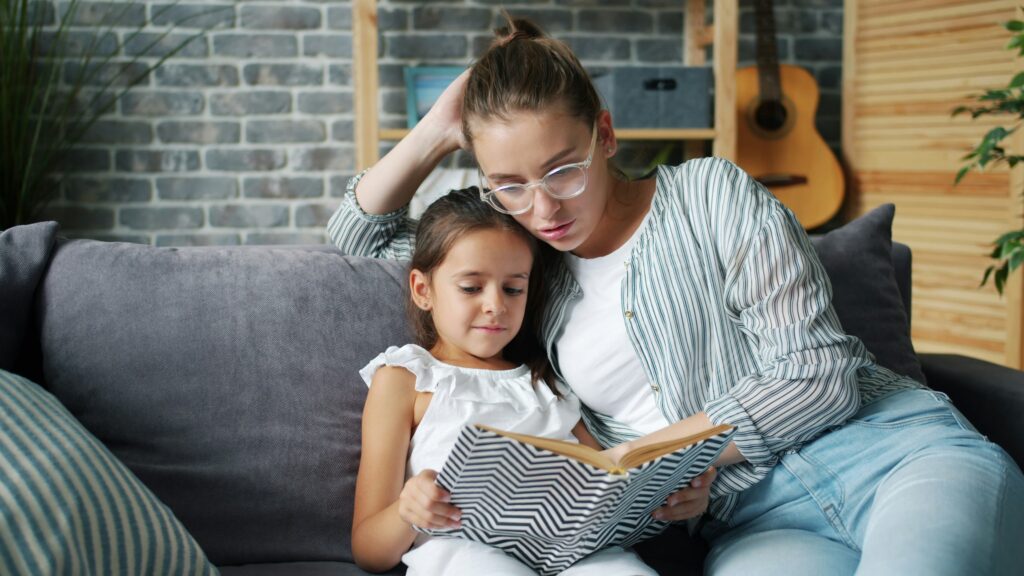
The phrase “single mother” sounds simple until you start asking what it actually means.
Is a woman still a single mother if her child’s father pays child support faithfully but rarely participates in raising the child? What about a mother whose co-parent lives ten minutes away, contributes financially, takes the children several days a week, attends school functions, and shares the responsibility of making important decisions? Is she experiencing single parenthood in the same way as the mother who has no financial support, no active co-parent, and no reliable person to call when she needs help?
And what happens when grandparents, siblings, friends, neighbors, or a trusted “village” step in? Does having a strong support system make a woman less of a single parent?
The truth is that single parenthood is not one universal experience.
A woman can be unmarried and parenting. She can be divorced and co-parenting. She can receive child support but carry nearly every parenting responsibility alone. She can have a father living nearby who is technically involved but inconsistent. She can also have an excellent co-parent with whom she shares parenting responsibilities even though they no longer share a household.
All of those women may check “single” on a form.
Their parenting realities, however, can be dramatically different.
Financial Support Is Important, but Parenting Requires More Than Money
A father who financially supports his child is fulfilling an important responsibility. Money matters. Children need food, clothing, housing, transportation, healthcare, school supplies, childcare, extracurricular activities, technology, haircuts, birthday presents, field-trip money, and approximately 47 unexpected expenses that somehow appear five minutes before bedtime.
Financial support should never be dismissed as meaningless.
But financial contribution and active parenting are not interchangeable.
A mother can receive regular child support and still be the person handling breakfast, homework, parent-teacher conferences, doctor appointments, discipline, emotional meltdowns, transportation, school projects, permission slips, sick days, bedtime routines, laundry, household management, and the thousand tiny decisions involved in raising another human being.
There is also an invisible part of parenting that is difficult to quantify: being the person who is always mentally on call.
Who remembers that picture day is Thursday?
Who notices that the child has become unusually quiet?
Who researches the summer program?
Who stays awake worrying about whether that cough sounds worse?
Who talks through friendship drama, grades, puberty, disappointment, heartbreak, bullying, college applications, or the first terrible breakup?
Money can help support a child.
It cannot attend a parent-teacher conference.
It cannot sit beside a frightened child in an emergency room.
It cannot answer the 11:43 p.m. question that begins with, “Mom, can I tell you something?”
So yes, a woman can receive meaningful financial support and still experience the overwhelming responsibility of parenting largely alone.
But Living Separately Does Not Automatically Mean Parenting Alone
There is another side of the conversation that deserves honesty.
Not every mother who lives separately from her child’s father carries the same burden as a mother who has essentially been left to do everything herself.
A healthy co-parenting relationship can significantly change the experience.
If another parent consistently handles school pickups, keeps the children overnight, attends appointments, pays expenses, helps make decisions, responds during emergencies, takes responsibility for discipline, and remains emotionally available to the children, that mother may still consider herself a single mother because she is unmarried or maintains her own household.
But she is also receiving something extremely valuable: shared parenting labor.
That distinction is worth acknowledging without turning motherhood into the Struggle Olympics.
The goal should not be deciding who has “earned” the title of single mother.
The better question is:
How much of the actual responsibility of raising this child does one parent carry alone?
That question leaves room for nuance.
Two women can both be single mothers while having vastly different levels of support, financial pressure, time freedom, emotional responsibility, and exhaustion.
Recognizing those differences does not invalidate either woman. It simply tells the truth.
Does Having a Village Make You Less of a Single Mother?
No. But a village can absolutely make single parenthood more manageable.
There is a difference between having support and having a parenting partner.
Grandma picking the children up from school twice a week can be life-changing. An aunt who keeps them during school breaks can save hundreds or thousands of dollars in childcare costs. A friend who becomes the emergency contact can provide peace of mind. Family members who attend games, graduations, birthdays, and school programs can surround children with love and stability.
That support matters tremendously.
But Grandma is still Grandma.
Your sister is still your sister.
Your best friend is still your best friend.
They may lovingly help carry pieces of the load, but unless they have assumed a parental role, the ultimate responsibility usually comes back to the parent.
And having a village does not mean a woman should feel guilty for admitting that single parenting is difficult.
Help does not erase responsibility.
In fact, one of the healthiest things a single mother can do is stop believing she has to prove her strength by refusing assistance.
You do not receive a trophy for reaching complete exhaustion without asking anyone for help.
If trustworthy people love your children and genuinely want to support you, allowing them to participate can be good for everyone involved—including your children.
Stop Trying to Be “Both Parents”
One of the heaviest expectations placed on single mothers is the idea that they must somehow become two people.
“I have to be the mother and the father.”
But you cannot be two people.
And you should not have to destroy yourself trying.
You can provide stability. You can teach accountability, kindness, confidence, responsibility, boundaries, independence, and love. You can expose your child to trustworthy adults and positive role models. You can build a safe home.
What you cannot do is manufacture another parent.
If another parent chooses not to participate, their absence is not a vacancy you are required to fill by becoming superhuman.
Sometimes single mothers become so focused on making sure their children never feel the absence of anything that they begin sacrificing everything—money, sleep, relationships, goals, health, hobbies, peace, and identity.
That is not sustainable parenting.
Your child does not need a mother who can magically become everybody.
Your child needs you.
A human mother. A loving mother. A mother who sometimes gets tired. A mother who occasionally needs help. A mother who can say, “I don’t know, but we’ll figure it out.”
That is enough.
3 Ways to Carry the Single-Parent Load Without Losing Yourself
1. Build Systems Instead of Depending on Superwoman Mode
Single mothers are often praised for being strong, but strength without structure eventually becomes exhaustion.
Create systems that reduce how many things you must remember and manage manually. Automate bills where possible. Keep one family calendar. Establish routines for mornings, homework, meals, laundry, and bedtime. Prepare for the week before Monday morning starts acting like Monday morning.
More importantly, give children age-appropriate responsibilities.
You are raising members of a household, not permanent hotel guests.
Children can learn to put away clothing, prepare simple meals, pack school bags, clean their spaces, keep track of assignments, and gradually manage their schedules.
This is not putting adult responsibility on children. It is teaching life skills while recognizing that Mom should not be responsible for every spoon, sock, backpack, water bottle, homework assignment, and dirty dish in the building.
Your goal is not to become more efficient at doing everything.
Your goal is to create a household where everything does not require you.
2. Accept Help Without Using It to Minimize Your Own Work
If you have a village, use it.
Let Grandma take the children Saturday afternoon.
Accept the school pickup.
Trade childcare with another trusted parent.
Allow relatives to attend activities when you cannot.
Ask the person who keeps saying, “Call me if you need anything,” whether they can actually help with something specific.
Support is not evidence that you are failing at single motherhood. Support is one of the ways human beings have raised children for generations.
At the same time, do not minimize your workload simply because someone helps you.
You can be grateful for your parents and still be tired.
You can appreciate child support and still wish your child’s father were more emotionally present.
You can have dependable friends and still occasionally feel lonely in the responsibility.
Gratitude and exhaustion can exist in the same woman.
3. Do Not Count Yourself Out Because Your Family Looks Different
Single mothers sometimes quietly reduce their own expectations for life.
Maybe buying a home feels impossible.
Maybe returning to school seems unrealistic.
Maybe starting a business, changing careers, traveling, dating again, saving money, or simply having a life outside motherhood feels selfish or too difficult.
Fear starts whispering:
What if I fail?
What if something happens to my income?
What if my child needs me?
What if I cannot handle one more thing?
Those are legitimate concerns. Single-parent households often have less margin for error because there may not be another adult income, another schedule, or another person immediately available when something goes wrong.
But caution does not have to become surrender.
Move strategically.
Build an emergency fund little by little. Apply for the promotion. Investigate tuition assistance. Take the class. Build the side hustle slowly. Use your PTO. Ask about flexible schedules. Research childcare resources. Create backup plans. Set goals that fit the season of life you are actually living.
You do not have to make reckless leaps to keep moving forward.
Sometimes progress looks like a giant step.
Sometimes it looks like putting $20 into savings, completing one class, sending one application, making one phone call, or giving yourself permission to imagine a future that contains more than survival.
Single Motherhood Is a Family Structure, Not a Prediction
Perhaps the most important distinction in this entire conversation is this:
Doing it alone does not mean you are destined to fail.
Your household may have one parent living in it. Your child may have an inconsistent parent, an absent parent, an active co-parent, or an entire extended family helping raise them. Your support system may be enormous, tiny, complicated, or nonexistent.
None of those circumstances automatically determine what your child can become—or what you can become.
There will be things you cannot control.
You cannot force another adult to parent.
You cannot guarantee that money will never get tight.
You cannot prevent every disappointment your child will experience.
And you certainly cannot be everything, everywhere, all at once.
But perhaps that was never the assignment.
The assignment is to build the healthiest, safest, most loving life you reasonably can with the resources available to you—and to remember that your life matters inside that family too.
Motherhood should not require your disappearance.
Your children need care, guidance, protection, accountability, consistency, and love. They also benefit from seeing a mother who understands that she remains a whole person with dreams, limits, boundaries, needs, and a future.
So define single motherhood in whatever way accurately reflects your family. Acknowledge the help you have without pretending it eliminates the burden you carry. Give credit to an involved co-parent when that involvement exists. Be honest when it does not.
And above all, stop measuring your ability to succeed by whether someone else stayed, helped, paid, participated, or showed up.
You may be parenting solo.
You may sometimes be exhausted.
You may occasionally wonder whether you are getting any of this right.
But solo does not mean incapable, unsupported does not mean unsuccessful, and single motherhood does not mean your dreams—or your child’s—have to become smaller.A Note to the Mother Reading This
If you are reading this after another long day of carrying responsibilities that seem invisible to everyone else, give yourself permission to put some of the weight down.
You do not have to prove that you can do everything alone.
Ask for help when you need it. Receive help when it is offered. Stop comparing your motherhood to women whose circumstances, resources, co-parenting relationships, finances, or support systems are completely different from yours.
And please do not count yourself out.
Do not abandon the woman you hoped to become because motherhood became harder than you expected. Your dreams are not selfish. Rest is not laziness. Needing support is not weakness. Starting over is not failure.
Maybe today you cannot change your entire situation. That’s okay.
Choose one thing you can do for yourself this week.
Make the appointment you have been postponing. Ask someone you trust for help. Put a few dollars toward your future. Apply for the opportunity. Take an uninterrupted hour for yourself. Write down the dream you stopped talking about. Sit with your child and remind yourself that the home you are building is about love, not perfection.
Then tomorrow, take another small step.
And when fear tells you that you are not enough because you are doing this without a partner beside you, remember: your family’s story is still being written.
You are allowed to build a beautiful life while raising your children.
You are allowed to want more than survival.
You are allowed to need people.
And you are allowed to believe that there is still something extraordinary ahead for you, too.
To every woman carrying the single-parent load: keep building, keep asking for help, keep believing, and most importantly, don’t disappear from your own future while creating one for your children.Discover more from Connected Woman Magazine
Subscribe to get the latest posts sent to your email.