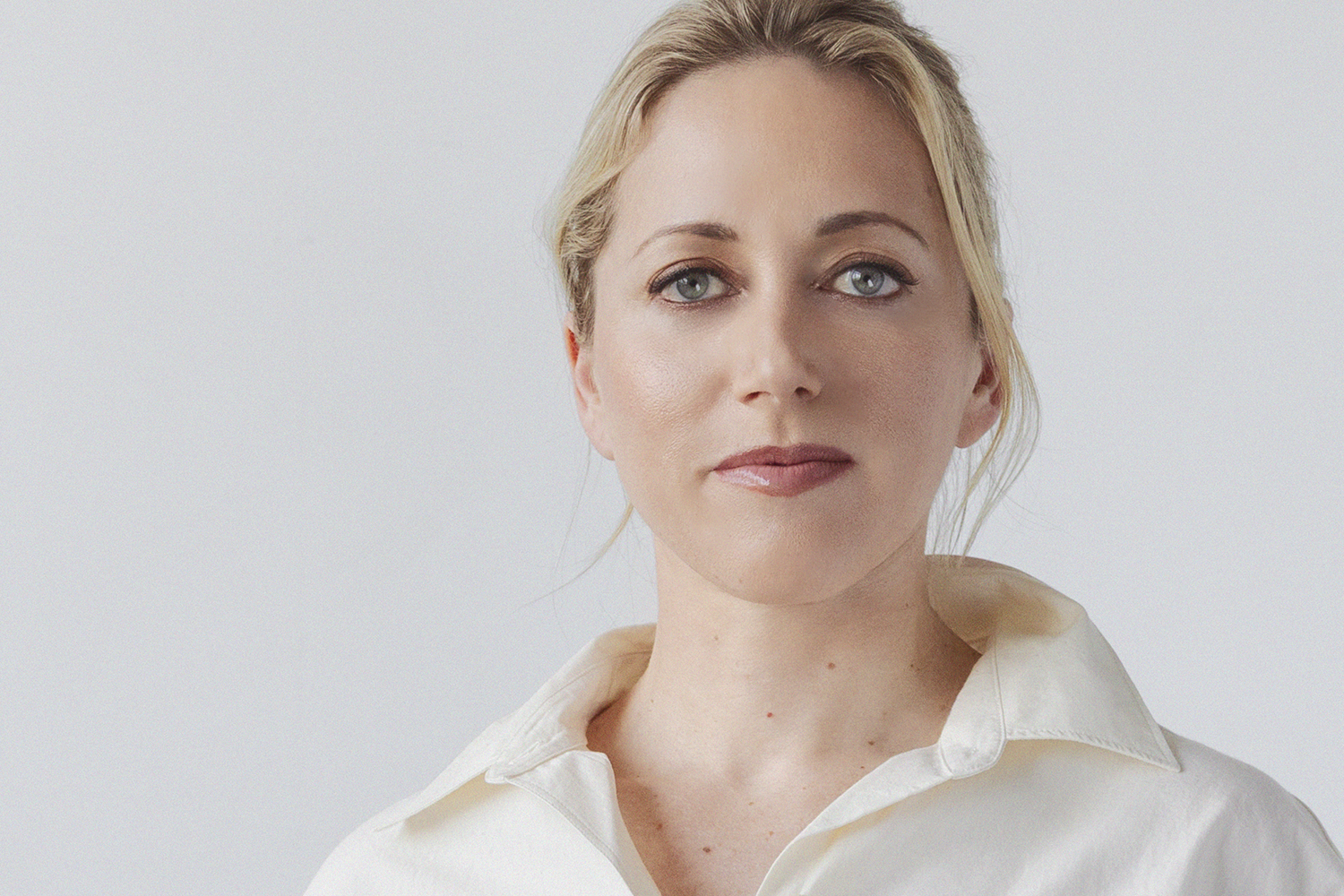
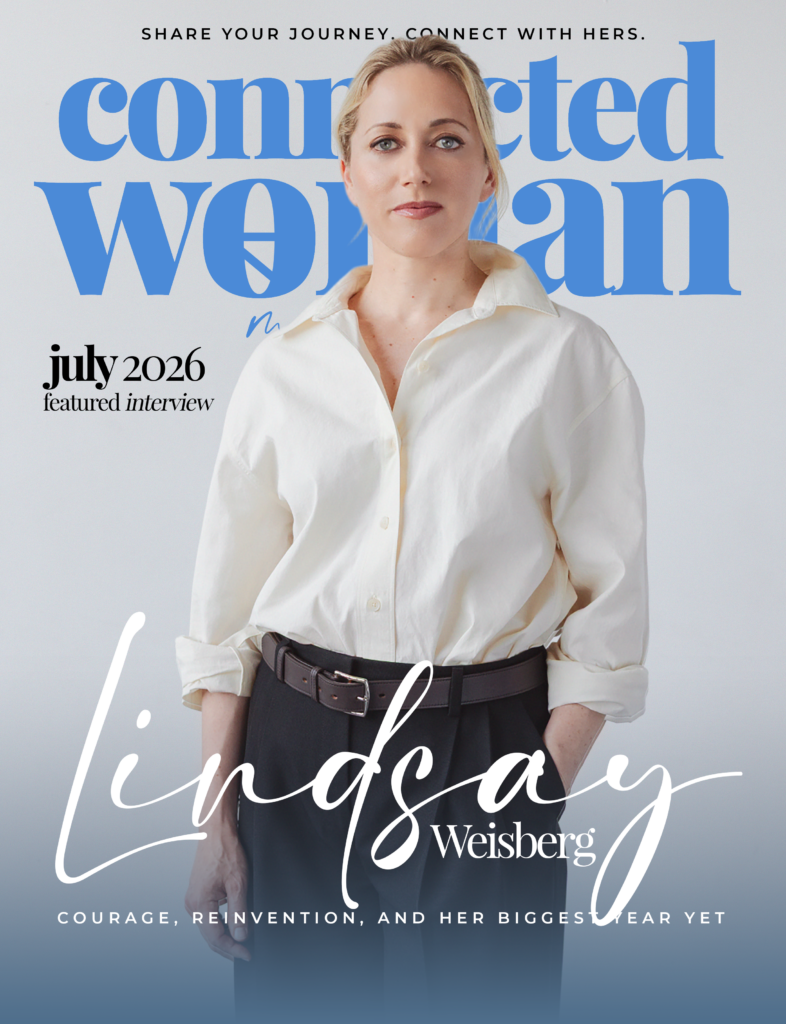
From neuroscience to the spotlight, Lindsay Weisberg proves that passion and purpose can thrive on the same path.
With an impressive blend of artistic talent, academic excellence, and unwavering determination, actress Lindsay Weisberg is proving that there is no single path to success. From earning advanced degrees in neuroscience and acting to making her mark across film, television, and theater, Lindsay’s career is a testament to following your passion without abandoning your curiosity. As she prepares for a breakout year with a slate of highly anticipated projects, she joins Connected Woman Magazine to discuss her unconventional journey, the stories that matter most to her, and what audiences can expect as she continues to captivate screens both big and small.
You’ve had such a unique journey—from competitive downhill skiing to neuroscience to acting. Looking back, what first sparked your interest in performance, and what ultimately gave you the courage to pivot away from more traditional career paths into the arts?
I grew up in a highly pressured academic environment. I had hours of homework in first grade. For me, high school was about doing well so I would have options and could then do anything I wanted. I had done everything “right,” gotten good grades, and was headed off to an Ivy League school. Then my dad accidentally threw away my chemistry textbooks, binder, and notes, and I had a complete meltdown. I thought I would need all of it for college. Mid-meltdown, I had the thought: What am I doing? I’m crying over my chemistry textbook? I can’t like chemistry that much. So I decided to defer college for a year. I moved to Colorado to continue ski racing and teach skiing. Then a fellow racer asked me if I was “Hanukkah-ed,” which in her mind meant Jewish. It was one of the last straws that made me realize I needed a little more diversity in my life than a ski town could provide. I went back home to New York City and decided to take an acting class to try something different. I was so nervous, but for the first time, something felt right. I told my parents I wasn’t going to college. Yeah, that wasn’t happening. But I was allowed to transfer to NYU Tisch.
 Your educational background is incredibly impressive, especially balancing studies at Dartmouth College, NYU Tisch School of the Arts, University of Southern California, and earning a neuroscience degree from Columbia University. How has your academic discipline shaped the way you approach character work, storytelling, and the emotional psychology of your roles?
As an actor, you are a human being with thoughts, emotions, behaviors, needs, a history, and ways you interact with the world around you. Studying neuroscience has helped me understand the brain and behavior and why people do what they do. Drama school taught me to be prepared, fully show up, and be on time. When a teacher locks the door at the start of class, you learn quickly.
Many people struggle with the idea of “starting over” or changing direction in life. What was that transition period like emotionally when you shifted from pre-med studies into acting, and did you ever wrestle with fear, doubt, or outside expectations?
I’m the kind of person who throws myself into something when I do it. Transitioning to acting after being a science nerd most of my life wasn’t difficult. I love learning, so I was very open to what I was being taught. When I later returned to acting full-time after earning a degree in neuroscience, I had already spent some time away from the field. I was so grateful to be doing what I loved that the gratitude outweighed the fear.
You received a Joseph Jefferson Award early in your career for Best Supporting Actress in a Play. What did that recognition mean to you at that stage of your journey, and how did it impact your confidence as an emerging Actress?
Haha, that award told me something was wrong. I thought I had read the list of nominees incorrectly. My confidence was not particularly high at the time. Winning that award was one of the things that convinced me I should probably go back and get a master’s degree in acting.
Your upcoming film Cotton Fever premiered at the Tribeca Festival alongside an incredible cast. What initially drew you to the project, and what can audiences expect emotionally or thematically from this film?
Cotton Fever is a beautiful film, and I am so grateful to have been part of that project. One of the things I loved about playing Nurse Diana was that she worked in a facility supporting women in need. Many of these women had nobody on the outside. That really stayed with me.
You’re working across film, television, and theater—three mediums that all demand very different skills and energy. Which space currently feels the most creatively fulfilling for you, and how do you adapt your performance style depending on the medium?
Now I feel most at home working on a film or TV set. Lately, many of the projects have been similar, a bit edgy, dark and dramatic.
What inspired you in your short film Lethia, and how did the project impact you as an artist?
I was drawn to my role in Lethia. I play a loving caretaker for an elderly woman suffering from dementia. The story hit close to home because I have a family member who is struggling with dementia. I wish I could find this person the caretaker I was able to be in that film. Lethia was also led by a female director and producer, and I am passionate about supporting female filmmakers.
 There’s often pressure in Hollywood for actors to fit into a certain mold, especially women navigating the industry. As someone with such a multidimensional background, have you ever felt pressure to minimize parts of yourself in order to “fit” the entertainment industry narrative?
Haha, no. I don’t think I fit into a mold. I mean, I’m an actress with a neuroscience degree.
Between projects like Chicago P.D., Will Trent, and your upcoming Netflix series All the Sinners Bleed, your career momentum is clearly building. How are you staying grounded while navigating what seems to be a major breakout moment?
I just care about working. I love it. Other than that, I like being in nature as much as possible. Or working out. And going on a retreat with Gangaji, my spiritual teacher.
As a former competitive downhill skier, you understand pressure, performance, and resilience at a high level. Are there lessons from athletics that still show up in your acting career today, particularly when dealing with rejection, competition, or high-stakes opportunities?
It’s a mindset that’s always there. Also, it involves, taking care of my body, my sleep, and my nutrition. I still train in the gym like a competitive athlete. The gym feels like a playground to me. I’m one of those weird people who gets excited by gym equipment.
Your career path breaks the stereotype that creatives must choose between intelligence and artistry. What message do you hope young women take away from seeing someone pursue science, athletics, and acting all at once without shrinking any part of themselves?
I think it’s simply about doing what you love and what brings you joy. That’s all that matters.
In an era where social media can create unrealistic expectations around overnight success, what do you think people misunderstand most about the amount of discipline and persistence required to build a sustainable acting career?
Unfortunately, I think social media sometimes makes people think they can take shortcuts.
You’ve worked with such a wide range of actors and storytellers already in your career. What qualities do you value most in collaborators, directors, or creative environments that bring out your best work?
I love when a director wants to play with something a bit. I also love working with actors who are very present and committed. The best sets are the ones where everyone seems grateful to be there and it’s about creativity and collaboration and not ego. I’ve been fortunate to be on a few sets like that, most recently, All The Sinners Bleed.
With so many exciting projects on the horizon, including Gangland and All the Sinners Bleed, is there a particular type of role, genre, or story you still dream of tackling someday?
So many! I would love to be working on an edgy TV show with great writing.
You’re entering a season where audiences are going to be seeing a lot more of Lindsay Weisberg on their screens. Beyond the credits and accomplishments, what do you hope people ultimately feel or understand about you through the stories you choose to tell?
I hope audiences find meaning in the beautiful stories that I am grateful to be a part of. Thank you.
Discover more from Connected Woman Magazine
Subscribe to get the latest posts sent to your email.